
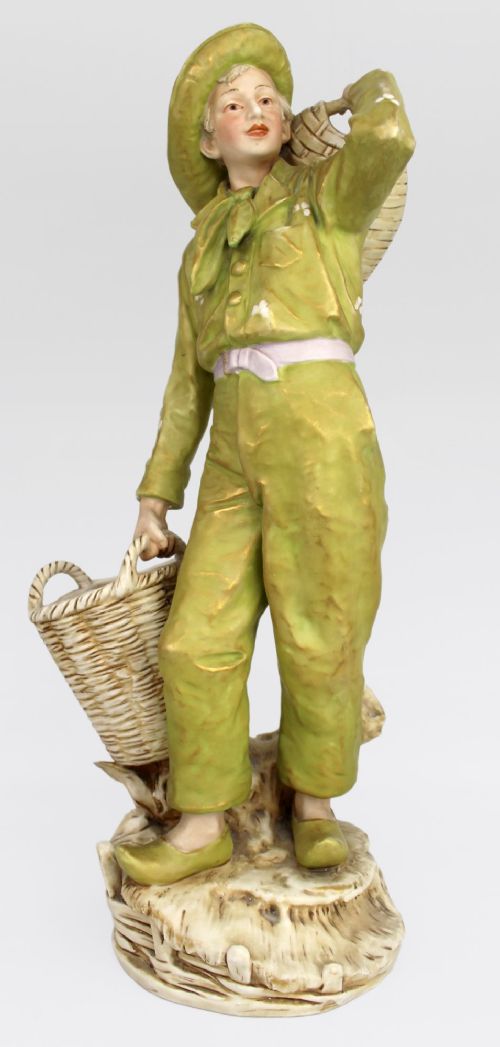


Royal Dux Bohemian Porcelain
Royal dux bohemian porcelain brings sculptural form and fluid glaze into a room through figures, vases and centrepieces.
Royal Dux Bohemian Porcelain
Royal dux bohemian porcelain encompasses decorative ceramics created in Bohemia across the nineteenth and twentieth centuries, spanning the Victorian period through to Art Deco. When searching for royal dux bohemian porcelain, a buyer encounters figurative sculpture and vessels, from large water carriers and maidens to animal studies of setters and hunting dogs.
The objects take many forms, including figural centrepieces, large pairs of figures, and vide poche vessels modelled with shells and bathers. These pieces frequently draw upon Art Nouveau styling, featuring organic lines and graceful human forms alongside Victorian Orientalism.
Edwardian pieces and items from around nineteen ten dominate the selection, capturing the height of the factory's figural output. The works utilise biscuit porcelain and glazed finishes, often combining naturalistic modelling with applied colour.
Judging Quality and Execution
Quality rests in the crispness of the modelling and the precision of the hand-finishing across complex figure groups and large vases. Superior examples display sharply defined facial expressions, intricate drapery folds, and balanced proportions.
The application of enamel, paint, and gold leaf distinguishes masterworks from standard production items, with careful detailing enhancing the depth of the porcelain. Subtle tonal gradations in the glaze elevate the visual impact of figural compositions.
The structural ambition of the piece also dictates standing, as monumental figures and elaborate multi-figure centrepieces require high technical skill to fire without distortion.
Materials recorded across the selection include biscuit porcelain, enamel, gold leaf, and traditional ceramic glazes.
H Schubert·Alois Hampel
The Royal Dux Bohemian Porcelain Glossary
- Biscuit porcelain
- Unglazed ceramic fired once to create a matte, porous finish resembling marble. This surface absorbs light differently than glazed porcelain, highlighting fine modelling.
- Turn-Teplitz
- The Bohemian region and manufacturing centre where pottery works, including those producing this porcelain, operated. It signifies the geographical origin of the piece.
- Vide poche
- A small decorative dish or bowl intended for emptying pockets, often integrated into figural sculptures of maidens leaning on shells. These items combine practical use with sculptural display.
- Orientalism
- An artistic style drawing subject matter from North African and Middle Eastern cultures. It appears in figures depicting water carriers and traditional dress.
- Art Nouveau
- A decorative movement characterised by flowing, organic lines and stylised natural forms. This style shapes the hair, bases, and drapery of early twentieth-century figures.
Royal Dux Bohemian Porcelain: Frequently Asked Questions
How do I identify royal dux bohemian porcelain?
Look for the distinct pink triangle trademark impressed into the ceramic body beneath the glaze. This mark serves as the primary indicator of factory origin.
Examine the modelling style, which frequently leans towards Art Nouveau curves or naturalistic figural groups with matte biscuit and gloss finishes.
What periods do these porcelain pieces come from?
The pieces span from the late nineteenth century through the Edwardian era and into the Art Deco period of the nineteen thirties. The majority date from around nineteen ten.
Stylistic shifts trace this timeline, moving from Victorian Orientalism and ornate nineteenth-century vases to fluid Art Nouveau maidens and later geometric designs.
How were these decorative figures used?
These items served primarily as ornamental centrepieces, mantel decorations, and decorative sculptures for domestic interiors. Large vases and figural groups acted as focal points in wealthy homes.
Some specialised forms, such as vide poche dishes, held small daily items, but most functioned purely to display artistic skill and taste.
Are animal figures common in this porcelain?
Animal studies form a distinct category alongside human figures, featuring dogs such as setters and hunting hounds with game. These pieces capture realistic postures and detailed coat textures.
Modellers applied the same technical care to animal subjects as they did to human figures, often combining glazed and biscuit finishes.