




Bohemian Ceramic Statue
A bohemian ceramic statue brings expressive nineteenth and twentieth-century figures into a room through moulded porcelain, terracotta and glaze.
Bohemian Ceramic Statue
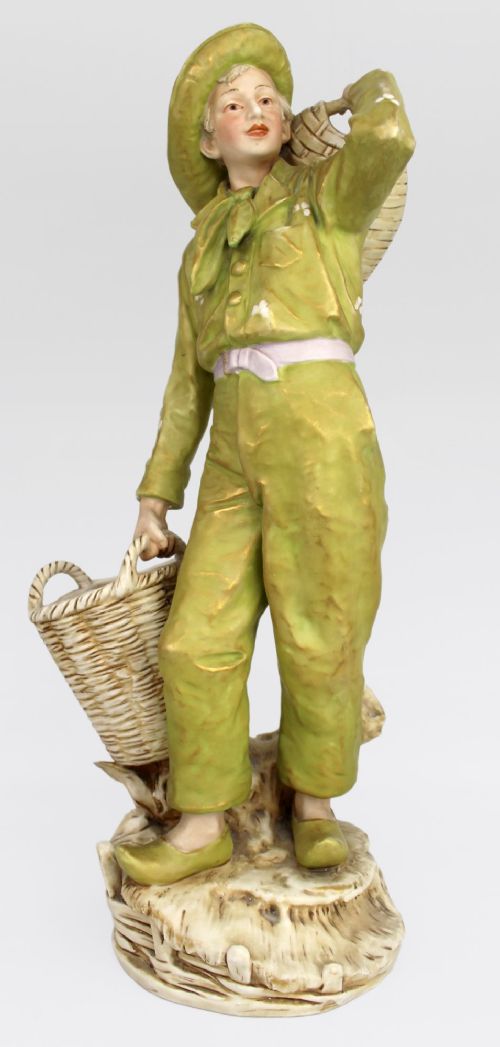
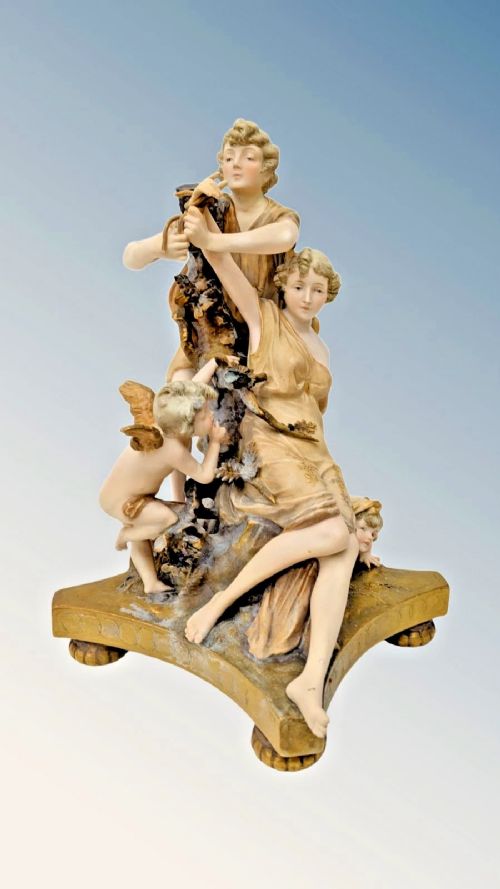
A bohemian ceramic statue represents sculptural figures and groups produced across the nineteenth and early twentieth centuries, spanning the Victorian period through Art Nouveau and Art Deco. These pieces take the form of maidens, water carriers, fisherfolk, children and animals, modelled as single figures, pairs or large centrepieces.
The versions met most frequently on this page originate from Bohemian factories, with Royal Dux forming the core of the selection alongside pieces by makers such as Ernst Wahliss and Bernard Bloch. Their styles move from nineteenth-century realism and Victorian Orientalism into flowing Art Nouveau lines and later Art Deco geometries.
How they were made
These sculptures utilise porcelain, biscuit porcelain and terracotta, shaped through careful moulding to capture intricate drapery, hair and animal forms. Glaze, paint, enamel and gilt then finish the surfaces, adding colour and metallic detail to garments, skin and base elements.
Model numbers and factory stamps are frequently impressed into the ceramic bodies, linking individual examples to specific design catalogues from the late nineteenth and early twentieth centuries.
Listings feature porcelain, terracotta and biscuit porcelain spanning the nineteenth century through the Art Deco era.
What varies in quality
The standard of a bohemian ceramic statue rests upon the sharpness of the original modelling and the delicacy of the finishing brushwork. Hand-painted enamel and gilt applied with precision elevate the visual depth of hair, eyes and costumes.
Scale and ambition separate standard figures from monumental groups or detailed prototypes. Larger dimensions and complex multi-figure compositions demand greater technical skill during the firing and glazing stages.
Royal Dux Bohemia·Ernst Wahliss·Bernard Bloch·Alois Hampel·H Schubert
The Bohemian Ceramic Statue Glossary
- Biscuit porcelain
- Unglazed porcelain fired once to produce a matte, porous surface resembling white marble. This finish highlights fine sculptural detail without surface shine.
- Terracotta
- Fired brownish-red clay used for sculptural figures and busts. It offers a warm, earthy alternative to glazed porcelain.
- Art Nouveau
- A design style characterised by organic, flowing lines and natural motifs such as water nymphs and drapery. It dominates much of the Bohemian ceramic output from the turn of the twentieth century.
- Art Deco
- A later twentieth-century style defined by streamlined geometric forms and modern aesthetics. Pieces from this era often depict dancers and flapper girls.
- Gilt
- A thin layer of gold applied to ceramic surfaces for highlights and trim. It accents borders, clothing and accessories.
Bohemian Ceramic Statue: Frequently Asked Questions
What is a bohemian ceramic statue?
A bohemian ceramic statue is a figural sculpture produced in Bohemia during the nineteenth and early twentieth centuries. These pieces depict human figures, animals and mythological subjects in porcelain or terracotta.
They reflect shifts in European design from nineteenth-century realism to Art Nouveau and Art Deco styles, often carrying maker marks or impressed model numbers on the base.
How do I identify the period of a statue?
Dating relies on stylistic markers such as Victorian realism, flowing Art Nouveau curves or geometric Art Deco lines. Factory marks and impressed numbers also point to specific manufacturing eras.
Earlier nineteenth-century works often favour classical or pastoral themes, whereas Edwardian and later pieces embrace graceful maidens and modern dress.
Where were these statues made?
These sculptures originate from Bohemia, a historical region known for rich ceramic traditions and skilled porcelain manufactories. Prominent firms operated in towns such as Teplitz.
Production combined local clay and porcelain resources with trained modellers and painters who supplied international markets.
How should I display a porcelain figure?
Porcelain and terracotta figures require stable placement away from heavy traffic areas and direct sunlight. Flat, level surfaces ensure secure support for tall or heavy group pieces.
Dusting with a soft, dry cloth maintains the glaze and painted enamel without introducing moisture to unglazed biscuit sections.