
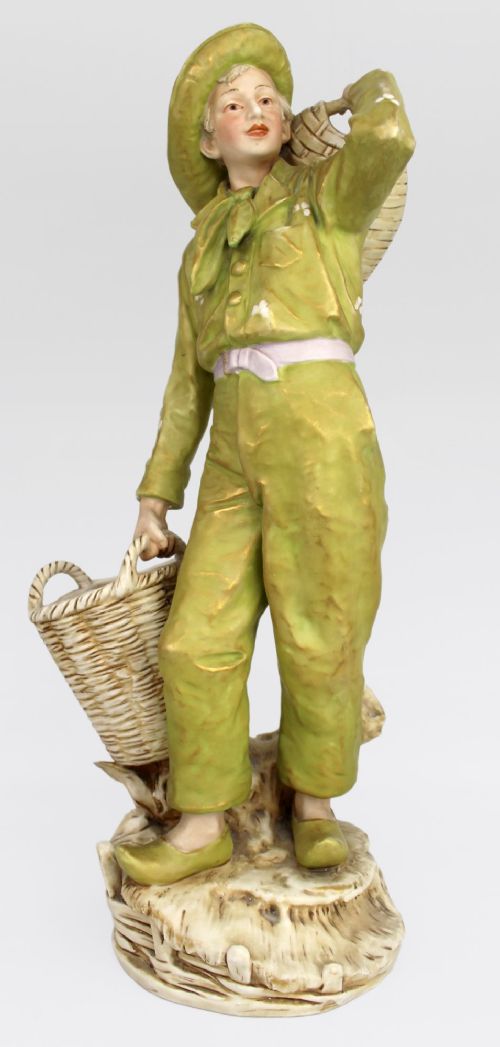


Royal Dux Porcelain Figurine
A royal dux porcelain figurine brings the sweeping curves and vibrant character of nineteenth and early twentieth century Bohemia directly to a room.
Royal Dux Porcelain Figurine
A royal dux porcelain figurine sits at the intersection of European ceramic art and decorative sculpture. When you search for a royal dux porcelain figurine, you encounter single figures, pairs, and large centrepieces depicting human subjects, animals, and mythological forms. The selection draws heavily on periods from the late nineteenth century through the Edwardian era and into the Art Deco years, capturing figures ranging from water carriers and maidens to dogs and fishermen.
The aesthetic leans strongly towards Art Nouveau and Victorian Orientalism, alongside distinct Art Deco pieces. You are most likely to meet sizeable female figures, maidens leaning on shells, and figural groups produced in Bohemia. These works often serve as standalone decorative sculptures or vide poche bowls, reflecting the diverse modelling output of the Bohemian factories across different decades.
How they were made
Makers utilised ceramic body materials combined with specialist glazes and biscuit porcelain to achieve varied surface textures. Many pieces incorporate enamel, paint, and gilt or gold leaf highlights to accentuate the contours of garments, hair, and structural details. The technique relies on skilled moulding followed by careful hand-finishing, which allows intricate elements like baskets, water jugs, and natural foliage to be rendered with clarity.
The application of colour ranges from soft, naturalistic skin tones and muted glazes to rich, metallic gilding characteristic of the Art Nouveau period. Biscuit porcelain sections provide a matte contrast against glossy glazed areas, adding depth to clothing and floral elements. This interplay of finished surfaces defines the tactile quality of the figures.
Materials recorded across the selection include biscuit porcelain, enamel, gold leaf, and painted glaze.
What varies in quality
Quality in a royal dux porcelain figurine rests primarily on the ambition of the modelling and the precision of the hand-finishing. Taller monumental figures and complex multi-figure groups demonstrate greater technical skill in firing and balance than standard single-subject models. The crispness of the applied details, from facial expressions to the weave of wicker baskets, separates standard production runs from superior artistic outputs.
The application of glaze, enamel, and gold leaf also dictates the visual hierarchy of the pieces. Finer examples display subtle tonal shading and controlled gilding that enhance the sculptural lines rather than masking them. Scale plays a role, with monumental works and large centrepieces representing the more ambitious side of the maker's output.
H Schubert·Alois Hampel
The Royal Dux Porcelain Figurine Glossary
- Biscuit porcelain
- Unglazed ceramic fired to a matte, porous finish that resembles marble and highlights fine sculptural details.
- Art Nouveau
- A style of design characterised by flowing, organic lines, asymmetrical plant forms, and graceful female figures.
- Vide poche
- A small decorative dish or tray designed for emptying pockets, often integrated into figural sculpture.
- Turn-Teplitz
- The Bohemian region and manufacturing hub where notable porcelain works, including Royal Dux, operated.
- Orientalism
- An artistic style drawing thematic inspiration from the cultures of the Middle East and Asia.
Royal Dux Porcelain Figurine: Frequently Asked Questions
What subjects do these figures show?
The subjects range from graceful maidens and water carriers to shepherd figures, children, and animals such as dogs and setters. Many pieces also depict narrative scenes like fishermen or figures with wicker baskets.
More elaborate models include centrepieces featuring bather figures or maidens leaning on large nautilus shells. These varied forms reflect popular tastes across different decades of production.
How do I identify Art Nouveau examples?
Art Nouveau examples typically feature flowing, organic lines with motifs of winding hair, draped garments, and natural elements like shells and water reeds. The human figures often adopt graceful, swaying postures.
This style is frequently found in pieces modelled as maidens, water nymphs, and figural centrepieces produced during the Edwardian period.
Where were these pieces made?
These works originated in Bohemia, a region renowned for its rich ceramic and porcelain manufacturing traditions. The factories operated within areas associated with historic porcelain production.
Workshops in this region produced items ranging from small figurines to monumental sculptural groups marked by distinct regional styles.
How do I clean my figurine?
Dust the porcelain gently using a soft, dry brush to prevent dirt from settling into the fine crevices of the biscuit sections or glazed surfaces. Avoid using harsh chemical cleaners or submerging pieces in water, particularly those with delicate painted details or gold leaf.
Regular, careful maintenance preserves the original glaze and surface finish without risking damage to the fine modelling.