



Antique Pointer Dog Figurine
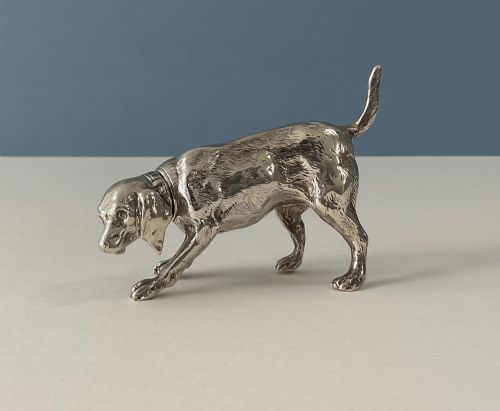
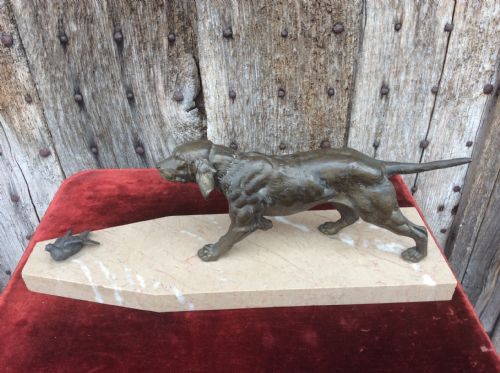
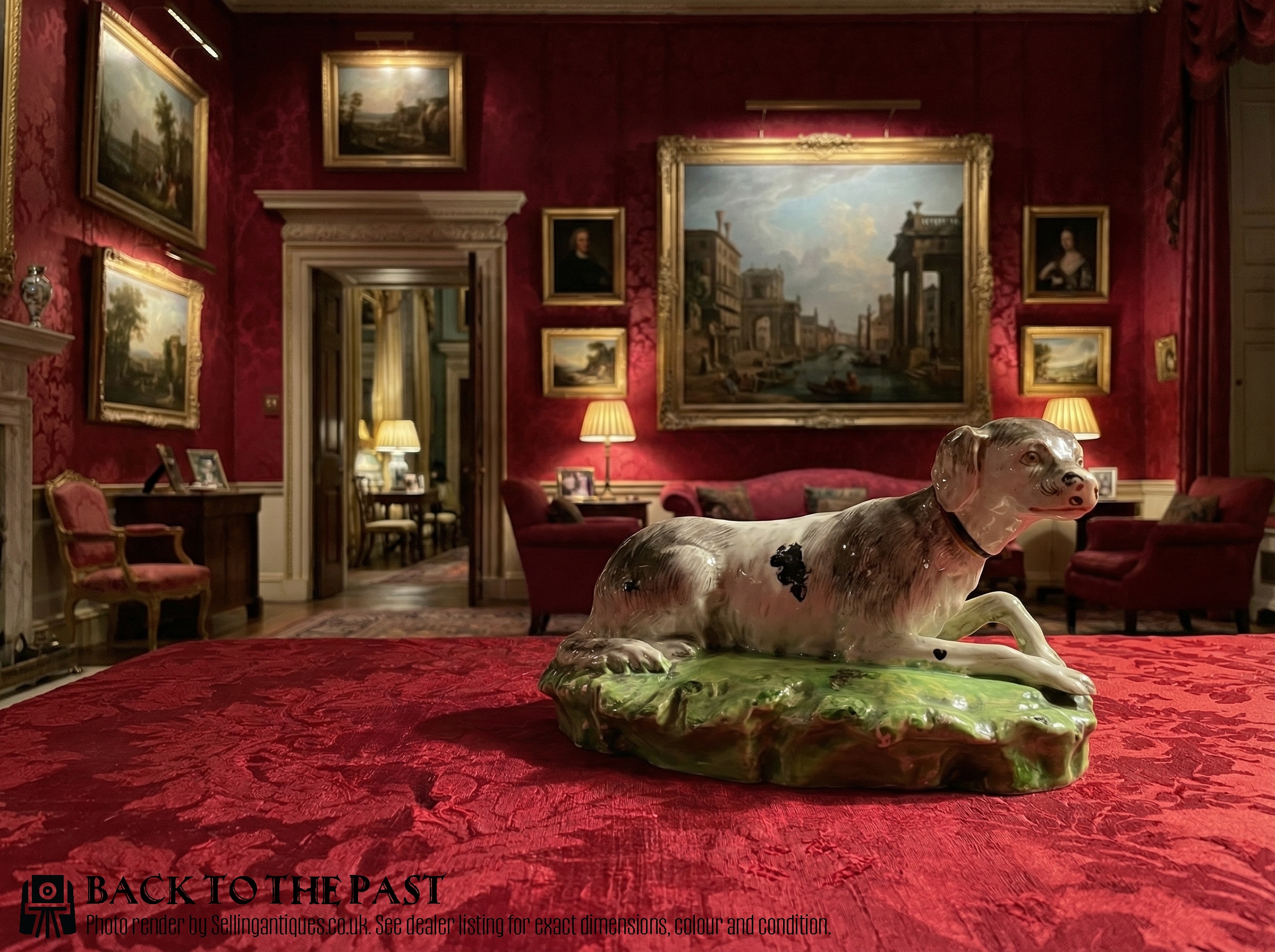
An antique pointer dog figurine captures the poised intensity of the hunt in bronze, porcelain, silver, and cast iron.
Antique Pointer Dog Figurine
An antique pointer dog figurine embodies the athletic grace of sporting hounds through various sculptural interpretations. These pieces capture the distinctive stance of the breed, often frozen in the act of pointing or resting alongside game.
The selections on this page span the nineteenth century into the twentieth, encompassing Victorian and Edwardian iterations alongside Art Deco works. You encounter tabletop bronzes, novelty pepper pots, and glazed ceramic figures originating from British and continental workshops.
Makers utilised diverse media to render the canine form, ranging from heavy cast iron and polished marble to delicate porcelain and gleaming solid silver. Each object reflects the prevailing aesthetic of its era, moving from realistic nineteenth-century animalier studies toward stylised twentieth-century forms.
Materials and construction
Foundry-cast bronze works utilise the lost-wax technique to achieve sharp musculature and detailed fur, often mounted upon heavy marble bases. Sculptors such as Delabrierre and Dubucand signed these metal pieces, reflecting French animalier standards of the nineteenth century.
Ceramic examples combine moulded earthenware or porcelain with hand-painted glazes, exemplified by early Minton blanc de chine and Staffordshire pottery figures. Artisans applied pigments beneath or over the glaze before firing, capturing naturalistic markings on the hound's coat.
Some hunting hounds double as dining table accessories, holding peppercorns inside their ceramic or silver bodies.
Distinctions in quality
Anatomical precision and liveliness of posture separate standard decorative castings from masterworks by renowned sculptors. The crispness of the chasing on metal surfaces and the subtlety of brushwork on glazed pottery indicate the level of craftsmanship involved.
The integrity of the material dictates the piece's presence, whether through the deep patination of antique bronze, the weight of solid silver, or the unblemished surface of early porcelain.
Delabrierre·Minton·Enoch Wood factory·Dubucand·Royal Dux
The Antique Pointer Dog Figurine Glossary
- Animalier
- A nineteenth-century artistic movement dedicated to the realistic portrayal of animals, particularly wild beasts and hunting dogs. Practitioners often rendered subjects in cast bronze with meticulous attention to natural movement.
- Blanc de chine
- A French term for white porcelain originating from China, adopted by European factories to describe unglazed or clear-glazed white ceramic figures. Early examples display a creamy translucency.
- Spelter
- An alloy of zinc and other metals used as a cheaper alternative to bronze during the late nineteenth and early twentieth centuries. It accepts patination well to simulate heavier metals.
- Patina
- The surface sheen and colour acquired by metal, wood, or stone through age and handling. A natural patina develops over decades and marks genuine antiquity.
- Plinth
- A heavy base or pedestal upon which a sculpture or figurine stands. Marble plinths frequently support bronze animal figures to provide stability and visual weight.
Antique Pointer Dog Figurine: Frequently Asked Questions
What materials were used for these figures?
These sculptures and vessels utilise bronze, cast iron, solid silver, spelter, marble, and porcelain. Metal items often feature applied patination or gilding.
Ceramic pieces employ traditional pottery glazes and blanc de chine finishes to render the canine subjects.
How do I identify the period of a bronze dog?
Nineteenth-century bronzes frequently display the signature of known animalier sculptors and bear deep, natural patinas acquired over time. Twentieth-century examples often incorporate Art Deco stylisation or mount directly onto marble plinths.
Examining the casting seams and the method of attachment to the base provides further clues to the manufacturing date.
Where were these ceramic figures made?
British production is represented by Staffordshire potteries and factories such as Minton, which produced early porcelain pieces. Continental output includes Royal Dux figures from Bohemia alongside French decorative works.
Each regional tradition employed distinct clay bodies and glazing techniques characteristic of its origin.
How should I display a heavy bronze sculpture?
Place heavier cast iron or bronze pieces on stable, level surfaces capable of supporting their weight without bowing. Ensure the display area avoids direct, prolonged moisture to protect metal patinas and marble plinths.
Allow sufficient clearance around the sculpture to appreciate the three-dimensional modelling from multiple angles.