
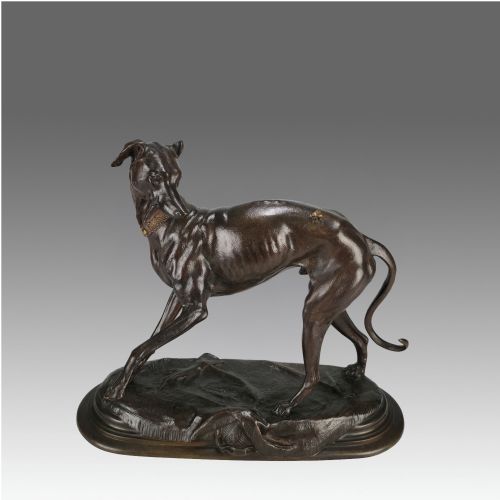
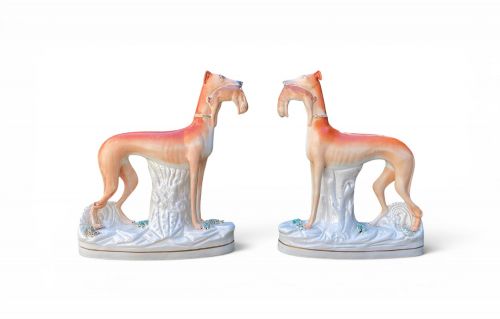


Antique Hound Dog Figurine
These antique hound dog figurine examples span bronze, porcelain and earthenware, offering character and sculptural presence for any room.
Antique Hound Dog Figurine
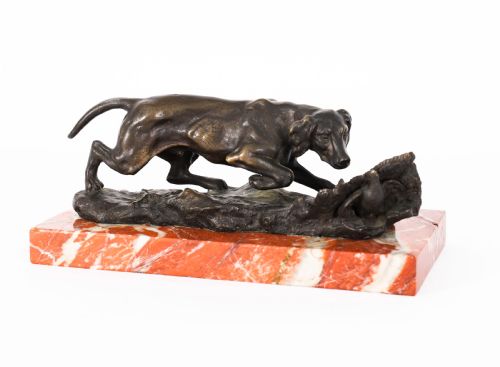
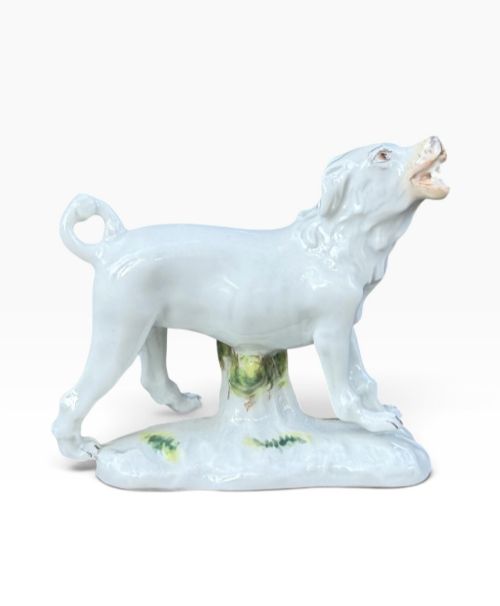
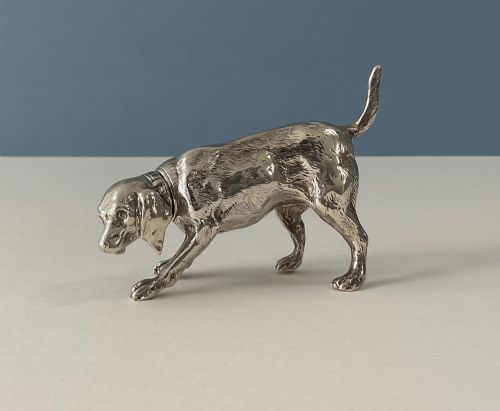
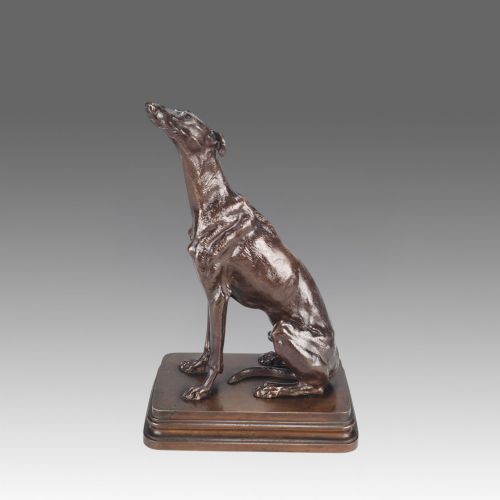
An antique hound dog figurine represents hounds, setters, greyhounds and bassets in bronze, porcelain, earthenware and spelter. These pieces capture sporting dogs in repose, in motion or engaged with game across various historical periods.
You will encounter French animalier bronzes alongside Staffordshire pottery greyhounds and continental porcelain models. The selection ranges from cabinet figures to heavy fireside statues and novelty pepper pots.
The nineteenth century dominates the offerings, supplemented by Edwardian and Art Deco interpretations. English potteries and French founders provide the core of the available forms.
Materials and casting methods
Bronzes utilise the lost-wax casting method to capture muscle definition and fur texture, frequently mounted on marble bases. Founders applied chemical patination to achieve deep brown or dark green surface tones.
Pottery and porcelain pieces combine slip-casting or pressing in moulds with hand-painted enamel decoration and lead glazes. Parian ware utilises unglazed biscuit porcelain to imitate carved marble.
Listings feature nineteen-century French animalier bronzes alongside Victorian Staffordshire pottery greyhounds and Edwardian porcelain.
Assessing execution and finish
Quality rests in the anatomical accuracy of the musculature and the crispness of the chase on bronze casts. Superior pieces retain the artist's signature or foundry marks on the base and show careful hand-chasing after casting.
Carl Kauba·Alfred Dubucand·Alfred Barye·Thomas Parr·Enoch Wood factory·Antoine Louis Barye·Joseph Francois Victor Chemin·Christophe Fratin·Barbedienne·Royal Dux
The Antique Hound Dog Figurine Glossary
- Animalier
- A nineteenth-century artistic movement focused on the realistic depiction of animals. Sculptors in this tradition studied live specimens at menageries to achieve correct proportions.
- Parian ware
- A fine-grained biscuit porcelain developed in the nineteenth century that resembles white marble. It gains its name from the Parian marble of ancient Greece.
- Spelter
- An alloy of zinc used as an economical alternative to bronze. It accepts metallic paints and patinas to simulate heavier metals.
- Staffordshire pottery
- Earthenware produced in the English potteries during the Victorian era and earlier. Figures typically feature hollow construction and hand-applied underglaze colours.
- Grand Tour
- A traditional trip through Europe undertaken by upper-class scholars. Souvenirs included small marble or bronze sculptures purchased abroad.
Antique Hound Dog Figurine: Frequently Asked Questions
How do I date an antique hound dog figurine?
Examine the material, the style of the base and any factory marks or signatures stamped into the bronze or stamped underneath the pottery. Nineteenth-century pieces often display foundry marks or registration stamps that narrow down the decade of production.
Compare the modelling style against known artistic movements such as the French animalier school or Art Deco to confirm the period.
Where should I display bronze hound sculptures?
Bronze sculptures require stable surfaces away from direct heat sources and moisture to protect the patination. Heavy animalier bronzes suit desks, sideboards or library tables where their weight and detail can be appreciated close up.
Ensure placement avoids areas prone to accidental knocks, particularly for pieces mounted on delicate marble plinths.
How do I clean antique ceramic dog figures?
Dust ceramic and porcelain figures gently with a soft, dry brush to prevent the accumulation of dirt in crevices. Avoid using water or chemical cleaners on pieces with delicate enamel paint or gold leaf.
Unglazed parian ware requires careful handling as its porous surface absorbs oils from bare hands.
What is the difference between bronze and spelter figures?
Bronze is a durable copper alloy that takes a deep chemical patina and withstands handling over centuries. Spelter is a softer zinc alloy that feels lighter and often shows a painted rather than a chemical surface finish.
Check the underside of the piece where the bare metal may be visible to determine the material.