
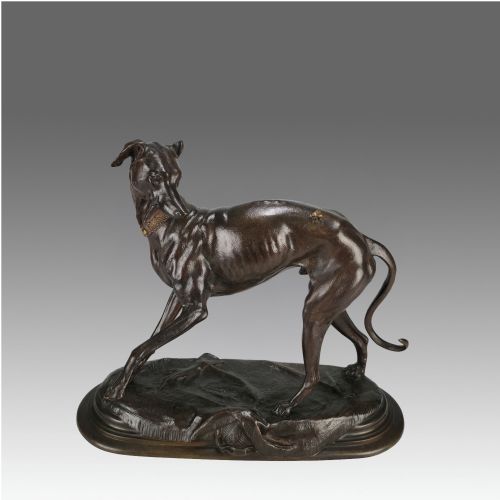


Nineteenth Century Bronze Dog
Nineteenth century bronze dog sculptures bring remarkable life and character to a room, offering both sculptural mastery and a rich historical presence.
Nineteenth Century Bronze Dog
A nineteenth century bronze dog brings together the lively observation of the Animalier movement and the enduring weight of cast metal. When you search for a nineteenth century bronze dog, you encounter works capturing hounds, terriers, and temple lions with striking realism.
The selections available here range from French Animalier castings of greyhounds and hunting hounds to Japanese Meiji period examples and Tibetan temple lions. These pieces appear as standalone sculptures, fireplace chenets, and cold painted figures.
French foundries and international makers dominate these listings, utilising patinated bronze, gilt bronze, and ormolu mounts. Buyers most frequently meet domestic dog breeds and formal fireplace ornaments from the Victorian era and adjacent decades.
How they were made
These works rely primarily on traditional metal casting methods using bronze, brass, and cast iron. Molten metal flows into moulds to capture fine muscle structures, fur textures, and collar details.
Surface finishes include cold painting, patination, and gilt bronze or ormolu mounts. Makers often mounted these bronze figures upon marble or onyx bases to provide stability and visual contrast.
Some canine subjects hold their ground with such stubborn realism that visiting cats refuse to look them in the eye.
What varies in quality
The definition in the chasing and chiselling separates standard castings from exceptional works. Superior pieces retain crisp detail in the animal's coat and expression long after the initial casting stage.
The quality of the patination or cold painted surface dictates the visual depth of the sculpture. Furthermore, the integration of ormolu mounts and marble bases influences the overall harmony of the object.
Alfred Barye·Auguste Nicholas Cain·Pierre Jules Mene·Jules Moigniez·Barbedienne
The Nineteenth Century Bronze Dog Glossary
- Animalier
- A nineteenth-century artistic movement focused on the realistic depiction of animals, particularly in bronze sculpture. Practitioners captured creatures in motion and repose with anatomical precision.
- Chenet
- A French term for a firedog used to support logs in an open fireplace. Pairs of these often featured bronze and ormolu mounts.
- Ormolu
- Gilded bronze, where a finely ground gold-mercury amalgam is applied to a bronze object. This technique creates a rich, enduring golden surface.
- Patinated bronze
- Bronze that has been treated with chemicals to produce a specific surface colour and tone. This finish protects the metal and highlights sculptural contours.
- Cold painted bronze
- A method where paint is applied to a cold bronze surface rather than fired in a kiln. This technique allows for vibrant, multi-coloured finishes on small animal figures.
Nineteenth Century Bronze Dog: Frequently Asked Questions
What is a nineteenth century bronze dog?
These pieces are metal sculptures and fireplace accessories depicting various dog breeds, created during the eighteen hundreds and early nineteen hundreds. They reflect the period's fascination with realistic animal anatomy and decorative metalwork.
Foundries across France, Japan, and other regions produced them using bronze, brass, and patinated finishes. Collectors value them for their artistic merit and historical craftsmanship.
How were nineteenth century bronze dogs used?
Many served as desk ornaments, cabinet sculptures, or mantelpiece decorations in European homes. Others formed functional pairs of firedogs or chenets used to adorn hearths.
Their substantial weight and detailed casting made them both practical furnishings and expressive works of art. They added status and refined taste to nineteenth century interiors.
How do I live with bronze dog sculptures?
Place them on stable surfaces such as wooden sideboards, marble mantelpieces, or dedicated display tables where their weight provides security. Keep them away from direct moisture and clean them gently with a soft cloth to preserve the patina.
Allow the natural lighting in the room to catch the surface textures and bronze tones. They integrate easily into traditional and contemporary interiors alike.
How do I tell different periods and types apart?
Examine the casting quality, surface finish, and stylistic markers such as French Rococo Revival scrolls or Meiji period Japanese detailing. Signatures or foundry stamps etched into the base often reveal the maker and origin.
Consulting the materials, whether ormolu, marble bases, or cold painted surfaces, helps anchor the piece to a specific decade or regional workshop.