




Antique High Stool
These antique high stool examples are practical pieces built for work, trade, and domestic use, offering raised seating with enduring character.
Antique High Stool
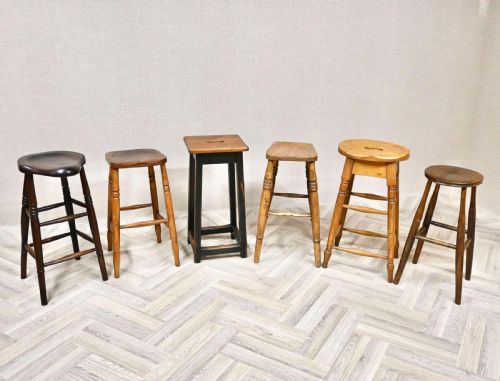
When you search for an antique high stool, you find tall seating designed for workplaces, taverns, and domestic spaces rather than formal dining rooms. The pieces recorded here span the nineteenth and twentieth centuries, taking forms such as clerk's stools, tavern seats, and industrial lab examples.
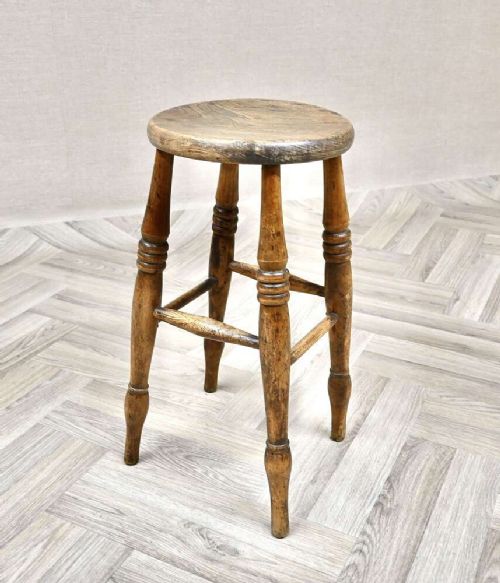
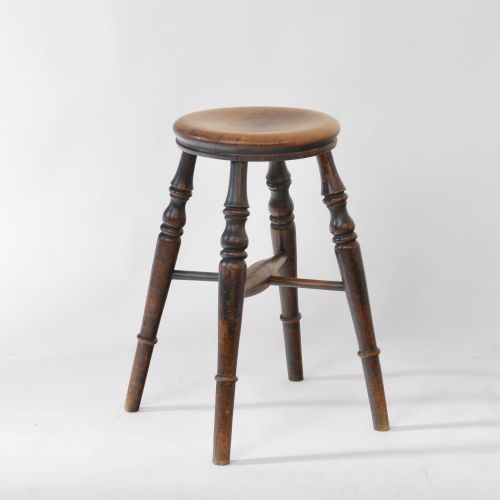
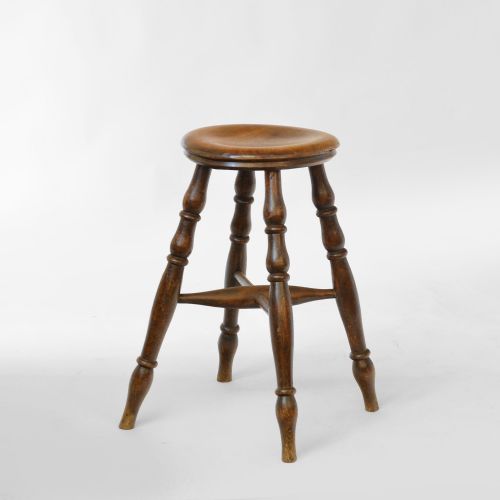
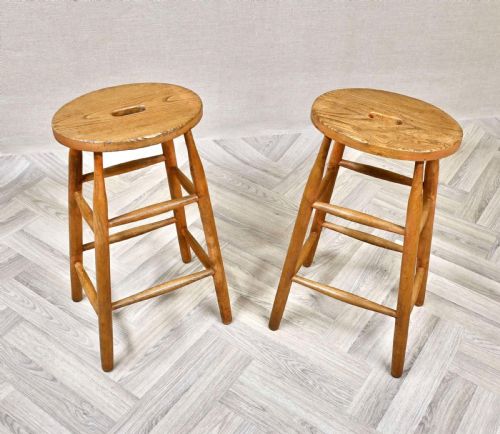
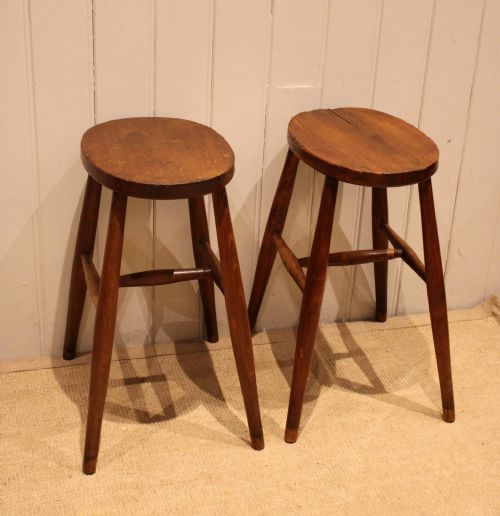
The version you are most likely to meet on this page is a nineteenth century wooden stool with a turned underframe, often made for public houses, offices, or workshops. These utilitarian forms rely on sturdy construction, simple turned legs, and solid timber tops shaped through years of use.
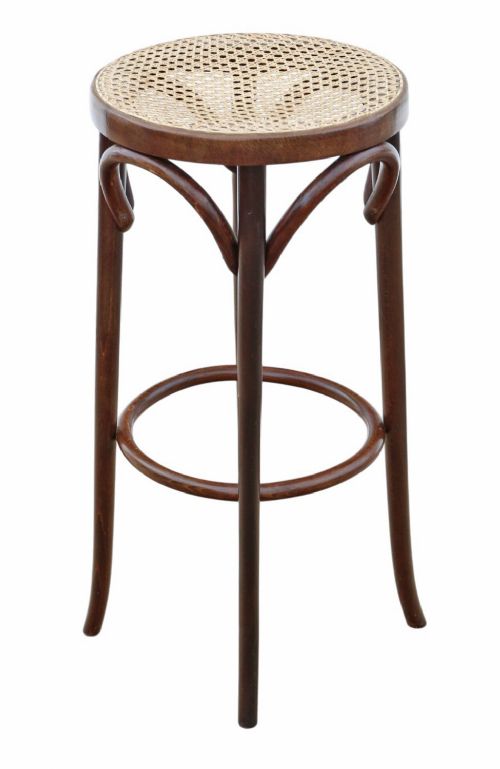
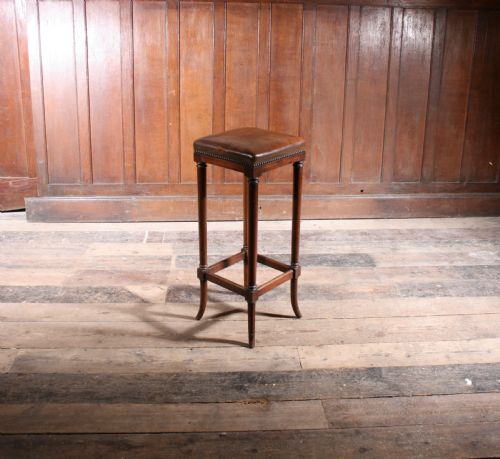
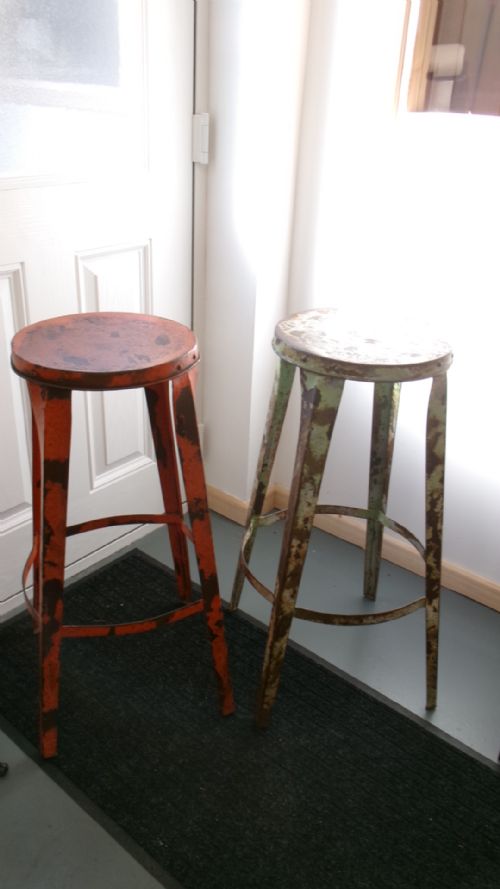
Other variations appearing in the records include industrial metal-riveted bar stools, bentwood designs, and upholstered high seating from the Regency and Victorian periods. Each type reflects the specific trade or domestic setting it served, from mill work to country house dressing rooms.
How they were made
Makers utilised solid timbers like elm, sycamore, beech, oak, and mahogany for the frames and seats, often pairing woods within a single stool. Elm and sycamore provided durable, splinter-resistant surfaces for round tops, while beech and birch offered strong, straight grain for turned legs and stretchers.
Joinery depended heavily on traditional turning and wedged tenon joints to withstand the heavy daily use demanded by clerks, pub patrons, and industrial workers. Later twentieth century pieces incorporated riveted industrial metal and bentwood techniques to achieve greater height and flexibility.
Listings feature 19th century and 20th century pieces, including 1930s industrial examples and Victorian country vernacular forms.
What varies in quality
Quality in an antique high stool rests upon the integrity of the timber and the strength of the underframe construction. A superior piece displays well-proportioned turned stretchers placed at varying heights for footrests, fixed firmly into sound legs without excessive movement.
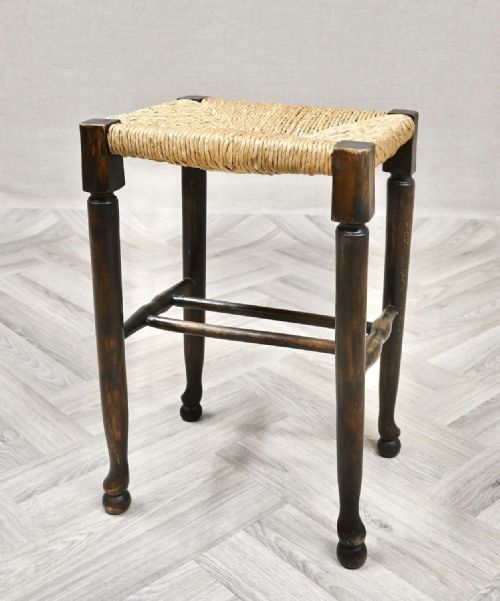
The character of the seat itself dictates much of the appeal, whether it is a deeply dished solid timber top showing distinct grain or an intact rush weave. Finer examples retain their original surface patination and structural stability, bearing the honest marks of their working history.
The Antique High Stool Glossary
- Clerk's stool
- A tall wooden seat designed for a high desk in an office, banking house, or counting room. These typically feature four turned legs braced by stretchers.
- Sycamore
- A dense hardwood commonly chosen for chair and stool seats due to its resistance to splitting under heavy daily wear. It frequently forms the dished top of nineteenth century tavern examples.
- Stretchers
- The horizontal rails connecting the legs of a stool near the base, which serve to stiffen the frame and act as a footrest for the user. Their placement often indicates the piece's specific working height.
- Rush seat
- A seating surface woven from dried marsh plants around a wooden frame, found on traditional country ladderback chairs and high stools. This technique provides a resilient, slightly flexible surface.
- Bentwood
- Wood softened by steam and bent into curved shapes, a method utilised in tall stools from the early twentieth century. This technique created lighter, flowing frames without traditional corner joints.
Antique High Stool: Frequently Asked Questions
Where were high stools used originally?
These tall seats served primarily in commercial, industrial, and public spaces where workers or patrons needed elevation above standard floor level. Examples include clerk's desks in offices, tavern counters, and workshop benches.
Domestic uses also occurred in kitchens, sculleries, and dressing areas where elevated seating suited specific tasks. Their sturdy construction ensured they could endure constant movement and heavy daily employment.
How do I tell a clerk's stool from a bar stool?
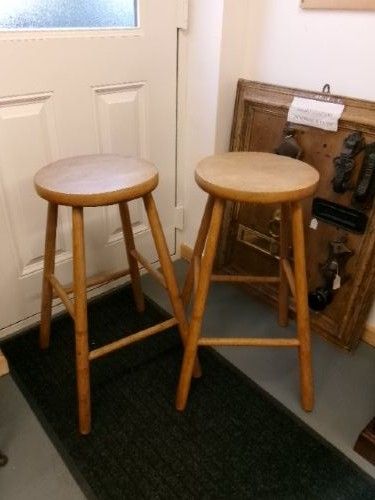
Clerk's stools usually originate from nineteenth century offices and feature simple turned wooden legs with multiple foot stretchers placed at different heights. Their seats are often plain round timber, sometimes dished for comfort.
Bar and tavern stools share similar proportions but frequently appear in materials like sycamore or elm with heavier wear patterns from public house use. Industrial variations from the twentieth century introduce metal frames and riveted construction.
Can I use an antique high stool at a kitchen island?
These pieces fit modern kitchen islands very well, provided you check the exact height against your counter. Nineteenth and early twentieth century work stools offer the necessary elevation and narrow footprint.
Because they were built for actual labour in mills, offices, and pubs, their frames possess the structural strength required for daily domestic seating. Their varied timber patinas also add historic character to modern kitchen spaces.
What is the difference between elm and beech frames?
Elm was traditionally selected for stool seats because its interlocking grain resists splitting when shaped into a dished surface. It provides a heavy, resilient platform that develops a rich surface sheen over time.
Beech, by contrast, has a straight and even grain that makes it ideal for the turned legs and stretchers of the underframe. Carpenters combined these two timbers to utilise the specific structural strengths of each wood.