



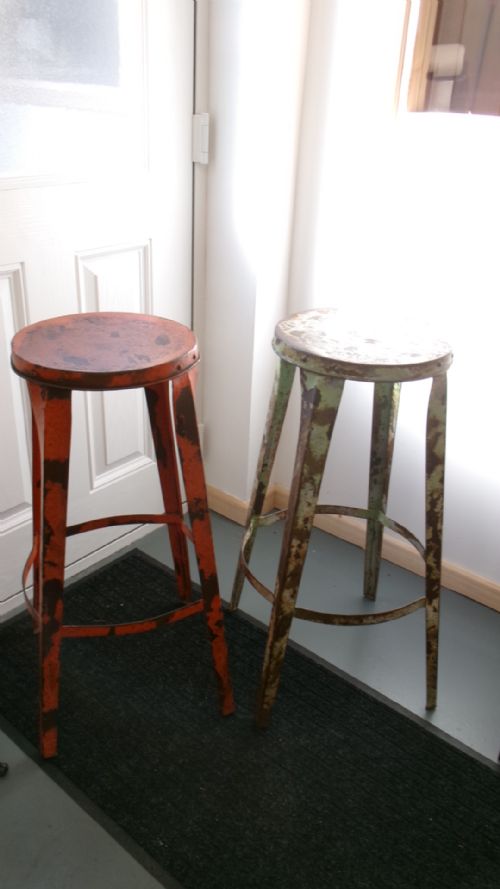


Kitchen Island Stool
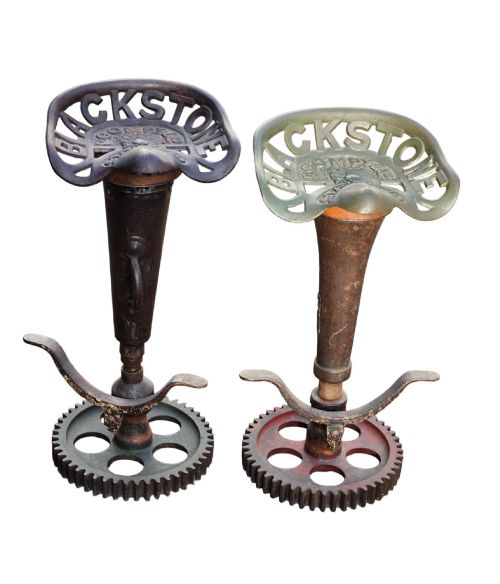
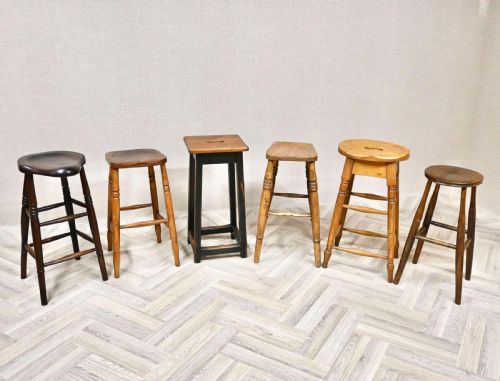
These kitchen island stool examples bring practical height and honest character to a room, spanning industrial metal and rustic timber.
Kitchen Island Stool
A kitchen island stool sits at elevated heights for breakfast bars and preparation counters, drawn from forms made across the nineteenth and early twentieth centuries. The selection on this page centres on bar stools, high stools, and occasional chopping blocks suited to domestic workspaces.
Most pieces you encounter here belong to the rustic country, rustic farmhouse, or industrial traditions. Surviving examples range from single nineteenth century items to matching sets of tall bar stools.
Makers produced these functional seats for utilitarian settings, utilising sturdy timbers like beech, oak, pine, and elm alongside riveted steel and cane. Their enduring appeal lies in straightforward construction designed for daily use.
Materials and construction methods
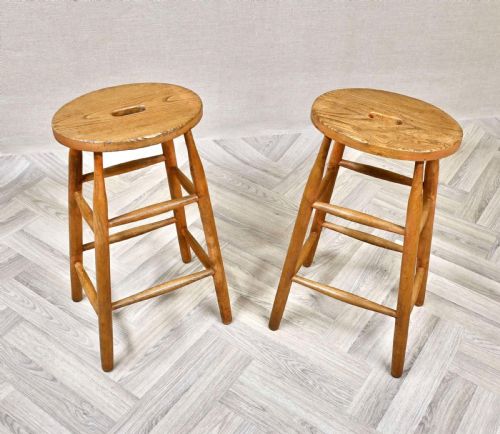
Makers built these pieces using solid timbers such as pine, elm, beech, and oak, often shaping seats from single planks or steam-bending wood into curved frames. Industrial examples incorporate riveted steel components for robust durability under heavy loads.
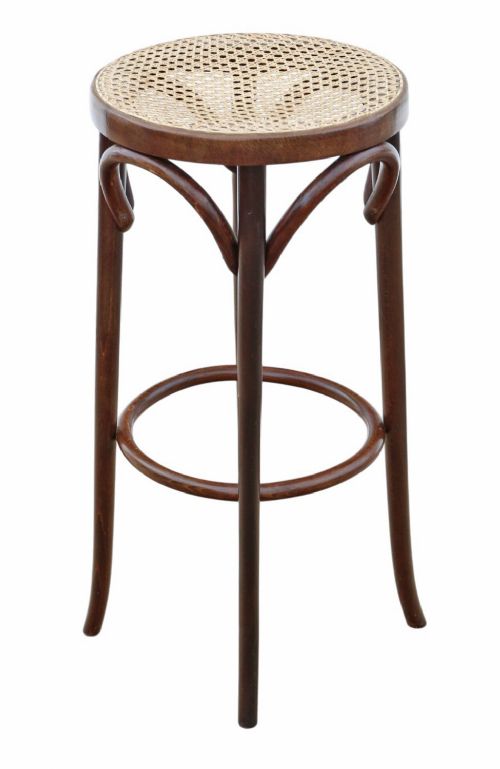
European bistro and Vienna bentwood styles rely on heated timber forced into graceful arcs, joining parts with mechanical fixings or traditional adhesives. Vernacular pieces from the nineteenth century display straightforward joinery suited to farmhouses and workshops.
Kitchen Island Stool Retail Price Guide 2026
Typical asking prices for kitchen island stool among the pieces listed under this phrase on Sellingantiques today, from the lower quarter to the upper quarter. They describe what is for sale here now, not the wider market.
Current listings feature items in beech, oak, pine, elm, timber, solid pine, cane, and steel across the nineteenth and early twentieth centuries.
Judging the quality of these seats
Quality in a kitchen island stool rests on the integrity of its frame and the balance of its legs. Pieces that retain their original timber surfaces without excessive replacement parts stand apart from heavily altered examples.
The sophistication of the turning or the precision of the metal riveting dictates the tier of the piece. Industrial metal riveted designs show finer metalworking skill, while bentwood items depend on the smooth execution of steam-curved frames.
The Kitchen Island Stool Glossary
- Bentwood
- Wood softened by steam and bent into curved structural forms. This technique created lightweight yet resilient frames popular in European bistro settings.
- Vernacular
- Everyday objects built by local craftspeople for practical utility rather than high-style design. These pieces prioritise function over ornament.
- Chopping Block
- A heavy wooden block used for food preparation, often integrated into kitchen furniture. They share functional spaces with high seating.
- Industrial
- Style and construction associated with factories, warehouses, and early twentieth-century workplaces. These items frequently combine timber with riveted steel.
Kitchen Island Stool: Frequently Asked Questions
How high are these stools?
These pieces are built with elevated frames designed specifically for taller counters and bars. They provide the necessary reach for kitchen islands and breakfast bars.
Heights vary according to the original working environment, with nineteenth-century examples often tailored to specific workshop or household requirements.
Can I mix different styles together?
Combining industrial metal frames with rustic farmhouse timber creates a balanced, collected interior. Mixing varied textures adds depth to a kitchen scheme.
Many listings include pairs or larger sets if uniformity is preferred over a gathered arrangement.
How do I date an older stool?
Dating relies on material clues, tool marks, and construction techniques visible on the frame. Riveted steel points towards the twentieth century, whilst hand-turned timber indicates nineteenth-century craftsmanship.
Wear patterns and the specific type of timber used also help establish the period of origin.
Are these seats comfortable for daily use?
Most of these items were originally made for working environments rather than prolonged lounging. Their solid timber or cane seats offer firm support.
Adding cushions can soften the seating surface for extended sitting at an island.