





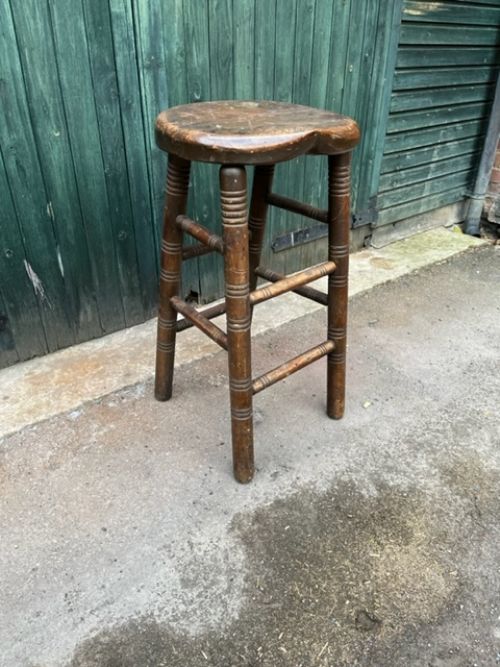


Dark Wood Bar Stool
A dark wood bar stool brings solid timber presence and height to a counter, combining robust daily utility with period character.
Dark Wood Bar Stool
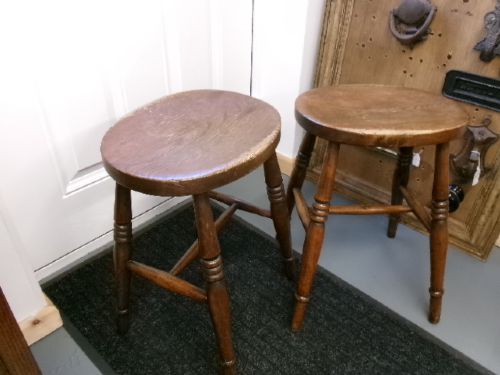
When you search for a dark wood bar stool, you encounter tall seating designed for elevation, ranging from nineteenth-century tavern and pub examples to industrial workshop pieces and bentwood designs. The forms on this page include bar stools, pub stools, clerk's stools, and workshop seats dating from the Regency era through to the 1930s. You are most likely to meet nineteenth-century timber examples featuring dished tops, rush seats, or turned supports alongside early twentieth-century bentwood and industrial variants.
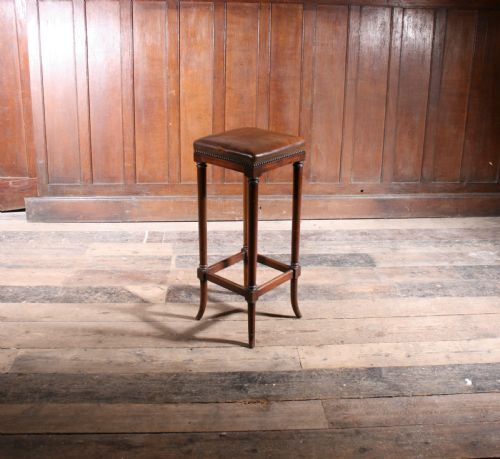
The styles span Victorian, English Country, Industrial, and European Bistro aesthetics, reflecting domestic, commercial, and working environments. Many pieces demonstrate vernacular rural traditions, utilising simple turned legs and sturdy stretchers to handle heavy use. Whether you select a low-backed, upholstered, or plain wooden top, each variant offers a distinct silhouette rooted in historical seating forms.
Construction and materials
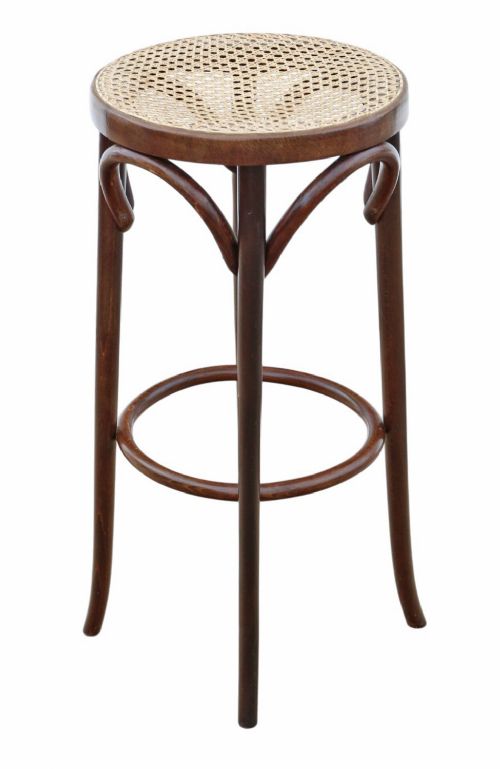
These stools are constructed primarily from timber species such as beech, mahogany, oak, sycamore, and assorted hardwoods, frequently paired with secondary elements like leather, steel, and rush. Turnery techniques shape the legs and spindles, while steam-bending forms the curved components seen in bentwood items.
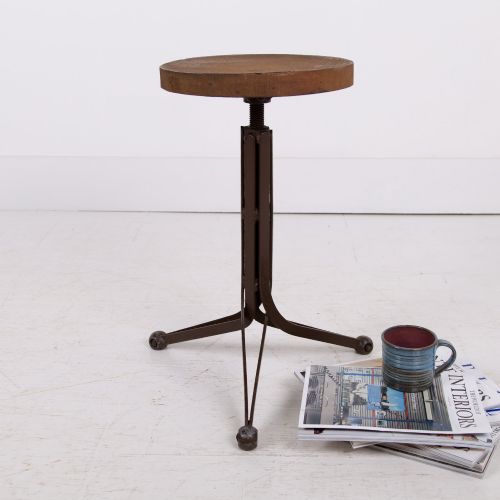
Makers utilised solid wood boards for seats, often dishing or recessing the upper surface for comfort during prolonged sitting. Metal components, including adjustable steel mechanisms and framing, appear on industrial workshop variants from the early twentieth century.
Dark Wood Bar Stool Retail Price Guide 2026
Typical asking prices for dark wood bar stool among the pieces listed under this phrase on Sellingantiques today, from the lower quarter to the upper quarter. They describe what is for sale here now, not the wider market.
Some tavern stools feature dished wooden tops carved specifically for resting comfortably through a long evening of ale.
Assessing quality and proportion
Quality in these high stools rests upon the integrity of the timber, the tightness of the joints, and the balance of the overall height. Dished wooden seats shaped from a single solid board display superior craftsmanship compared to multi-piece alternatives.
The stability of the foot rails and stretchers dictates daily durability, especially on tall nineteenth-century vernacular and tavern forms. Fine joinery and refined turning on legs and spindles separate standard utility pieces from more carefully articulated workshop and domestic seating.
The Dark Wood Bar Stool Glossary
- Dished top
- A seat surface carved into a shallow concave depression to fit the body. This technique provides comfort on plain wooden stools without requiring upholstery.
- Bentwood
- Wood softened by steam and bent into curved structural forms. This process defines the fluid frames of bistro and early twentieth-century high seating.
- Rush seat
- Woven seating material made from dried marsh plants. It creates a textured, supportive surface traditionally used in vernacular country chairs and stools.
- Turned
- Shaped on a lathe by rotating the timber against cutting tools. This method creates cylindrical, tapered, or decorative legs and stretchers.
- Clerk's stool
- A tall seating form historically used by writers and bookkeeping staff at high desks. They feature elevated heights and sturdy foot rests.
Dark Wood Bar Stool: Frequently Asked Questions
What periods do these stools come from?
The pieces span from the Regency period and the nineteenth century through to the 1920s and 1930s. You will find Victorian country examples alongside early twentieth-century industrial workshop designs.
This chronological range covers traditional turned wood tavern seating as well as later steel-framed adjustable stools.
Were these originally used at bars?
Many were used in pubs, taverns, and commercial workshops rather than modern domestic home bars. Clerk's stools and workshop seating were designed for elevated desks and work benches.
Over time, these tall historical forms adapted naturally to contemporary kitchen islands and counter seating.
How do I care for antique wood stools?
Maintain the timber by keeping the pieces away from direct heat sources and sudden temperature fluctuations. Regular dusting and occasional application of appropriate wax help preserve the dry finish of old hardwood.
Avoid excessive moisture, particularly on rush seats and leather upholstered pads, to protect the natural materials.
How do I distinguish industrial from country styles?
Industrial stools incorporate steel frames, adjustable screw mechanisms, and metal brackets originating from workshops and factories. Country and vernacular pieces rely entirely on turned hardwood legs, stretcher frames, and pegged joinery.
Examining the materials and construction methods immediately clarifies whether a stool belongs to a rural or a manufacturing context.