



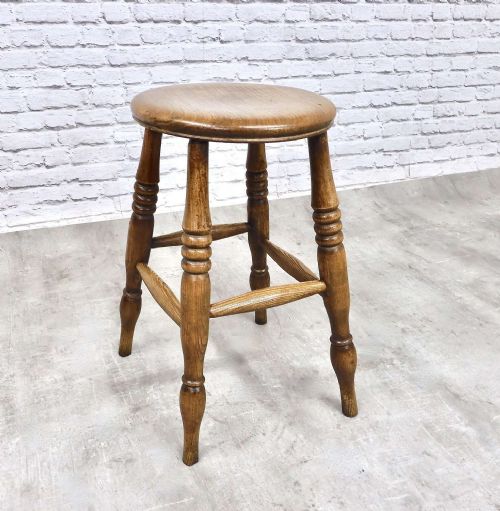

Turned Leg Pub Stool
These turned leg pub stool examples are sturdy vernacular seats built for alehouses and taverns, prized by collectors for their honest domestic utility.
Turned Leg Pub Stool
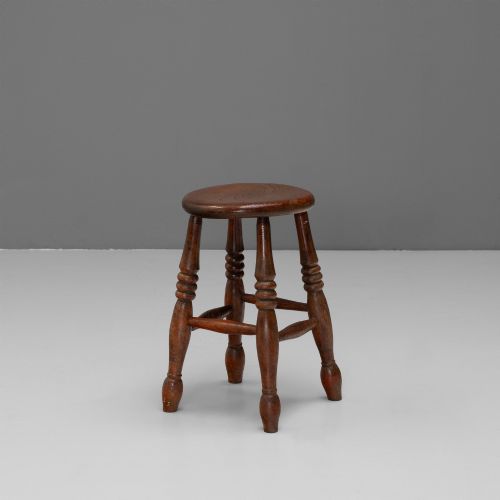
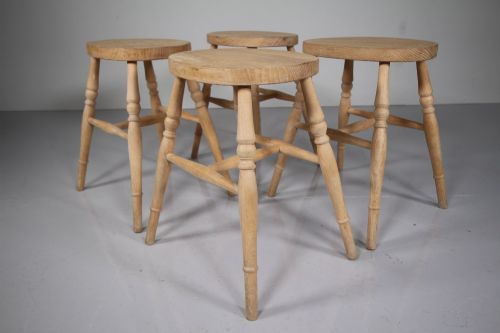
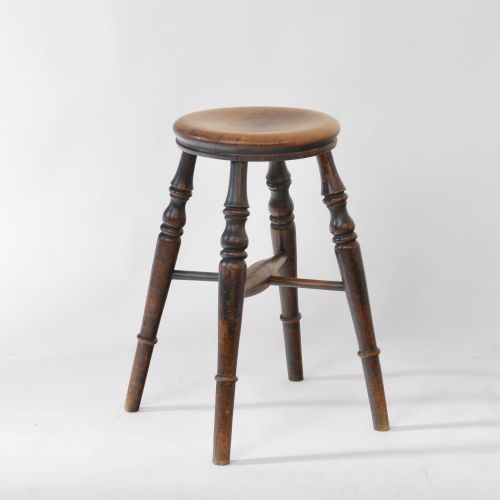
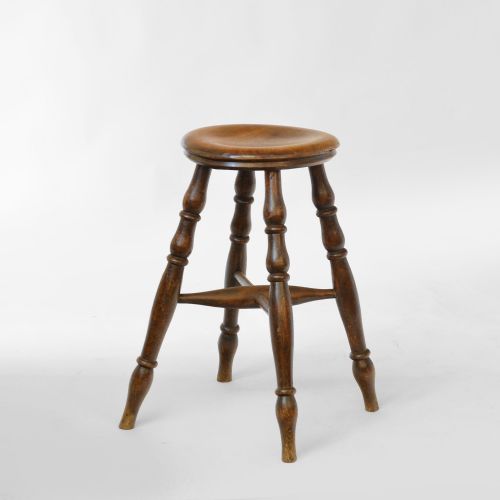
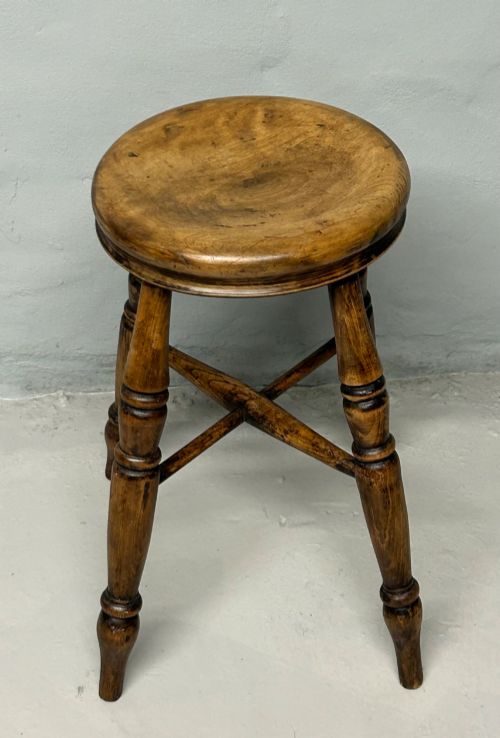
A turned leg pub stool represents the practical seating used in nineteenth-century public houses, alehouses, and taverns. Buyers searching for a turned leg pub stool encounter robust vernacular forms designed to withstand heavy daily use in commercial and domestic settings.
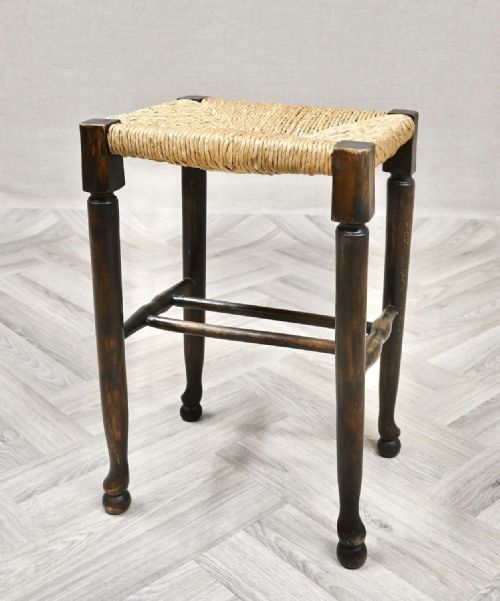
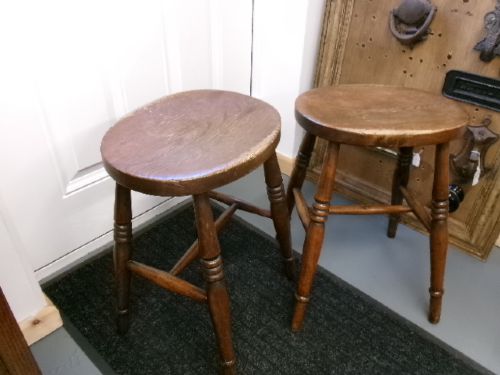
The pieces listed on this page span the nineteenth century and the Edwardian period, encompassing styles such as Victorian Country, English Country Vernacular, and Rustic Country. Forms range from low tavern stools with oval dished tops to tall bar stools and clerk seats.
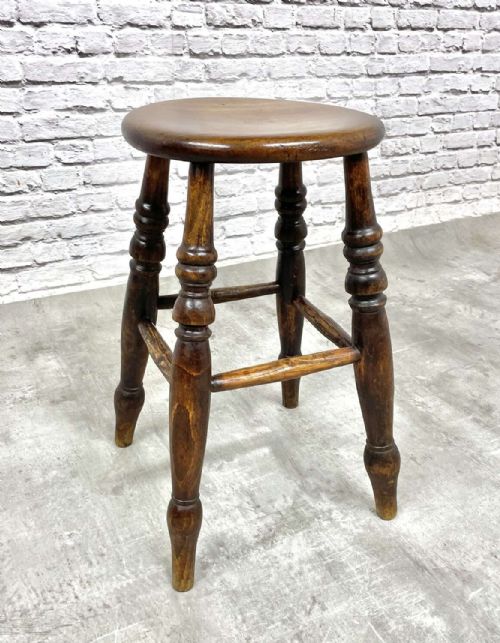
Originating largely from British workshops, these utilitarian objects include specific regional variations like the Boston stool, Windsor stool, and mill worker variants. Most examples on this page rely on traditional turning for their legs, paired with solid timber seats.
Materials and construction
These stools were constructed using a variety of native timbers, predominantly elm, beech, sycamore, oak, ash, and pine. Woodworkers selected these hard and soft woods for their local availability and structural resilience under heavy loads.
Seats were frequently shaped from single planks of elm or sycamore, often featuring a dished or oval depression carved for comfort. Legs and stretchers were shaped on a lathe with turned details, then wedged or pegged into tapered holes bored directly into the underside of the seat.
Listings feature pieces spanning the nineteenth century and the Edwardian period, utilising native woods including elm, beech, sycamore, and ash.
Assessing quality in turned seating
Quality in these vernacular pieces rests on the integrity of the timber and the balance of the turning. A superior stool displays well-proportioned turned legs that complement the thickness and figure of the wooden seat, rather than appearing clumsy or overly thin.
The connection between the legs and the seat dictates structural survival. Finer examples retain tight joints and original wedging without excessive replacement timber, showing the hand of a skilled country joiner who understood how wood moves over generations.
The Turned Leg Pub Stool Glossary
- Vernacular
- Everyday objects made by local tradesmen rather than high-style cabinetmakers. These pieces reflect regional traditions and practical utility.
- Dished top
- A seat surface hollowed out into a shallow concave depression. This shaping provides ergonomic comfort for the sitter.
- Windsor stool
- A seat built using Windsor chair construction methods, where legs and spindles are fitted directly into a solid wooden seat.
- Stretcher
- A horizontal wooden rod connecting the legs of a stool for added stability. Stretchers often double as footrests on taller bar seating.
Turned Leg Pub Stool: Frequently Asked Questions
What is a turned leg pub stool?
A turned leg pub stool is a historic seating piece featuring lathe-turned wooden legs and a solid timber top, originally used in nineteenth-century taverns and alehouses.
These functional objects were built for endurance, serving patrons at counters and communal tables across Britain.
How were these stools used?
They served as portable or fixed seating for customers in public houses, taprooms, and rural workplaces like mills and clerks' offices.
Their compact footprint allowed them to be tucked easily beneath tables or counters when not in use.
How do I date an antique pub stool?
Dating relies on timber characteristics, tool marks, wear patterns, and traditional turning styles associated with the nineteenth century and Edwardian eras.
Examining the construction methods underneath the seat often reveals the age and regional origin of the piece.
How do I live with antique pub stools?
These versatile pieces function well as extra seating around a kitchen island, as bedside tables, or as standalone display surfaces.
Their robust construction means they easily accommodate daily domestic use while adding rustic character to modern interiors.