
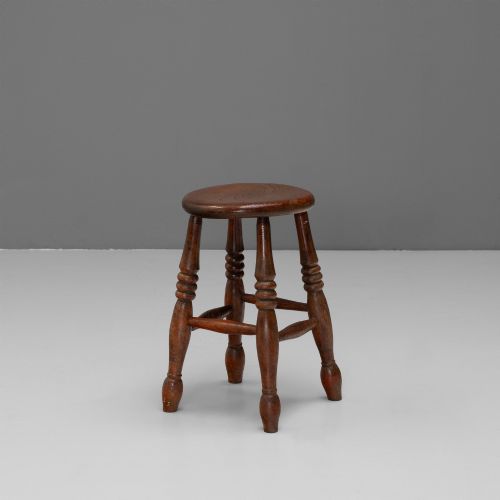
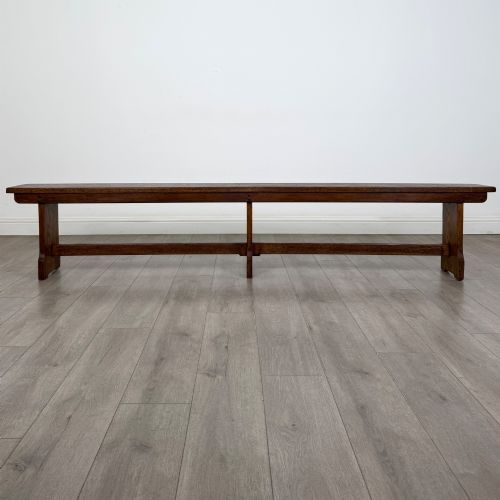
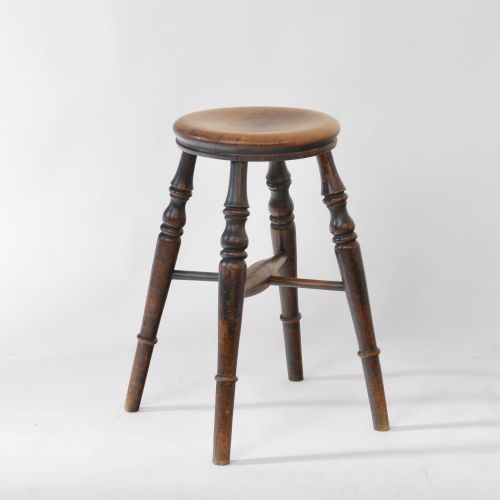
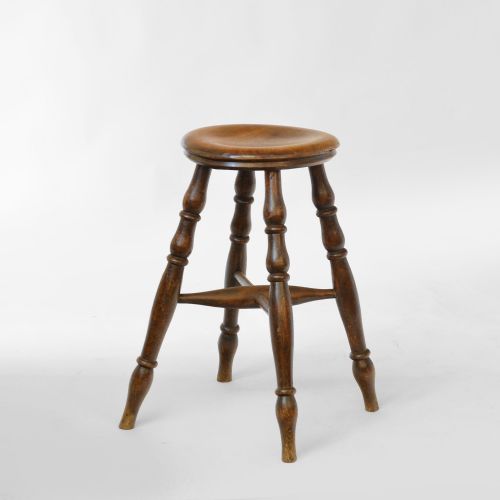



Wooden Tavern Stool
A wooden tavern stool is a heavy, honest seat built to withstand generations of public house use.
Wooden Tavern Stool
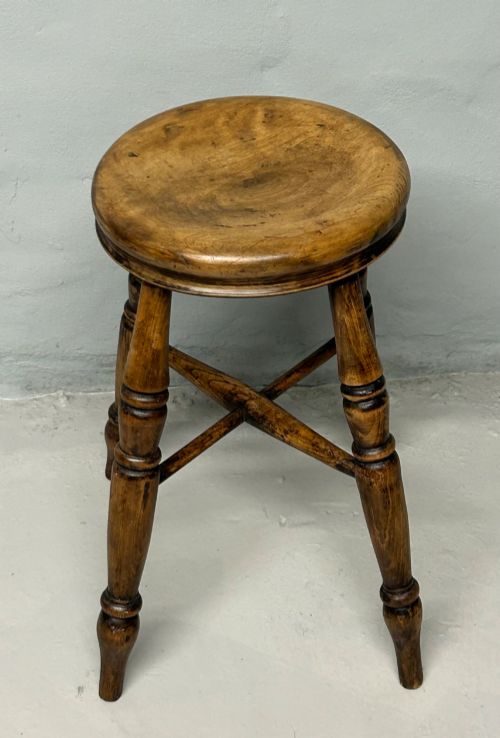
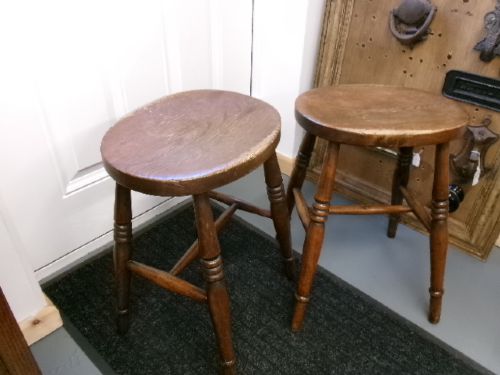
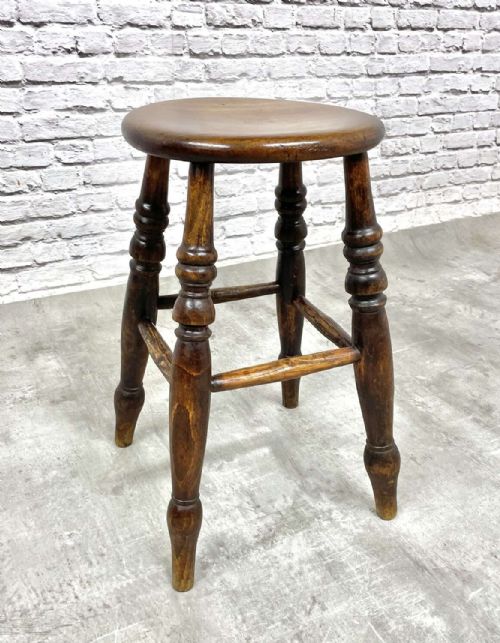
When you search for a wooden tavern stool, you encounter robust seating shaped by utilitarian purpose rather than formal design. The listings on this page span the eighteenth, nineteenth and Victorian centuries, taking the form of low pub stools, bar stools and country stools with simple wooden tops.
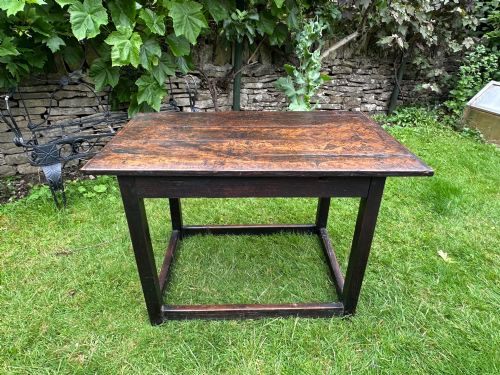
Most pieces show vernacular English country construction, often featuring turned or stick legs wedged firmly into solid timber seats. Alongside standard single seats, the selection includes long benches, oval dished top pairs and occasional related items like tavern chairs and plank top tables.
Origins range from plain domestic workshops to bustling alehouses, uniting disparate utilitarian forms under a shared history of daily service. A buyer seeking a wooden tavern stool finds pieces designed for longevity, marked by the honest wear of decades in trade.
Construction and timber
Maker's hands relied on domestic hardwoods selected for specific structural roles within each stool. Seats typically utilise solid planks of sycamore, elm or oak, chosen to resist splitting under constant weight and movement.
Underframes employ turned or cleft beech, ash and oak for legs and stretchers, joined using traditional pegged or wedged mortise and tenon methods. This combination of dense timbers creates a rigid skeleton capable of enduring heavy daily loads in public houses.
A few stubborn tavern stools still bear the faint circular stain of a long-vanished nineteenth-century pewter pint pot.
Judging quality and character
Quality in a wooden tavern stool rests upon the depth of the original timber patina and the integrity of the joinery. Superior examples retain their initial stability without excessive structural replacement, showing surface marks earned through decades of genuine use.
The choice of seat wood and the execution of the leg turnings dictate the visual weight of the piece. Dished tops shaped smoothly from a single thick board demonstrate a higher standard of country joinery than flat, plain-sawn replacements.
The Wooden Tavern Stool Glossary
- Vernacular
- Unpretentious furniture made by local craftsmen following regional traditions rather than metropolitan pattern books. These objects prioritise practical utility over decorative display.
- Dished top
- A seat surface hollowed out into a shallow concave bowl shape for seating comfort. This shaping is hand-carved directly into the solid timber plank.
- Stretchers
- Horizontal wooden rods connecting the legs of a stool to provide structural rigidity. They often double as footrests on taller bar seating.
- Mortise and tenon
- A joint formed by inserting a shaped projection into a corresponding cavity. Wooden pegs commonly secure this connection in country furniture.
- Patina
- The surface sheen and colour developed by wood over long periods through handling, polishing and ageing. This gradual change reveals the history of the material.
Wooden Tavern Stool: Frequently Asked Questions
What defines a tavern stool?
A tavern stool is a utilitarian seat constructed from solid hardwoods like elm, oak or sycamore for commercial use in public houses.
These pieces feature heavy timber seats and sturdy underframes built to withstand constant wear in busy social spaces.
How do I date an old stool?
Dating relies on observing tool marks, timber shrinkage, construction methods and the specific turnings of the legs.
Eighteenth-century examples often display simpler hand-planed surfaces, while nineteenth-century pieces frequently show machine-assisted preparation alongside traditional joinery.
Where were these stools used?
They stood around drinking tables and counters in nineteenth-century inns, alehouses and rural taverns.
Their compact footprints allowed them to tuck neatly beneath counters while providing stable seating for patrons.
Are these stools comfortable?
Many examples feature dished tops carved into the solid wood to accommodate the body during extended periods of sitting.
While lacking upholstery, the ergonomic shaping of the timber provides surprising support.
How should I care for the wood?
Maintain the dry finish by applying traditional beeswax sparingly and buffing gently with a soft cloth.
Avoid placing wooden seating near direct heat sources that can dry out and split historical timbers.