

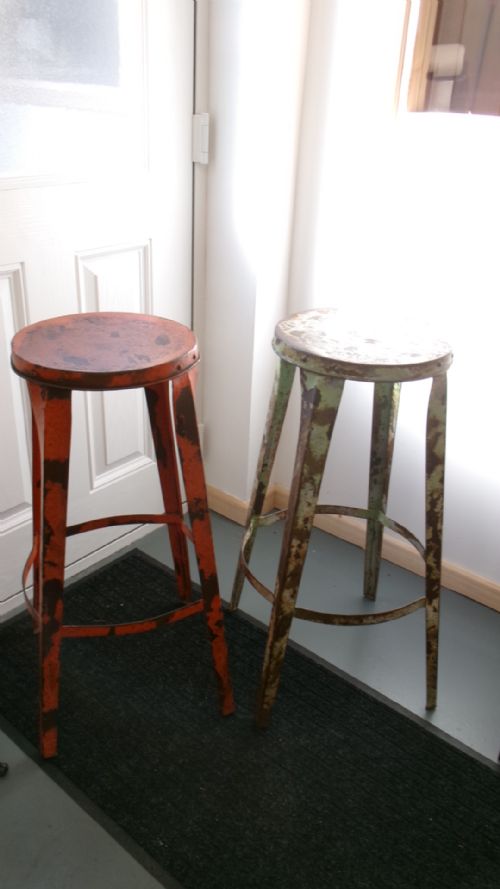


Rustic High Stool
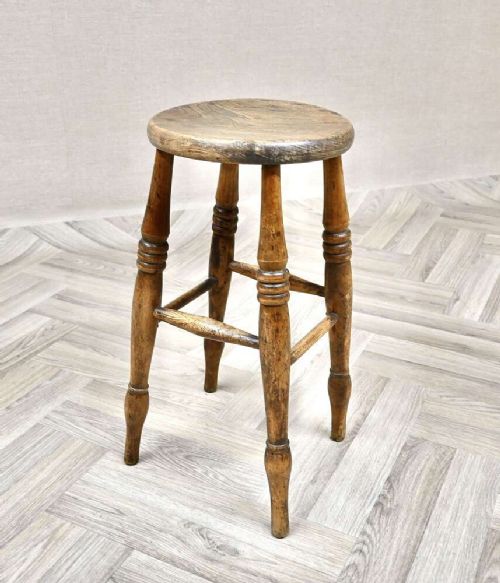
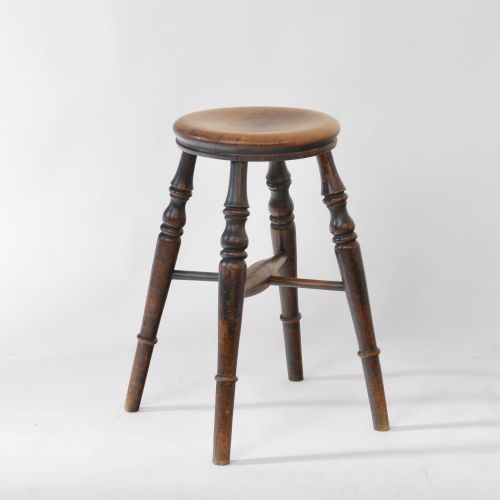
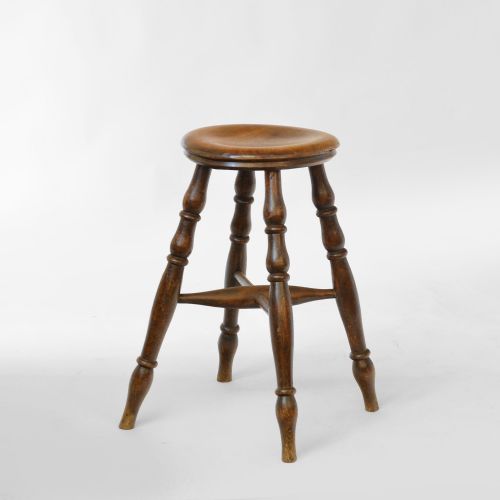
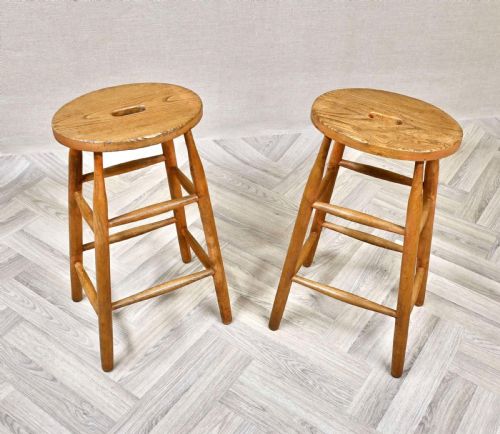
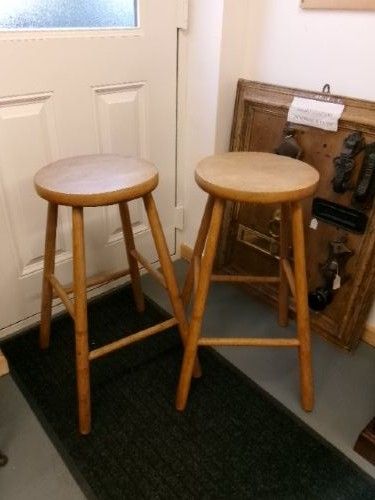
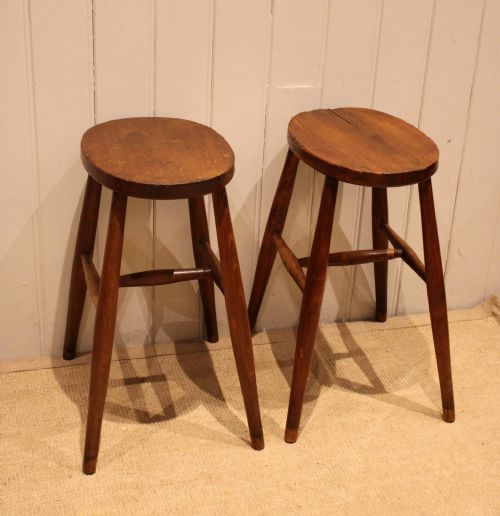
These rustic high stool examples offer honest utility, combining sturdy timber construction with elevated seating suited for period kitchens, bars and workspaces.
Rustic High Stool
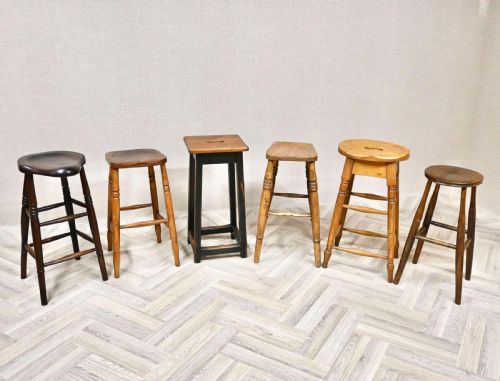
A rustic high stool brings unpretentious height to domestic and commercial interiors, taking forms such as clerk's stools, tavern seating, bar stools and laboratory benches. When searching for a rustic high stool, buyers encounter utilitarian seating created for work rather than display, spanning the nineteenth century through the early decades of the twentieth century.
The most common examples on this page are nineteenth-century tavern and clerk's stools, alongside industrial metal-riveted bar stools and sturdy elm-topped kitchen variants. These pieces originate from domestic workshops and trade environments, reflecting the practical needs of past workplaces.
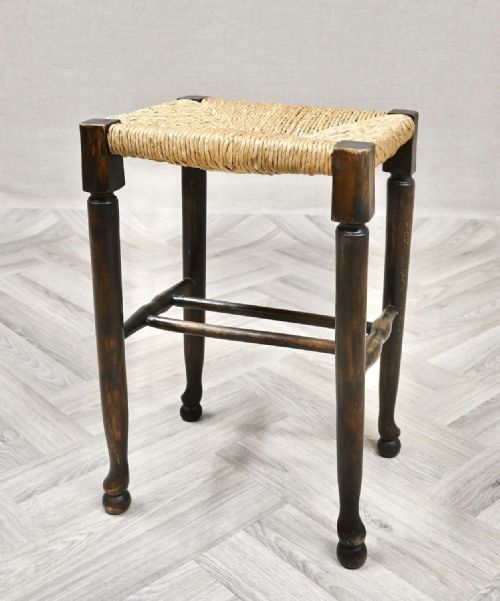
Forms range from simple round tops supported by turned legs to ladderback high chairs featuring rush seating and structural stretchers. Each item demonstrates the straightforward construction methods characteristic of country vernacular and industrial furniture design.
Distinctions in quality and execution
Quality in a rustic high stool rests upon the selection of timber and the integrity of the joinery rather than ornate decoration. Superior examples employ dense hardwoods like wild elm or sycamore for the seat, combined with well-turned legs that remain firmly seated in the base.
Construction details such as wedged tenon joints and sturdy underframe stretchers separate robust everyday furniture from lighter utility pieces. The natural ageing of the wood and the retention of an honest working surface define the character of the better pieces.
The listings span from the nineteenth century through to 1940, incorporating materials such as elm, beech, oak, pine, sycamore and rush.
The Rustic High Stool Glossary
- Stretchers
- Horizontal wooden rods connecting the legs of a stool to provide structural stability and footrests. They are essential for weight distribution in tall seating.
- Rush Seat
- A seating surface woven from dried marsh rushes, providing a resilient and flexible platform. This technique appears frequently on country vernacular chairs and stools.
- Vernacular
- Furniture made by local craftsmen for everyday use, following regional traditions rather than high-style academic designs. These pieces prioritise function over fashion.
- Turned
- Wood shaped on a lathe by rotating it against chisels to create symmetrical legs, spindles and stretchers. This process defines the profile of nineteenth-century seating.
- Clerk's Stool
- A tall utility stool designed for standing or high desks in offices and counting houses. They often feature simple circular wooden tops and robust bracing.
Rustic High Stool: Frequently Asked Questions
How tall are these high stools?
Heights vary across the selection to accommodate different bar counters, workshop benches and high desks from various periods.
Most nineteenth-century and twentieth-century examples adhere to standard working heights of the era, so checking specific dimensions ensures a proper fit for your space.
Can I use them at a kitchen island?
These historical utility stools integrate well into modern kitchen islands, bringing authentic character and practical elevated seating to domestic settings.
Their robust timber construction suits daily use around contemporary food preparation and dining areas.
Are rush seats durable for daily seating?
Traditional rush seating is surprisingly resilient, woven tightly to support regular weight while offering a slightly flexible surface.
Careful placement away from excessive moisture preserves the natural fibres over years of domestic use.
How do I identify a nineteenth-century piece?
Nineteenth-century examples display characteristic timber ageing, hand-turned joinery marks, and specific vernacular construction methods unique to regional workshops.
Comparing the turning profiles and wood species helps distinguish earlier country pieces from later twentieth-century reproductions.