
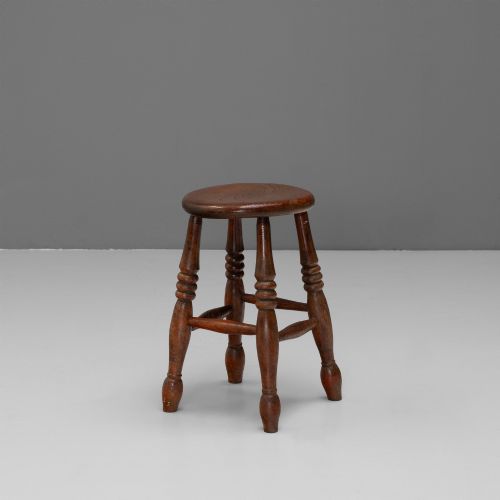
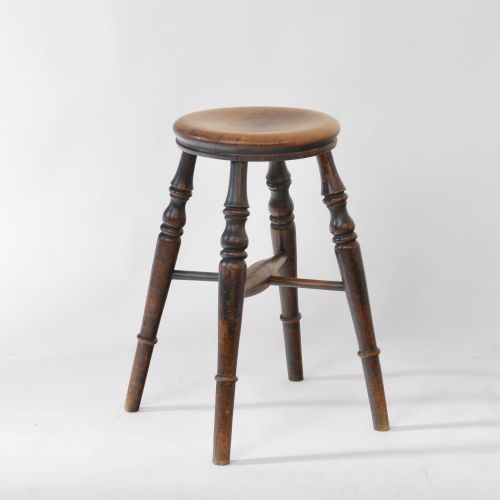
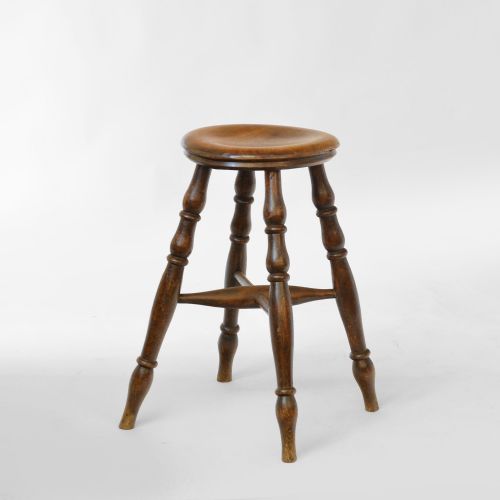
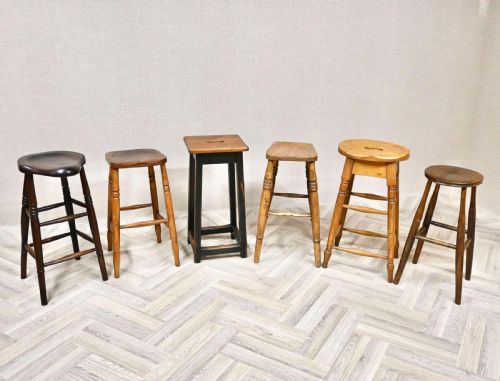




Victorian Pub Stool
These robust victorian pub stool examples are practical seating designed for heavy commercial use, offering rustic charm and solid timber construction for the modern interior.
Victorian Pub Stool
When you search for a victorian pub stool, you are looking at functional nineteenth-century seating designed for commercial and domestic taverns, alehouses, and workspaces. The examples found here span the nineteenth century, including specific dates like 1890 and 1910, reflecting the utilitarian needs of public houses and clerk's offices.
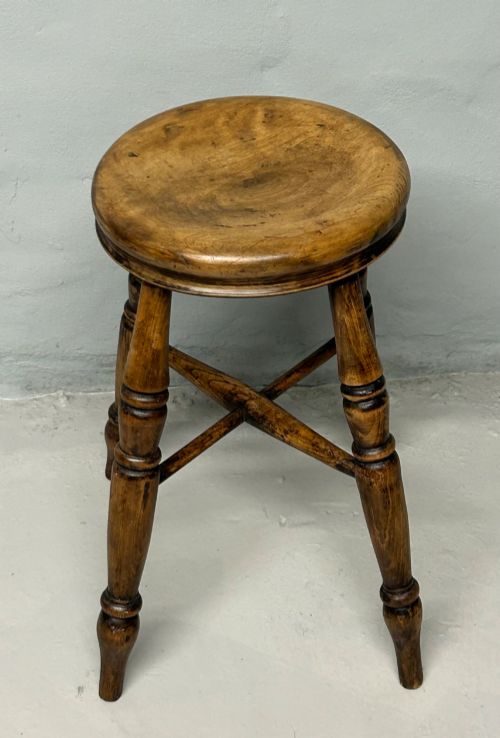
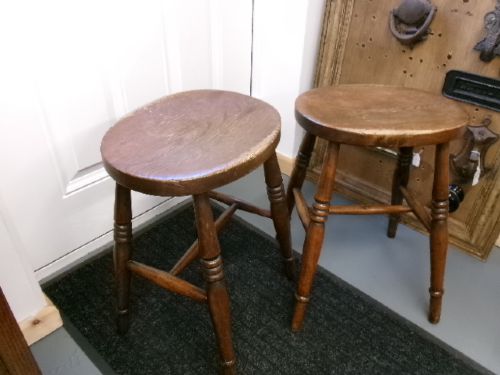
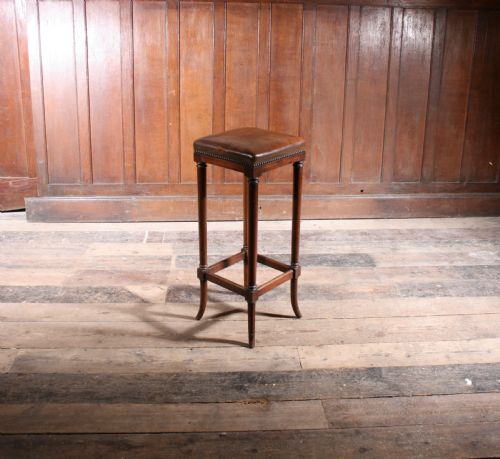
You are most likely to meet sturdy wooden forms such as tavern stools with oval dished tops, bar stools, and clerk's stools. These pieces often overlap with styles like Victorian country, rustic farmhouse, and vernacular industrial seating.
Makers produced these functional items to withstand heavy daily use in busy environments. Consequently, survivors often show the characteristic wear of nineteenth-century trade furniture while retaining their original structural integrity.
How they were made
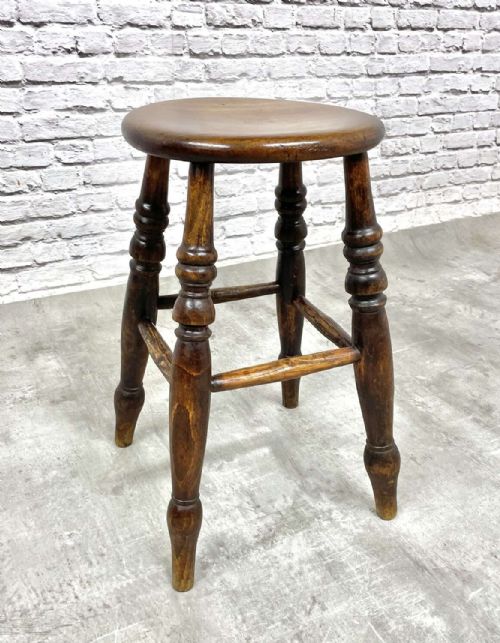
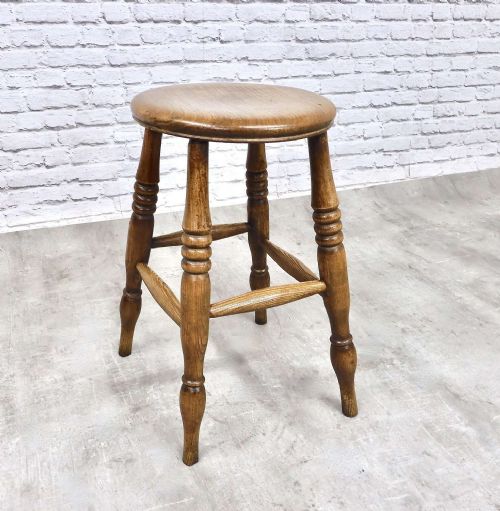
The construction of a victorian pub stool relies heavily on traditional timber selection, utilising domestic hardwoods such as elm, beech, oak, sycamore, pine, ash, and birchwood. Craftsmen turned the legs and stretchers on lathes to ensure stability, pairing these components with solid timber seats.
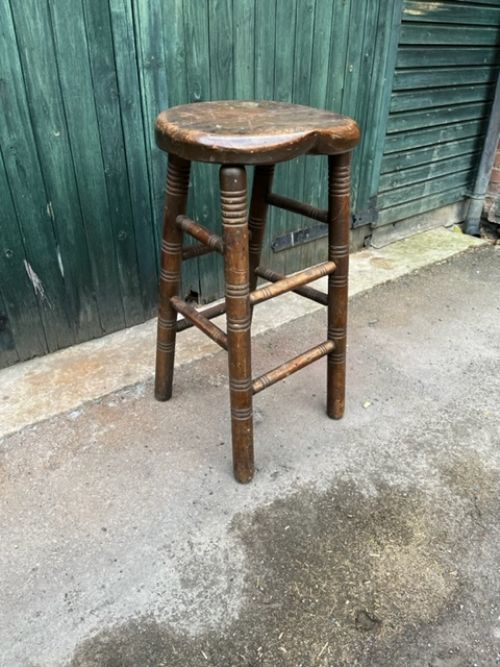
Many examples feature oval dished tops that were hollowed out using adzes or specialised scutches to provide comfort for patrons. Turnery techniques and pegged joints held the frames together firmly without the need for complex metal fixings.
What varies in quality
The distinction between standard utility seating and a finer victorian pub stool lies in the choice of timber and the sophistication of the turnery. Seats carved from richly grained sycamore or figured elm command more attention than basic pine or softwood variants.
Proportion and execution also dictate the tier of a piece, particularly when comparing heavy bar stools to lighter clerk's chairs. Higher quality is evident in balanced turned legs, tight joinery, and the depth of the dished seat carving.
The Victorian Pub Stool Glossary
- Dished top
- A seat carved with a shallow depression to fit the human body. This shaping provided rudimentary comfort on wooden tavern seating without the need for upholstery.
- Turnery
- Wood shaped by being rotated on a lathe while cutting tools are applied. This method produced the cylindrical legs and stretchers typical of nineteenth-century seating.
- Vernacular furniture
- Items made by local craftsmen for everyday use rather than following high-style academic designs. These pieces prioritize function and local material availability above all else.
- Stretcher
- A horizontal wooden rod connecting the legs of a stool to provide structural rigidity. On pub seating, these often double as footrests for seated patrons.
Victorian Pub Stool: Frequently Asked Questions
What is a victorian pub stool?
A victorian pub stool is a sturdy wooden seat made during the nineteenth century for use in public houses, alehouses, and taverns. These pieces were built for durability in commercial settings.
They typically feature turned legs and solid wooden tops designed to withstand heavy daily traffic. Many share similarities with vernacular clerk's and bar stools from the same era.
How were tavern stools used?
Tavern stools served patrons seated at high counters or around crowded taproom tables. Their compact footprints allowed staff to move easily between drinkers in busy Victorian pubs.
Some taller variants were also utilised by clerks and workers in industrial settings. Footrests positioned on the stretchers helped users remain comfortable during long periods.
What woods are most common?
Makers relied heavily on durable domestic hardwoods such as beech, elm, sycamore, oak, and ash. These timbers resisted the heavy knocks and spills typical of a nineteenth-century alehouse.
Softwoods like pine appear less frequently, usually reserved for secondary components or utilitarian workshop furniture. Sycamore and elm were particularly favoured for carving into dished seats.
How to date these stools?
Dating relies on observing construction methods, tool marks, and timber wear rather than relying on maker's marks, which are uncommon on utility furniture. Nineteenth-century pieces display hand-turned components and traditional joinery.
Specific stylistic indicators like Boston patterns or clerk's configurations also help narrow down the period of manufacture. Comparing the patina and wear patterns to dated examples in the archive provides further clarity.