



Country Tavern Stool
A country tavern stool brings honest domestic utility to a room, offering sturdy seating built for hardworking public houses and rustic interiors.
Country Tavern Stool
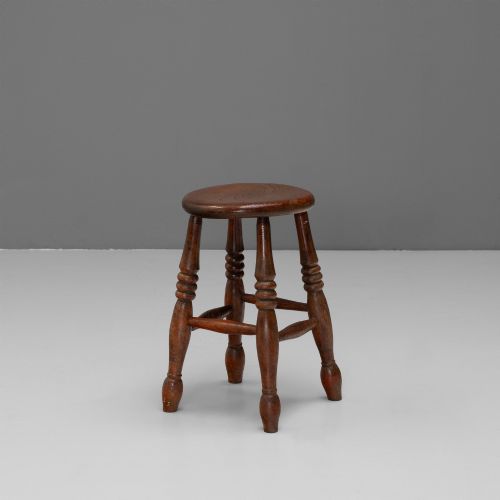
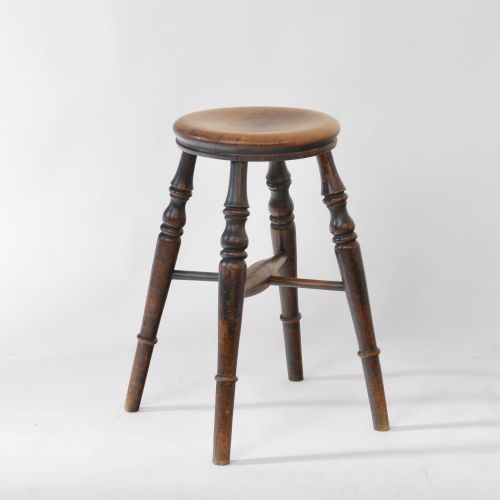
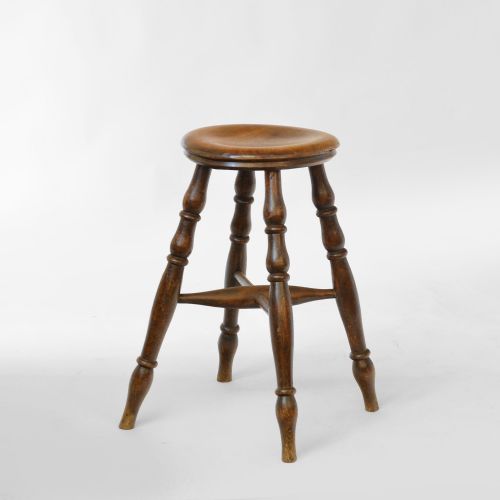
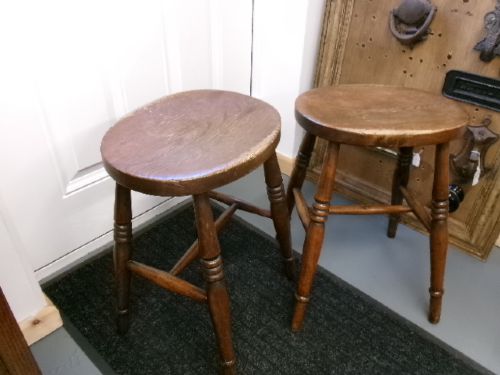
A country tavern stool represents the utilitarian seating found in public houses, alehouses, and rural domestic settings across Britain during the Georgian and Victorian eras. These items served a purely practical function in places where durability mattered far more than ornamentation.
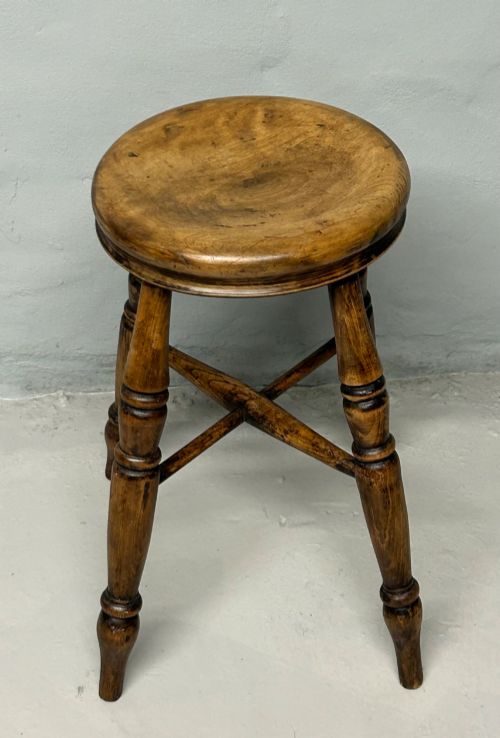
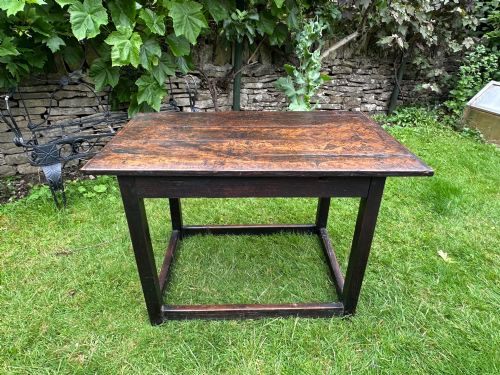
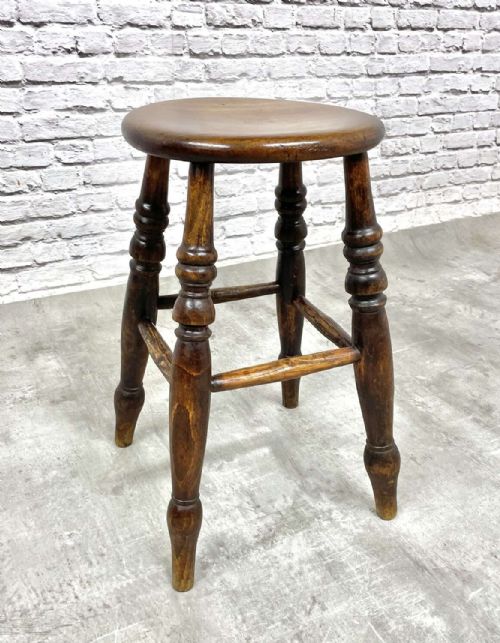
The versions most frequently met on this page date from the nineteenth century, taking the form of three-legged or four-legged seats with circular, oval disished, or plank tops. Alongside traditional stools, the selection includes related vernacular forms such as bar stools, side tables, cricket tables, and low tables.
Originating within English country traditions, these pieces embody regional craftsmanship designed to withstand heavy daily use. They appear in styles ranging from Georgian country vernacular to Victorian utility, reflecting the straightforward needs of rural establishments.
How they were made
Makers utilised native British hardwoods suited to heavy use, selecting oak, elm, ash, sycamore, beech, and pollard oak for their strength and resilience. Tops were frequently fashioned from single planks or disished timbers to provide a comfortable seat.
Construction methods relied on traditional joinery techniques, embedding legs directly into solid wooden seats using wedged tenons or through-wedging. This straightforward approach produced stable three-legged and four-legged structures capable of standing firm on uneven tavern floors.
What varies in quality
Quality rests in the choice of timber and the natural character accumulated through decades of use in public houses and country houses. Selecting dense hardwoods like pollard oak or well-figured elm elevates an ordinary utility object into a more substantial piece.
Proportion and the handling of the wood define the upper end of the range, visible in smoothly disished oval tops and well-turned legs. Lesser examples show simpler lines and utilitarian repairs that speak of hard service rather than refined design.
The Country Tavern Stool Glossary
- Dished top
- A wooden seat surface hollowed out into a shallow concave shape. This shaping provided comfort for the sitter without requiring upholstery.
- Vernacular
- Objects made by local craftsmen following traditional regional patterns rather than high-style metropolitan designs. These pieces solved everyday domestic and commercial problems directly.
- Cricket table
- A small three-legged table traditionally used in domestic settings. The three-legged construction ensured stability on uneven floors.
- Pollard oak
- Oak timber taken from a tree that was cut at a height above livestock reach to encourage dense, highly figured branch growth. This wood produces striking patterns across furniture tops.
Country Tavern Stool: Frequently Asked Questions
Where were tavern stools used?
These pieces sat beside counters and communal tables in country pubs, alehouses, and rural inns. They provided functional seating for patrons drinking or resting.
They also found places in domestic settings, serving as auxiliary seats or low stands in farmhouse kitchens.
How do I date a country stool?
Dating relies on observing tool marks, timber selection, and construction methods characteristic of Georgian or Victorian rural workshops. Eighteenth-century pieces often display thick oak planking, while nineteenth-century examples frequently utilise beech, elm, or sycamore.
Form also offers clues, as vernacular styles shifted from heavier Georgian proportions toward slimmer Victorian utility designs.
Are three-legged stools stable?
Three-legged stools remain entirely stable on uneven floors because three points establish a plane automatically. This practical engineering made them ideal for stone-flagged tavern floors.
Makers angled the legs outward to widen the footprint and prevent tipping during heavy use.
How do I live with a tavern stool?
These compact pieces fit easily into modern rooms as spare seating, bedside stands, or display surfaces for plants and objects. Their modest footprint allows them to tuck beneath surfaces when not in use.
Maintaining the wood requires simple dusting and occasional waxing to preserve the aged surface character.