


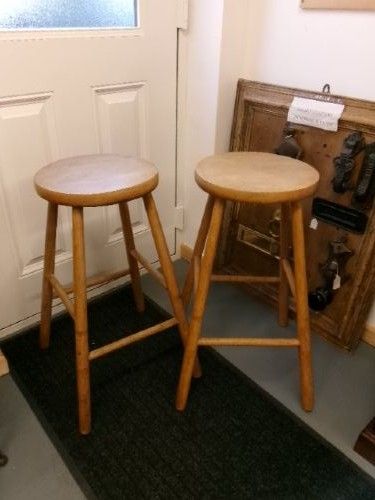
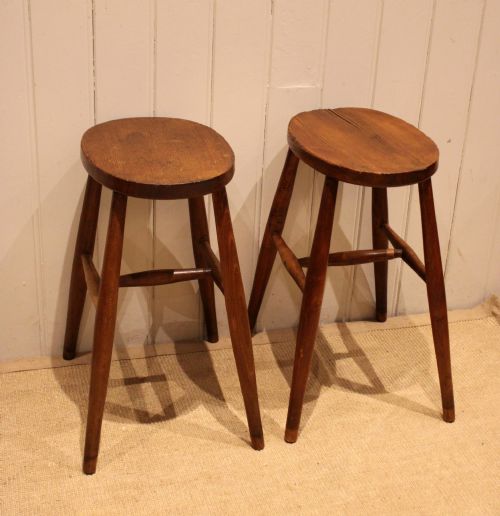


Tall Country Stool
These tall country stool pieces are honest everyday seats built for pubs, dairies, and kitchens, offering practical height and rural charm.
Tall Country Stool
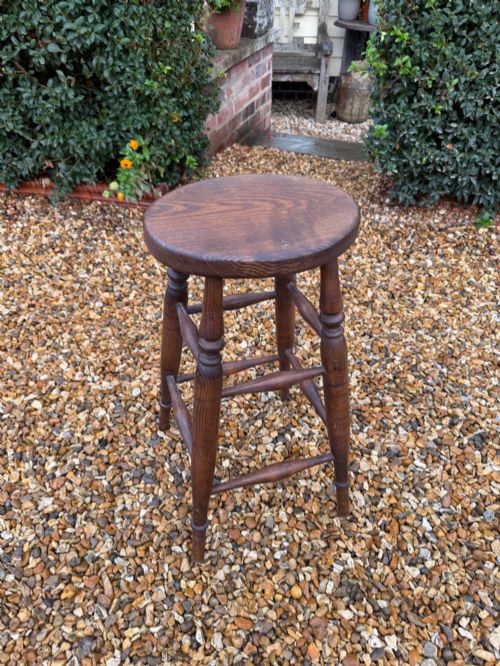
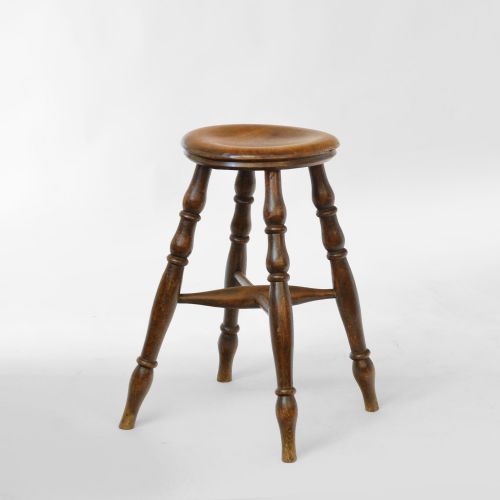
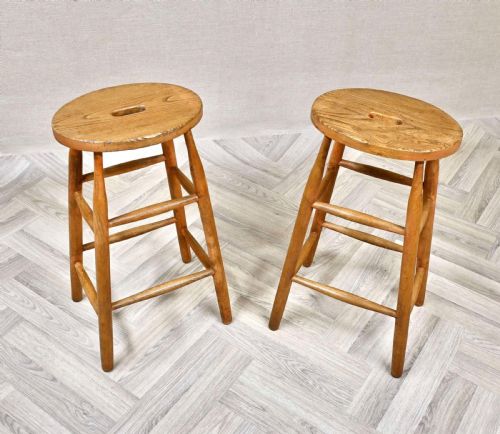
A tall country stool serves as a high seat rooted in domestic and commercial rural life, often found in taverns, dairies, and farm kitchens. Buyers seeking a tall country stool will mostly encounter nineteenth-century examples shaped by vernacular traditions.
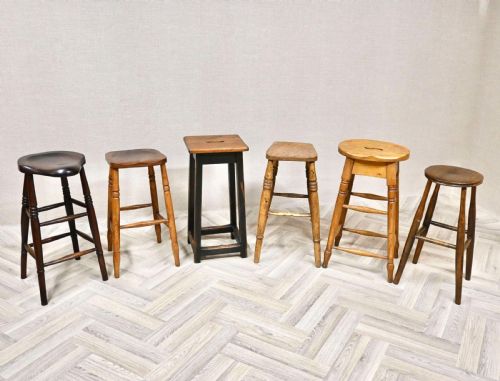
The forms span bar stools, kitchen stools, clerk chairs, and milking stands designed for elevated seating. Surviving pieces frequently show functional adaptations for daily work rather than ornamental display.
How They Were Made
Makers utilised native hardwoods such as elm, beech, sycamore, oak, and pine, selecting solid timber for durability. Elm frequently forms the shaped tops, while turned beech provides sturdy legs and stretchers.
Construction relies on traditional joinery methods like wedged tenons and turned spindles to support heavy everyday use. Some examples retain early paint finishes or rush seating applied during manufacture.
Tall Country Stool Retail Price Guide 2026
Typical asking prices for tall country stool among the pieces listed under this phrase on Sellingantiques today, from the lower quarter to the upper quarter. They describe what is for sale here now, not the wider market.
Several examples retain traces of old dairy paint, hinting at decades spent beside milking sheds and farmhouse butter churns.
What Varies in Quality
Superior examples display well-figured timber tops with rich natural grain patterns and deep patination developed through decades of handling. Poorer specimens may show unsympathetic repairs or replacement components that alter the original proportions.
The distinction also lies in the turning work of the legs and the integrity of the structural joints. Finely turned spindles and balanced footprints elevate a piece above utilitarian utility.
The Tall Country Stool Glossary
- Vernacular
- Everyday objects made by local craftspeople for practical use rather than following strict academic design rules. This approach defines much of rural furniture production.
- Elm
- A tough native hardwood known for its interlocking grain that resists splitting under heavy pressure. Makers favoured it for solid seats.
- Stretchers
- Horizontal wooden rods connecting the legs of a stool to provide lateral stability and strength. They often double as footrests.
- Turned
- Shaped on a lathe to create cylindrical or spindle legs and supports. This technique ensured uniformity and strength in production.
- Rush
- Dried marsh grasses twisted into cords for weaving seats. It provides a flexible yet resilient surface for sitting.
Tall Country Stool: Frequently Asked Questions
Are these stools comfortable to sit on?
Many feature sculpted timber tops shaped to fit the body over long periods of sitting.
They lack upholstery, relying instead on ergonomic wooden depressions for comfort.
How do I clean a wooden seat?
Dust with a dry cloth and occasionally nourish the wood with traditional beeswax.
Avoid modern chemical polishes that can damage historic surfaces.
Can these be used at modern breakfast bars?
Heights vary across nineteenth and early twentieth century examples, so measuring your counter is essential.
Many historic tall seats match standard contemporary kitchen island dimensions.
How do I identify a tavern stool?
Tavern and pub pieces often feature sturdy foot rails and heavier wear patterns from patrons.
Turned beech frames and robust elm tops are typical of these commercial environments.