






Country Wooden Pub Stool
A country wooden pub stool offers sturdy, honest seating, built to endure heavy tavern use with simple lines and solid character.
Country Wooden Pub Stool
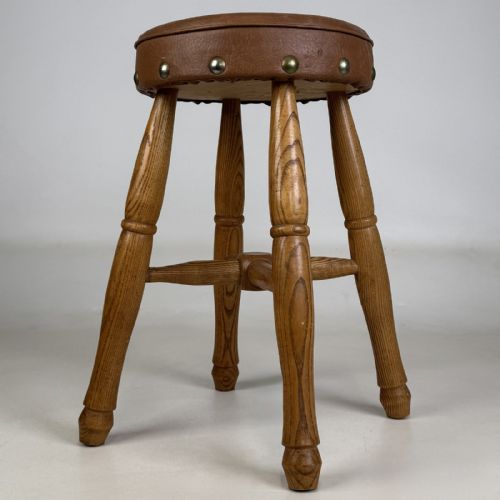
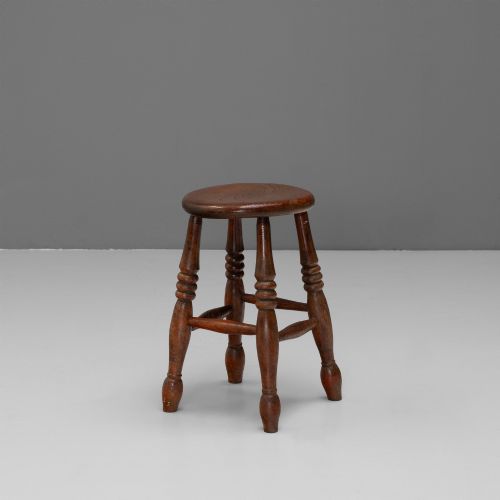
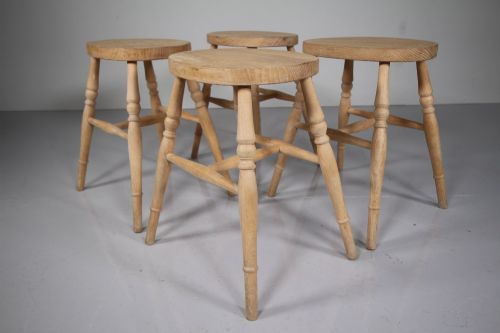
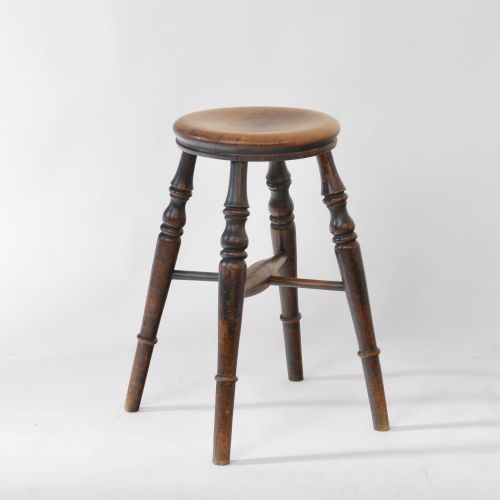
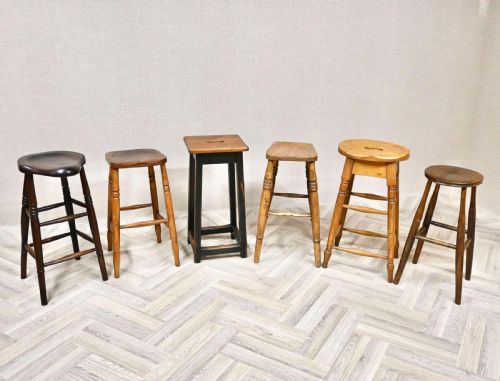
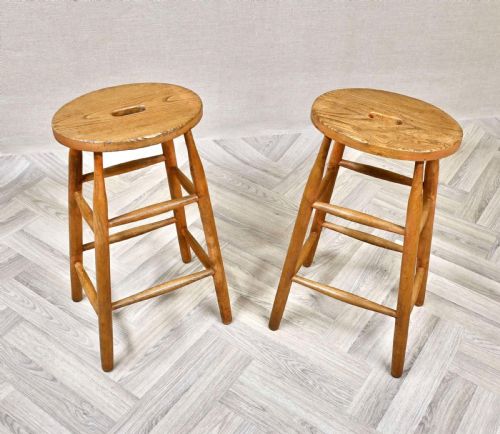
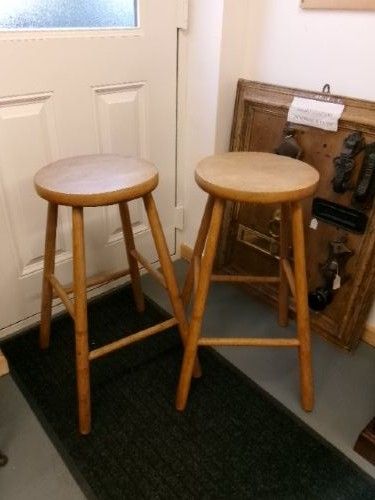
When you search for a country wooden pub stool, you find robust seating designed for taverns, alehouses, and domestic counters. The selection here brings together bar stools, tall bar stools, dining stools, and clerk's stools from the nineteenth century onward.
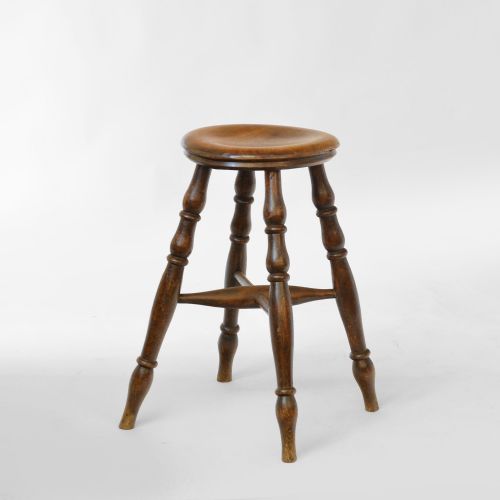
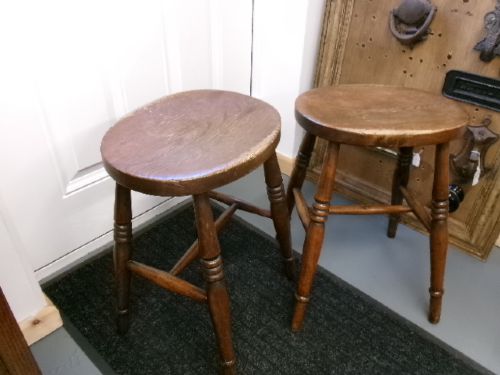
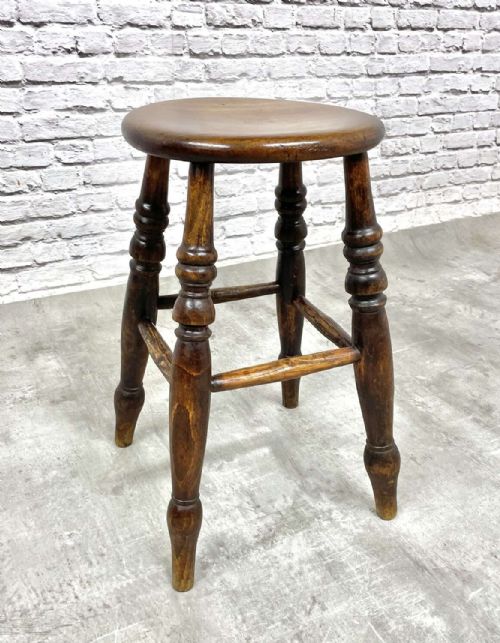
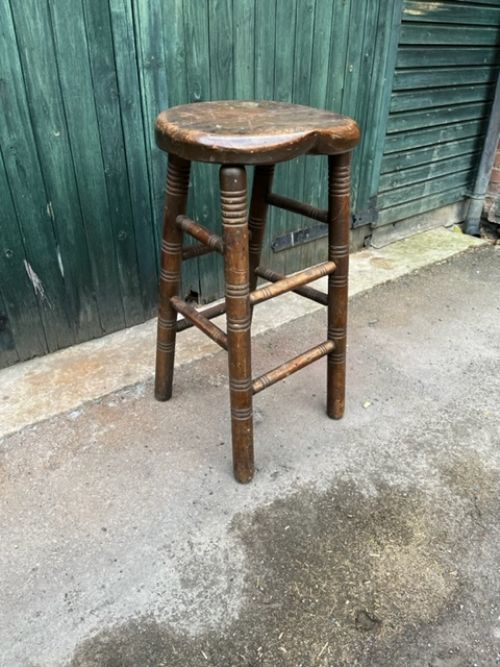
You are most likely to meet nineteenth-century examples fashioned from native hardwoods. These pieces often feature simple saddle seats or dished tops supported by turned legs and stretchers.
The styles span Victorian vernacular, rustic farmhouse, and Edwardian country traditions. These seats served working environments, resulting in honest utilitarian forms built without unnecessary ornament.
How they were made
Maker-craftsmen built these stools using solid timbers such as elm, beech, oak, ash, sycamore, and pine. Elm frequently provided the tough, interlocking grain needed for dished or saddle seats that resisted splitting under daily use.
Turned beech and ash formed the legs and stretchers, joined to the seats using traditional Windsor framing techniques. Some pieces incorporated rush seating or simple wooden tops shaped to the sitter.
Construction relied on pegged joints and solid turning rather than complex machinery. This straightforward joinery allowed local carpenters to produce durable seating for demanding tavern and alehouse settings.
Country Wooden Pub Stool Retail Price Guide 2026
Typical asking prices for country wooden pub stool among the pieces listed under this phrase on Sellingantiques today, from the lower quarter to the upper quarter. They describe what is for sale here now, not the wider market.
Tall bar stools often bear generations of boot scuffs on their stretchers, recording the restless feet of historical tavern patrons.
What varies in quality
Quality rests in the choice of timber and the depth of the seating dish. Heavy elm tops show rich figuring and wear that reveal the integrity of the original material.
The strength of the turned underframe and the tightness of the leg joints dictate structural longevity. Finer examples retain balanced proportions and crisp turnings on the stretchers, showing the maker's eye for form alongside utility.
The Country Wooden Pub Stool Glossary
- Saddle seat
- A wooden seat base carved with ergonomic hollows to resemble the shape of a saddle. This shaping provided comfort during long hours in public houses and clerk's offices.
- Dished top
- A solid wooden seat surface scooped out into a shallow depression. This technique kept sitters secure on tall stools without upholstered cushions.
- Vernacular
- Everyday objects made by regional craftsmen following local traditions rather than high-style academic designs. These pieces prioritized practical function over fashionable ornament.
- Windsor construction
- A method of framing where legs and back spindles are fitted directly into holes bored through a thick solid seat slab. It creates a rigid, resilient joint structure.
- Stretcher
- A horizontal wooden rod connecting the legs of a stool to provide lateral bracing and stability. They also served as footrests for sitters perched on tall bar stools.
Country Wooden Pub Stool: Frequently Asked Questions
What is a country wooden pub stool?
A country wooden pub stool is a tall or standard seating piece built for commercial taverns and alehouses using native timbers. They prioritize rugged construction over decorative detail.
These utilitarian seats include tavern stools, clerk's stools, and tall bar stools designed to withstand heavy daily use in public houses.
How were tavern stools used?
Tavern stools served patrons sitting at high counters, bar tables, or communal alehouse benches. Their height allowed customers to eat and drink comfortably in crowded spaces.
Some variations, such as clerk's stools, functioned in offices and counting houses where workers stood or perched at elevated desks.
What woods do makers use?
Makers relied on durable native hardwoods suited to heavy daily wear. Elm appeared frequently for solid seats because its tangled grain resisted splitting.
Legs and stretchers were typically turned from beech, ash, or oak to provide rigid structural support beneath the heavy top.
How do I date an antique stool?
Dating relies on material patination, tool marks, and construction methods. Nineteenth-century examples display hand-turned elements and deep surface wear from generations of use.
Later Edwardian and twentieth-century pieces often show more standardised turning and lighter framing while maintaining traditional rustic forms.