




Victorian Tall Bar Stool
These nineteenth-century seating pieces bring height and honest utility to any room, offering the sturdy character of a victorian tall bar stool.
Victorian Tall Bar Stool
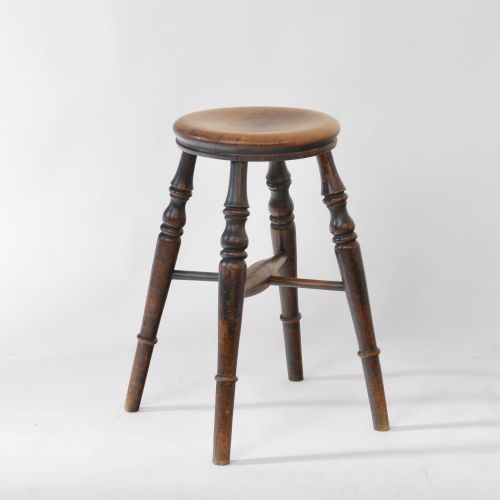
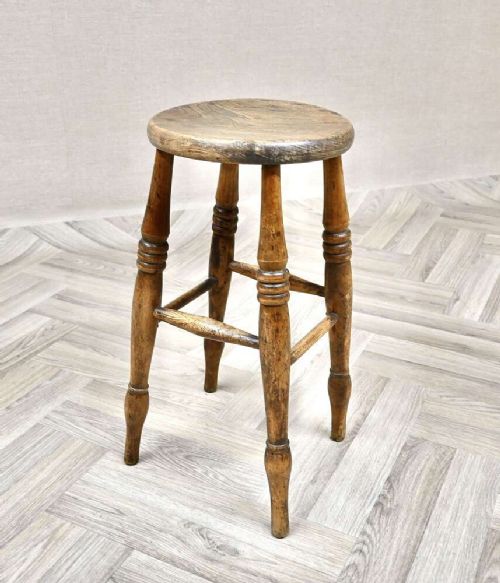
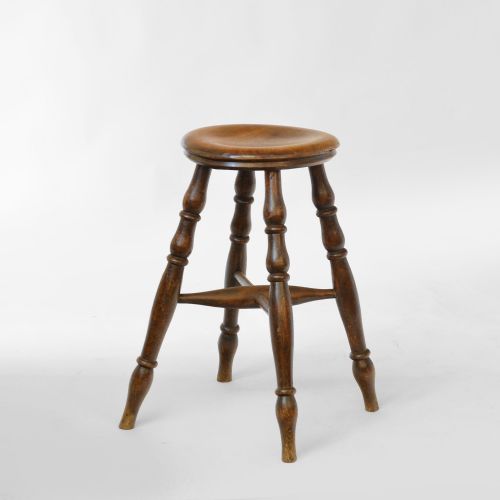
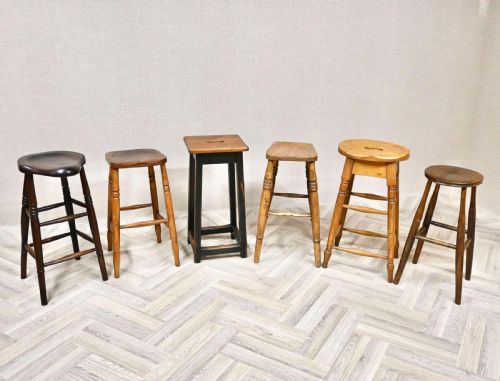
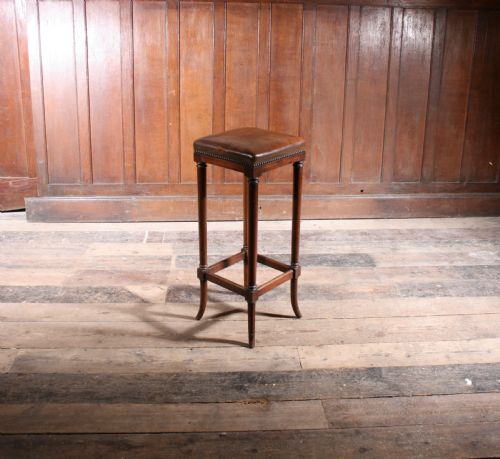
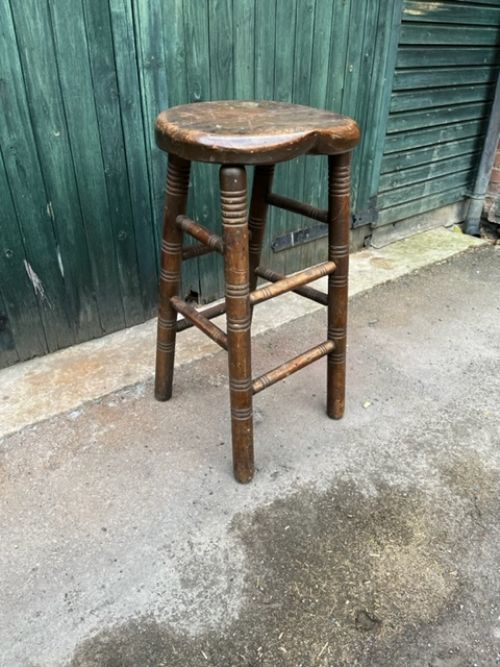
A victorian tall bar stool is a high-seated perch designed for working use in public houses, taverns, counting houses, and artist studios during the nineteenth century. These utilitarian seats include clerk stools, pub stools, and saddle seat examples built to accommodate elevated work surfaces.
The versions most frequently encountered on this page date from the nineteenth century and reflect rural vernacular and rustic farmhouse traditions. They often appear singly or occasionally in small groups, shaped for practical environments rather than formal display.
Makers shaped these tall seats for daily endurance, resulting in sturdy forms that balance narrow footprints with high centres of gravity. Their primary purpose demanded functional reliability over ornamental refinement, shaping the domestic and commercial interiors they inhabited.
How they were made
Makers relied heavily on native timbers such as elm, sycamore, beech, and pine, frequently turning legs on a lathe and securing them into solid wooden seats using traditional joinery. Elm and sycamore provided tough, resilient timber for saddle seats that resisted splitting under heavy daily use.
Certain examples incorporate leather upholstery or metal components to reinforce high frames and provide additional comfort for extended periods of sitting. Turned beech and birchwood structures utilise simple pegging and wedged tenons to maintain rigidity across tall, slender frames.
Victorian Tall Bar Stool Retail Price Guide 2026
Typical asking prices for victorian tall bar stool among the pieces listed under this phrase on Sellingantiques today, from the lower quarter to the upper quarter. They describe what is for sale here now, not the wider market.
What varies in quality
Quality in a tall seat rests upon the integrity of the timber selection and the proportional balance between height and stability. Dense native hardwoods like wild elm or figured mahogany hold carved contours and turned details far more crisply than softer utility woods.
The character of the patination and the depth of wear on the seat surface reveal the honesty of the piece's working life. Superior examples retain original timber surfaces untouched by heavy restoration, displaying a harmonious integration of turned components and seat shaping.
The Victorian Tall Bar Stool Glossary
- Saddle seat
- A wooden seat base scooped and shaped to mimic the contours of a riding saddle for ergonomic comfort. This form distributes weight evenly across the timber surface during long hours of sitting.
- Vernacular
- Objects designed by regional craftspeople for local utility rather than following metropolitan academic styles. These pieces prioritise practical function and local materials above decorative convention.
- Turned
- Wood shaped on a lathe by rotating the material against cutting tools to create cylindrical, tapered, or reeded legs and stretchers. This technique ensures uniform symmetry across structural vertical supports.
- Patina
- The surface sheen and colour depth developed through decades of handling, polishing, and natural ageing. A rich patina indicates long-term use and honest preservation of the original wood.
- Stretcher
- A horizontal wooden brace connecting the legs of a stool to provide lateral stability and rigidity. These reinforcement rails often double as footrests on elevated seating.
Victorian Tall Bar Stool: Frequently Asked Questions
What were tall stools originally used for?
These elevated seats served clerks, publicans, and artists who needed to work at high desks, bars, or easels. Their height allowed workers to alternate between sitting and standing while managing ledgers or serving patrons.
Built for demanding environments, they prioritized practical utility over domestic comfort, becoming essential fixtures in commercial and professional workspaces of the period.
How do I care for antique wooden stools?
Maintain the timber by keeping the stool away from direct heat sources and sudden humidity changes that cause wood to split. Regular dusting with a dry cloth and occasional application of appropriate wax helps preserve the surface.
Avoid harsh chemical cleaners that strip the historic finish and dry out the underlying wood fibres, ensuring the natural patination remains intact.
Are these tall stools stable to sit on?
Most nineteenth-century examples are remarkably sturdy due to splayed legs and strong wooden stretchers designed to prevent wobbling. However, their elevated height requires careful placement on level flooring.
Users should check that the leg joints and wedged tenons remain firm, as centuries of use can occasionally loosen the original structural bonds.
How can I identify a nineteenth-century stool?
Look for construction markers such as hand-turned legs, adzed seat scoops, and traditional joinery methods appropriate to the period. Native timbers like elm, sycamore, and beech often exhibit distinct grain patterns and tool marks.
Examine the wear patterns around the footrests and seat edges, which typically show organic smoothing consistent with decades of genuine daily use.