



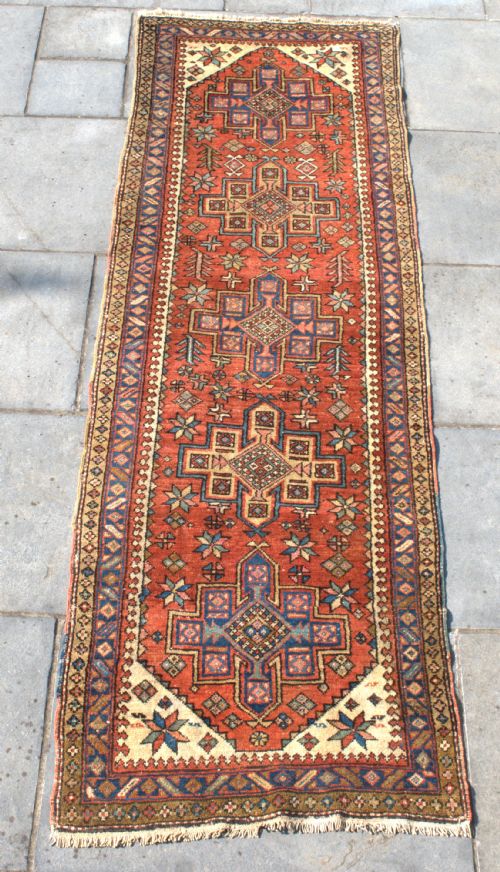
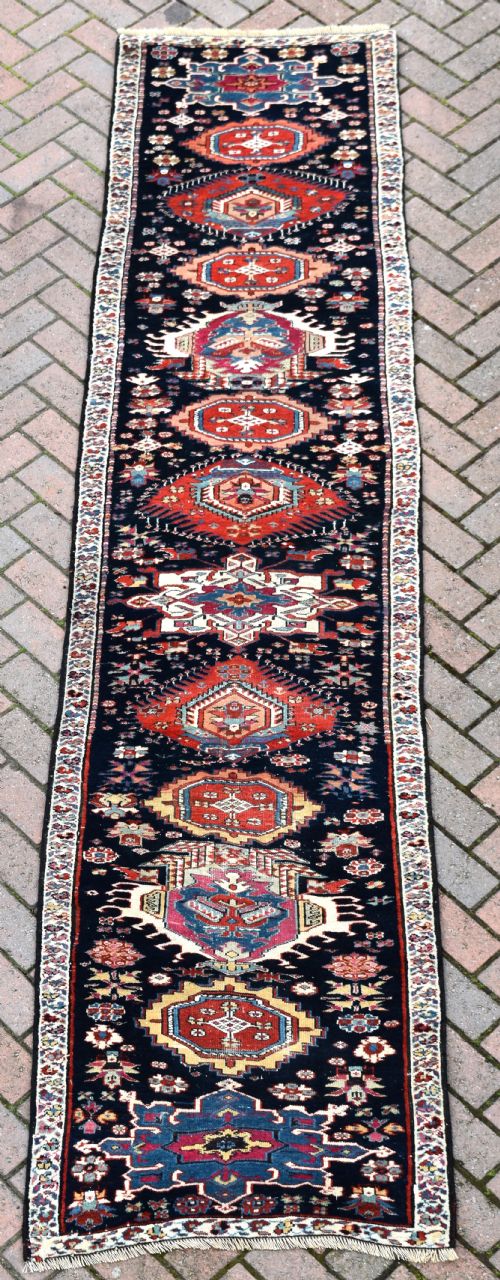

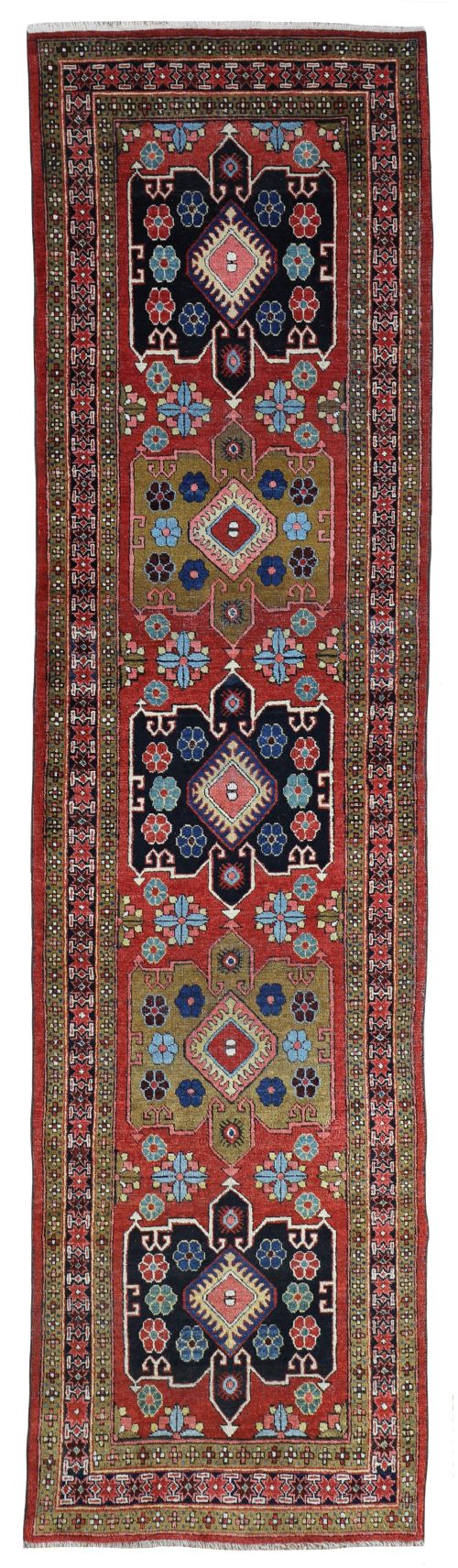


Antique Heriz Corridor Carpet
An antique heriz corridor carpet brings robust North West Persian craftsmanship and geometric strength to narrow spaces.
Antique Heriz Corridor Carpet
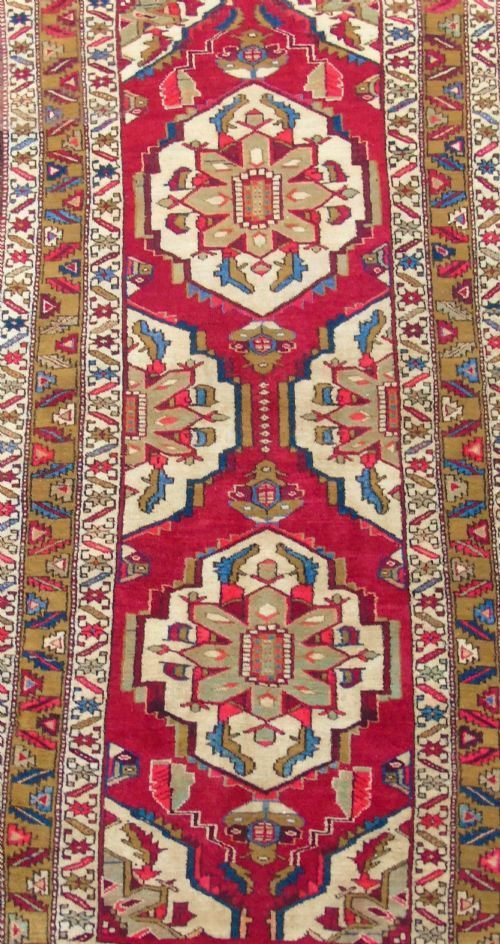
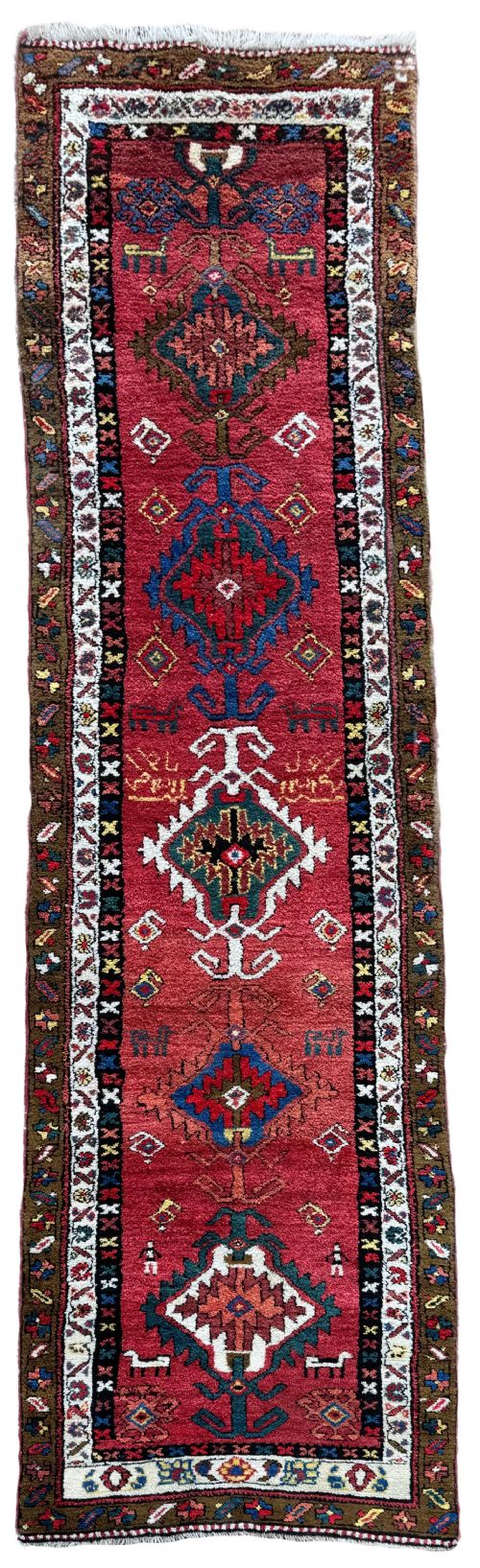
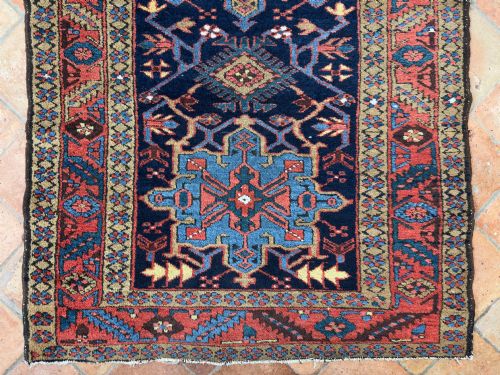
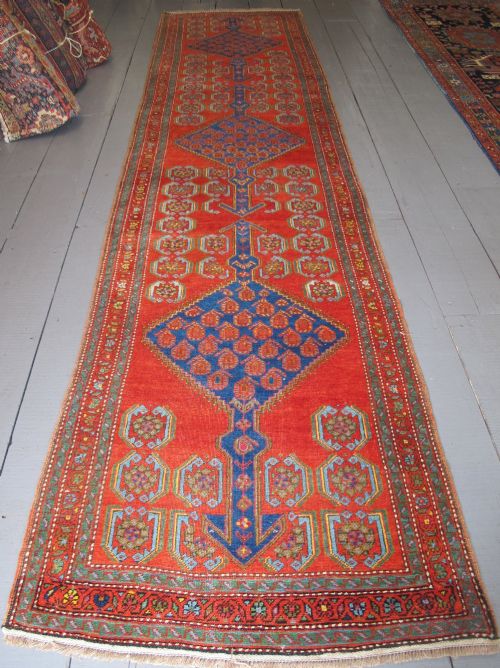
Buyers encountering this group will find that the dominant form is the traditional runner rug, often characterised by bold medallion designs and geometric motifs. Examples span lengths exceeding four metres alongside narrower widths tailored for corridors. While many pieces bear the distinct Heriz attribution, related North West Persian styles such as Karaja, Bakshaish, Gorevan and Hastrud frequently appear within this category.
Assessing quality in regional runners
Quality rests in the precision of the geometric drawing and the crispness of the medallion layout. Stronger pieces display confident proportions and balanced border systems that anchor the elongated format effectively.
The condition of the wool pile and the integrity of the cotton foundation dictate the longevity of each runner. Uniform wear across the surface and intact side cordings separate structurally sound examples from those requiring extensive conservation.
Antique Heriz Corridor Carpet Retail Price Guide 2026
Typical asking prices for heriz corridor carpet among the pieces listed under this phrase on Sellingantiques today, from the lower quarter to the upper quarter. They describe what is for sale here now, not the wider market.
Listings span production dates from eighteen eighty through nineteen twenty, utilising wool and cotton exclusively across various North West Persian formats.
Waring and Gillow
The Antique Heriz Corridor Carpet Glossary
- Medallion
- The central ornamental motif dominating the field of the carpet. In North West Persian weaving, this element is typically geometric and bold in scale.
- Warp
- The vertical threads stretched across the loom that form the foundational skeleton of the rug. Cotton is the standard material utilised for this structural component in these pieces.
- Weft
- The horizontal threads passed through the warps after each row of knots to bind the structure firmly together. These threads contribute to the rigidity and flatness of the runner.
- Pile
- The upright wool surface formed by the knotted yarn ends that receives direct foot traffic. Tightly packed pile enhances durability and colour clarity.
- Runner
- A long, narrow carpet format specifically proportioned for corridors, hallways and staircases. These pieces measure significantly longer than their width.
Antique Heriz Corridor Carpet: Frequently Asked Questions
Where should I place a long runner?
These narrow floor coverings suit high-traffic hallways, corridors and transitional spaces where length and durability matter most.
Their linear proportions guide movement through a home while protecting timber or tiled floors from wear.
How do I identify a North West Persian piece?
Look for geometric medallion layouts, sturdy wool pile and characteristic palette choices typical of looms in that region.
Signatures or structural markers like cotton foundations further connect pieces to traditional workshops.
Are these carpets suitable for daily use?
The combination of dense wool and strong cotton foundations provides exceptional resilience for everyday domestic environments.
Routine care and appropriate underlays help preserve the structural integrity of older textiles.
What distinguishes Karaja from Heriz runners?
Karaja pieces often feature distinct geometric subsidiary motifs and narrower dimensions compared to standard Heriz productions.
Both originate from North West Persia and share similar robust material construction.