
Antique Hearth Kerb
An antique hearth kerb frames the fireplace to contain ash and sparks while anchoring the room.
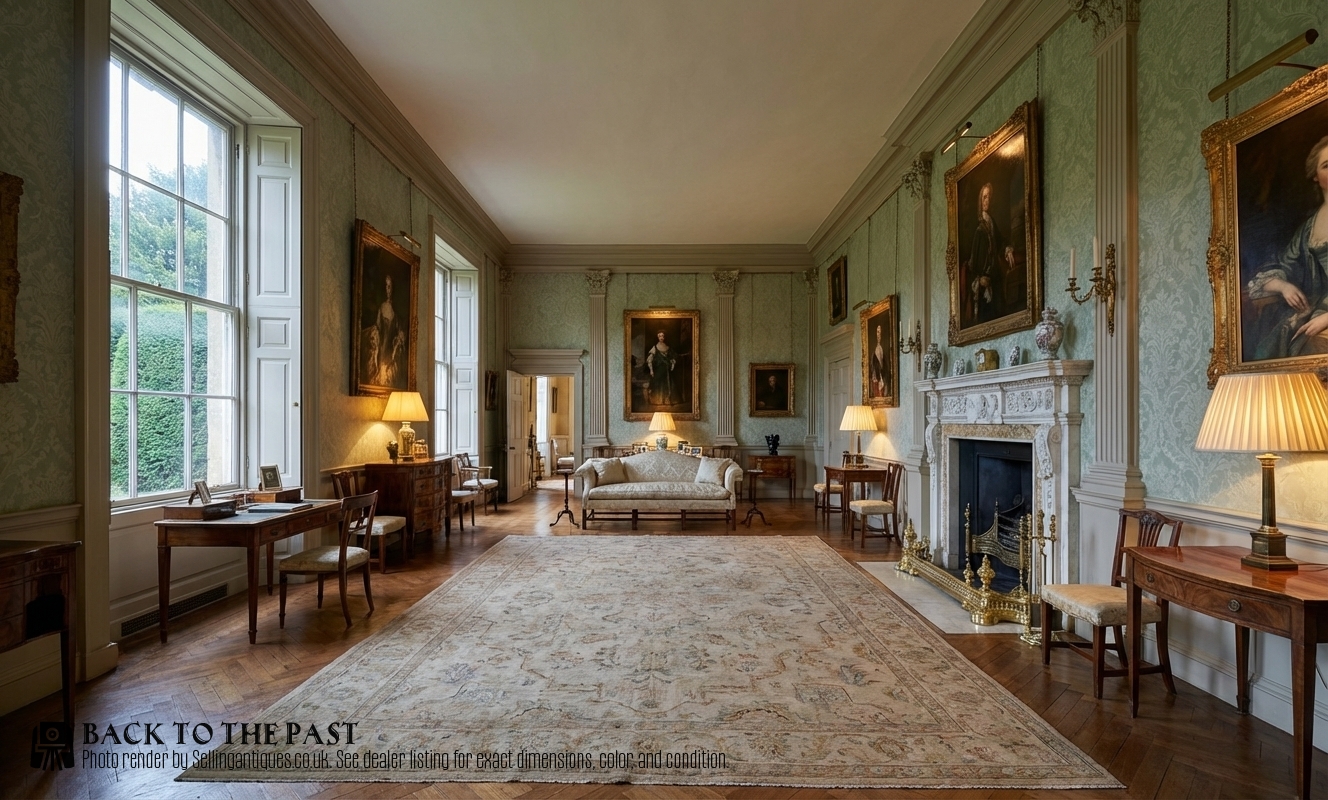
Antique Hearth Kerb
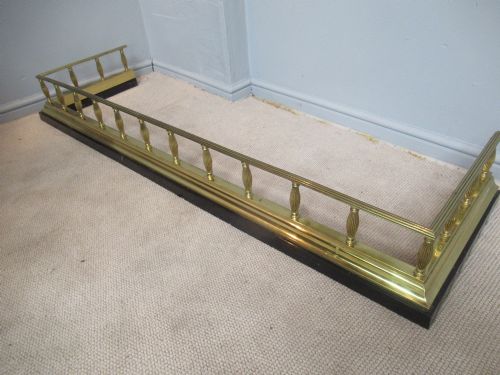
An antique hearth kerb sits directly on the floor around the fireplace hearth, serving both a functional barrier and a decorative boundary for the room. Pieces matching this search phrase encompass fireplace fenders, hearth fenders, and club fenders spanning the Georgian, Victorian, and Edwardian periods.
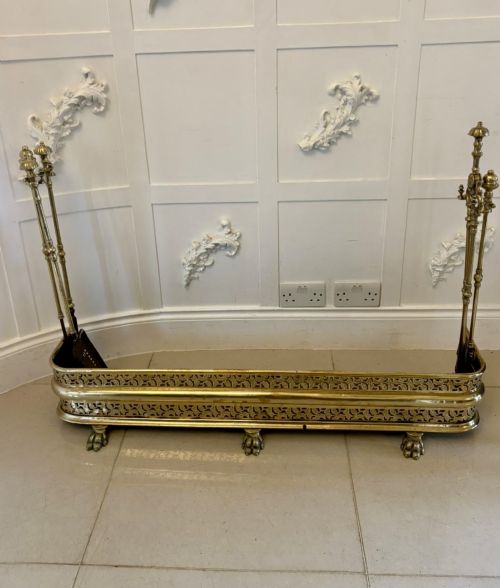
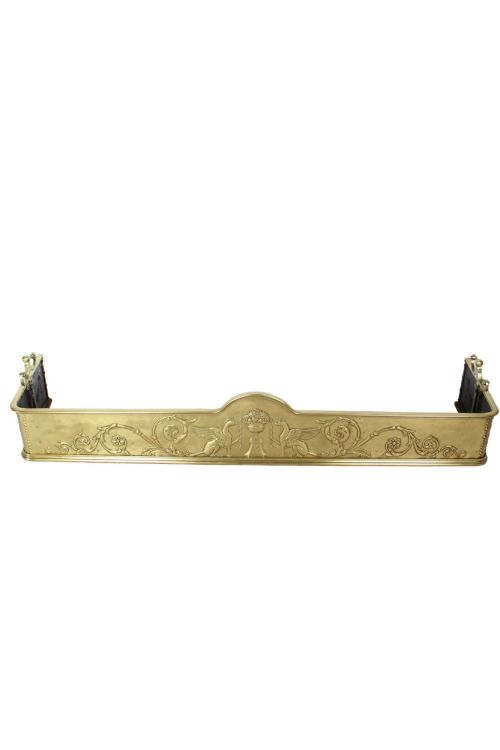
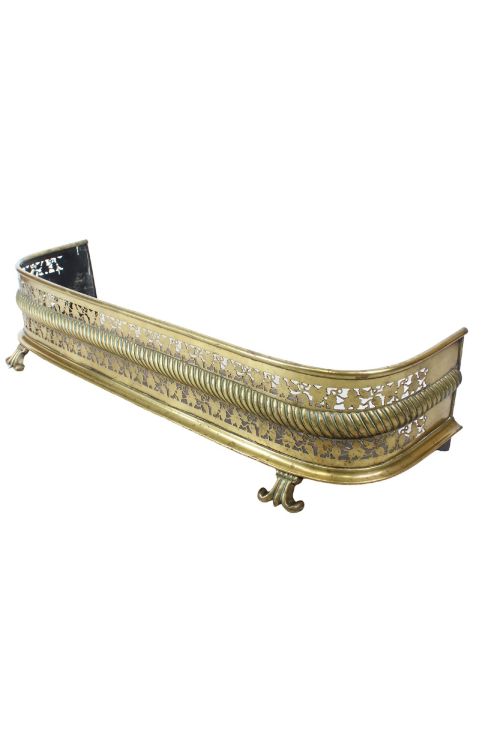
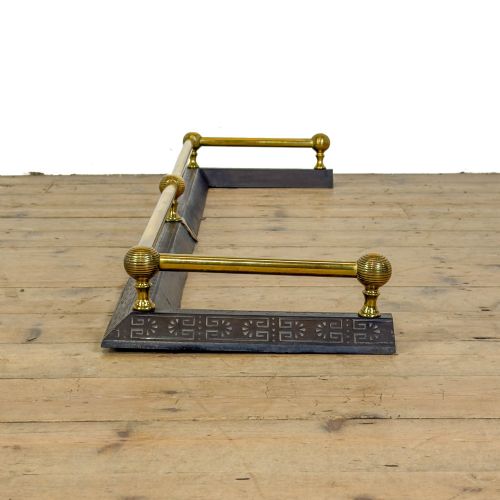
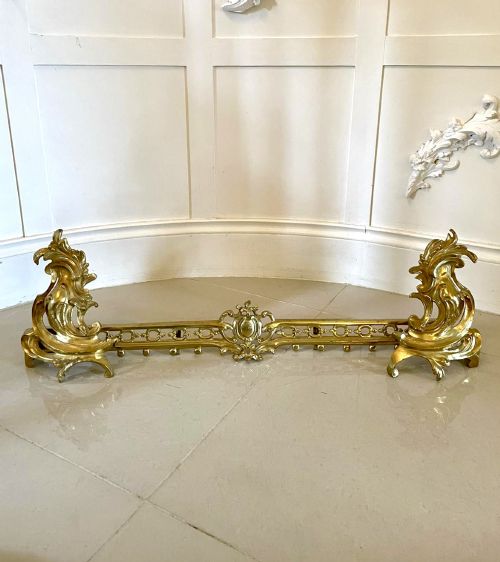
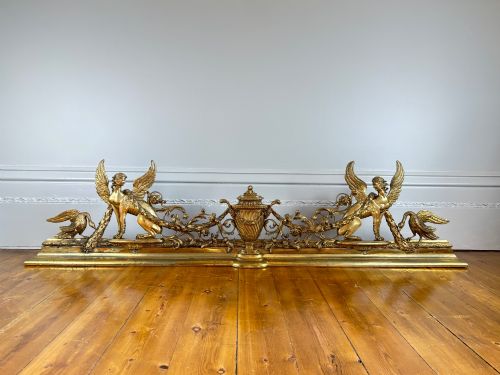
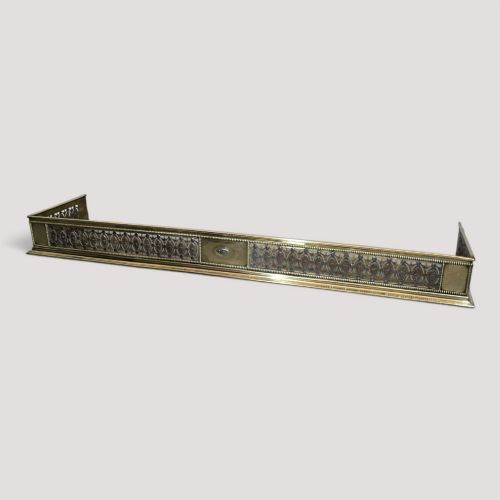
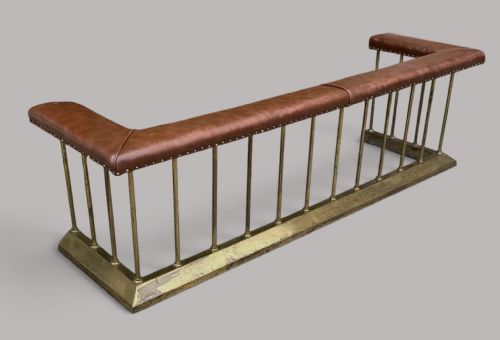
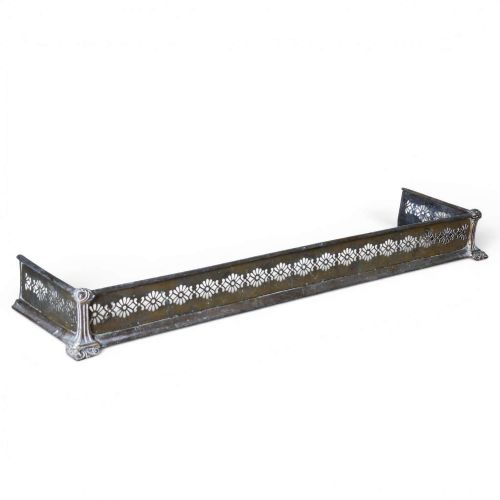
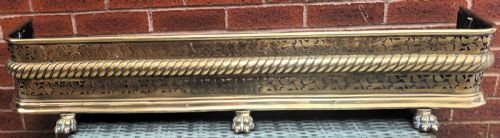
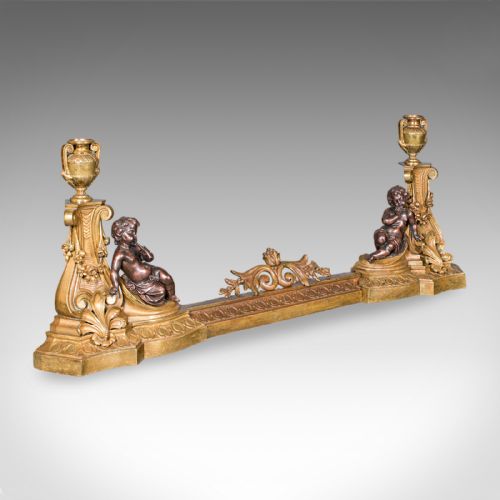
The versions most frequently met on this page are constructed from polished brass or cast iron, often detailed with pierced metalwork or adjustable frames. Examples range from simple nineteenth-century steel borders to ornate French rococo designs and substantial club fenders fitted with leather seating.
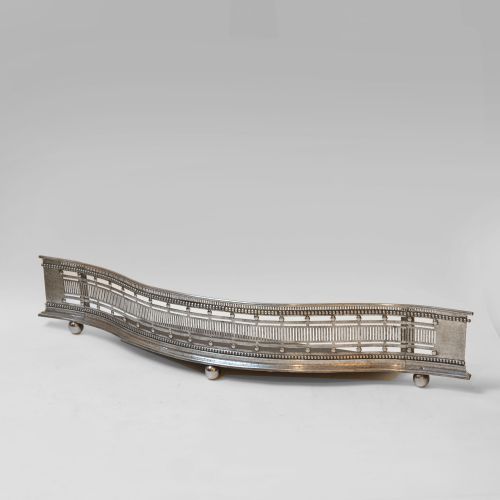
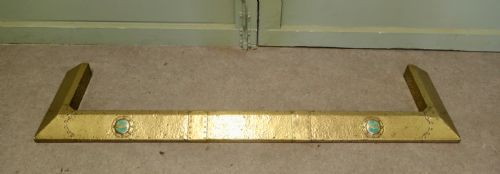
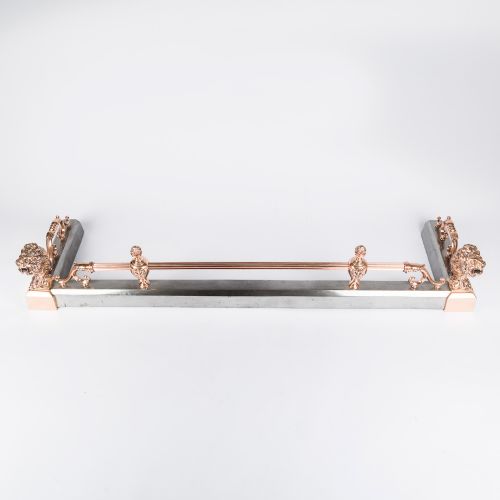
Form follows utility, with shapes shifting from straight bows to serpentine curves designed to fit specific hearth dimensions. Some incorporate specialised mounts for fire irons or feature decorative elements such as green enamel cabochons and flower patera.
Materials and construction
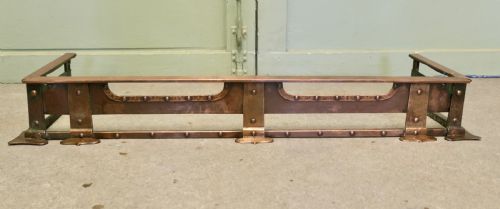
Metals form the structural backbone of these hearth surrounds, utilising brass, cast iron, steel, and copper either alone or in combination. Makers joined heavy cast components with riveted joints, hammered sheet metal, or turned elements to build rigid frames capable of withstanding daily fireside heat.
Surface decoration relied on mechanical and manual techniques, including piercing, engraving, cut steel mounting, and parcel gilding. Copper and brass surfaces were frequently beaten, polished, or left with patinated finishes, whilst club versions integrated seasoned oak frames upholstered in mature leather.
Listings show brass as the predominant material, frequently paired with steel, iron, or copper across Victorian and Georgian periods.
Distinctions in quality
Material gauge and thickness dictate the underlying substance of a kerb, separating heavy, substantial castings and thick-walled brass from thin, lightweight stampings. Superior examples employ solid bronze, heavy cast iron, or thick gauged copper that retains structural rigidity over decades of use.
Execution of detail defines the visual calibre of a piece, distinguishing crisp, hand-pierced brass and hand-engraved steel from mass-produced castings with soft edges. The presence of original fitted components, such as matching fire irons or integral leather seats on club variants, elevates the integrity of the object.
E F Caldwell New York
The Antique Hearth Kerb Glossary
- Fender
- A low metal guard placed around the hearth to keep burning embers from rolling onto the floor. These items appear in various configurations of brass, iron, and steel.
- Club fender
- A specialised hearth surround featuring upholstered top rails that serve as fireside seating. They typically combine oak or brass structures with leather pads.
- Serpentine
- A curved outline shaped in a gentle wave, often found on Georgian and Victorian steel and brass fronts. This contour adds visual movement to the hearth boundary.
- Patera
- A circular ornamental disk carved or stamped with a floral or rosette motif. These decorative roundels frequently appear on copper and brass hearth borders.
Antique Hearth Kerb: Frequently Asked Questions
What is an antique hearth kerb used for?
A hearth kerb acts as a physical barrier placed directly on the floor around the fireplace opening. Its primary purpose is to contain falling embers, ash, and sparks while defining the hearth space.
Beyond safety, these metal and leather surrounds frame the fireplace visually and often provide integrated rests for fire irons or comfortable seating on club variants.
How do I measure for a hearth kerb?
Measuring requires taking the exact width, depth, and projection of your fireplace hearth to ensure the metal frame sits squarely on the floor. Take note that many nineteenth-century examples feature adjustable frames designed to adapt to slight variations in room dimensions.
Consider the clearance needed for fire irons or club seating when selecting models with extended returns or upholstered top rails.
What materials are antique hearth kerbs made from?
These fireplace surrounds are constructed primarily from metals including brass, cast iron, steel, copper, and bronze, sometimes accented with ormolu or gilt finishes. Combinations of brass and steel or iron are particularly common across Victorian productions.
Certain specialised forms, such as club variants, incorporate wooden bases like oak alongside upholstered leather seating surfaces.
How do I date an antique hearth kerb?
Dating relies on observing stylistic markers, manufacturing techniques, and materials characteristic of specific eras such as the Georgian, Victorian, or Edwardian periods. Georgian examples often feature hand-engraved serpentine steel, while Victorian and Arts and Crafts pieces frequently utilise pierced brass, beaten copper, or enamel cabochons.
Construction methods like hand-riveting and the presence of specific decorative motifs help narrow the manufacturing window.