


Antique Hearth Firedogs
These antique hearth firedogs anchor an open hearth, supporting logs for an even burn while bringing period character to the chimney breast.
Antique Hearth Firedogs
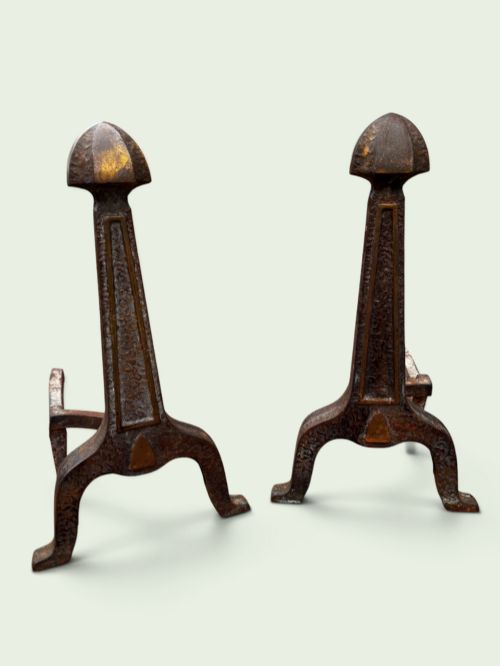
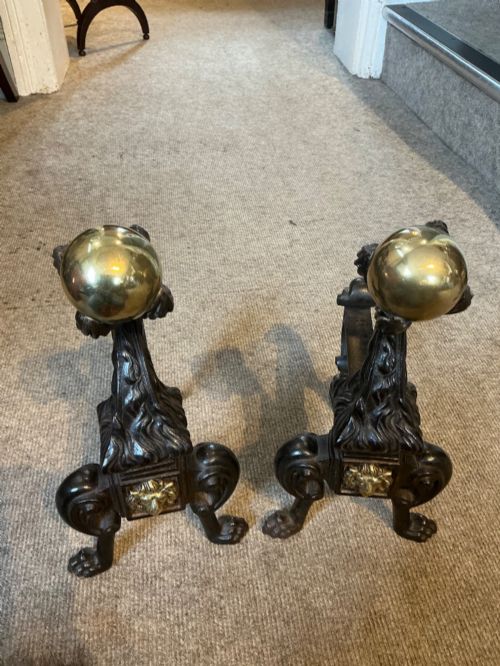
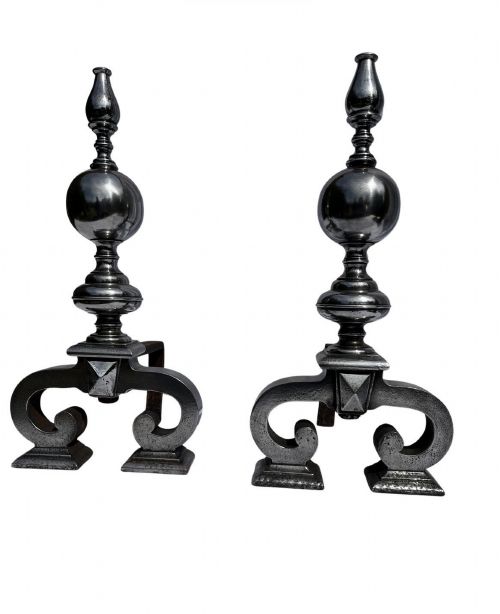
When you search for antique hearth firedogs, you are looking at utilitarian fireplace supports designed to hold fuel off the hearth floor and improve draught. The examples gathered here span from the eighteenth century through the Victorian era and into the early twentieth century, taking the form of matched pairs intended to sit at either side of the grate. Most of the pieces meeting this description on the page date from the nineteenth century, particularly the Victorian period, reflecting the heavy domestic output of that time.
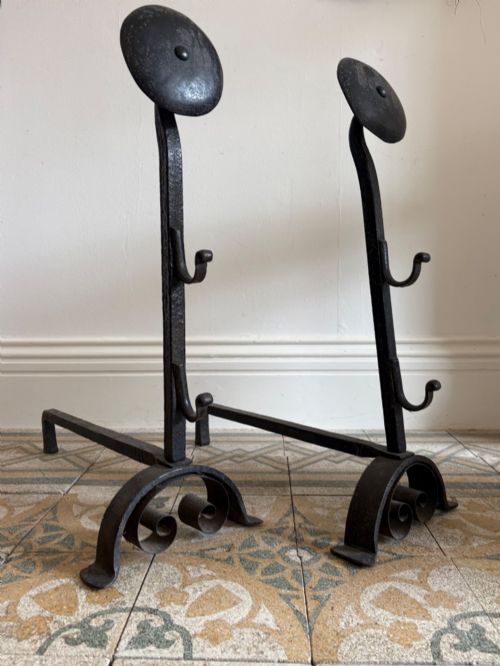
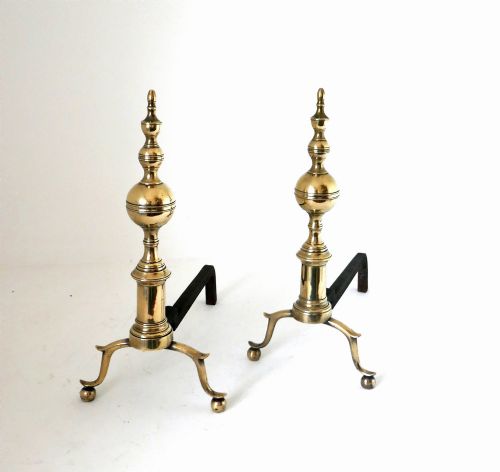
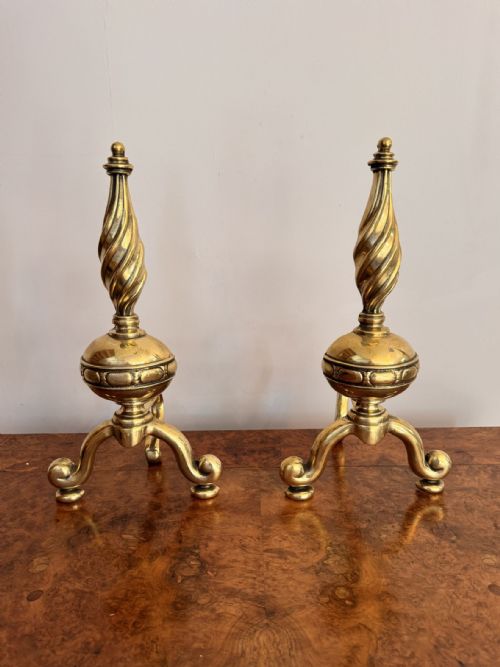
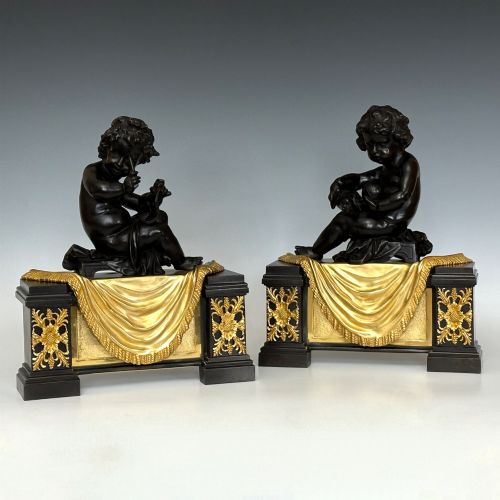
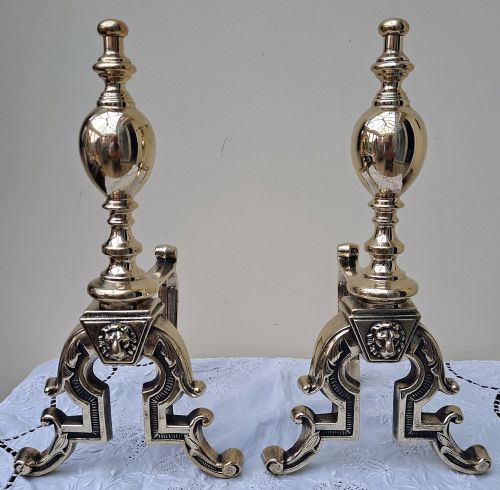
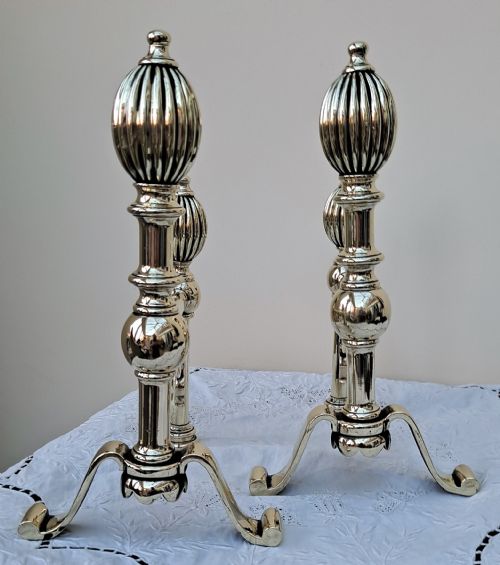
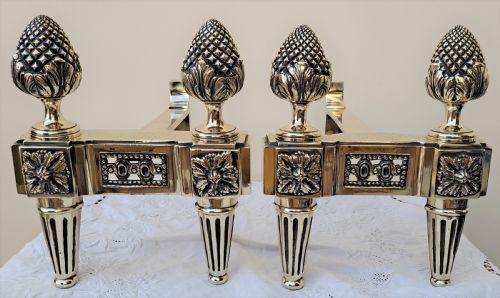
The physical shapes vary according to the prevailing taste of their period, ranging from robust forged iron supports of simple utility to ornate cast brass and ormolu pieces modelled in French styles. Alongside straightforward andirons, you will encounter related fireside hardware including fire baskets, tool rests and chenets designed for specific hearth layouts. Their primary function remains holding logs in place, yet their ornamentation reveals how domestic ironmongery evolved into a deliberate decorative choice for the nineteenth-century parlour.
Materials and construction methods
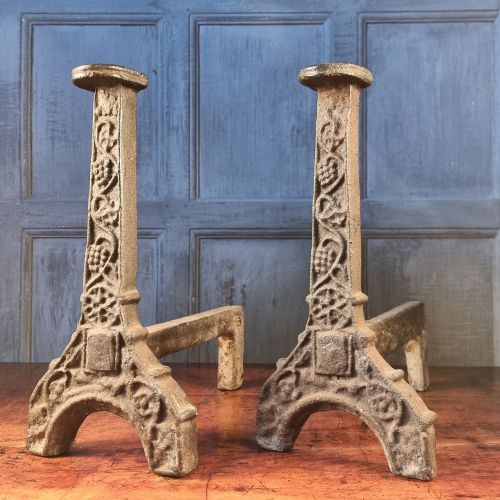
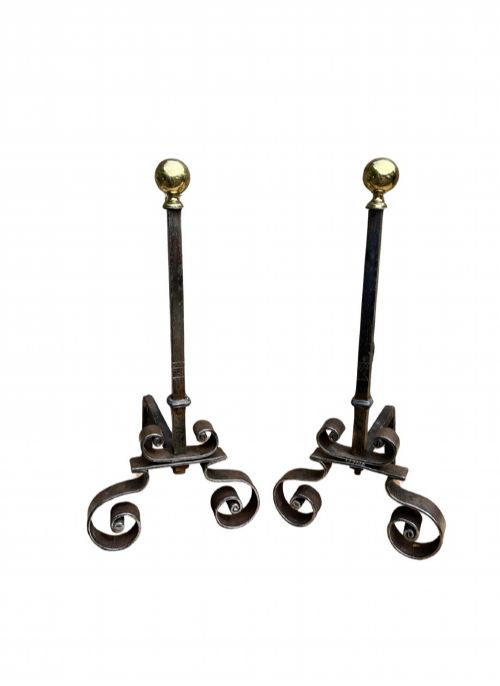
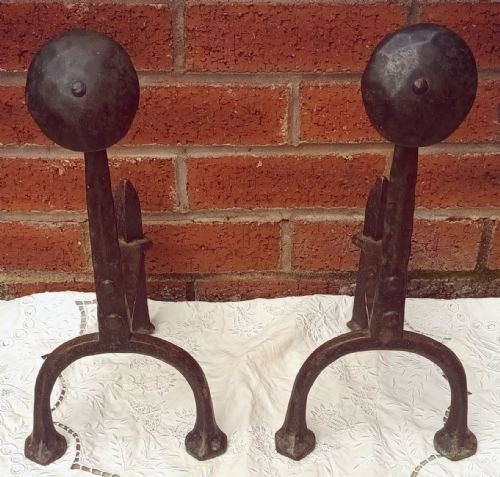
The construction of these pieces relies heavily on the foundry work and metal-working techniques typical of their respective centuries. Cast iron and wrought iron provide the heavy structural body for the utilitarian forms, shaped by hand-forging or poured into sand moulds to create solid uprights. Iron components often show the hammer marks of the smith or the plain texture of raw cast metal.
For more decorative examples, brass, bronze, gilt bronze and ormolu take precedence, often cast in detailed sections and joined mechanically. French models and English revival pieces utilise chased or patinated finishes, combining cast brass with iron billets to balance ornamental detail with heat-resistant weight.
Listings feature brass, wrought iron, and cast iron across nineteenth-century Victorian, Georgian, and Arts & Crafts styles.
Distinctions in quality and execution
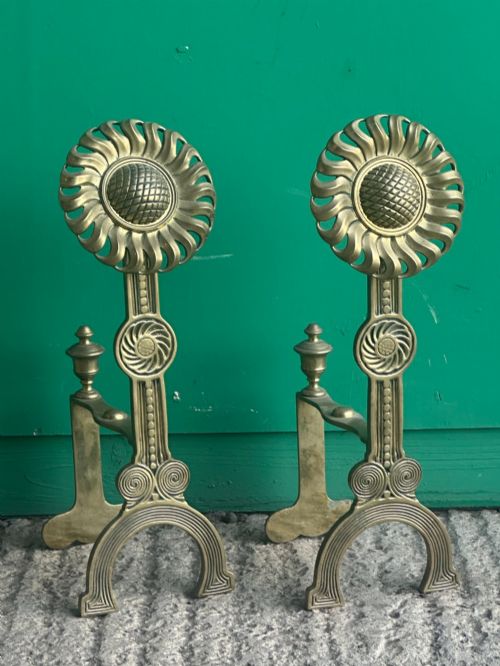
Quality in these hearth supports is determined by the crispness of the casting and the weight of the metal utilised. Superior examples display sharply defined motifs, such as sunflower designs or figural statuettes, where details are hand-finished by a chaser rather than left as cast from the mould. Thicker gauge ironwork and heavy brass castings indicate robust domestic manufacturing rather than light decorative reproductions.
The integrity of the construction also separates standard production from superior workshop output. Well-made pairs demonstrate secure joints between the vertical display front and the horizontal billet bar that supports the wood, ensuring the metal resists warping under intense hearth heat over decades of use.
Thomas Jeckyll·William Tonks·James Cartland & Sons
The Antique Hearth Firedogs Glossary
- Andiron
- A horizontal iron or metal support raised on legs, used to hold logs in an open fireplace. They typically feature an ornate front standard facing into the room.
- Chenet
- The French term for an andiron, frequently applied to decorative hearth supports cast in bronze, brass or ormolu during the eighteenth and nineteenth centuries.
- Billet bar
- The horizontal iron bar extending backward from the front standard of a firedog to support the burning logs.
- Ormolu
- Gilded bronze produced by applying a mercury-gold amalgam to a bronze base, creating a rich golden surface common on decorative nineteenth-century hearth pieces.
- Fire basket
- A self-contained metal grate for holding coal or wood, often flanked by integrated firedogs or designed to sit between them.
Antique Hearth Firedogs: Frequently Asked Questions
How do I choose the right size firedogs?
Measure the depth and width of your fireplace opening to ensure the horizontal billet bar fits comfortably inside the hearth without crowding the space. Taller uprights suit larger chimney breasts, while shorter pairs maintain proper proportion in smaller rooms.
Consider the scale of your mantelpiece and surrounding fender when selecting a pair. The firedogs should complement the hearth opening visually while leaving adequate room for air circulation around the burning wood.
How do I clean brass and iron firedogs?
Remove surface soot and ash using a soft brush and dry cloth to prevent acidic residue from pitting the metal. Avoid harsh commercial dips that strip away desirable age patina.
For iron components, a light application of traditional grate polish or micro-crystalline wax helps prevent surface oxidation. Polishing brass depends on whether you prefer a bright shine or a deeper, aged golden tone.
What is the difference between andirons and firedogs?
The terms are generally used interchangeably to describe the same supporting metal structures placed on a hearth. Historically, regional preferences and trade catalogues favoured one word over the other.
Both refer to a matched pair of upright metal supports featuring a horizontal bar for holding firewood. You may occasionally find 'firedog' used for simpler forged iron designs and 'andiron' for decorative cast brass versions.