




Georgian Brass Hearthware
Georgian brass hearthware brings warmth and period character to a fireplace, offering both practical utility and enduring metalwork craftsmanship.
Georgian Brass Hearthware
When you search for georgian brass hearthware, you encounter functional items designed for eighteenth and nineteenth century domestic firesides. These pieces range from kettles and coal scuttles to fire dogs and bed warming pans.
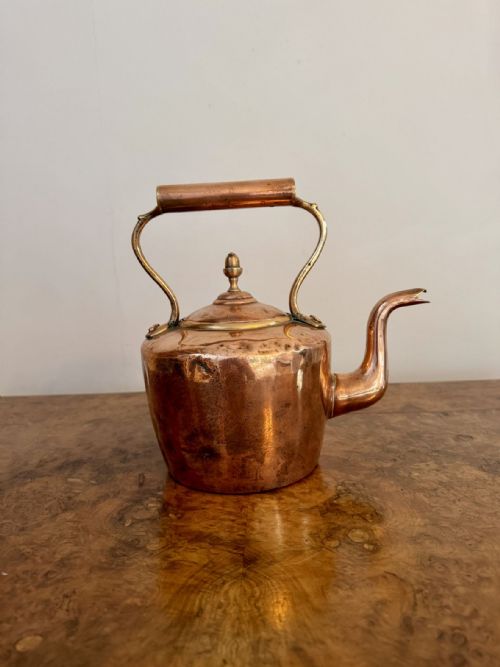
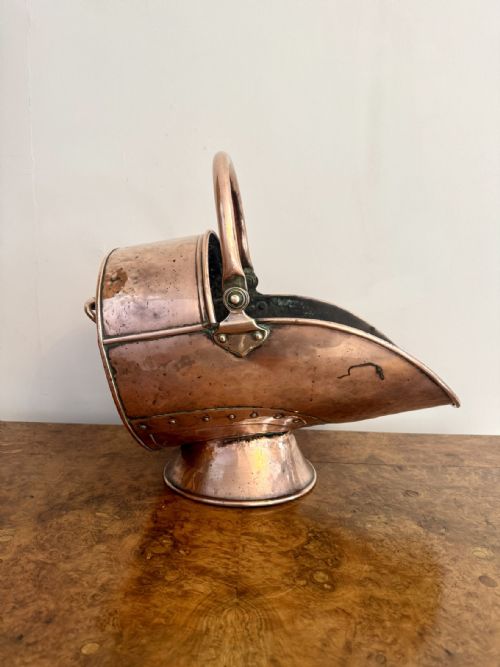
The versions most frequently met on this page include copper and brass kettles alongside coal scuttles bearing George III characteristics. Collectors also find specialised items such as goffering irons and footmen.
Originating primarily from English and Welsh workshops, these items reflect the utilitarian needs of historical households. They span production dates from the mid eighteenth century through to the late nineteenth century.
How they were made
These items rely heavily on brass and copper, frequently combined with iron or wood handles for daily fireside use. Metalworkers utilised casting and beating techniques to shape sheet brass and heavy duty copper into durable vessels and accessories.
Makers often incorporated wrought iron for structural strength in fire dogs and spit jacks. Polished brass finishes contrast with darker iron components, showcasing traditional eighteenth and nineteenth century metalworking methods.
Bottle spit jacks hide intricate clockwork mechanisms inside gleaming brass casings to turn roasting meat by firelight.
What varies in quality
Quality in these objects lies in the substance of the metalwork and the integrity of the original construction. Heavier gauge brass and robust copper display superior resilience compared to lighter, thinner alternatives.
Refinement in surface finish and the retention of original fixtures distinguish superior examples. Pieces that maintain their authentic structural elements demonstrate greater integrity than those with replaced parts.
John Linwood of Birmingham
The Georgian Brass Hearthware Glossary
- Andirons
- Supports for logs in an open fireplace, also known as fire dogs. They usually feature decorative brass fronts paired with iron bars.
- Goffering iron
- A heated metal cylinder used for pressing ruffs and frills. This laundry tool sits on a stand and was heated with a hot iron slug.
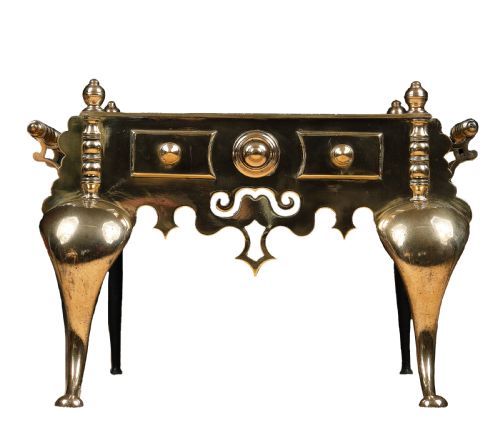
- Footman
- A metal stand placed in front of the hearth to keep plates warm. These sturdy brass tables typically feature pierced tops and cabriole legs.
- Spit jack
- A mechanical device used to turn meat before an open fire. Clockwork mechanisms inside bottle shaped brass cases powered the rotation.
- Braising pan
- A heavy vessel with a tight fitting lid used for slow cooking over hearth coals. These items combine copper bodies with sturdy brass handles.
Georgian Brass Hearthware: Frequently Asked Questions
What is georgian brass hearthware?
Georgian brass hearthware comprises functional and decorative items used around the domestic fireplace during the eighteenth and nineteenth centuries.
These objects include coal scuttles, kettles, fire dogs, and warming pans fashioned from brass, copper, and iron.
How were warming pans used?
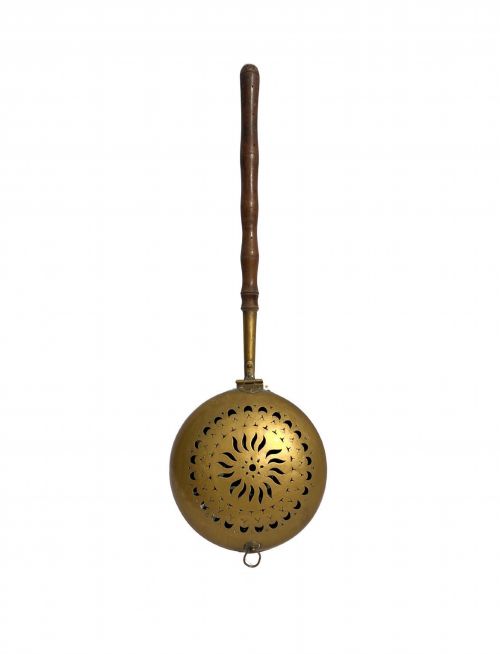
Bed warming pans were filled with hot coals from the hearth and moved between bed sheets to warm the linen.
The long wooden handles allowed users to sweep the metal pan across the mattress safely.
How do I clean brass hearthware?
Cleaning requires gentle polishing with appropriate metal creams to remove tarnish while preserving the underlying historical surface.
Avoid aggressive abrasives that can strip away the aged patina accumulated over centuries.
Are these items still functional?
Many brass hearth items retain their structural integrity and can be utilised for their original domestic purposes.
Kettles and scuttles remain practical, though many collectors prefer to display them as decorative period pieces.
How do I identify George III pieces?
George III pieces date from the reign spanning the late eighteenth to early nineteenth century, identified by specific stylistic markers.
Construction methods, material thickness, and traditional form help distinguish these items from later nineteenth century reproductions.