
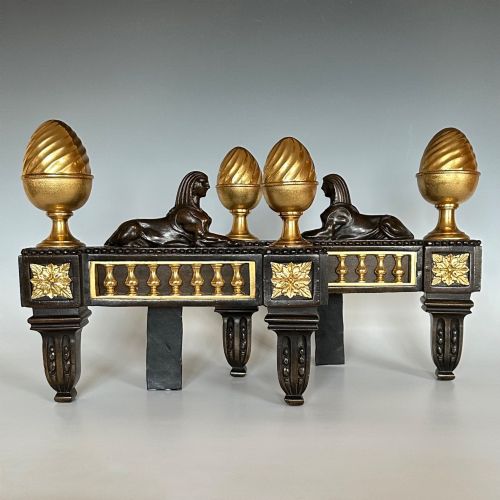
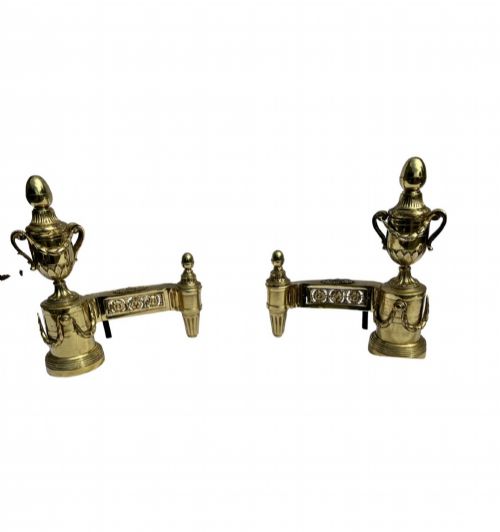
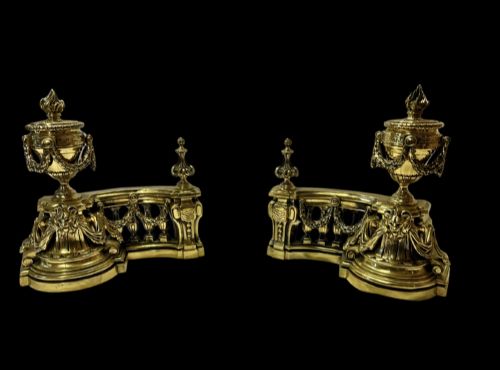
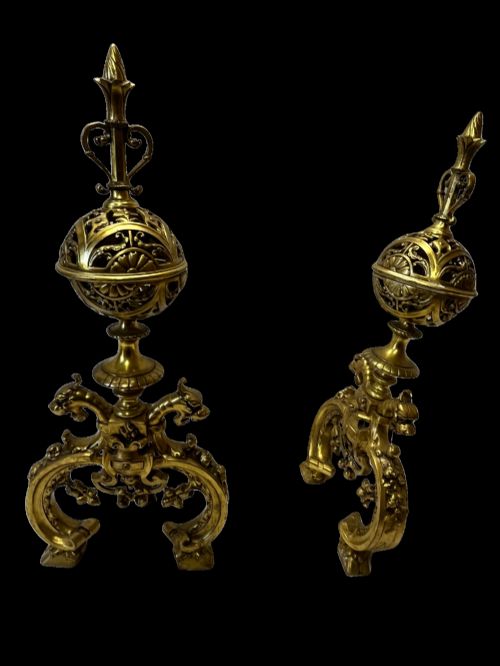
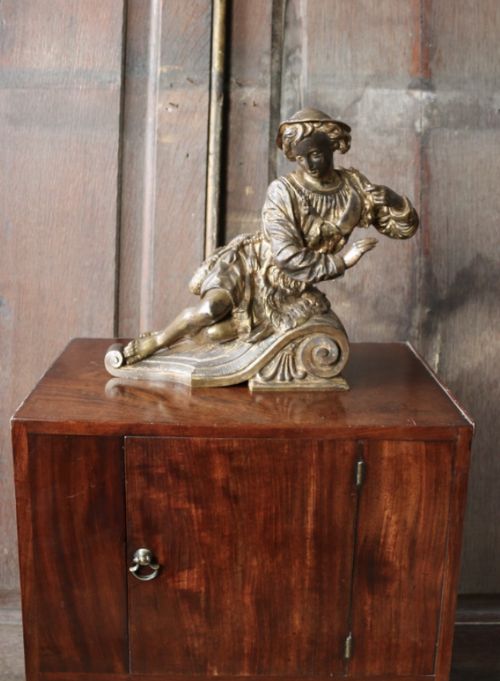


Antique French Chenets
Antique French chenets bring hearths to life with sculptural metalwork that anchors a room.
Antique French Chenets
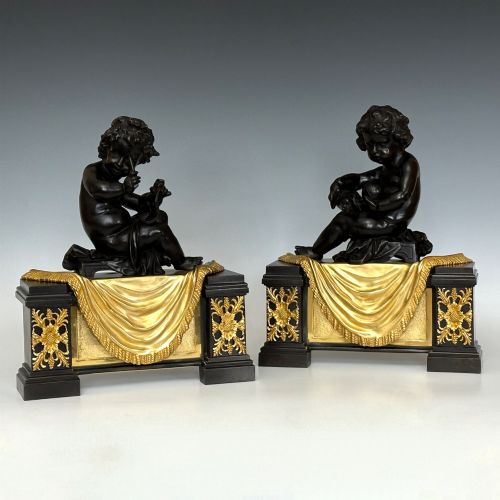
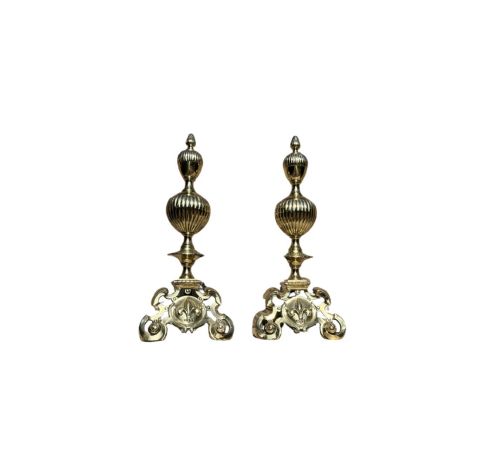
Antique French chenets, also known as fire dogs or andirons, are functional and decorative supports placed inside a fireplace to hold logs above the hearth. When you search for antique French chenets, you encounter pairs of heavy metal uprights designed to sit at the front of the fireplace opening.
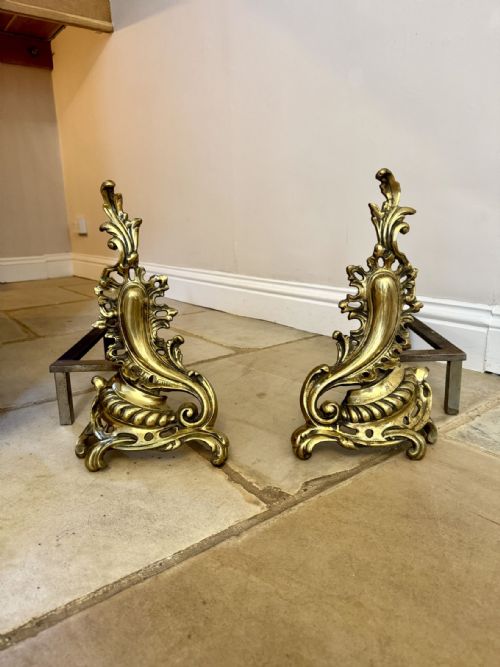
The selections span the nineteenth century, including periods such as Regency, along with earlier eighteenth-century influences. Common stylistic iterations include French Rococo, Neoclassical, Baroque, and French Provincial designs.
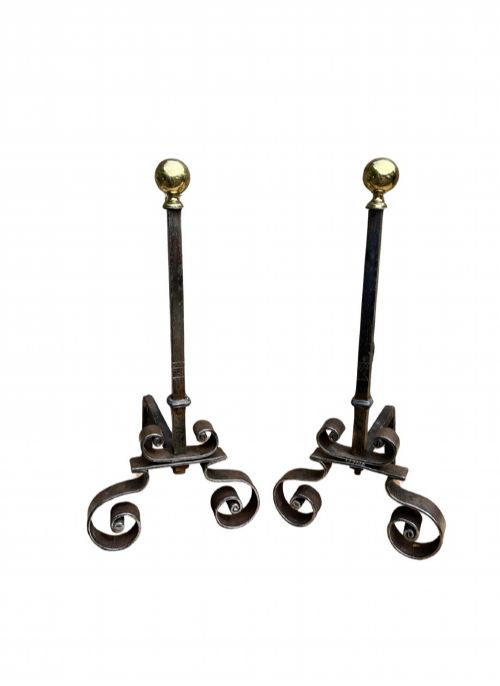
Most examples function as pairs of matched fire dogs, frequently accompanied by cast or forged components intended to support fire grates. Their primary forms range from simple utilitarian wrought iron shapes to elaborate figural statuettes.
Materials and construction
Foundry workers utilised bronze, brass, and iron to cast and forge these hearth accessories. Ormolu and parcel gilt finishes added a golden sheen to bronze and brass surfaces, while patinated bronze provided darker, contrasting tones.
Craftsmen employed techniques such as lost-wax casting for figural elements alongside hand-wrought forging for robust iron frames. Gilt bronze and ormolu mounts were meticulously chased and fire-gilded to catch the flicker of the hearth fire.
Materials across the listings include bronze, ormolu, gilt bronze, brass, iron, wrought iron, cast brass, and patinated bronze.
Assessing quality
The integration of materials also defines the grade of the piece, with secure assembly and substantial bronze or brass thickness marking superior craftsmanship. Heavy wrought iron pieces derive their quality from clean forging and balanced proportions.
The Antique French Chenets Glossary
- Chenet
- An alternative French term for an andiron or fire dog used to support wood on a hearth. These decorative front pieces often feature figural or scrollwork designs.
- Ormolu
- Finely ground high-carat gold applied to a bronze base using a mercury amalgam technique. This creates a durable, luminous golden finish characteristic of fine fireplace furnishings.
- Patinated bronze
- Bronze treated with chemicals or heat to produce a stable surface colour ranging from brown to near black. It highlights the underlying metallic contours.
- Rococo
- An ornate design style characterised by asymmetrical scrollwork, C-scrolls, and naturalistic plant motifs. It heavily influences nineteenth-century French hearth accessories.
Antique French Chenets: Frequently Asked Questions
How were antique French chenets used?
They stood on the hearth floor to support logs, allowing air to circulate underneath for a better fire. Many also served to keep rolling logs safely inside the hearth opening.
Some pairs incorporated adjustable bars or matched with fire grates to hold fuel securely in place during burning.
How do I clean ormolu chenets?
Dust gently with a soft, dry brush to prevent scratching the delicate gold surface. Avoid chemical polishes that strip away historic fire-gilt finishes.
Professional conservation is recommended if deeper cleaning is required to remove stubborn soot accumulation from active hearth use.
How do I date an antique pair?
Examine the casting quality, fastening methods, and stylistic cues such as Regency lines or Rococo revival motifs. Nineteenth-century interpretations often borrow freely from earlier Louis periods.
Tool marks on the reverse and the composition of the underlying bronze or iron provide further clues to their exact era of manufacture.