


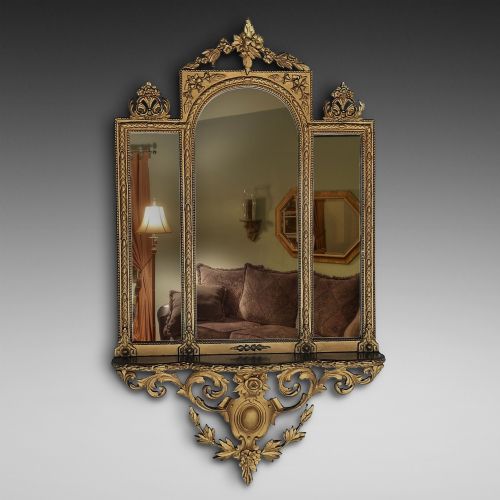
Antique Hanging Mirror Frame
An antique hanging mirror frame brings depth and reflected light to a room, drawing the eye with carved timber and gleaming gold leaf.
Antique Hanging Mirror Frame
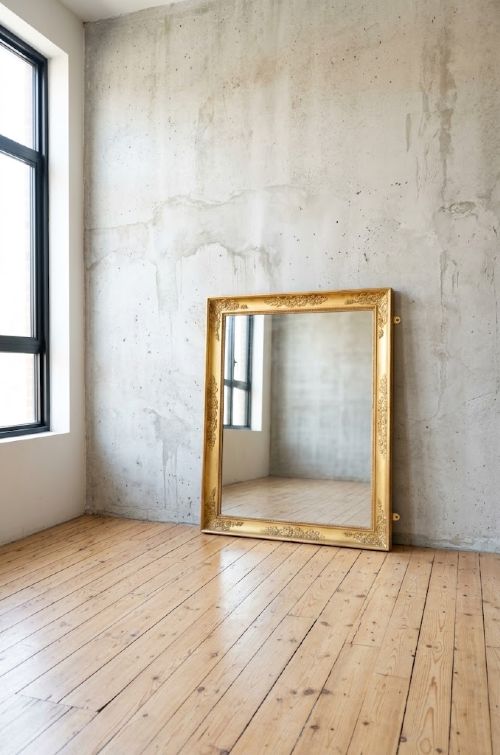
An antique hanging mirror frame is a decorative border designed to hold a reflective glass plate upon a wall. When searching for an antique hanging mirror frame, buyers encounter pieces spanning from the eighteenth century through to the early twentieth century, with Victorian and nineteenth-century examples appearing most frequently.
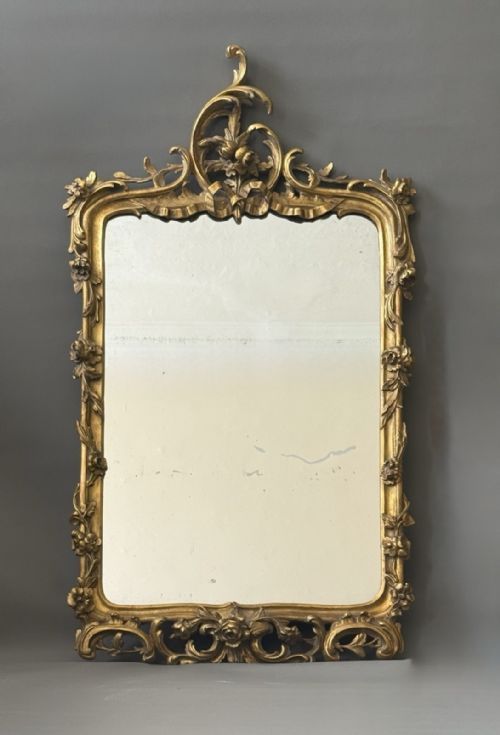
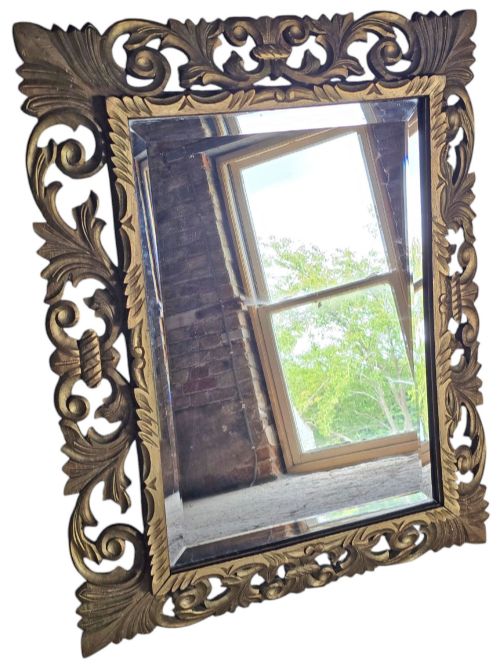
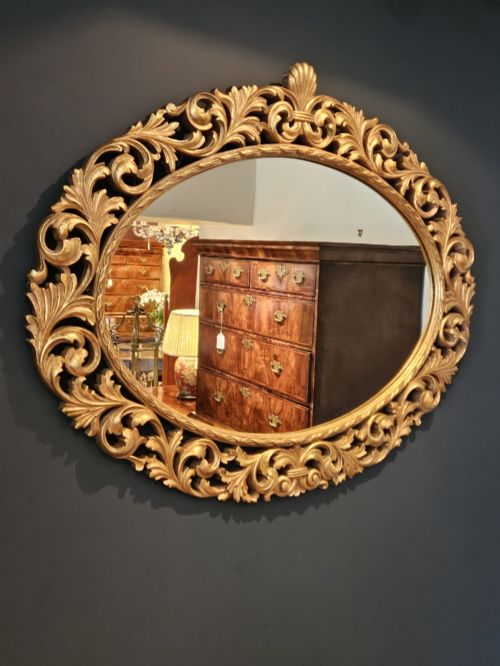
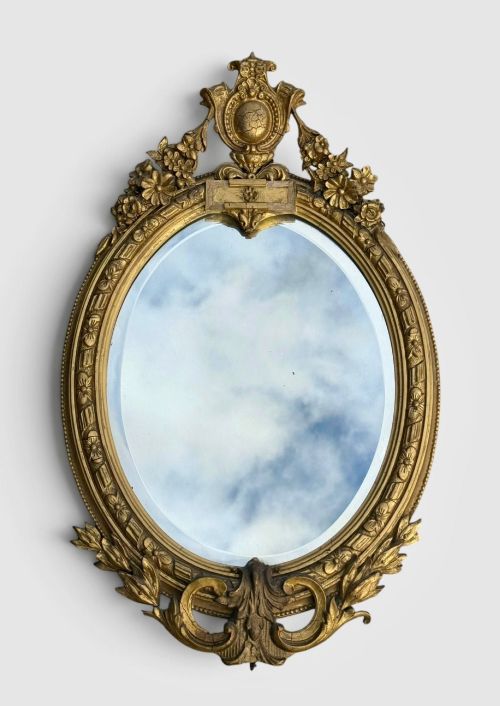
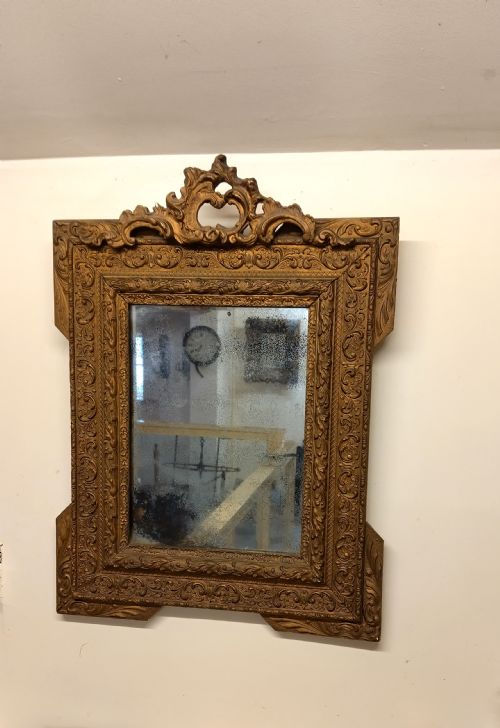
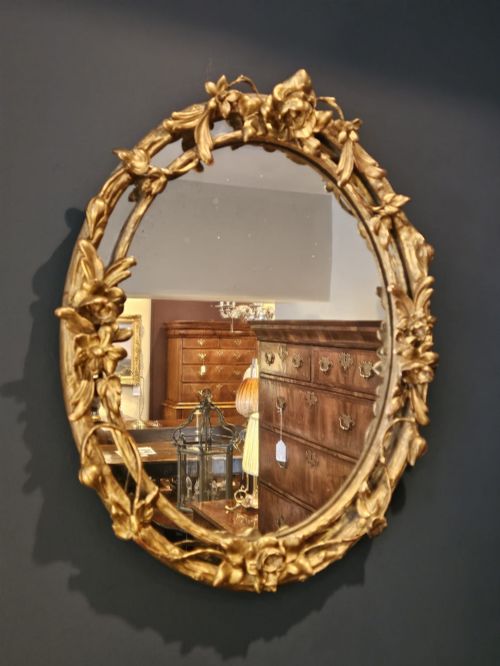
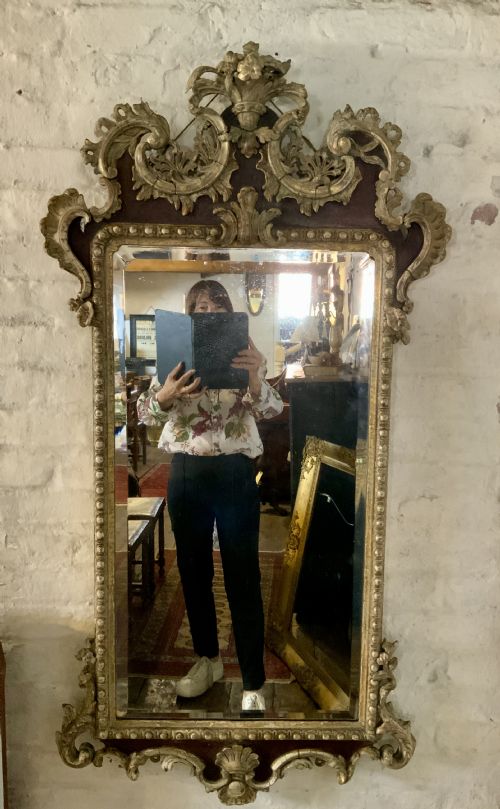
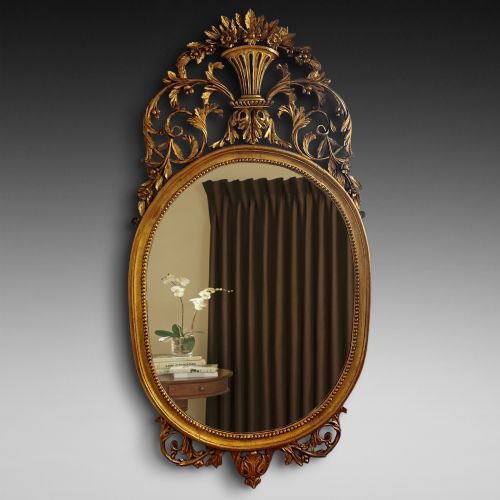
The selections on this page range from compact hall mirrors to large overmantle and pier designs. Forms include oval, rectangular, and trapezoidal shapes, alongside elaborate Rococo revival compositions and Chinoiserie aesthetics.
Origins stretch across England, France, Italy, and China, incorporating woods such as mahogany, oak, walnut, and rosewood, alongside gilded surfaces and carved timber.
Materials and Construction
Frames are constructed from solid timbers like mahogany, oak, walnut, and rosewood, often shaped through carving or inlaid with marquetry. Many examples employ gesso built up over a wooden base to create raised decorative motifs before receiving layers of gold leaf, silver-gilt, or liquid gilding.
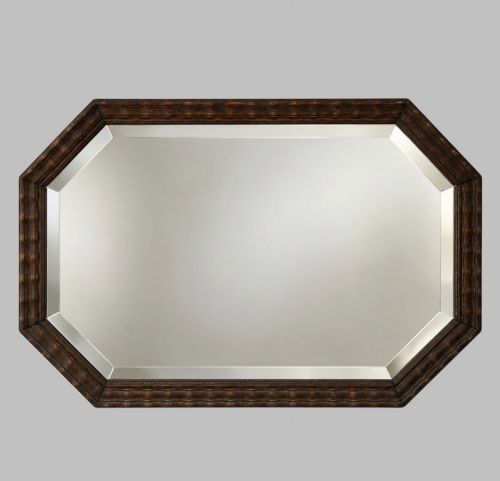
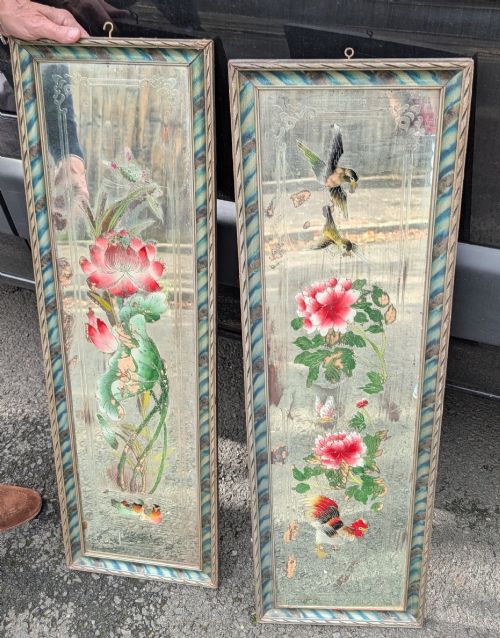
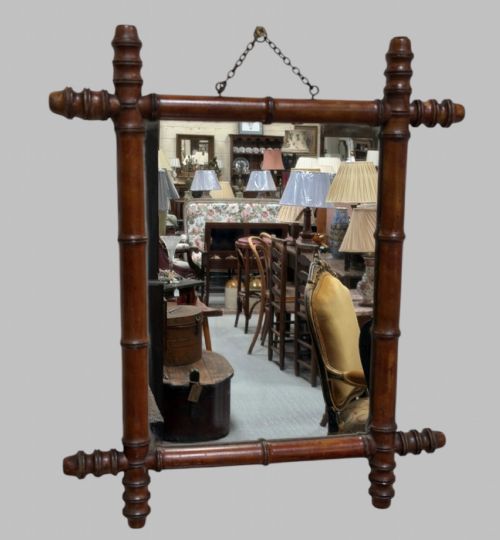
Glass plates are secured within the rebates, occasionally featuring bevelling or engraved details. Specialised techniques include parcel gilding, faux bamboo shaping, and reverse painting on glass.
Listings feature eighteenth-century walnut alongside nineteenth-century giltwood, faux bamboo, and Chinese decorative wall hanging mirrors.
Distinctions in Quality
Quality rests upon the crispness of the hand-carved detail and the depth of the gilding. Superior frames display deeply undercut foliage, scrolls, or mythological carvings rather than shallow, mass-moulded plaster ornament.
The integrity of the construction and the retention of the original glass plate and backing boards separate standard decorative items from finer works of cabinetmaking.
Waring Gillow
The Antique Hanging Mirror Frame Glossary
- Giltwood
- Wood that has been coated with gold leaf. This finish reflects light and provides a brilliant metallic sheen across the carved ornamentation of the frame.
- Gesso
- A plaster-like mixture applied to wood frames and carved. It provides a smooth surface for receiving gilding and allows for intricate relief decoration.
- Overmantle
- A large mirror designed to hang specifically above a fireplace mantelpiece. These pieces often feature wide proportions to balance the hearth below.
- Pier Mirror
- A tall mirror intended to hang on the narrow wall space between windows. They frequently incorporate lower dimensions tailored to fit specific architectural gaps.
- Parcel Gilt
- Partially gilded woodwork where gold leaf is applied only to selected carved details while exposing the natural wood grain elsewhere.
Antique Hanging Mirror Frame: Frequently Asked Questions
Are antique mirror plates original?
Many antique frames retain their original glass, which often exhibits characteristic foxing, minor pitting, and light grey oxidation spots. These age marks confirm the period of the piece.
Replacement glass appears clean and uniform without the soft, distorted reflections typical of older hand-poured or silvered plates.
How should I clean a gilded frame?
Dust gilded surfaces gently with a very soft, dry brush or a clean feather duster. Moisture and chemical cleaners strip away delicate gold leaf and historical gesso.
Avoid rubbing the raised ornament, as antique metallic leaf abrades easily under pressure.
What defines a Rococo revival frame?
Rococo revival frames draw inspiration from eighteenth-century French design, featuring asymmetrical scrolls, C-scrolls, shell motifs, and naturalistic floral carvings. They prioritize flowing organic shapes over strict symmetry.
These pieces appeared in significant numbers during the nineteenth century as interior decoration embraced ornate historical revivals.