






Ornate Italian Wall Mirror
An ornate Italian wall mirror brings historic drama and rich texture to a room, turning a blank space into a focal point.
Ornate Italian Wall Mirror
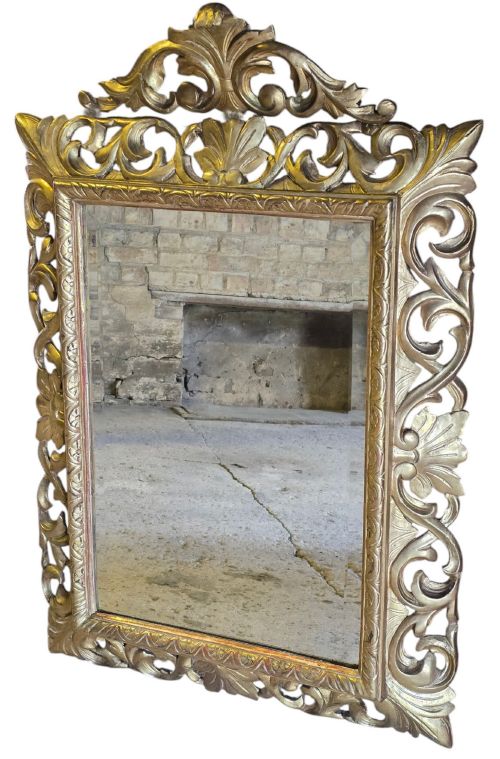
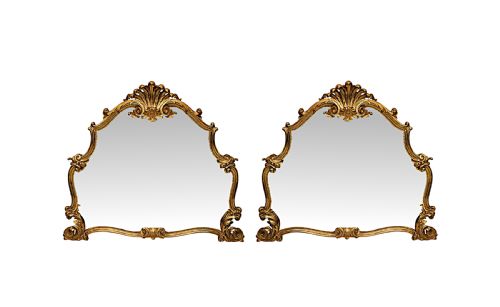
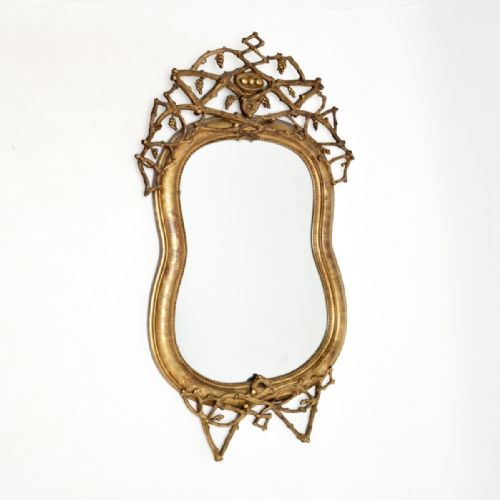
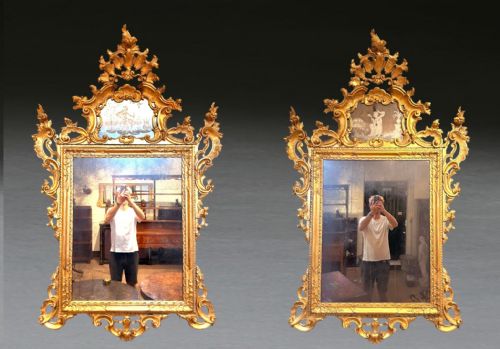
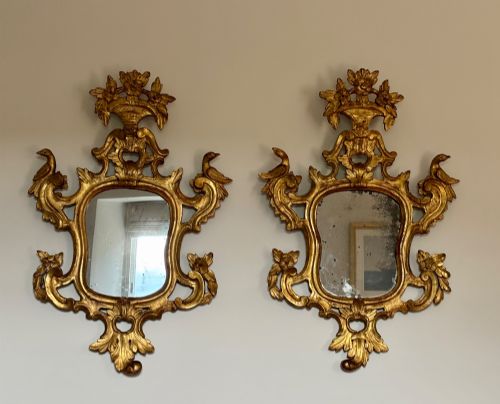
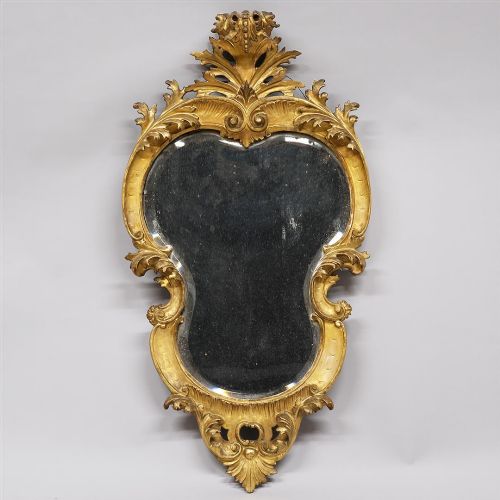
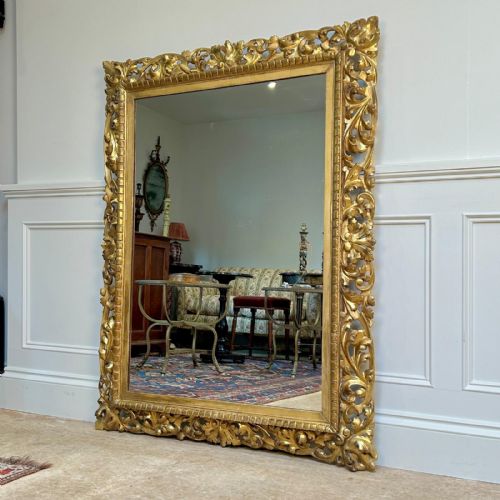
When you search for an ornate Italian wall mirror, you encounter pieces shaped by distinct regional traditions such as Florentine carving, Venetian glasswork, and spirited Rococo scrolls. These objects range from substantial overmantel and pier mirrors designed for grand reception rooms to smaller wall-hung dressing and hall mirrors.
Nineteenth-century examples dominate the selection, spanning styles from Italian Baroque revivals to exuberant Rococo frames. You will also find eighteenth-century works alongside pieces from the early twentieth century, showing the enduring appeal of traditional Italian framing techniques.
How they were made
Carved wood provides the structural foundation for many of these pieces, utilising limewood, walnut, and fruitwood shaped by hand. Artisans applied gesso over the timber base to create a smooth, responsive surface for intricate relief ornamentation.
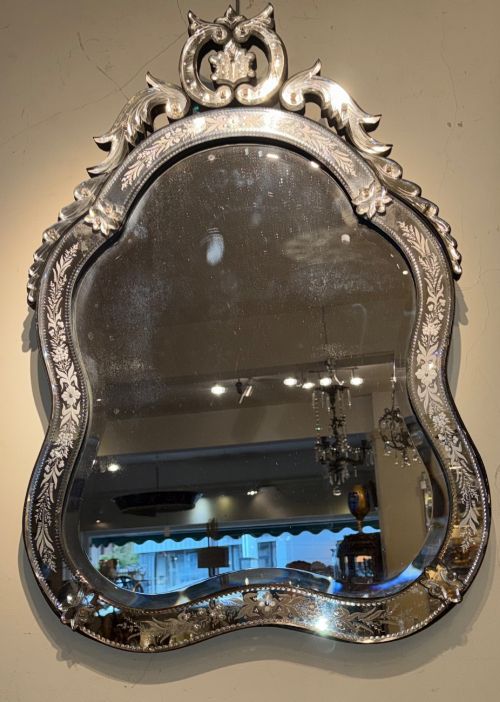
Guilders then applied gold or silver leaf onto the prepared surface, sometimes burnishing the metal to a high shine. Venetian variants often incorporate cut and etched glass frames, occasionally featuring coloured borders alongside mirrored plates.
Some Venetian frames incorporate ruby red glass borders designed to catch the candlelight of dimly lit historic chambers.
What varies in quality
The depth and clarity of the hand-carved relief distinguish finer examples from simpler production. Superior workshops employed skilled carvers whose scrollwork and foliage possess crisp undercut edges rather than soft, moulded contours.
The quality of the gilding and the condition of the original mirror plate also set pieces apart. Hand-applied gold leaf ages with a warmer tone and richer texture than substitute metallic paints.
The Ornate Italian Wall Mirror Glossary
- Giltwood
- Wood that has been covered with a thin layer of gold leaf. This finish creates a luminous metallic surface that catches candlelight or daylight.
- Gesso
- A plaster mixture applied to carved wood to prepare the surface for gilding. It allows craftsmen to model sharp decorative details.
- Overmantel mirror
- A large horizontal mirror designed to hang above a fireplace mantel. These pieces visually expand the room and reflect light from the hearth.
- Cartouche
- An ornamental frame resembling a rolled-up scroll or a shield. It frequently appears as the central motif in Rococo mirror designs.
- Pier mirror
- A tall mirror specifically proportioned to hang on the wall space between two windows. They often coordinate with console tables placed directly below them.
Ornate Italian Wall Mirror: Frequently Asked Questions
Where should I hang an ornate Italian wall mirror?
These mirrors work effectively above a fireplace mantel, in a hallway to create a sense of depth, or paired above a console table. Their decorative frames demand a wall space where they can command attention without competing with other heavy furniture.
Ensure the wall construction supports the substantial weight of carved wood and glass. Secure the piece using appropriate fixings suited to the specific frame size and weight.
How do I identify a Venetian mirror?
Venetian mirrors typically feature frames constructed entirely from glass sections, often decorated with cut and etched floral or geometric patterns. They frequently include applied coloured glass elements, such as ruby red borders, alongside central mirrored plates.
Unlike carved giltwood frames from Florence, Venetian examples emphasise glass craftsmanship and light reflection through engraved surface details.
What is the difference between Florentine and Rococo styles?
Florentine mirrors often display rich, dense surface carving with scrolling foliage, acanthus leaves, and deep gilding designed to project opulence. They lean toward architectural symmetry or elaborate rectangular formats.
By contrast, Rococo mirrors embrace asymmetry, C-scrolls, and cartouche forms that mimic natural organic growth and watery movement. The framing curves dynamically rather than following strict geometric boundaries.
How should I clean antique mirrored glass?
Clean the glass gently using a soft, dry microfibre cloth to remove dust without disturbing the edges of the plate. Avoid spraying liquid cleaners directly onto the mirror, as moisture can seep behind the glass and damage the silvering or foil backing.
If moisture is necessary, apply a minimal amount to the cloth rather than the glass. Take care around antique frames to avoid getting cleaning agents onto the giltwood or gesso surface.