


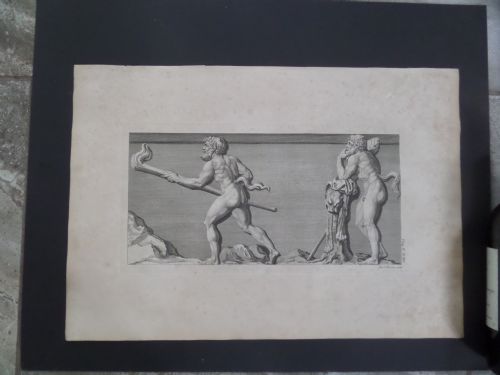


Antique Greek Relief Print
These antique greek relief print works capture neoclassical architectural details and mythological figures through 18th-century engraving on paper.
Antique Greek Relief Print
When buyers search for an antique greek relief print, they are looking at 18th-century paper engravings depicting classical subjects, architecture, and mythical figures from Athens. The versions most commonly met on this page are large 18th-century engravings associated with the antiquities of Athens, featuring deities, satyrs, and architectural studies.
The material record for these items is straightforward, consisting entirely of works printed in ink on paper during the 18th century. Neoclassical style dominates the visual language of these prints, reflecting the era's fascination with classical Greek antiquities.
Subjects range from specific gods such as Zephyros, Boreas, and Apeliotes to broader architectural and mythical paintings. Buyers encounter works published as part of systematic visual records of Athenian ruins and sculpture.
How they were made
These pieces are produced through the medium of 18th-century engraving, applying ink to paper to capture fine lines of architecture and mythical figures. The technique relies on skilled plate-cutting to render the intricate details of neoclassical design found in Athenian antiquities.
The physical format consists of paper sheets carrying detailed ink impressions that record both sculptural reliefs and structural elevations. This method allowed workshops to distribute precise visual records of classical sculpture and buildings to collectors across Europe.
Wind gods and mischievous satyrs share the 18th-century paper record alongside solemn architectural columns and archaeological serpents.
What varies in quality
Quality in these engravings rests upon the crispness of the ink impression and the clarity of the plate work executed by the hands responsible for the publication. Stronger examples maintain sharp definition in the architectural lines and the musculature of mythological figures.
The preservation of the paper sheet and the depth of the plate mark also separate examples, alongside the scale and ambition of the subject matter portrayed from the antiquities of Athens.
James Basire·Edward Rooker
The Antique Greek Relief Print Glossary
- Engraving
- A printmaking technique where an artist cuts an image into a metal plate using a burin. The resulting grooves hold the ink that transfers to paper under pressure.
- Neoclassical
- A style spanning the 18th century that drew inspiration from the classical art and culture of ancient Greece and Rome. It emphasises symmetry, proportion, and classical motifs.
- Antiquities
- The physical remains and artefacts of ancient civilisations, particularly Greece and Rome. In 18th-century publishing, this term referred to systematic illustrated volumes documenting these remains.
- Mythical
- Pertaining to traditional stories involving supernatural beings, gods, and heroes. In these prints, it describes depictions of figures like satyrs and wind deities.
Antique Greek Relief Print: Frequently Asked Questions
What subjects appear on these prints?
The listings show architectural studies and mythological subjects drawn from the antiquities of Athens. These include Greek gods, satyrs, serpents, and structural elements.
Such imagery reflects the 18th-century academic interest in documenting classical Greek heritage through detailed graphic art.
Which period do these pieces date from?
All items recorded on this page belong to the 18th century. They form a cohesive group from the neoclassical era.
During this time, European draughtsmen and engravers systematically recorded the architectural monuments and sculptures of Greece.
How should I frame an antique print?
Protect the paper by using conservation-grade, acid-free mounts and framing materials. Keep the work away from direct sunlight to prevent the ink and paper from fading.
Framing with UV-filtering glass helps preserve the 18th-century paper over years of display.
What defines neoclassical style in these works?
Neoclassical style draws directly on the aesthetic principles of ancient Greece, favouring clear lines, harmonious proportions, and classical subject matter. In these engravings, it appears in the accurate rendering of Athenian columns, friezes, and deities.
This artistic movement sought to revive the perceived nobility of classical antiquity in contemporary European culture.