
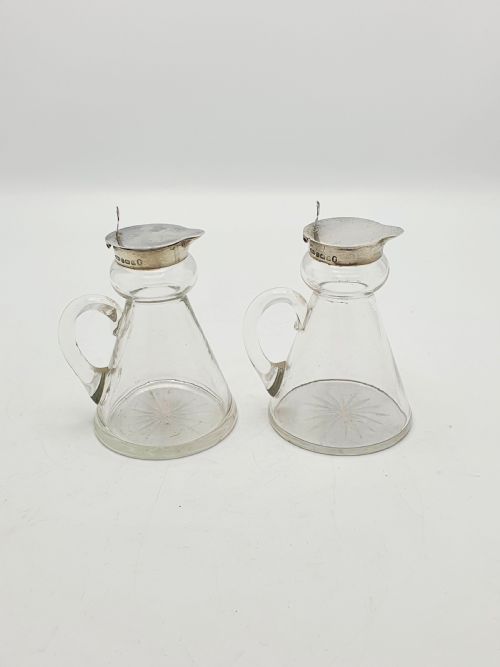


Antique Glassware Jug
An antique glassware jug brings table service alive with deep colour and brilliant refractive depth, making it a practical centrepiece for any room.
Antique Glassware Jug
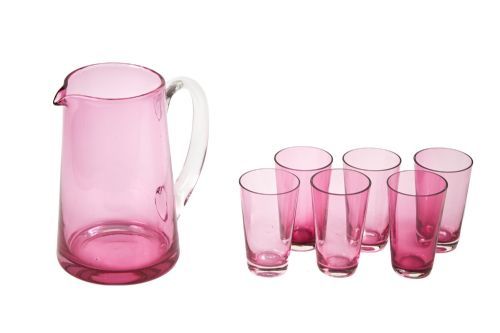
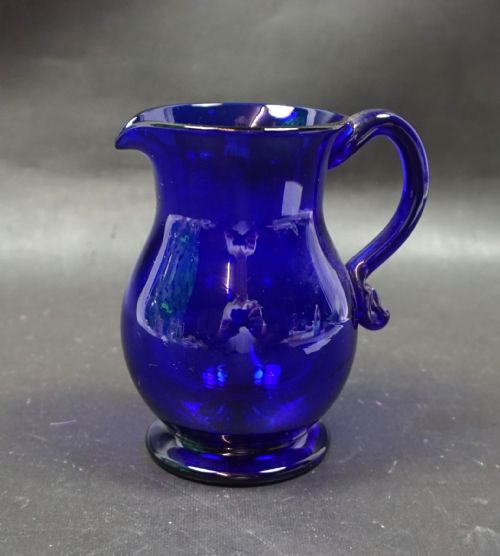
An antique glassware jug serves drinks across several periods, most commonly appearing as Victorian cranberry glass vessels, Edwardian cut glass ewers, and richly coloured water or claret jugs. These pieces range from small cream jugs in blue glass to large pitchers designed for table service.
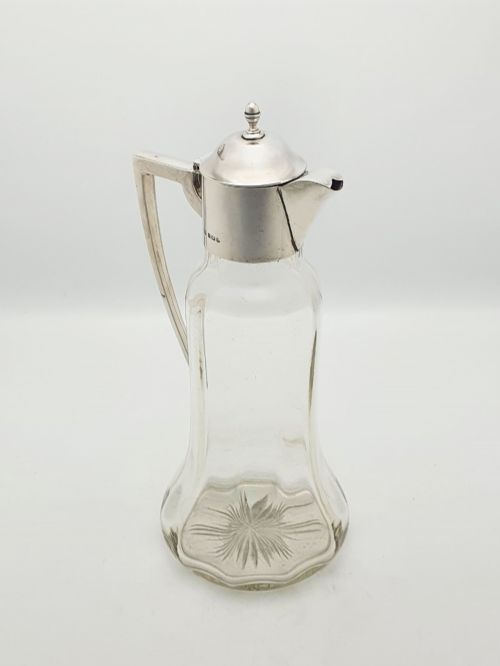
The selection here includes diverse forms such as claret jugs mounted in sterling silver, delicate latticinio decorated wine jugs from France, and bold Art Deco Czech drinking sets. Buyers frequently encounter nineteenth-century cut glass alongside vibrant enamelled and gilded Victorian examples.
Materials and construction
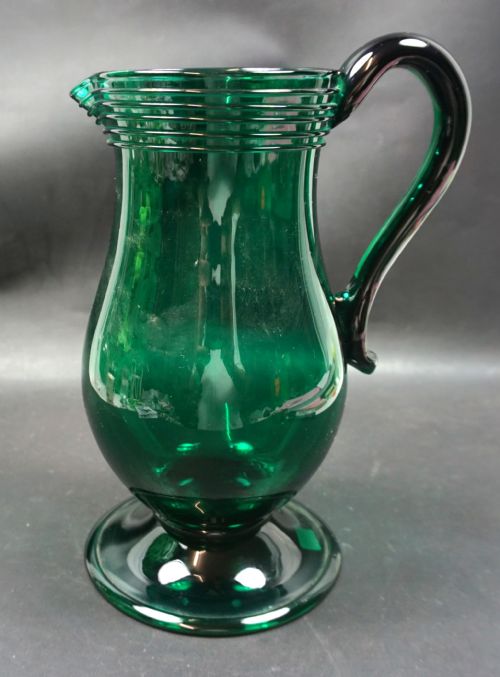
Makers shaped molten glass by hand, often incorporating lead crystal for added weight and brilliance, or blowing distinct hues like cranberry and Bristol blue directly into the metal. Many vessels feature applied details such as folded feet, trail rims, and white glass latticinio decoration.
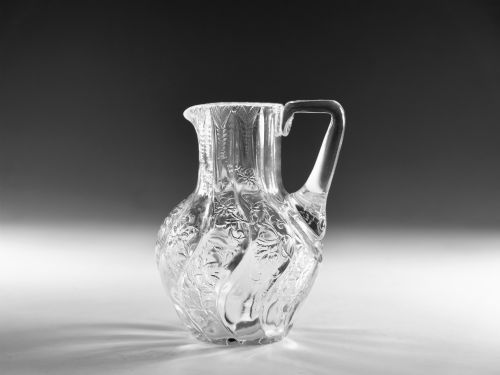
Surface ornamentation involved multiple specialist techniques including wheel cutting, acid-etching, enamel painting, and the application of gold leaf. Some pieces received structural mounts in sterling silver or pewter to secure handles and spouts.
Listings span periods from the Georgian era through Victorian, Edwardian, and Art Deco, utilising clear glass, cranberry glass, and crystal.
Assessing quality in glassware
Quality rests in the crispness of the wheel cutting, the uniformity of the glass body, and the precision with which decorative elements like enamel painting or gold leaf are applied. Superior examples display clean interior surfaces and well-balanced proportions between body, handle, and spout.
The integration of metal mounts, such as silver collars or pewter framing, distinguishes higher-grade service pieces. Weight, clarity of the crystal, and the depth of colour in tinted glass further separate standard production from exceptional studio work.
Stevens & Williams·Webb Corbett·Baccarat·Amphora
The Antique Glassware Jug Glossary
- Cranberry glass
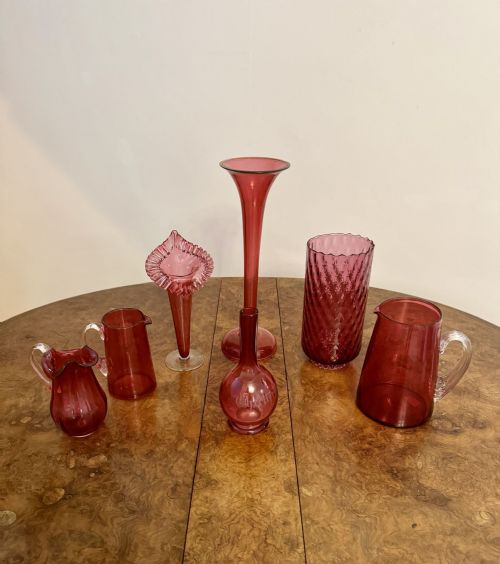
- A transparent red-pink glass coloured with gold chloride during production. It gained immense popularity during the Victorian era for tableware and decorative jugs.
- Latticinio
- A decorative glass technique involving intertwined opaque white or coloured glass threads embedded within clear glass. It creates delicate linear patterns across the body of the vessel.
- Claret jug
- A specialised pouring vessel designed for serving red wine at the dining table. These often feature silver or plated mounts with hinged lids.
- Ewer
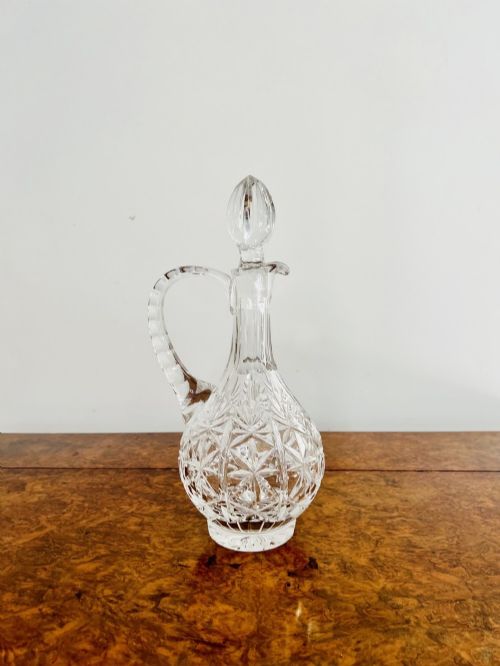
- A large jug with a wide spout and a looped handle, traditionally used for holding water or wine. In antique glass, they frequently showcase heavy cut decoration.
- Overshot glass
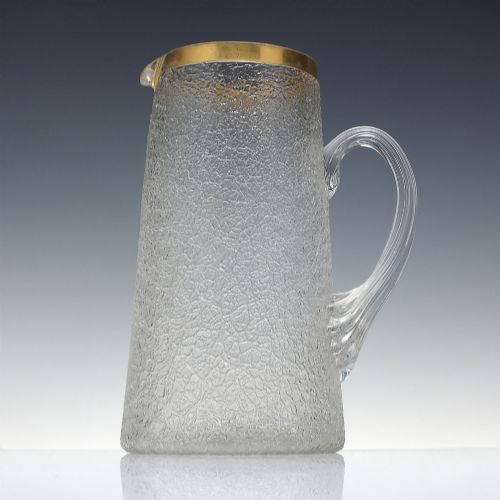
- A textured glass surface created by rolling a hot blown vessel over fragments of crushed glass before reheating and shaping. This produces a rough, ice-like exterior finish.
Antique Glassware Jug: Frequently Asked Questions
How were antique glassware jugs used?
These vessels served functional roles at the dining table, holding water, wine, claret, or cream for daily meals and formal gatherings. Many were paired with matching glasses or bowls as complete drinking sets.
Beyond dining, larger ewers and decorated jugs often functioned as ornamental display pieces on sideboards or mantelpieces, highlighting the rich colours of the glass.
How do I tell Victorian jugs apart from Edwardian ones?
Victorian jugs frequently feature rich cranberry hues, hand-painted enamel, or textured overshot surfaces, often reflecting romantic or revivalist design influences. The forms tend toward rounded, organic shapes with applied coloured glass trails.
Edwardian pieces often showcase brilliant-cut lead crystal with deep geometric facets, paired occasionally with sterling silver mounts. The aesthetic leans toward high clarity, precision cutting, and formal table service.
Can I use my antique jug for serving drinks?
Most antique glass jugs remain structurally sound and capable of holding cold liquids for modern use. Care should be taken with thermal shock, avoiding boiling water or sudden temperature changes.
Pieces featuring delicate enamel, gold leaf, or valuable metal mounts are better suited to careful display or gentle hand washing after occasional use.