
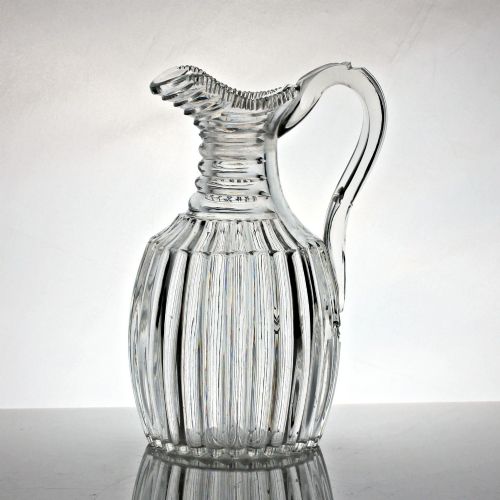

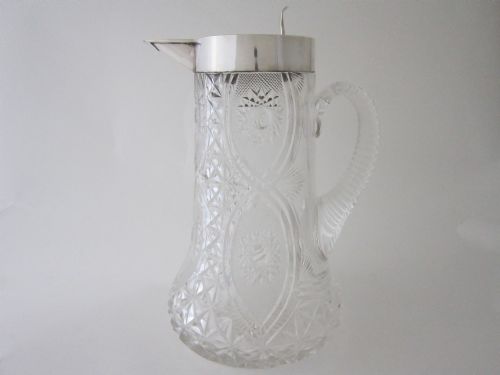
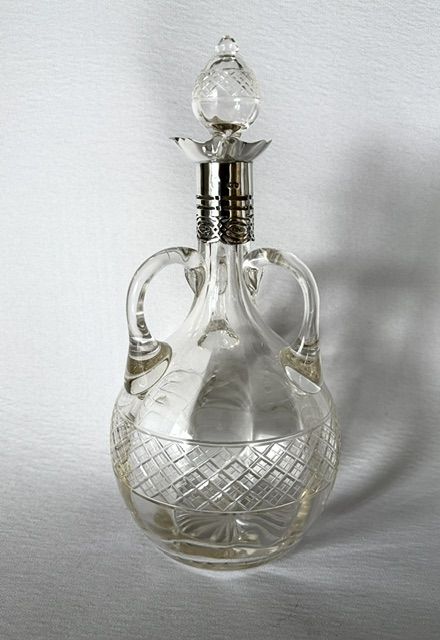
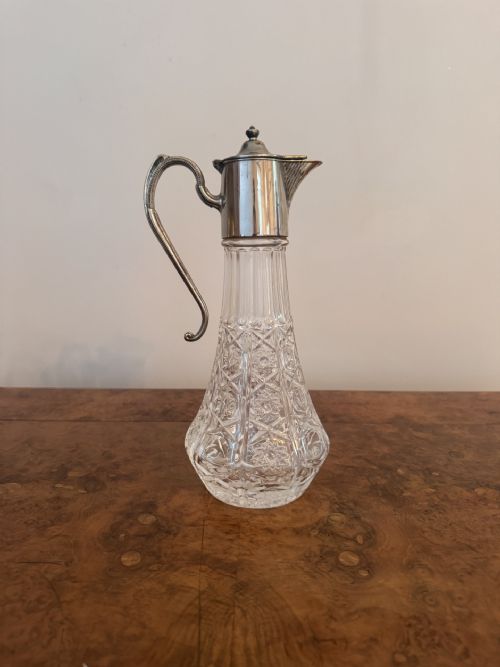
Antique Glass Claret Jug
An antique glass claret jug brings Victorian dining tables to life, pairing heavy crystal with ornate silver mounts to serve wine with theatrical flair.
Antique Glass Claret Jug
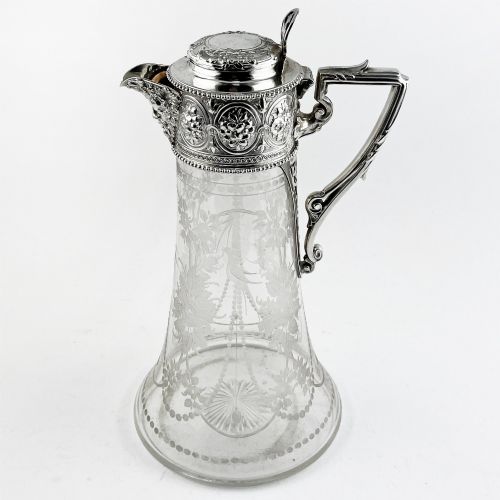
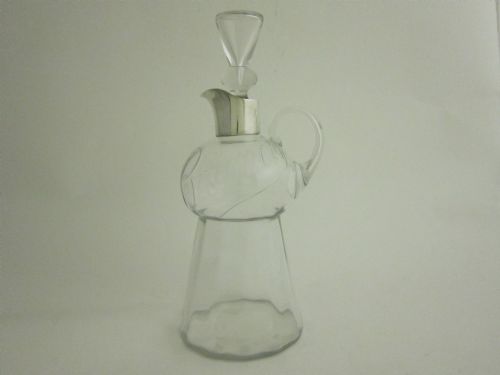
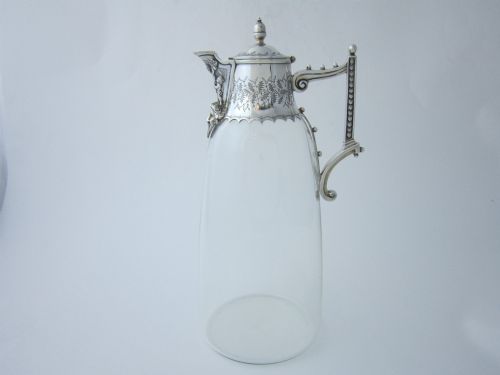
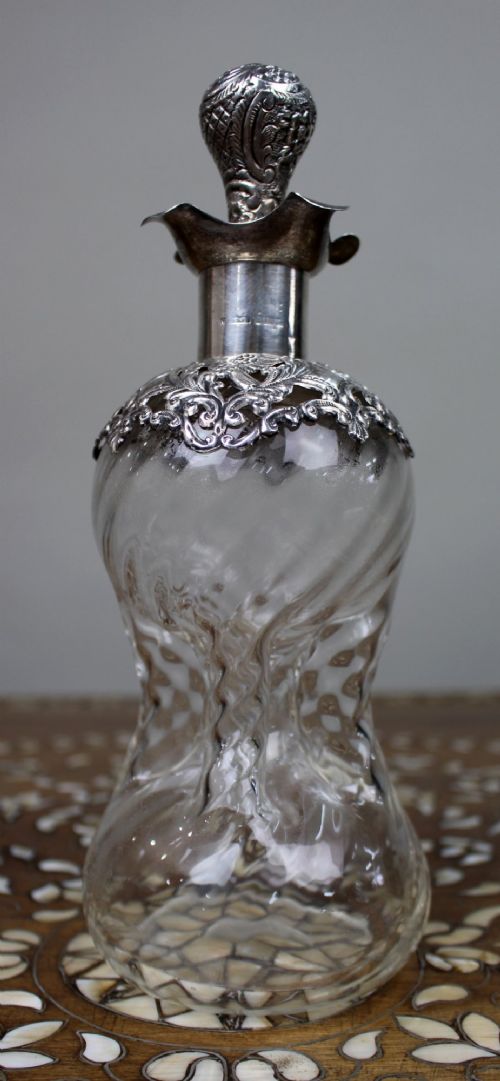
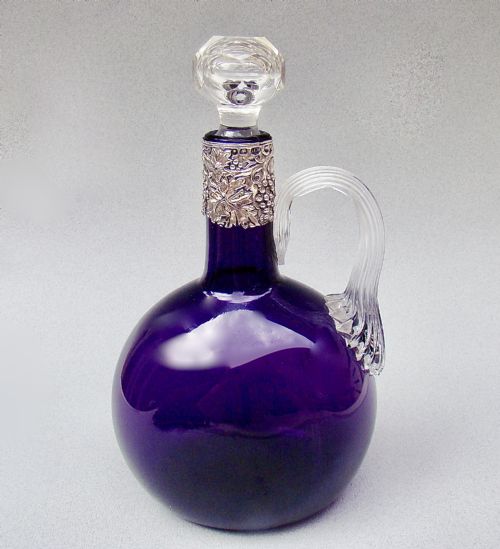
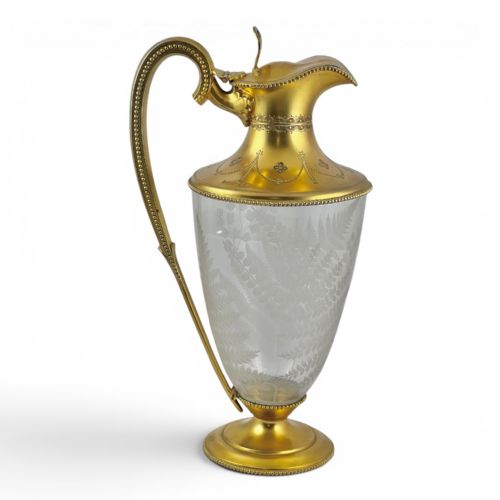
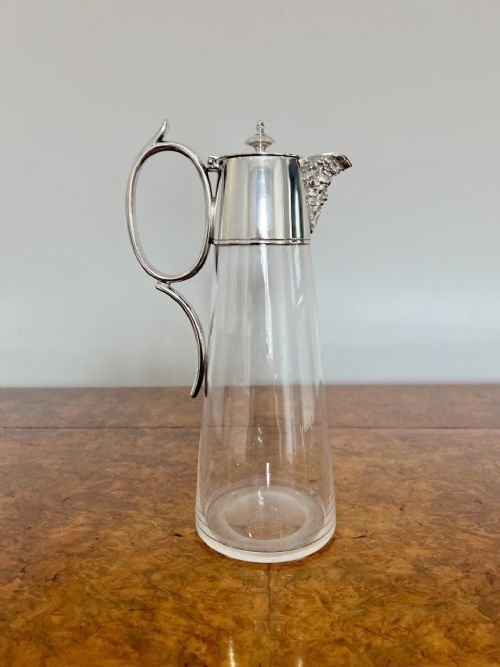
An antique glass claret jug is a specialised vessel designed for serving red wine at formal dining tables, combining a vitreous body with metal fitments. These pieces span the nineteenth and early twentieth centuries, with Victorian and Edwardian examples dominating the selection.
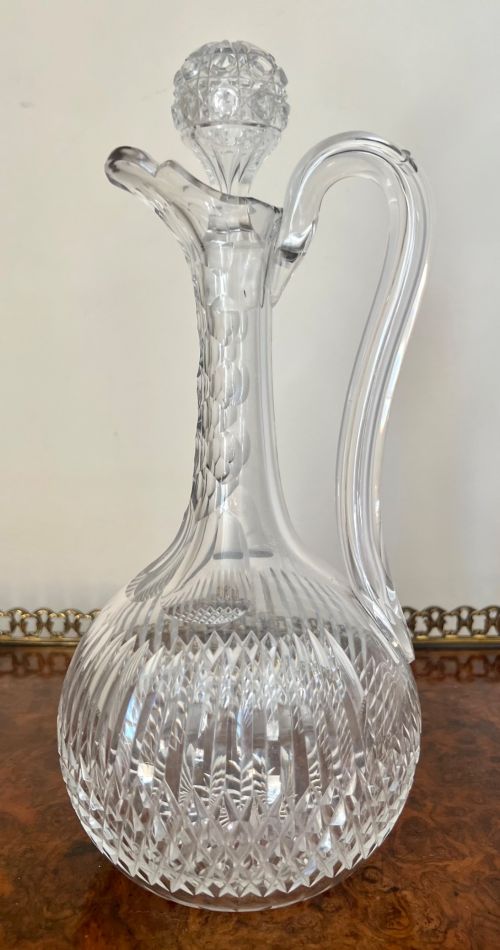
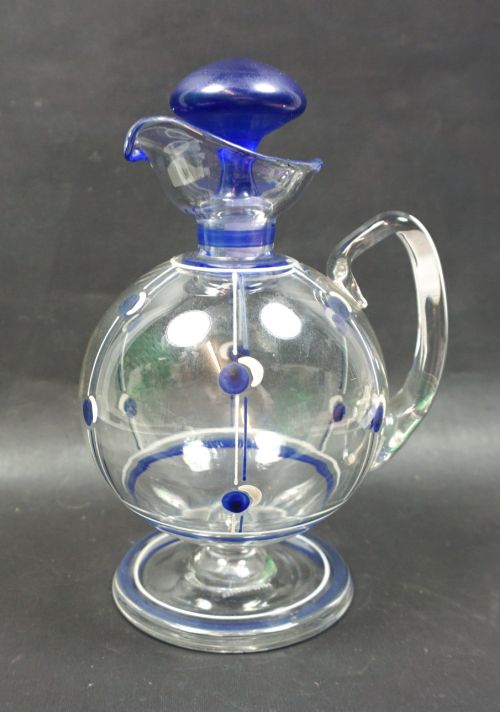
Makers utilised distinct regional styles, ranging from English brilliant-cut crystal paired with sterling silver to colourful Bohemian overlays and enamelled pieces from continental Europe. The standard form involves a bulbous or tapering glass body fitted with a hinged lid, handle, and a pouring spout.
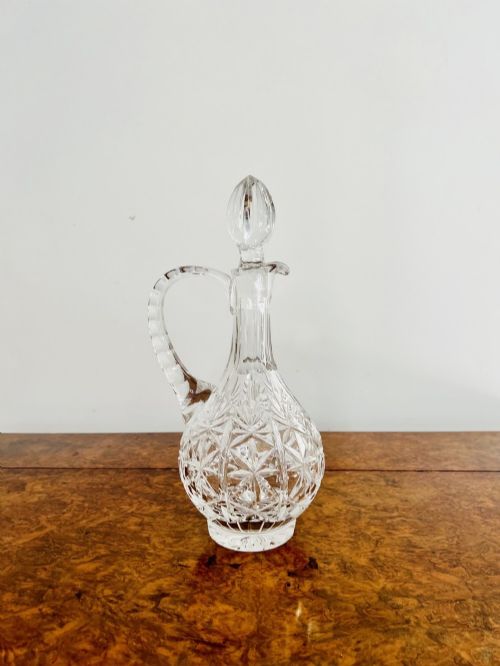
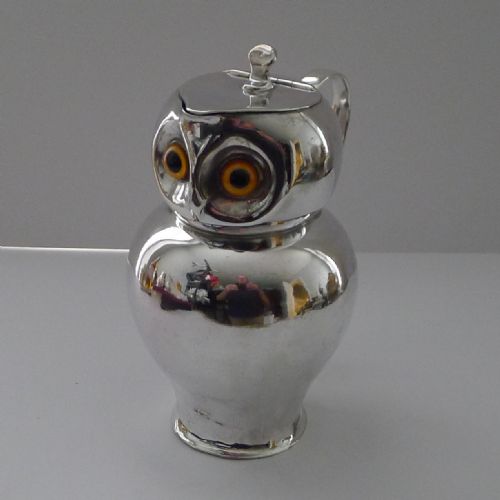
Buyers will encounter simpler utilitarian decanters alongside highly decorative ewers featuring novelty shapes like owls or detailed animal mask mounts. While many function primarily as wine servers, related forms include water jugs, champagne jugs, and lemonade pitchers.
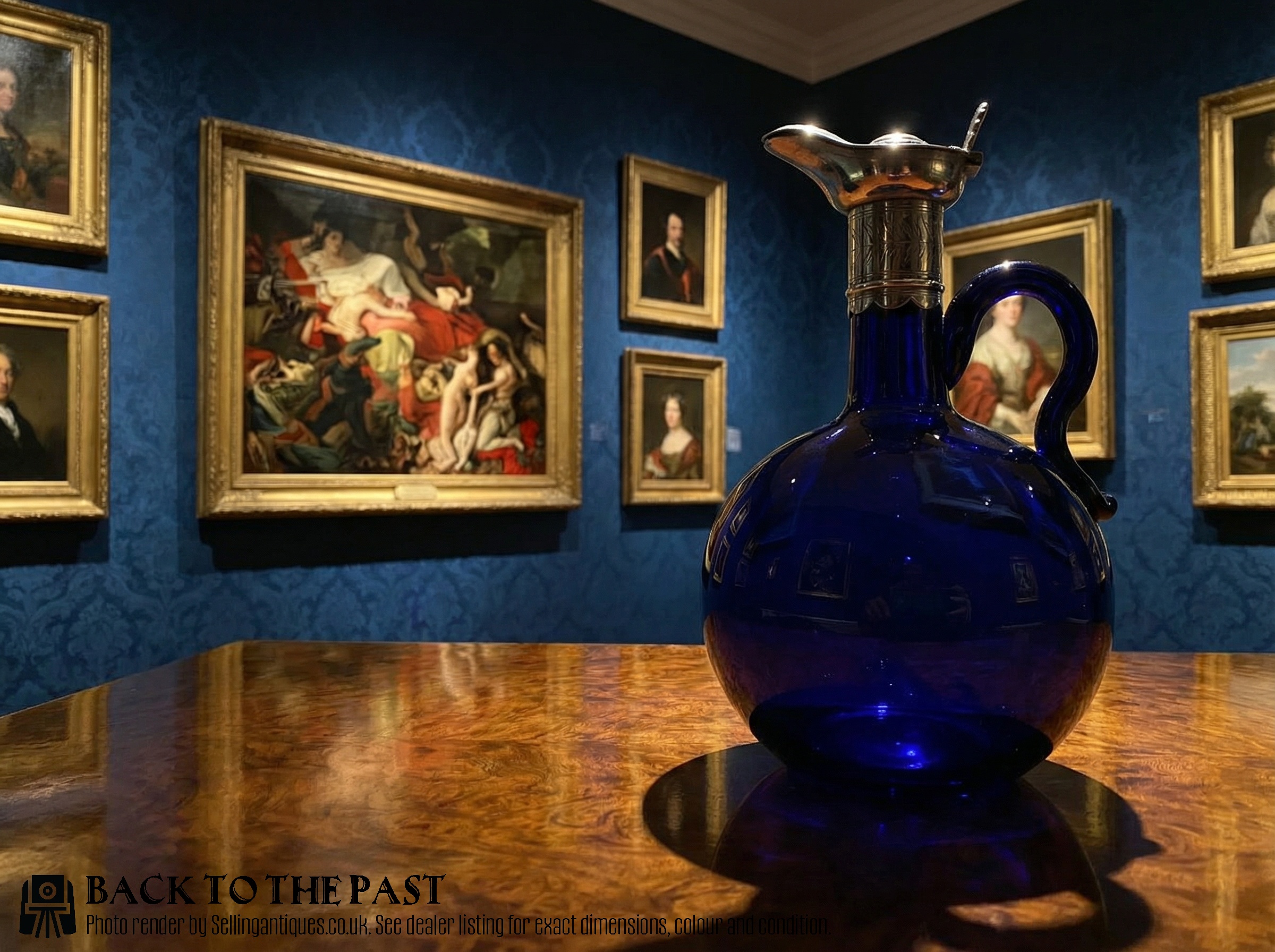
Materials and Construction
The body of an antique glass claret jug is typically formed from heavy lead crystal, clear glass, or coloured varieties such as cranberry, amethyst, and green. Artisans shaped these vessels using free-blowing, mould-blowing, or overlay techniques before applying deep wheel-cut patterns, pillar and prism motifs, or delicate floral engraving.
Metalwork forms the second essential component, encompassing sterling silver, silver gilt, old Sheffield plate, standard silver plate, and occasionally pewter. Silversmiths cast and chased mounts, handles, and hinged lids, securing them firmly around the neck and base of the glass body.
Antique Glass Claret Jug Retail Price Guide 2026
Typical asking prices for glass claret jug among the pieces listed under this phrase on Sellingantiques today, from the lower quarter to the upper quarter. They describe what is for sale here now, not the wider market.
Several makers produced novelty claret jugs shaped like owls with bulging glass eyes, bringing a touch of Victorian whimsy to the dining table.
Assessing Craftsmanship and Distinction
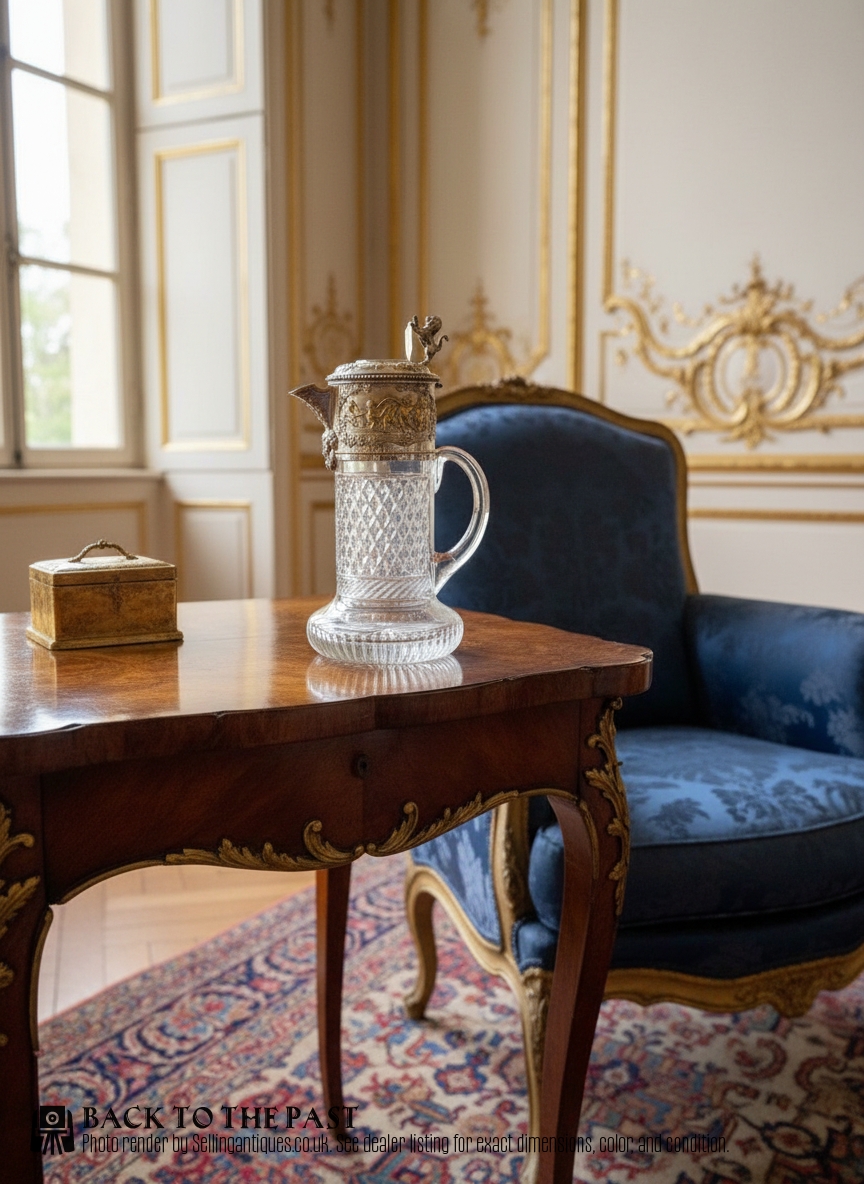
Quality in an antique glass claret jug rests on the depth and clarity of the glass cutting, where crisp, sharp facets catch the light differently than softer, rounded mouldings. The weight of the crystal and the resonance of the metal mounts contribute significantly to the overall presence of the piece.
The integration between the metalwork and the glass reveals the standard of manufacture, particularly in the snugness of the collar and the smooth action of the hinged thumbpiece. Maker marks from established silversmiths elevate the standing of a piece, especially when combined with crisp hallmarks and undamaged internal elements.
Asprey and Co Ltd·Henry Matthews·Mappin and Webb·Archibald Knox
The Antique Glass Claret Jug Glossary
- Claret jug
- A specialised pouring vessel created specifically for serving red table wine during the nineteenth and twentieth centuries. These pieces typically combine a decorative glass body with a metal handle and hinged lid.
- Silver plate
- A manufacturing method where a thin layer of silver is fused or electroplated onto a base metal such as copper or brass. This technique allowed makers to produce ornate mounts at a more accessible cost than solid sterling silver.
- Crystal
- A high-clarity glass containing lead oxide, which increases the weight, brilliance, and refractive index of the material. This composition allowed Victorian and Edwardian artisans to execute deep, sharp geometric cuts.
- Overlay
- A glassworking technique where a gathered core of coloured glass is encased within a layer of clear glass, or vice versa. Artisans then cut through the outer layer to expose the contrasting colour underneath.
- Hallmark
- A stamped official mark indicating the metal purity, place of assay, and date letter on silver components. These stamps provide a reliable method for dating the metal mounts of a piece.
Antique Glass Claret Jug: Frequently Asked Questions
What is an antique glass claret jug?
An antique glass claret jug is a nineteenth or early twentieth-century vessel designed to aerate and pour red wine at the dining table. These pieces feature a glass body joined with metal mounts, a handle, and a hinged lid.
They bridge the gap between functional tableware and decorative art, showcasing the glasscutting and silversmithing skills of their period.
How do I date a silver mounted claret jug?
Dating relies primarily on the hallmarks stamped onto the silver mounts, which indicate the assay office and year of production. Stylistic markers, such as the geometric cuts of the Victorian era or the cleaner lines of Edwardian pieces, also help determine age.
Changes in glass colours, such as the popularity of cranberry glass in the late nineteenth century, offer further chronological clues.
Were these jugs only used for claret?
While named for claret, these vessels served various drinks including water, white wine, champagne, and lemonade. Some specialised examples included internal ice chambers to keep beverages chilled without dilution.
Makers adapted the basic form for multiple formal dining requirements throughout the Victorian and Edwardian periods.
How should I clean an antique glass claret jug?
Cleaning requires warm water and mild soap, avoiding abrasive scrubbers that can scratch the crystal or damage silver plating. Metal mounts should be polished carefully with a soft cloth to prevent tarnishing while protecting the surrounding glass.
Soaking should be kept minimal, particularly around historic cement or sealed collar joints.