


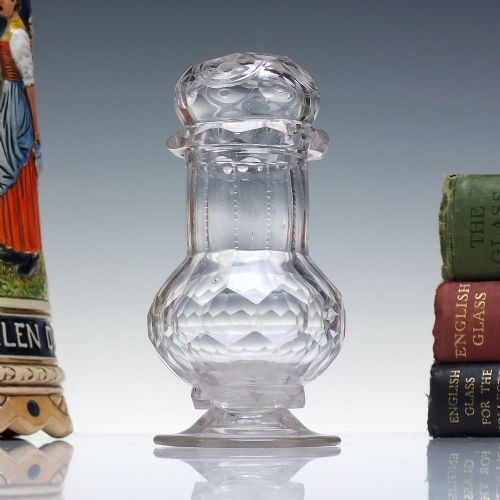


Antique Glass Caster
An antique glass caster holds sugar or condiments on the dining table, combining cut glass with sterling silver or silver plate.
Antique Glass Caster
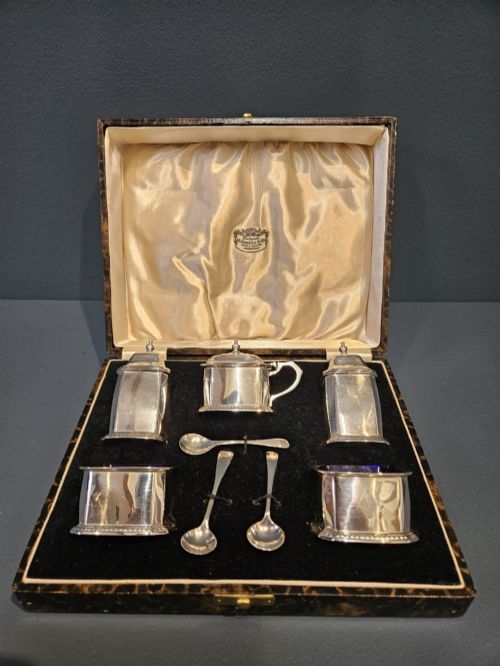
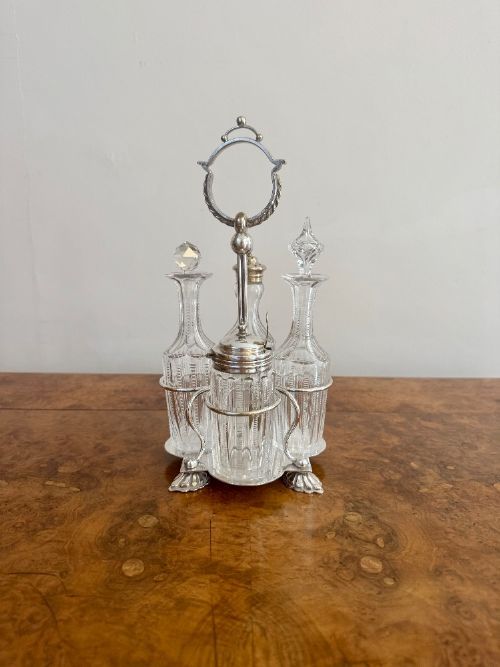
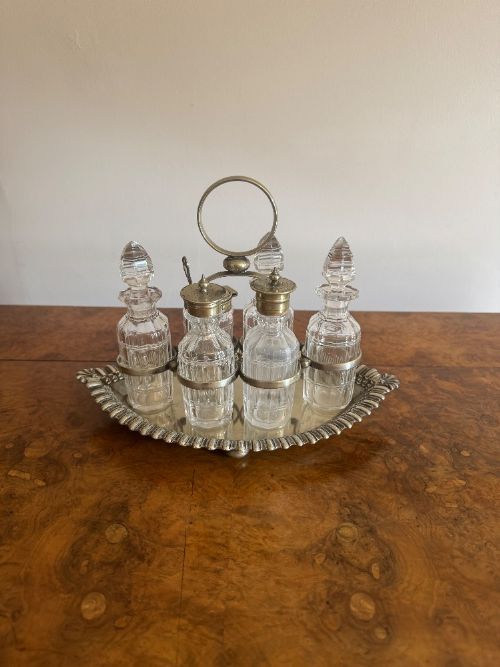
An antique glass caster appears in various forms on the table, spanning the eighteenth century through to the mid-twentieth century. Buyers searching this phrase encounter individual sugar sifters, pepper pots, and larger cruet sets containing glass bottles housed in silver plated or sterling silver stands.
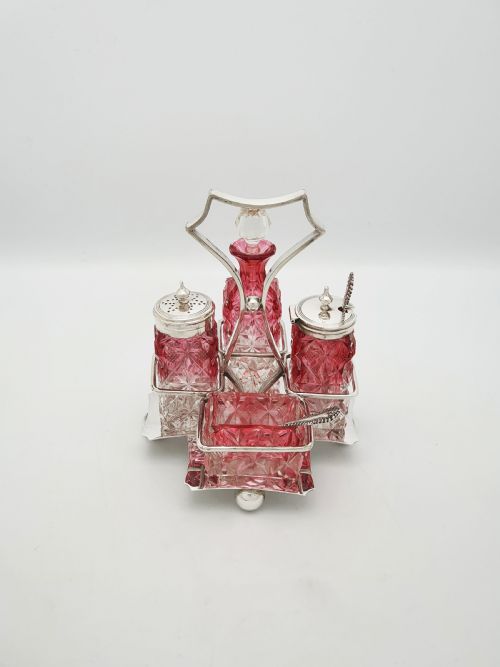
The materials range from clear cut glass and blue glass to cranberry flashed glass, mounted with sterling silver or silver plate. Styles stretch across Georgian, Victorian, Edwardian, and Art Deco periods, reflecting the shifting tastes of domestic dining over two centuries.
How they were made
The construction relies on combining heavy cut glass bodies with fitted metal mounts, screw feet, and pierced tops. Makers utilised sterling silver or silver plate for the lids and frames, often pairing them with hand-cut or moulded glass vessels.
Detailing includes intricate facet cutting on the glass, engraved silver tops, and fitted wooden or ebonised stands with silver mounts for multi-bottle cruet sets.
Materials documented across the collection include sterling silver, silver plate, pewter, oak, and various forms of cut glass.
What varies in quality
The standard of an antique glass caster depends on the depth and crispness of the glass cutting alongside the weight and hallmarks of the silver components. Superior examples show heavier gauge metalwork and precise piercing on the shaker tops.
Completeness alters the character of the piece, particularly in multi-bottle cruet sets where matched original glass bottles and intact silver mountings dictate the overall integrity.
Charles Thomas Fox·Mappin Brothers·Walker & Hall·Elkington & Co·Wade Wingfield Wilkins
The Antique Glass Caster Glossary
- Cruet set
- A matched or fitted stand holding multiple glass bottles and cast metal pots for condiments like oil, vinegar, salt, and pepper.
- Sugar caster
- A tall container with a pierced domed top designed for sprinkling caster sugar over food.
- Silver plate
- A base metal, often copper or Britannia metal, coated with a thin layer of silver through electroplating or older fusion methods.
- Cranberry glass
- A rich red-pink glass coloured with gold chloride during the manufacturing process, popular in Victorian tableware.
Antique Glass Caster: Frequently Asked Questions
What is a glass caster used for?
These vessels serve to dispense sugar or dry condiments at the dining table through a pierced lid.
Individual casters focus on sugar or pepper, while larger frames hold multiple bottles for various seasonings.
How do I clean antique silver and glass?
Wash the glass gently in warm soapy water, removing the metal tops beforehand to protect adhesives and delicate threads.
Polish the silver mounts with a soft cloth and appropriate silver cleaner, avoiding contact with the glass body.
Are cruet sets complete with original bottles?
Many surviving cruet sets retain their original fitted glass bottles, though replacements do occur due to breakages over generations of use.
Checking the fit and glass quality helps determine if the bottles match the period of the frame.
How do I date an antique glass caster?
Hallmarks on the silver components provide the most reliable date for solid silver pieces, pointing to specific assay offices and years.
Stylistic indicators such as Georgian cut patterns or Art Deco lighthouse forms help date silver plated or unmarked examples.