





Antique German Carving
When you handle an antique german carving, you hold centuries of timber craft, from Black Forest cuckoo clocks to devotional lime wood figures.
Antique German Carving
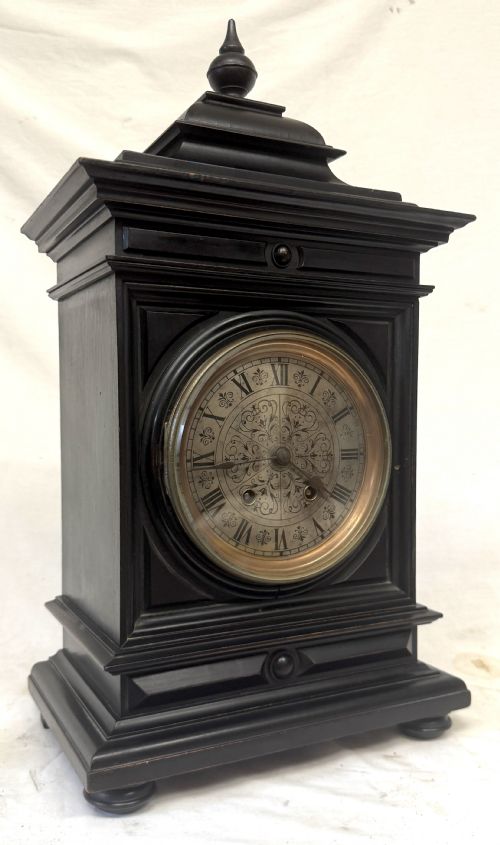
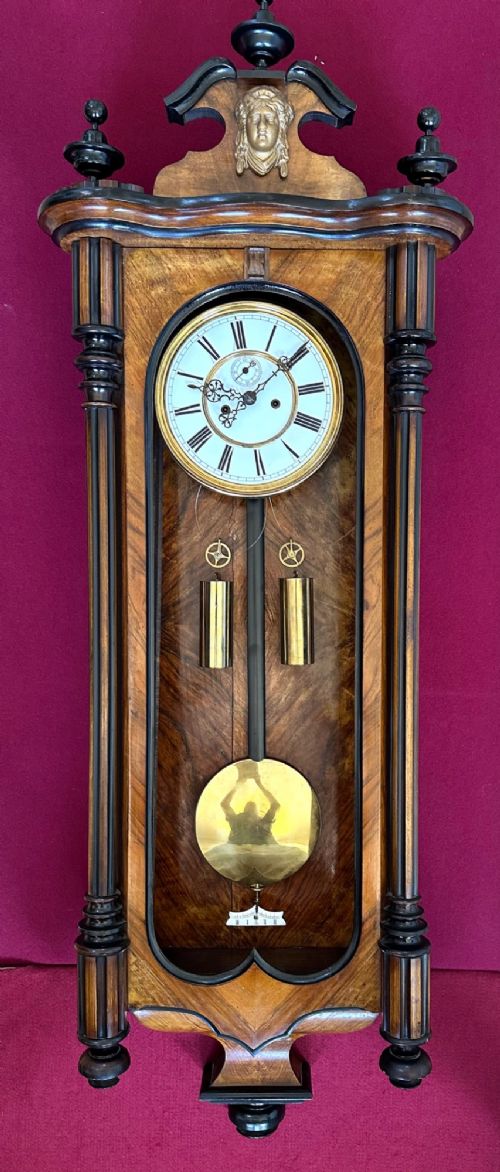
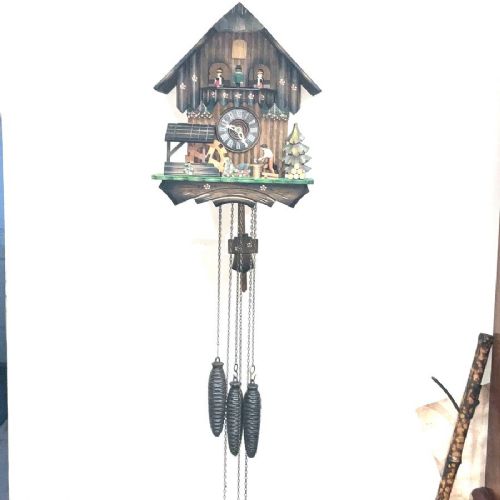
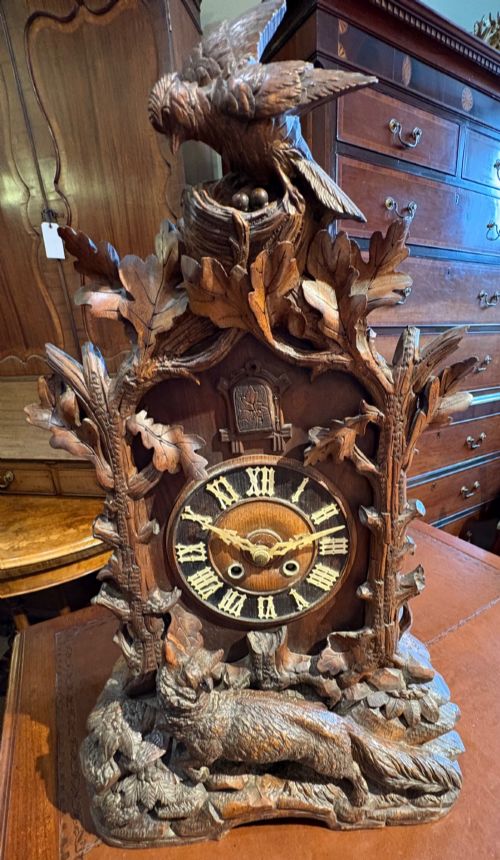
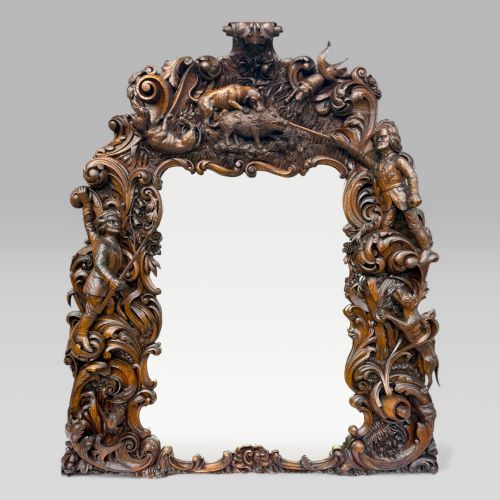
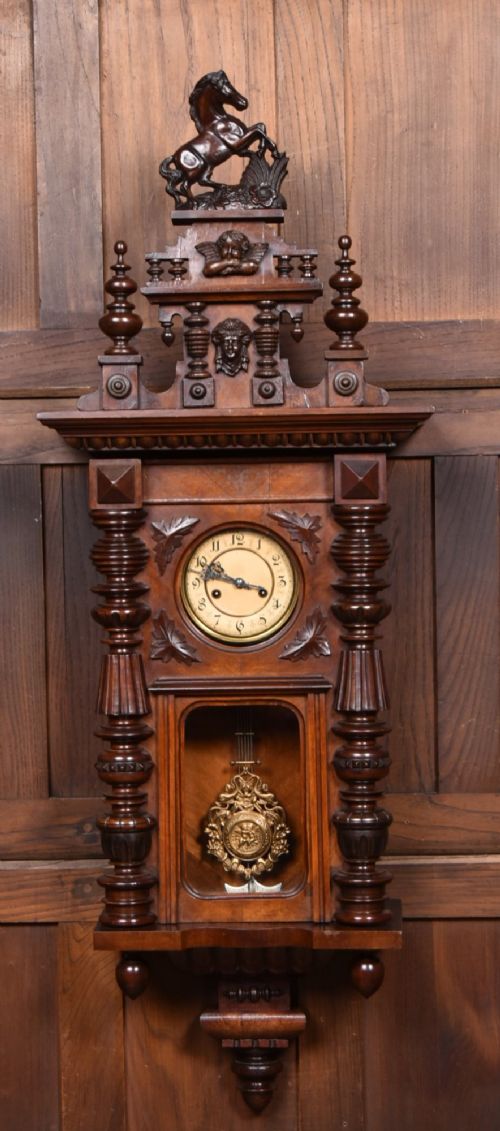
An antique german carving encompasses both domestic woodwork and ecclesiastical sculpture, representing traditions across several centuries. You find domestic pieces in the form of Black Forest walnut and oak clocks, barometers and relief panels depicting hunting scenes.
The material record also spans devotional lime wood and boxwood figures, alongside larger architectural items such as hunting lodge overmantle mirrors. Most examples you meet on this page date from the nineteenth century, though earlier Baroque and eighteenth-century figures appear.
Makers and regional styles vary considerably, moving from domestic animal and forest motifs to precise religious iconography. These objects served utilitarian domestic functions as timepieces or functional mirrors, as well as devotional purposes.
How they were made
Makers utilised solid timbers such as walnut, oak, lime wood and boxwood, selecting each for its grain and response to fine chisel work. Carvers employed hand gouges and chisels to build high-relief hunting scenes and intricate foliage, often leaving the natural grain visible or ebonising the surface.
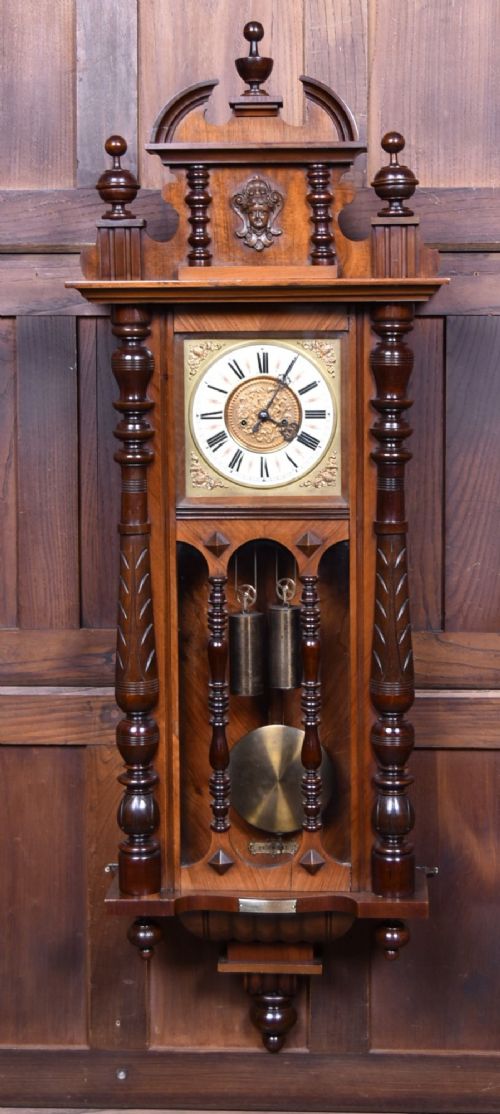
Figural works in boxwood and lime wood received polychrome pigments or giltwood finishes in earlier centuries, whilst nineteenth-century domestic clocks relied on precise mechanical movements housed within sculpted wooden cases.
Materials recorded across the inventory include brass, glass, enamel, cast iron, and several varieties of carved timber.
What varies in quality
Quality rests upon the depth of the undercut, the vitality of the carving, and the fidelity of the proportions. Superior works display confident tool marks and anatomical accuracy, whereas lesser items rely on mechanical stamping or shallow surface scoring.
The integration of the movement with the carved case dictates the worth of clocks and barometers, separating bespoke workshop output from mass production.
Simon Peter Gerz·Orivit·Winterhalder and Hofmeier·Simon Troger·Fritz Kochendorfer·Berthold Herman Muller·Franz Keller
The Antique German Carving Glossary
- Black Forest style
- A nineteenth-century style originating in the mountainous regions of central Europe, characterised by carved animal figures, foliage, and hunting motifs.
- Lime wood
- A pale, soft wood with a fine, even grain that resists splitting, frequently utilised by German carvers for intricate religious and secular figures.
- Giltwood
- Timber that has been coated with a thin layer of gold leaf, often seen on seventeenth-century and Baroque decorative elements.
- Relief panel
- A flat wooden board where figures and ornament are carved to project from the background, common in hunting and forest scenes.
- Polychrome
- The practice of decorating sculpted wood surfaces in multiple colours, frequently observed on ecclesiastical figures from earlier periods.
Antique German Carving: Frequently Asked Questions
How do I identify a Black Forest carving?
Look for deep relief work featuring naturalistic fauna, foliage, stags, and bears, typically executed in dark walnut or oak.
These pieces usually date from the nineteenth century and combine domestic utility, such as clocks or barometers, with sculptural ornament.
What wood was most commonly used?
Makers predominantly worked in walnut and oak for domestic clocks and architectural mirrors, while lime wood and boxwood served for sculptural figures.
Each timber responded differently to the hand tools employed by regional workshops.
How do I care for carved wood?
Keep carved wooden objects away from direct heat sources and dramatic humidity fluctuations to prevent the timber from splitting.
Dust gently with a soft brush rather than a cloth to protect delicate undercuts and projecting foliage.
Are these items purely decorative?
Many pieces combined decoration with daily utility, functioning as timepieces, barometers, mirrors, or table stands.
Ecclesiastical carvings served devotional roles in churches and private chapels before entering domestic collections.