


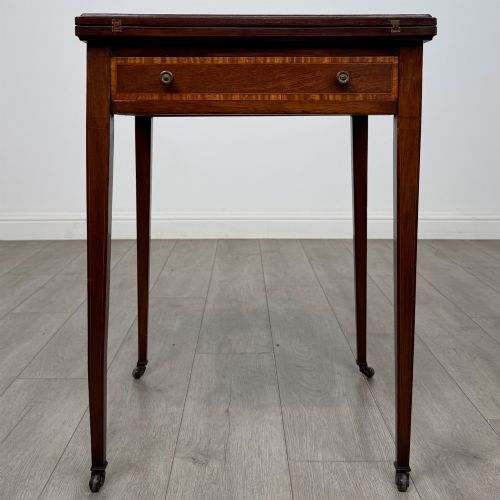
Antique Games Furniture
These antique games furniture pieces combine practical folding surfaces with fine cabinetmaking, offering period charm and clever dual-purpose design to any room.
Antique Games Furniture
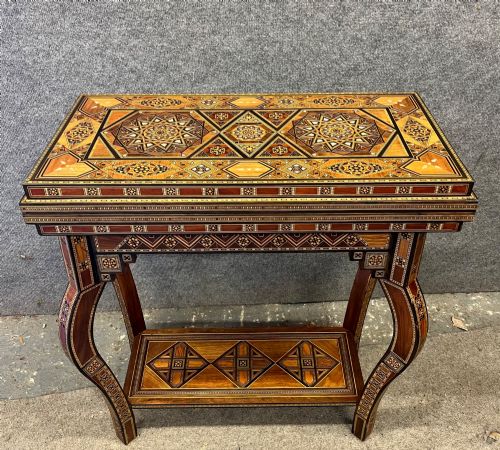
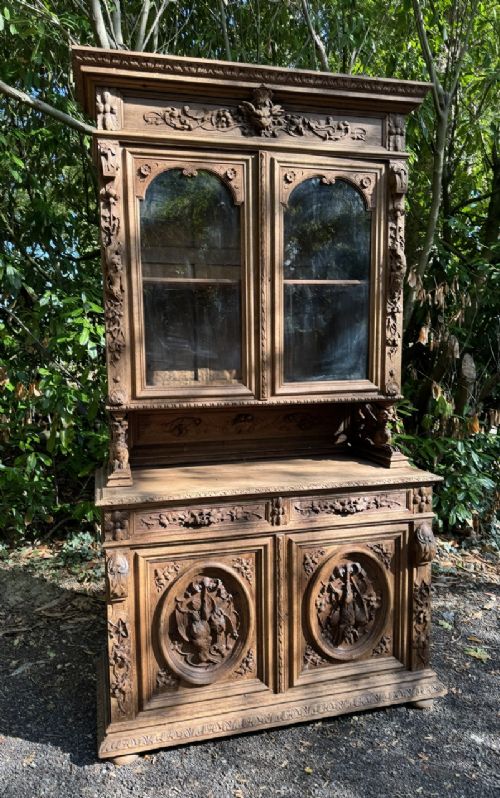
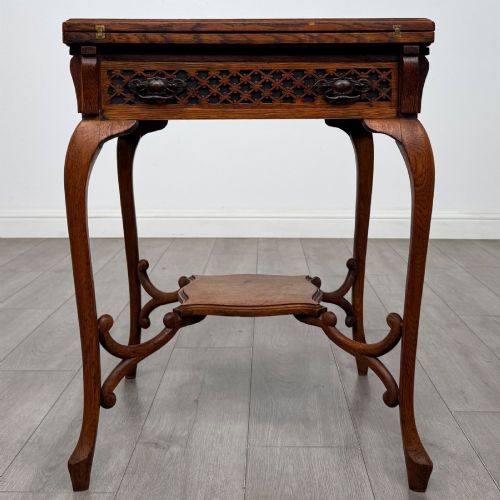
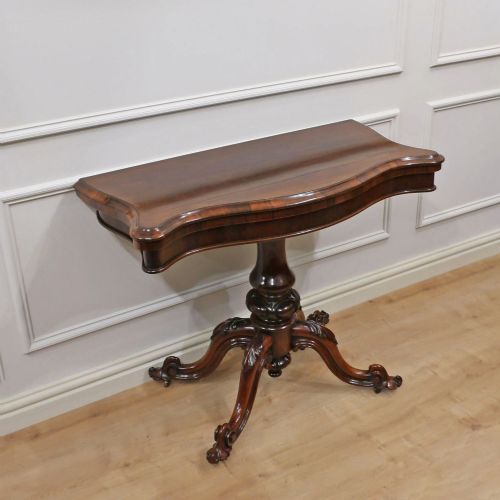
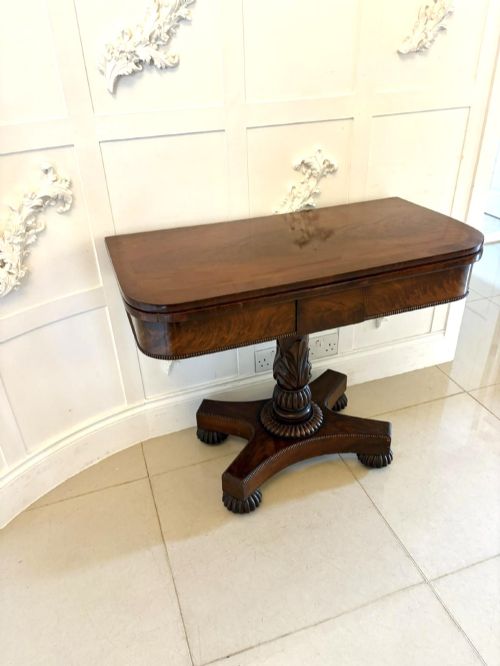
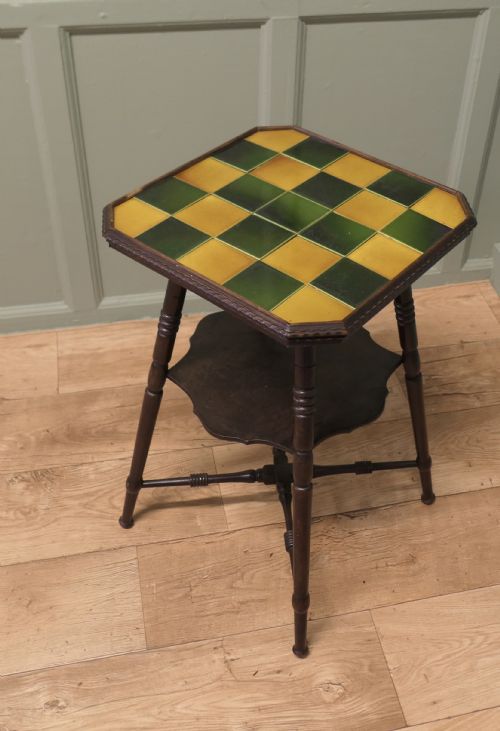
Antique games furniture encompasses versatile timber tables designed for card playing, chess, and domestic leisure, with card tables and games tables forming the core of the items seen here.
The pieces on this page span the eighteenth, nineteenth, and early twentieth centuries, featuring distinct design vocabulary from the Georgian, Regency, Victorian, and Edwardian periods.
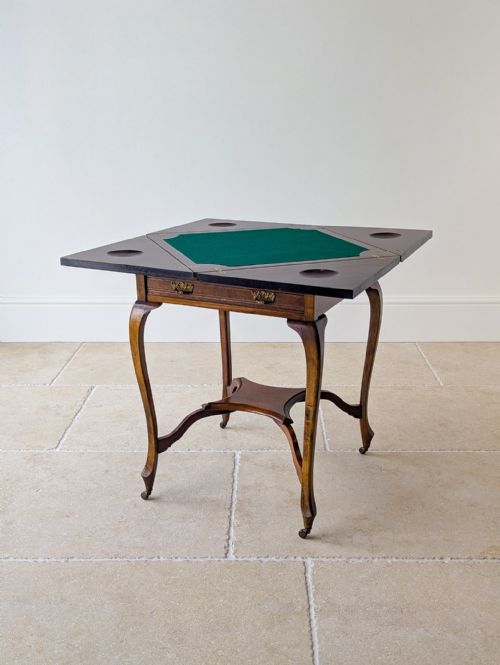
Makers utilised various clever mechanisms, from fold-over tops and swivel actions to envelope leaves, allowing multi-purpose utility within domestic reception rooms.
Materials and Construction
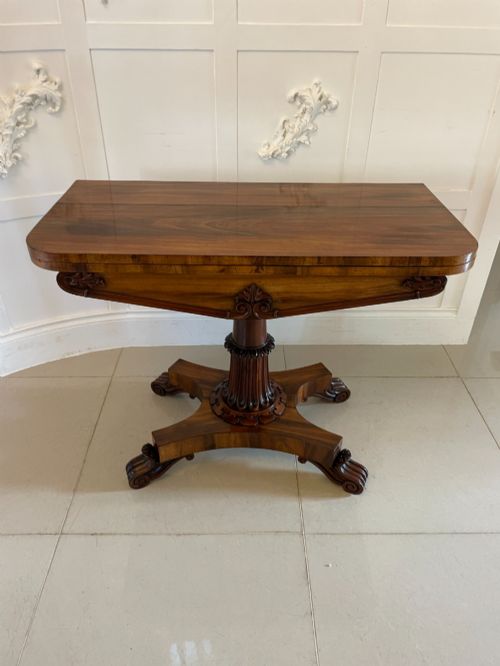
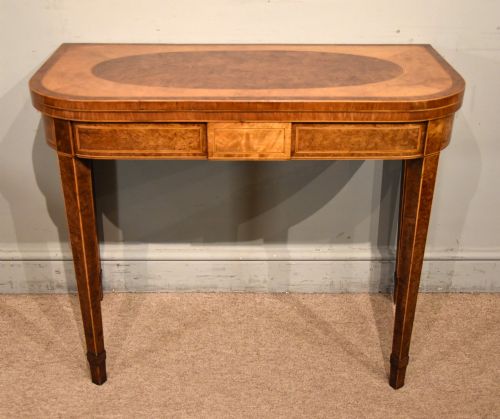
Cabinetmakers employed dense hardwoods such as mahogany, rosewood, walnut, and satinwood, frequently applying decorative veneers and crossbanding to enhance the visual appeal of the timber.
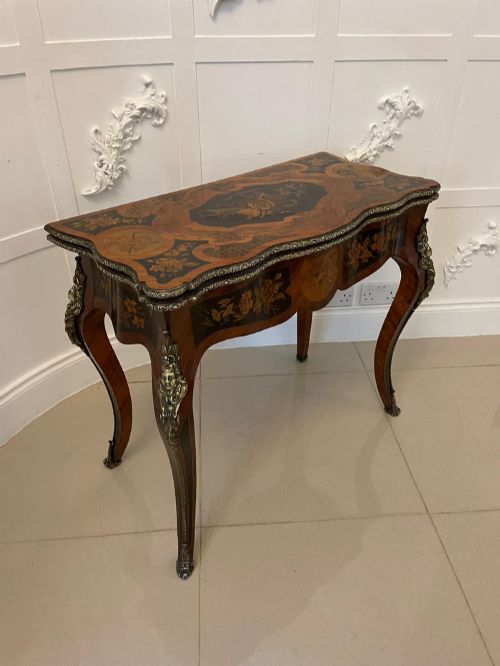
Metals including brass, ormolu, and boxwood provided contrasting inlay, stringing, sabots, and castors, adding structural reinforcement and refined detail to the table legs and edges.
Joiners constructed complex pivoting hinges and folding leaves that required precise carpentry to ensure stability when the furniture opened for play.
You might even spot a primitive French beech game block when standard tables feel too formal.
Assessing Quality
The calibre of a piece rests on the selection of figured timber veneers and the crispness of marquetry or brass inlay, distinguishing standard utility items from exceptional metropolitan commissions.
The engineering of the folding mechanism dictates daily usability, where smooth swivel actions and tight joints reveal superior workshop execution.
George Bullock·Shapland and Petter·Antoine Lampre·G T Morant·Epstein and Co
The Antique Games Furniture Glossary
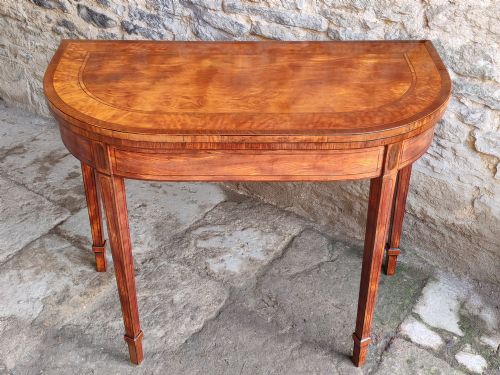
- Demi-Lune
- A half-moon shape commonly utilised for the tops and frames of side and card tables designed to sit flush against a wall.
- Envelope Card Table
- A square table top featuring four triangular flaps that fold outward in a diagonal sequence to reveal the playing surface.
- Crossbanding
- A narrow strip of veneer laid perpendicular to the grain of the main surface, framing the primary timber.
- Ormolu
- Gilded bronze mounts applied to furniture for decorative enrichment, popular during the Regency and Victorian eras.
- Marquetry
- Decorative patterns formed by fitting together thin pieces of wood veneer and other materials on a solid ground.
Antique Games Furniture: Frequently Asked Questions
How do envelope card tables work?
Envelope card tables feature four triangular leaves hinged diagonally from each corner. When lifted and pivoted outward, they reveal a baize-lined playing surface.
The clever overlapping motion folds flat to create a compact occasional table when not in use.
What is the difference between a tea table and a games table?
Tea tables generally have plain folding tops intended to hold porcelain service during afternoon gatherings. Games tables often integrate compartments for cards or specialised playing surfaces.
Many examples function as dual-purpose furniture, shifting between a side table, a console, and a gaming board.
How do I identify a Regency games table?
Regency games tables typically display classical architectural lines, rosewood veneers, and precise brass inlay work. They frequently rest on pedestal bases supported by sabots and castors.
Look for bold mahogany or rosewood grains paired with dark contrasting stringing.
Where should I place an antique games table at home?
These tables sit well against hallway walls or living room corners in their closed, folded configuration. Placing them out from a wall allows guests to appreciate the swivel top and inlaid borders.
Opening the top temporarily for display or entertaining highlights the historic function of the piece.