
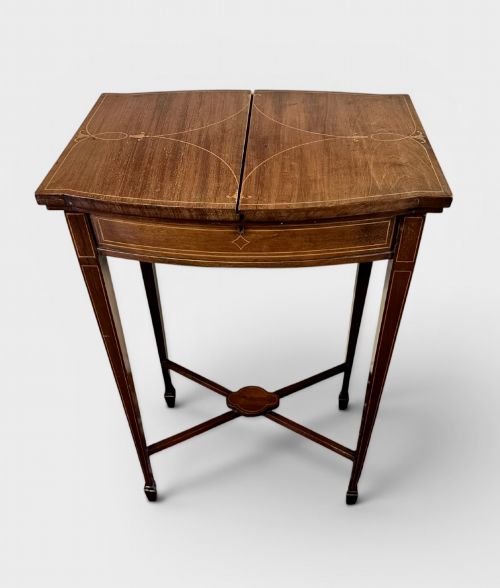


Small Games Table
These small games table pieces combine domestic utility with ingenious folding, sliding, or lidded surfaces designed for card play and board games.
Small Games Table
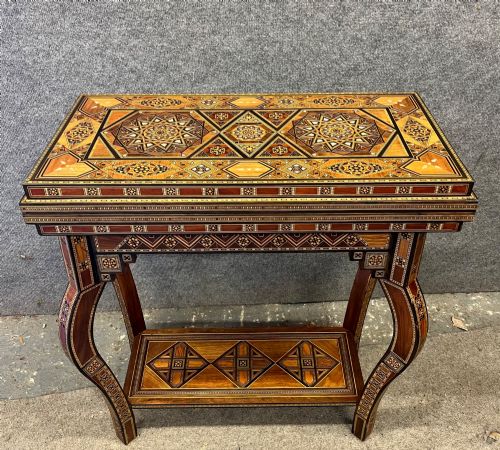
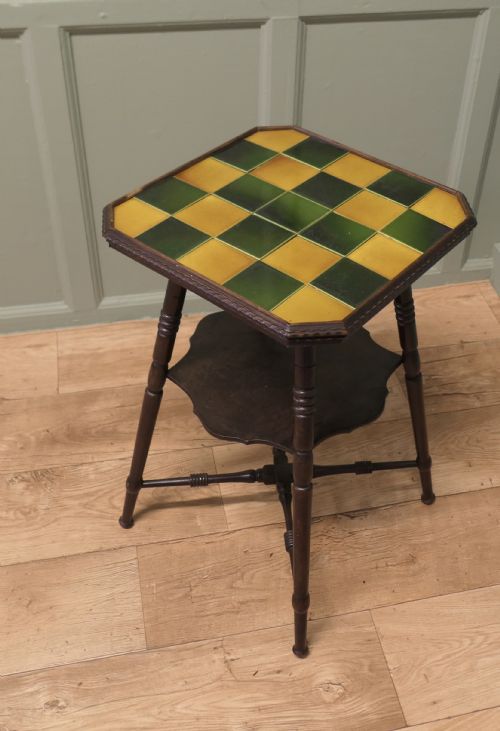
When you search for a small games table, you encounter a variety of compact furniture designed for pastimes like chess, cards, and dominoes. These pieces appear across Georgian, Victorian, and Edwardian periods, taking forms such as card tables, chess tables, and occasional tables with integrated boards or playing surfaces.
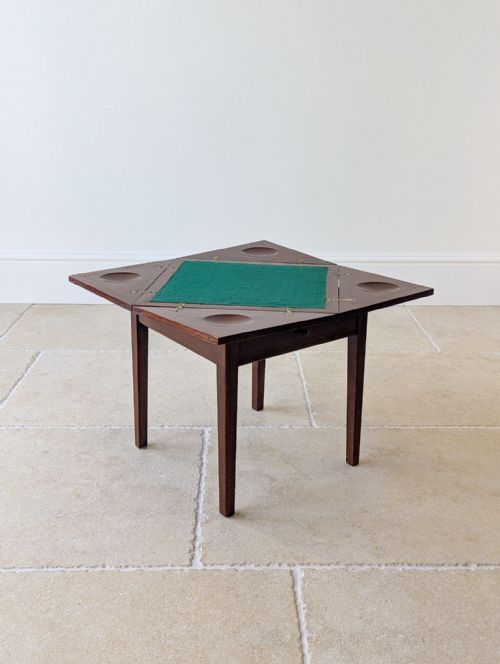
The version most commonly met on this page is the Edwardian or Victorian folding or envelope card table, often executed in mahogany, walnut, or satinwood. Many feature clever mechanisms that allow the top to rotate, fold over, or open out to reveal a baize-lined playing area and interior storage for pieces.
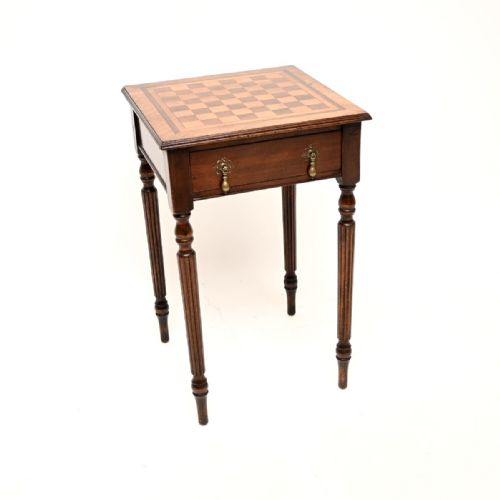
Beyond dedicated folding tables, the selection includes chess tables with inlaid wood surfaces, marble-topped bouillotte tables, and occasional tables that double as games sets. Their modest proportions suit modern rooms while retaining the specific functional adaptations of their original eras.
Materials and construction
Cabinetmakers utilised dense timbers like mahogany, walnut, and rosewood for their durability and capacity to take a fine polish. Lighter woods such as satinwood appeared particularly during the Edwardian period, offering a contrasting ground for delicate inlay work.
Surfaces frequently incorporated specific functional materials like wool baize to cushion playing pieces and cards, alongside ceramic elements and brass fittings. Inlaid woods created permanent chess or checkerboards directly into the table top, requiring precise geometric joinery.
Folding and pivoting tops relied on specialised hinges and rotational pivots concealed within the framing. Drop leaves and envelope mechanisms demanded exact tolerances so that leaves aligned flush when closed.
Listings feature mahogany, walnut, satinwood, and rosewood, spanning periods from Georgian through Victorian to Edwardian and Arts & Crafts.
Distinctions in quality
Quality rests upon the execution of the timber selection and the crispness of any inlaid marquetry or stringing. Superior examples display carefully matched grain patterns across folding leaves, ensuring the figure mirrors itself when opened.
Mechanical integrity defines the better pieces, where folding, rotating, and drop-leaf actions operate smoothly without sagging or friction. The precision of the interior compartment joinery and the retention of original baize linings further separate standard items from finer workshop output.
Attribution to documented makers or specific cabinet-making firms elevates a piece through verified provenance and superior hand-carved detailing on legs and stretcher bases. The integration of auxiliary materials like marble tops or detailed brass mounts also indicates higher grade manufacture.
Shapland & Petter·Gillow
The Small Games Table Glossary
- Envelope card table
- A square table with four triangular flaps that fold inward and overlap like an envelope to reveal the playing surface.
- Baize
- A coarse woollen material resembling felt, traditionally used to line the playing surfaces of card and gaming tables.
- Marquetry
- Decorative veneer work consisting of small pieces of various woods fitted together to form pictorial or geometric designs.
- Demi lune
- Half-moon shaped, commonly describing the curved top and frame of certain card tables designed to stand against a wall.
- Bouillotte table
- A small French circular table, often featuring a raised gallery edge and a marble top, traditionally used for the card game bouillotte.
Small Games Table: Frequently Asked Questions
What were small games tables used for?
These tables served as versatile living room furniture, remaining compact against a wall when closed for general use as lamp or side tables. When guests arrived, the tops folded or rotated open to accommodate card games, chess, or board pastimes.
Their dual purpose made them essential for entertaining in period homes where floor space was at a premium.
How do I care for the baize surface?
Original baize requires gentle dry cleaning with a soft brush to remove dust without pulling the wool fibres. Modern replacement baize can be fitted by a restorer if the original material has worn through from active use.
Keep these tables away from direct sunlight and excessive moisture to protect both the wool fabric and the underlying timber frame.
How can I tell a Georgian games table from a Victorian one?
Georgian tables often feature simpler, straighter mahogany legs, sometimes ending in pad or claw-and-ball feet, with restrained veneers and classic fold-over tops. Victorian examples frequently employ heavier burr walnut or rosewood, elaborate marquetry inlay, and turned or carved pillar bases.
Edwardian pieces tend to return to lighter satinwood and mahogany with delicate stringing and inlaid details.