
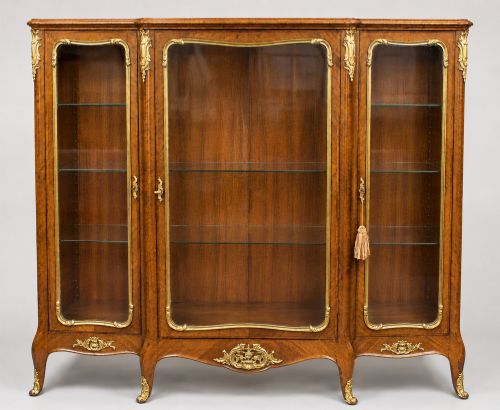


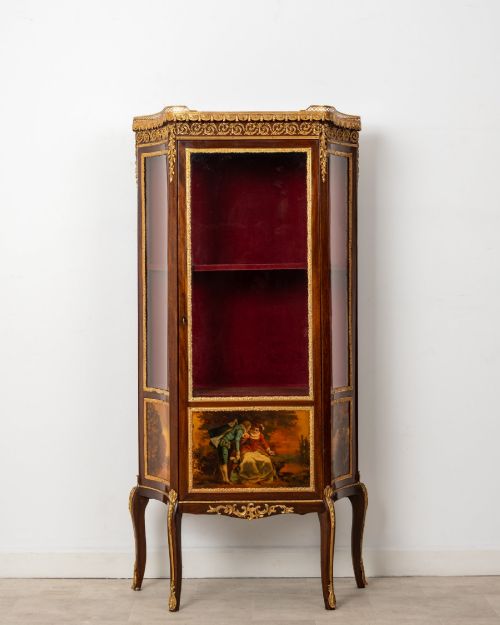
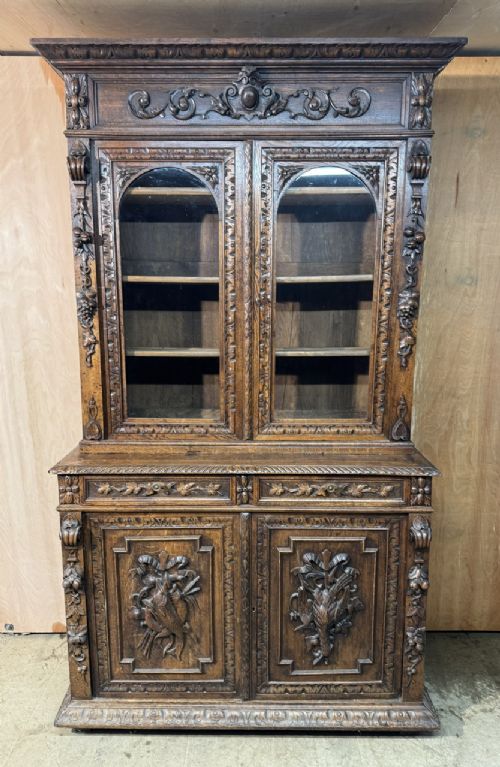
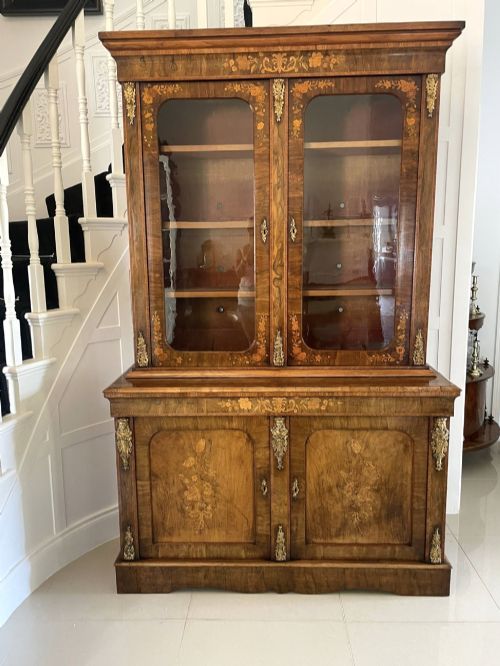
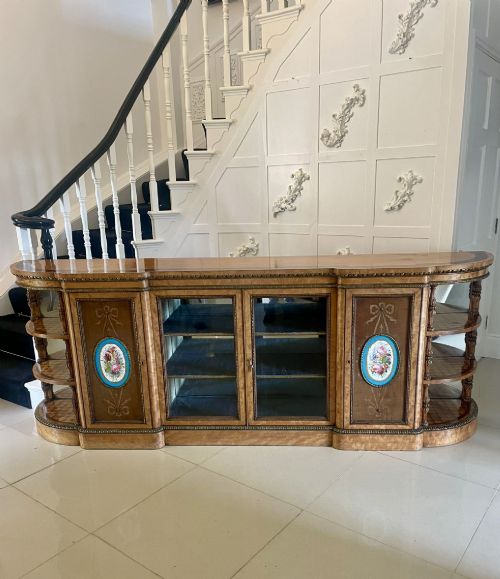
Antique French Glazed Cabinet
These antique french glazed cabinet examples bring continental elegance to a room while keeping precious collections safe behind glass.
What these pieces are
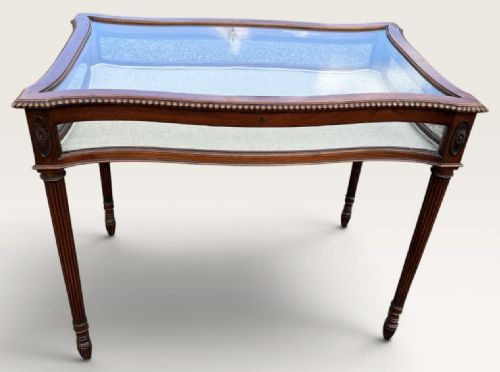
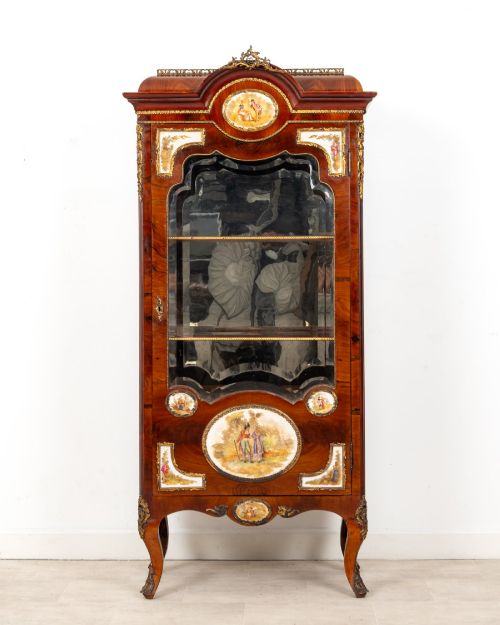
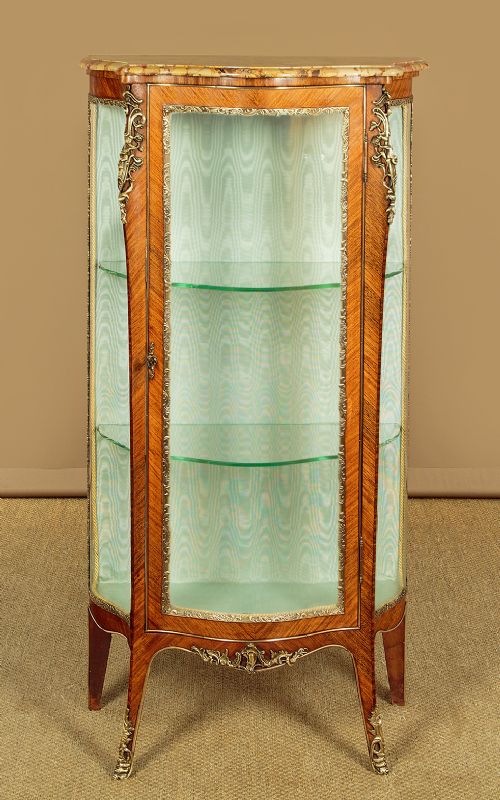
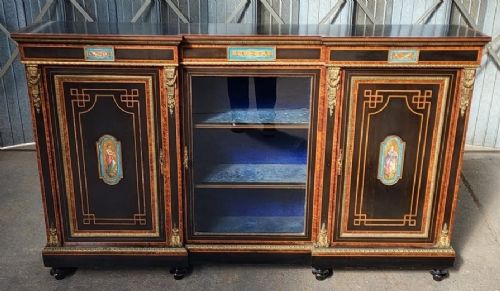
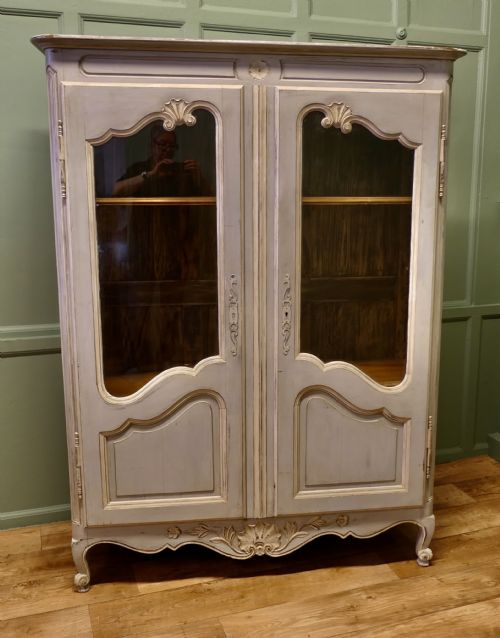
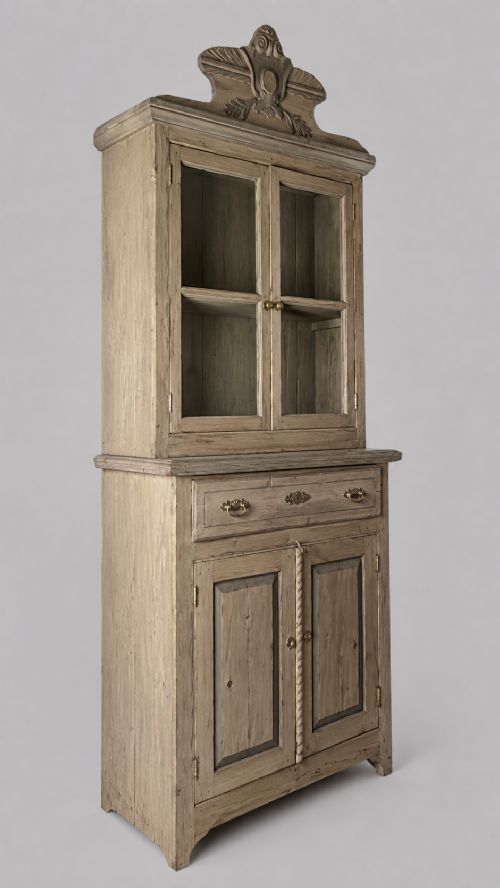
An antique french glazed cabinet serves as a grand storage and display piece for the home. The selection spans the nineteenth century up to nineteen twenty, taking form as vitrines, armoires, bookcases, and pier cabinets.
Revival styles dominate the offerings, drawing heavily on Louis Quinze, Louis Seize, and French Empire aesthetics. Buyers most frequently encounter walnut, mahogany, and kingwood carcasses fitted with glazed doors to showcase contents.
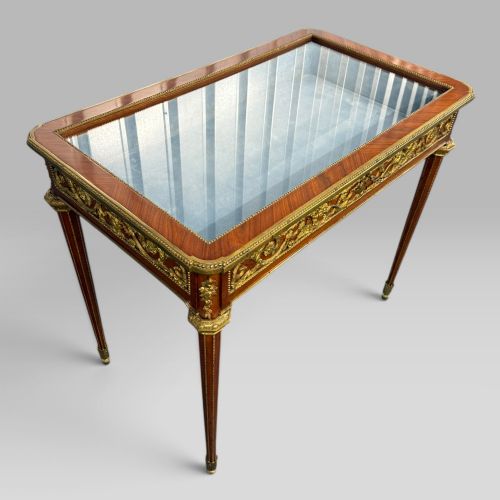
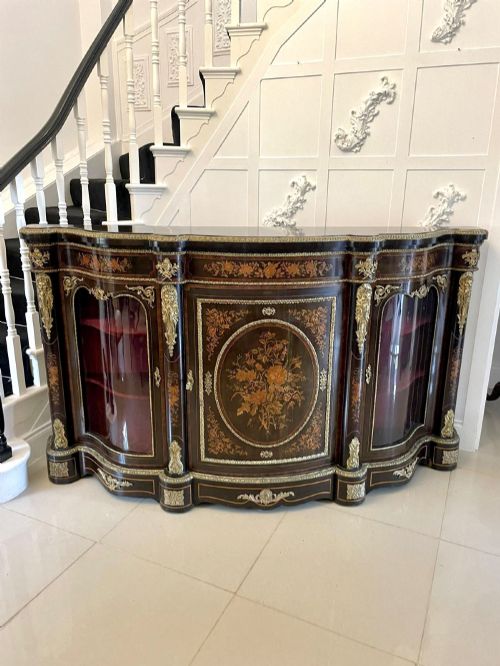
Many variants incorporate marble tops, ormolu mounts, and painted Vernis Martin panels. The smaller bijouterie and bow front vitrine versions appear alongside larger bookcase combinations.
How they were made
Cabinet makers utilised choice hardwoods including figured walnut, mahogany, and kingwood veneers over sturdy timber carcases. Glass panels were glazed into frames to protect the interior shelves and displayed objects.
Gilt bronze ormolu mounts were cast and applied to highlight structural corners, door borders, and aprons. Interior spaces were often lined with velvet to complement the polished exterior surfaces.
Retail Price Guide 2026
Typical UK retail prices for french glazed cabinet, calculated from the Sellingantiques database of over a million retail prices indexed since 2003. This retail price guide relies exclusively on Sellingantiques data; no external sources or auction records are used, so the figures do not describe the wider market.
The documented forms include armoires, bookcases, and bow front vitrines alongside standard display cabinets.
What varies in quality
The standard of timber selection and the complexity of veneer work set the baseline for each piece. Richly figured walnut and intricate marquetry inlay separate standard items from superior examples.
Chasing and fire-gilding on the ormolu mounts dictate the upper tier of craftsmanship. Pieces bearing painted Vernis Martin panels or exhibition quality detailing command greater attention through their artistic depth.
The Antique French Glazed Cabinet Glossary
- Vitrine
- A glass fronted display cabinet designed for showing porcelain, glassware, or small treasures. These pieces often feature glazed side panels as well as doors.
- Ormolu
- Gilt bronze mounts applied to furniture for decorative effect. This technique was widely utilised during revival periods.
- Vernis Martin
- A simulated Japanese lacquer finish developed in France, featuring painted scenes on furniture panels. It added high artistic value to elite cabinets.
- Bijouterie
- A low display case or table with glass for viewing jewellery and small valuables. These items focus on horizontal surface presentation.
- Kingwood
- A dense, heavily figured exotic timber utilised in fine cabinet making. Its contrasting dark and light grain patterns create striking exterior surfaces.
Frequently Asked Questions
What is a french glazed cabinet used for?
These cabinets were originally designed to protect and display prized possessions such as porcelain, books, and curiosities behind clear glass panels.
Today, they serve a similar purpose in domestic interiors, adding architectural presence while keeping displayed items free from dust.
How do I identify a louis style cabinet?
Louis revival pieces draw on eighteenth-century court aesthetics, displaying either the curved lines of Rococo or the straight, neoclassical geometry of Louis Seize.
Look for specific clues like ormolu mounts, marquetry inlay, and characteristic leg shapes that mimic historical French furniture.
Where should I place a vitrine cabinet?
Vitrines require stable indoor environments away from direct sunlight and sudden temperature changes to protect the wood veneers and interior velvet linings.
Positioning them against a solid interior wall allows the glass panels and ormolu mounts to catch ambient light effectively.
What woods are common in these cabinets?
Cabinet makers relied primarily on walnut, mahogany, and kingwood to build the structural carcases and decorative veneer surfaces.
These timbers provided the necessary strength and grain movement to support intricate inlays and heavy glass doors.