




French Revival Vitrine
A french revival vitrine is a glazed display cabinet built to showcase porcelain and small treasures, combining continental elegance with ornate mounts.
French Revival Vitrine
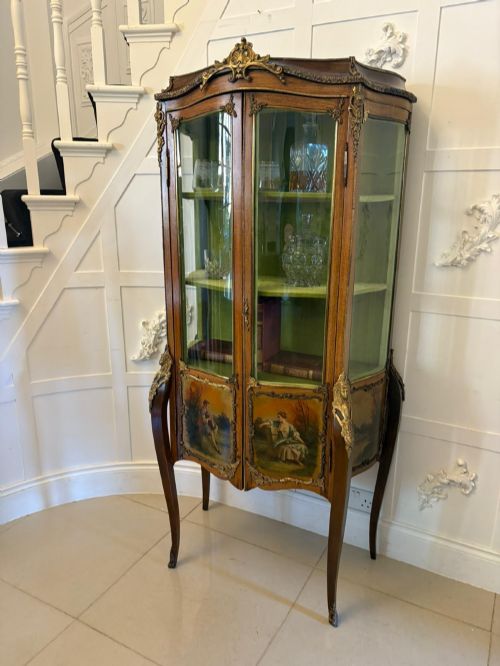
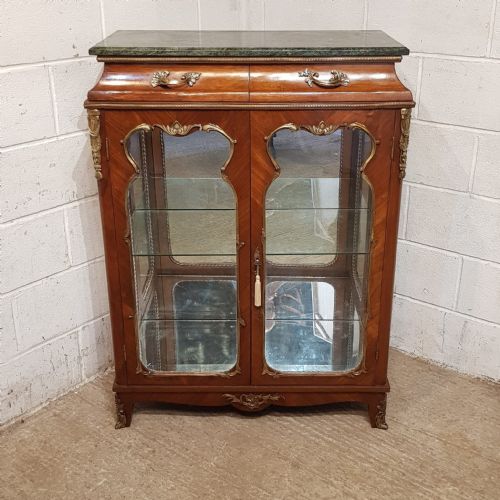
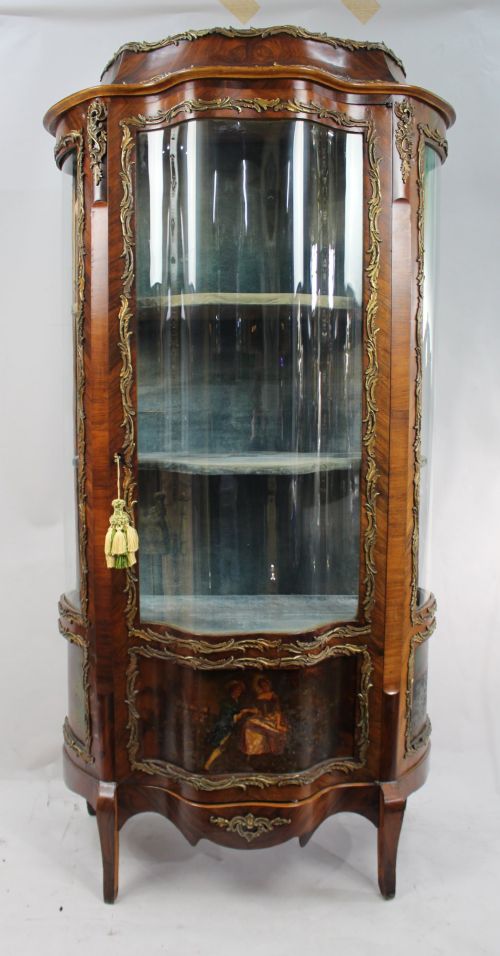
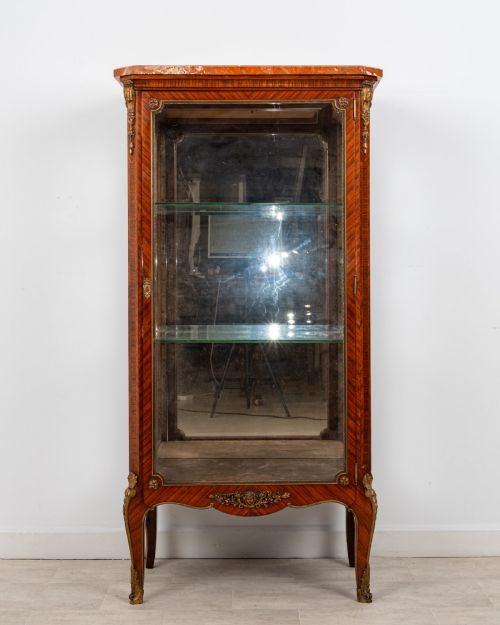
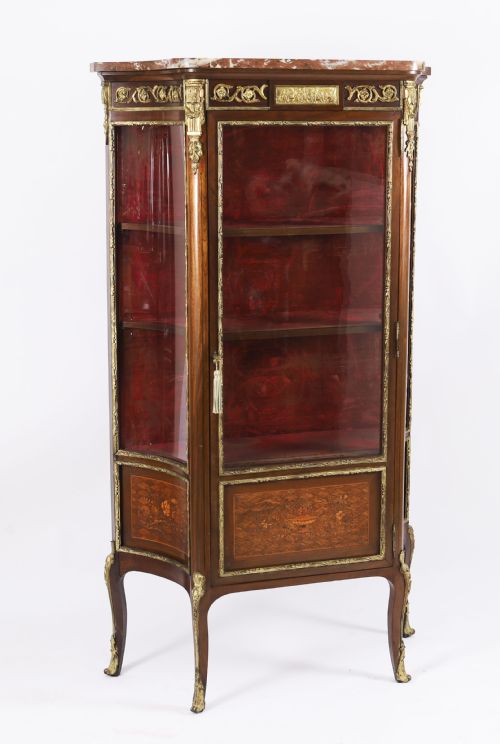
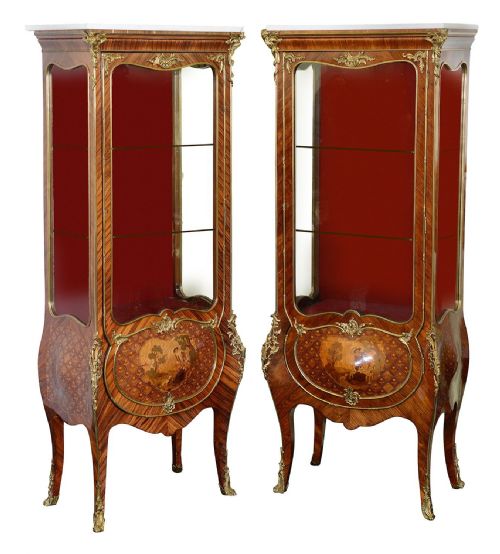
A french revival vitrine brings nineteenth century continental display furniture into modern rooms, drawing on Louis XV, Louis XVI, and Rococo styling. Pieces span the Victorian era, Edwardian period, and the nineteen twenties, adopting forms such as serpentine display cabinets, tall bookcases, and low bijouterie tables. Cabinets range from intimate single-door cupboards to large imposing exhibition pieces with glazed sides.
The nineteenth century yields the highest concentration of examples, particularly from eighteen sixty to nineteen hundred, encompassing Vernis Martin decorated surfaces and parquetry. Makers worked within established revival idioms, combining glazed compartments with lined interiors tailored for objects of curiosity. These designs prioritize visibility from multiple angles while maintaining architectural presence through shaped cornices and mounts.
Judging quality
The distinction between standard production and exhibition grade work lies in the crispness of the ormolu casting, the precision of the parquetry inlay, and the depth of the Vernis Martin painting. Top tier examples show hand-chased bronze mounts and flawless timber matching across serpentine curves, whereas lesser pieces rely on stamped brass and straightforward veneering.
Signatures by documented makers such as François Linke or G. Durand elevate provenance and construction standard. The integration of glazed side panels, complex bombe shaping, and heavy marble tops further separates ambitious workshop output from simpler domestic utility cabinets.
Some cabinets feature curved bombe fronts so pronounced that matching the grain across the drawers required extraordinary patience from the joiner.
François Linke·G. Durand
The French Revival Vitrine Glossary
- Vitrine
- A glass-fronted cabinet designed for displaying fine porcelain, curiosities, and small decorative objects. These cases evolved during the eighteenth century and saw renewed popularity in nineteenth century revivals.
- Ormolu
- Gilded bronze mounts applied to furniture edges, corners, and feet for decorative effect. The term derives from the French for milled gold.
- Vernis Martin
- A simulated Japanese lacquer technique developed by the Martin brothers in eighteenth century France, utilised later on revival furniture panels. It involves multiple layers of varnish applied over painted pastoral or floral scenes.
- Parquetry
- Geometric wood inlay patterns arranged to form cubes, triangles, or chequers across cabinet surfaces. Craftsmen selected contrasting timber grains to catch the light.
- Bijouterie table
- A specialised display table with a glazed top and velvet lined interior, built to exhibit jewellery, medals, and small trinkets at waist height.
French Revival Vitrine: Frequently Asked Questions
What is a french revival vitrine?
A french revival vitrine is a nineteenth or early twentieth century display cabinet influenced by earlier Louis styles, featuring glass panels and decorative mounts.
These pieces were made to exhibit porcelain and small ornaments in domestic reception rooms.
How do I style a vitrine at home?
Place a french revival vitrine against a solid wall where natural light can strike the glass panels without causing direct fading to interior fabrics.
Group collections of similar scale inside, balancing ceramics and metalwork across the velvet lined shelves.
What is Vernis Martin?
Vernis Martin is a decorative lacquer finish featuring painted scenes under translucent layers of varnish, common on revival display cabinets.
It provides a glossy, polished surface that emulates Asian lacquerwork popular in European royal courts.
How are bijouterie tables different?
Bijouterie tables function as low display cases with glazed tops rather than vertical cabinets with shelves.
They were designed for drawing rooms to hold flat items, medals, and jewellery within easy reach of seated guests.