
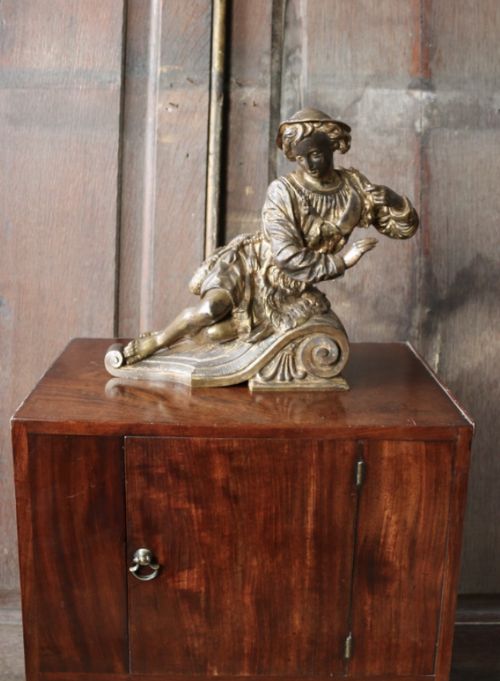


Antique French Firedogs
These antique french firedogs anchor the hearth with sculptural weight, transforming an empty fireplace into a focal point of period metalwork.
Antique French Firedogs
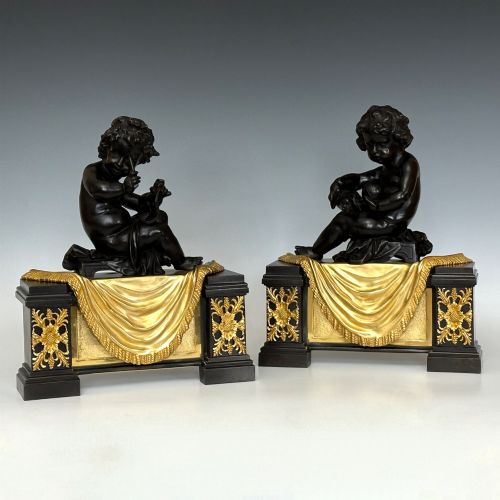
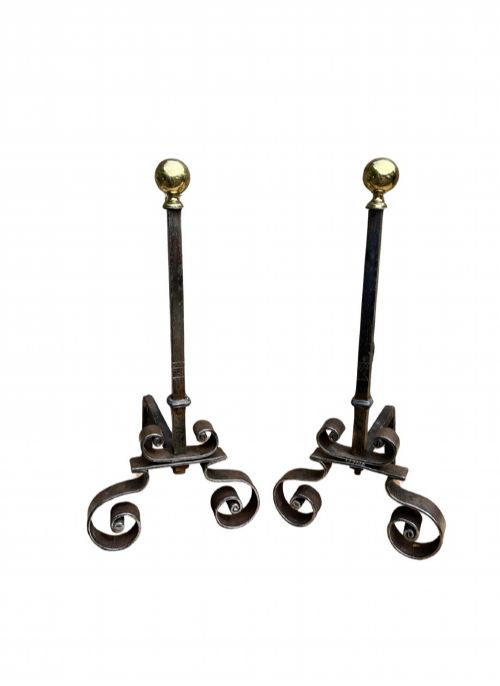
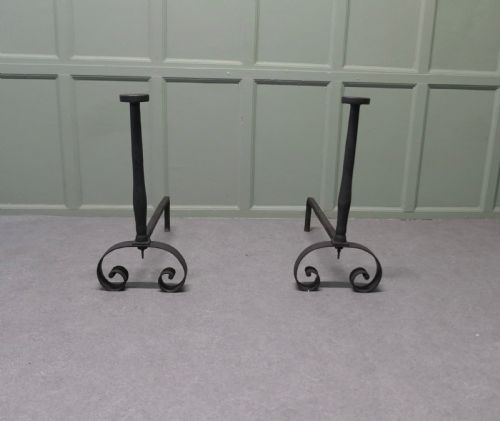
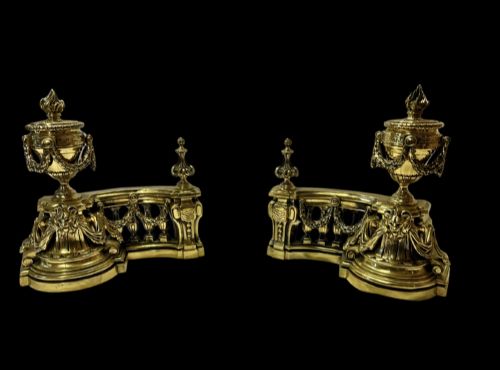
Antique french firedogs, often catalogued as chenets or fire dogs, serve both a practical function in supporting logs and a decorative role at the front of the hearth. The pieces on this page span the eighteenth and nineteenth centuries, taking forms that range from robust country ironwork to elaborate urban castings.
Buyers will encounter pairs executed in cast and wrought iron for simpler hearths alongside polished brass, bronze, and gilt ormolu versions designed for formal reception rooms. The selection includes figural statuettes, architectural Louis-style copies, and sweeping rococo scrollwork typical of French domestic metalwork.
Materials and construction
Foundry work dominates the construction of these hearth accessories, utilising molten bronze, brass, and iron poured into sand or lost-wax moulds to achieve sharp detail. Gilt bronze and ormolu pieces require a layer of gold amalgam applied to the base metal, fixed by heat to create a durable, lustrous surface.
Wrought and cast iron examples rely on the forge and anvil, where smiths hammer and shape heavy bars to withstand direct exposure to hearth flames. Many decorative sets combine these methods, mounting cast bronze figures onto sturdy iron billet bars designed to hold burning wood.
Some nineteenth-century makers faithfully copied Louis XVI designs so closely they even inscribed dead kings' reign styles onto the iron.
Assessing quality and execution
The choice of materials also dictates the upper tier of the range, where fire gilding on bronze creates a richer depth than simple lacquered brass. Weight and stability matter greatly, as superior pairs utilise heavy cast components that remain rigid and balanced under sustained domestic use.
The Antique French Firedogs Glossary
- Chenet
- An alternative French term for a firedog or andiron. These decorative metal supports sit at the front of a hearth to hold logs in place.
- Ormolu
- Finely ground high-carat gold applied in a mercury amalgam to a bronze base. This technique produces a warm, enduring golden finish characteristic of refined French metalwork.
- Billet bar
- The horizontal iron bar extending backward from the decorative front of the firedog. This component directly supports the burning logs within the fireplace basket.
- Patinated bronze
- Bronze that has been chemically treated to alter its surface colour. This process yields deep browns and greens before final polishing highlights the raised details.
- Rococo revival
- A nineteenth-century design movement that reinterprets eighteenth-century asymmetrical scrollwork and naturalistic motifs. This style heavily influences the ornamentation found on many fireplace accessories.
Antique French Firedogs: Frequently Asked Questions
How do I use antique firedogs today?
These pieces function primarily as decorative fireplace furnishings, placed at the front of the hearth to frame the opening and complement the room's period aesthetic. They can stand before a gas insert, an electric grate, or an open wood fire provided the heat exposure does not damage fragile gilt surfaces.
For functional hearths, ensure the iron billet bars behind the decorative fronts are sturdy enough to support active logs. Many owners simply position them against the brickwork as sculptural ornaments within an unused period fireplace.
What is the difference between andirons and chenets?
The terms are largely interchangeable, though chenet specifically denotes the French origin and often implies a more decorative, ornamental front piece. Both serve the dual purpose of keeping logs elevated for better airflow and adorning the hearth.
Traditional British andirons often include integrated horizontal baskets for holding fuel, whereas French firedogs frequently separate the decorative front upright from the log-supporting bar behind it.
How do I date a pair of French firedogs?
Dating relies on examining the casting quality, the fastening screws or nuts, and the stylistic vocabulary borrowed from reigning French monarchs. Eighteenth-century examples often feature hand-chased surfaces and heavier bronze casting, while nineteenth-century revival pieces frequently employ machine-threaded bolts and standardised brass components.
Stylistic cues such as the asymmetry of Rococo work or the strict symmetry of Louis XVI provide a baseline for the period of manufacture. Cross-referencing the weight and the method of joining the front mount to the billet bar confirms whether a piece is an authentic period original or a later nineteenth-century copy.