

Antique French Crapaud Chairs
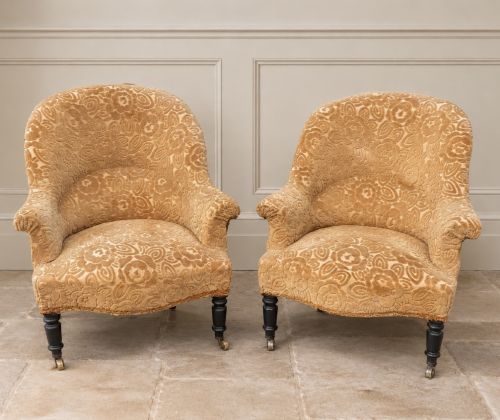
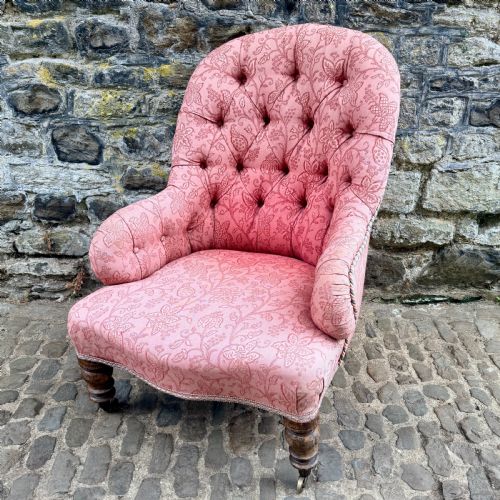
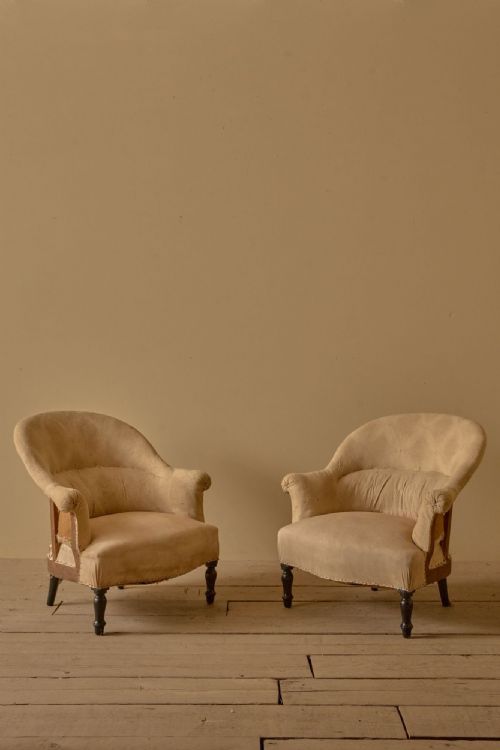
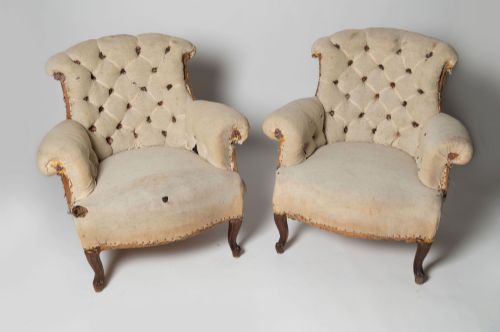
These antique french crapaud chairs are low-slung, fully upholstered armchairs designed for deep, enveloping comfort in nineteenth-century drawing rooms.
Antique French Crapaud Chairs
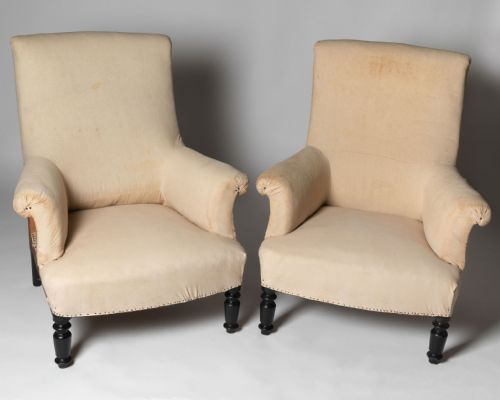
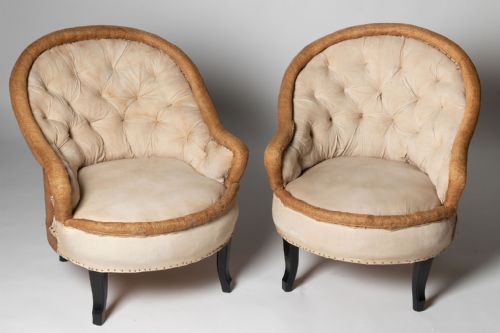
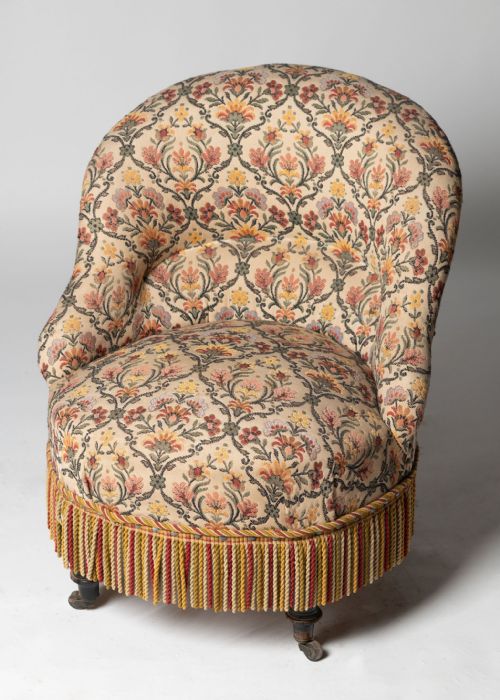
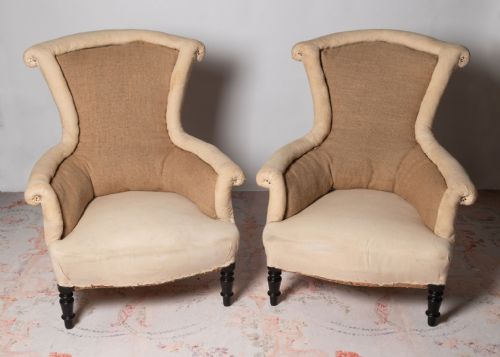
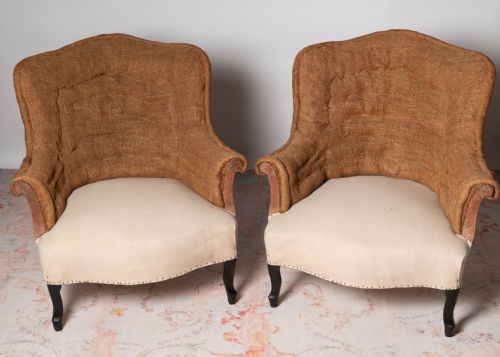
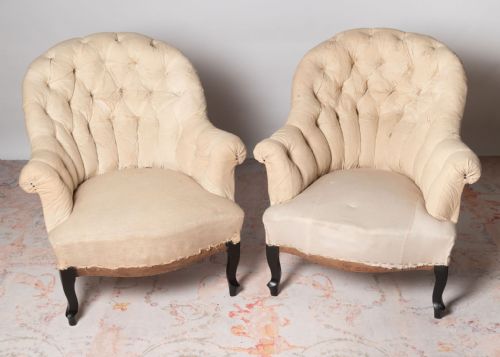
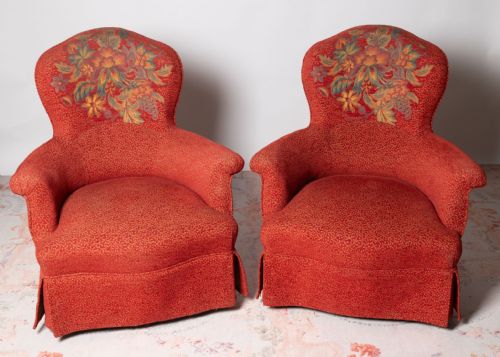
When you search for antique french crapaud chairs, you encounter low, tub-shaped armchairs originating mainly from the nineteenth century. These pieces frequently appear as pairs or individual bedroom and salon chairs.
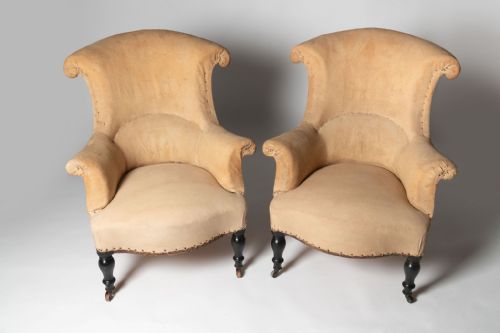
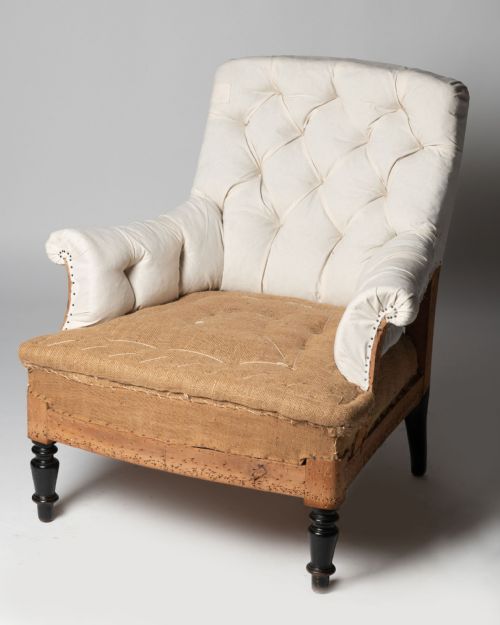
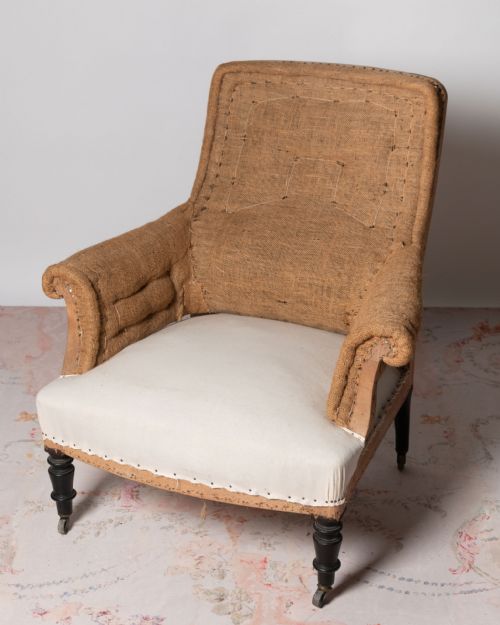
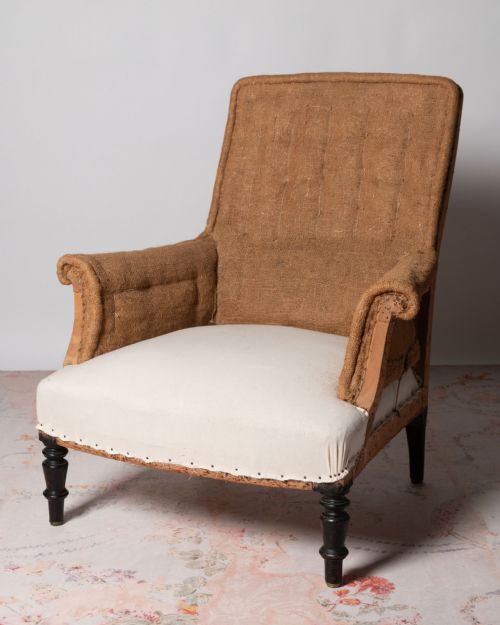
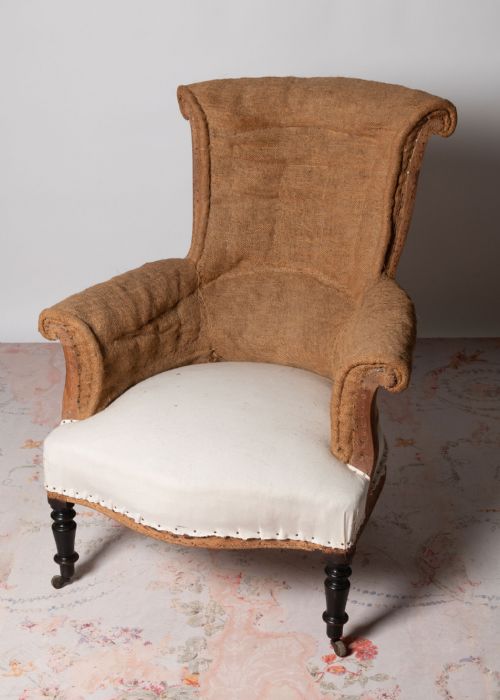
The prevailing style on this page is Napoleon III, characterised by a low, curved back and generous padding. Many examples survive awaiting upholstery, retaining their original hessian and webbing beneath.
Most pieces emerge from mid-to-late nineteenth-century France, reflecting the comfortable, cushioned aesthetic of the period. Forms range from compact bedroom seats to high buttoned curved back armchairs.
How they were made
Makers built the foundational frames of these low chairs from beech wood, selected for its strength and ability to be shaped into tight curves. This timber supports the substantial internal stuffing hidden beneath the final textile layer.
Traditional construction relied on heavy layers of hessian, linen, and cotton stuffed directly onto the wooden frame. Brass tacks frequently secure the edges of the fabric and interior materials to the beech structure.
Antique French Crapaud Chairs Retail Price Guide 2026
Typical asking prices for french crapaud chairs among the pieces listed under this phrase on Sellingantiques today, from the lower quarter to the upper quarter. They describe what is for sale here now, not the wider market.
Makers named these squat, padded seats after toads, admiring the low posture above all else.
What varies in quality
The refinement of the wooden frame's curves and the grace of the low-slung silhouette set the better examples apart. Superior pieces exhibit well-balanced proportions and harmonious lines that maintain comfort without appearing clumsy.
The integrity of the underlying beech structure and the original spring tension determine the overall substance of the armchair. Better-made specimens retain rigid joints and symmetrical padding foundations.
The Antique French Crapaud Chairs Glossary
- Crapaud
- A low-slung, heavily upholstered armchair typical of the nineteenth century, translating literally to toad. These chairs feature enclosed sides and deeply padded seats.
- Napoleon III
- A nineteenth-century French design period associated with eclectic revivals and supreme comfort in domestic seating. This style frequently employs curved backs and fully upholstered frames.
- Hessian
- A coarse woven fabric utilised as a foundational layer in traditional upholstery to contain internal stuffing. This material stretches tightly across the wooden frame.
- Calico
- A plain-woven cotton cloth often applied as an inner lining over the stuffing before the final decorative fabric. It provides a smooth base for top covers.
- Beech
- A dense hardwood commonly employed for the concealed frames of nineteenth-century French seating. Its fine grain permits intricate shaping without splitting.
Antique French Crapaud Chairs: Frequently Asked Questions
What is a crapaud chair?
A crapaud chair is a low-slung, fully upholstered nineteenth-century armchair designed for deep, enveloping comfort. The name derives from its squat, toad-like silhouette.
These pieces typically feature curved backs and completely covered wooden frames. They serve as compact seating options for bedrooms and drawing rooms.
How do I choose upholstery for these chairs?
Selecting upholstery involves matching the fabric weight to the compact, curved proportions of the frame. Heavy linens and cottons respect the traditional aesthetic of the period.
Many examples arrive ready for new fabric, allowing you to choose textiles that suit your interior. Calico and hessian form the proper foundation beneath the final cover.
Are these chairs comfortable?
These armchairs are specifically engineered for relaxation, offering low seats and supportive curved backs. The deep padding creates an enclosed, inviting sit.
Nineteenth-century makers prioritised domestic comfort, resulting in generously stuffed seats. The low profile encourages a relaxed posture.
How do I identify a Napoleon III chair?
Napoleon III seating is identified by fully upholstered frames, curved lines, and nineteenth-century construction methods. These chairs often feature buttoned backs and concealed beech woodwork.
The style reflects the opulent comfort of the Second Empire in France. Low profiles and sprung seats are standard characteristics.