



Project Chairs for Upholstery
Project chairs for upholstery are bare frames and partially stripped seats ready for new cloth, offering the chance to rebuild a classic form.
Project Chairs for Upholstery
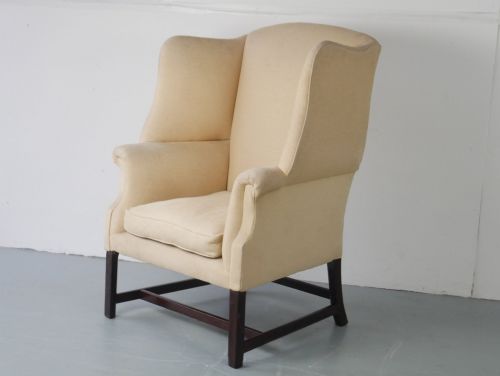
Project chairs for upholstery encompass armchairs, nursing chairs, slipper chairs, and wingbacks waiting for textile work. These frames span the eighteenth, nineteenth, and early twentieth centuries, drawing on Georgian, Victorian, Edwardian, and Regency designs.
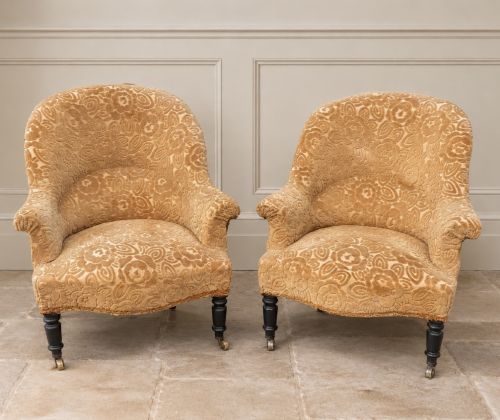
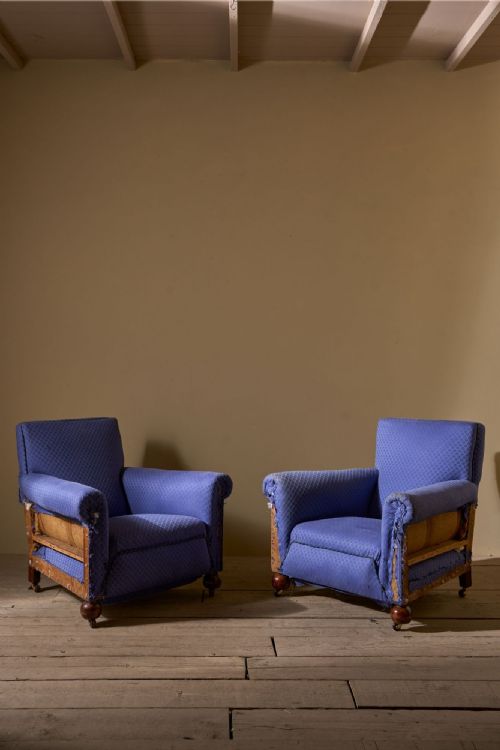
Buyers frequently encounter Victorian and Edwardian armchairs alongside French Napoleon III tub chairs and English country house models. Many arrive stripped back to calico or hessian, exposing the underlying webbing and springs.
The selection ranges from large library armchairs and daybeds to compact occasional chairs and walnut nursing seats. Each piece offers a blank canvas for historical restoration or modern fabric schemes.
How they were made
The primary structural frames rely on hardwoods such as mahogany, walnut, and general timber, shaped into sturdy legs, arms, and backrests. Joinery techniques from the eighteenth and nineteenth centuries ensure these skeletons endure beneath successive layers of padding.
Traditional upholstery builds up support using materials like hessian, calico, cotton, and stuffing secured with brass tacks. Exposed wooden elements often feature carved or polished finishes that contrast with the unfinished internal linings.
Project Chairs for Upholstery Retail Price Guide 2026
Typical asking prices for project chairs for upholstery among the pieces listed under this phrase on Sellingantiques today, from the lower quarter to the upper quarter. They describe what is for sale here now, not the wider market.
Listings feature eighteenth-century walnut wing armchairs, nineteenth-century mahogany frames, and early twentieth-century country house seating.
What varies in quality
Quality rests primarily in the integrity of the wooden frame and the precision of its original joinery. A well-constructed skeleton from a notable maker holds its rigidity across centuries, providing a superior foundation for new fabric.
Proportion and scale distinguish ordinary frames from exceptional examples. Finely balanced curves on a tub chair or the graceful rake of a wingback demonstrate the carver's skill before any textile is applied.
Howard and Sons·Miles and Edwards·Hindley and Sons·Gillows
The Project Chairs for Upholstery Glossary
- Calico
- A plain-woven cotton fabric used as an interim lining layer on upholstery projects. It covers the internal stuffing before the final decorative textile is fitted.
- Hessian
- A coarse woven fabric, typically made from jute fibres, utilised for webbing and as a base foundation to support interior padding.
- Calico stage
- The intermediate point in an upholstery restoration where the internal padding and springs are secured beneath plain cotton before final covering.
- Tub chair
- An armchair featuring a rounded, enclosed back that curves continuously into low arms. This form appears frequently in nineteenth-century French designs.
- Marquise
- A wide, deep French armchair designed for relaxed seating. These pieces often feature exposed wooden frames alongside upholstered backs and seats.
Project Chairs for Upholstery: Frequently Asked Questions
What does to calico stage mean?
The calico stage means the chair has been stripped, repaired, re-sprung, and covered in plain cotton. This intermediate layer establishes the shape and comfort before the final decorative fabric goes on.
Working from this stage allows a buyer to select outer textiles without worrying about internal structural repairs or webbing replacement.
How do I choose the right fabric?
Selecting a fabric depends on the period and proportions of the chair frame. Heavy country house armchairs suit robust wools or linens, while French tub chairs often take silks or patterned cottons.
Consider the intended use of the room and whether the chair will be a focal point or part of a matched pair.
Are these chairs comfortable as they are?
Unfinished project chairs usually lack final padding, seating cushions, and outer cloth. Sitting on them in their raw state is not recommended until the upholstery is completed.
Many listings note deep-seated or sprung designs, indicating how comfortable the final restored armchair will feel once the interior buildup is finished.
How do I identify a country house armchair?
Country house armchairs are typically deep-seated, generously proportioned, and built for sustained comfort. They often exhibit rolled arms and sturdy wooden legs suited to relaxed domestic interiors.
These pieces frequently date from the nineteenth or early twentieth century and carry the marks of long use in English residential settings.