

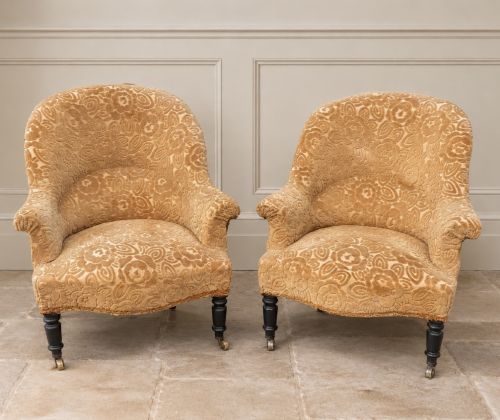
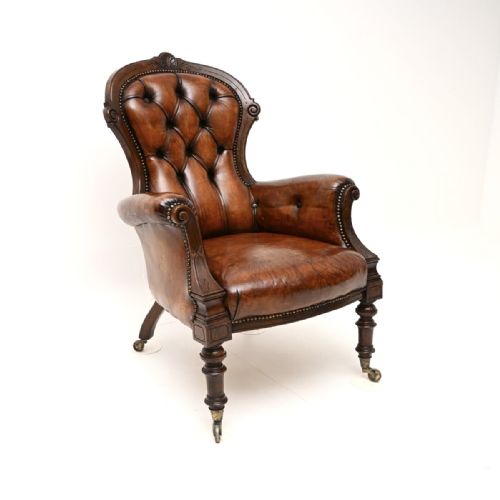
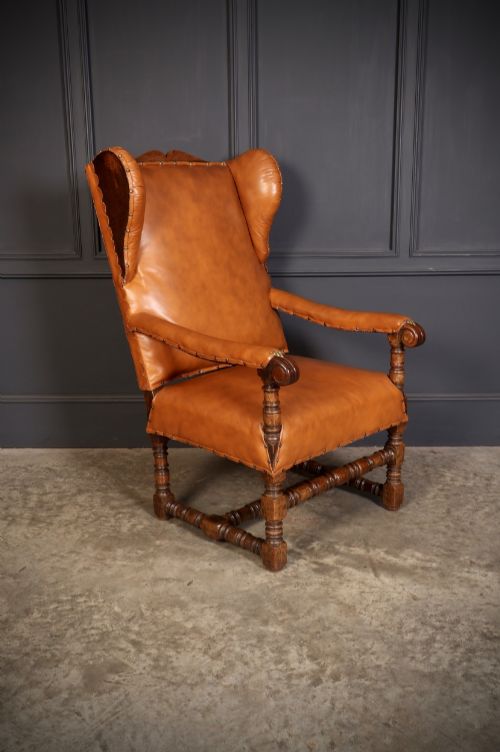
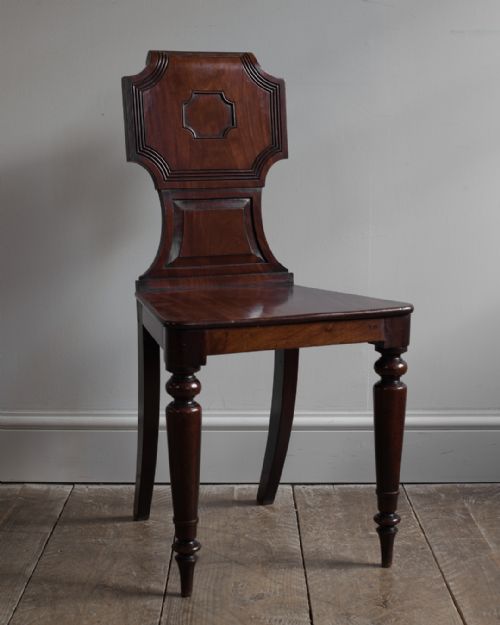
Carved Turned Leg Chairs
Carved turned leg chairs bring together solid timber frames and sturdy structural turnings designed for daily utility in dining rooms and libraries.
Carved Turned Leg Chairs
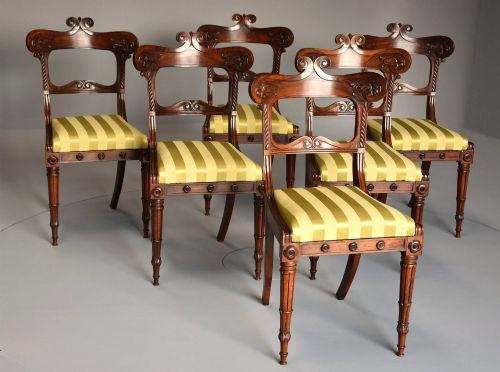
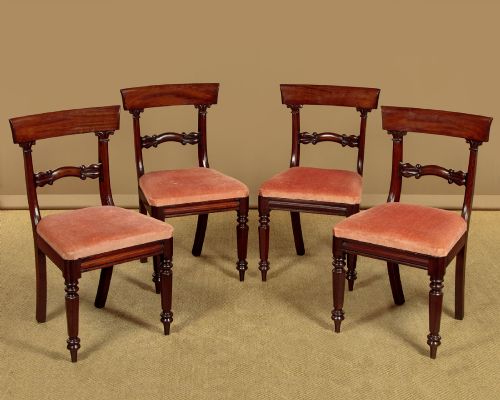
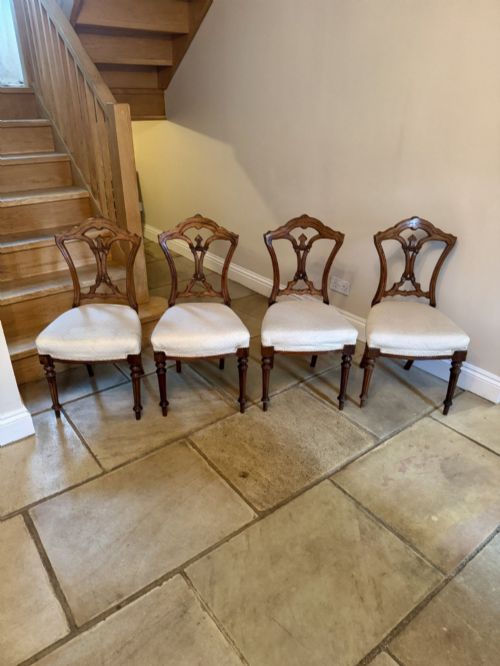
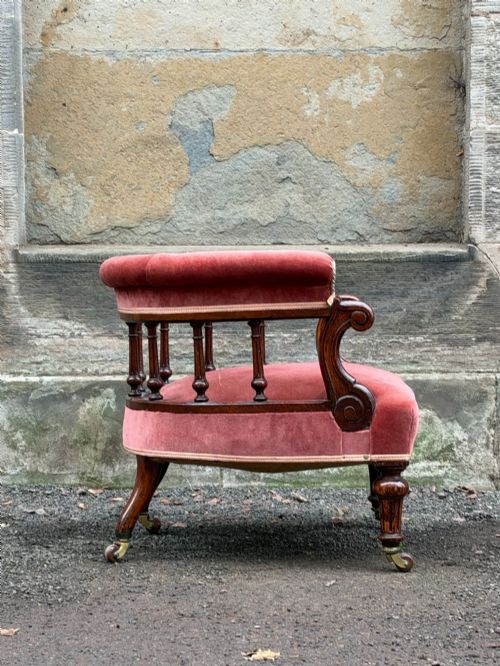
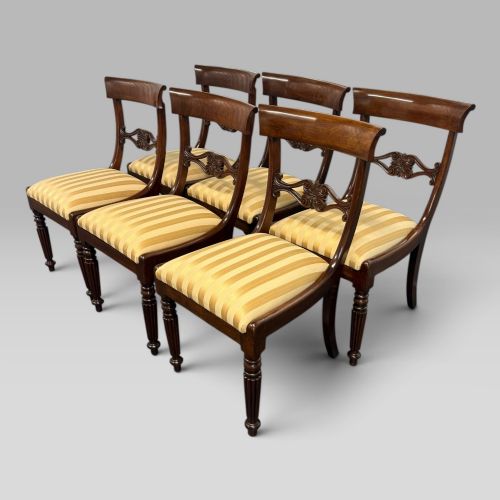
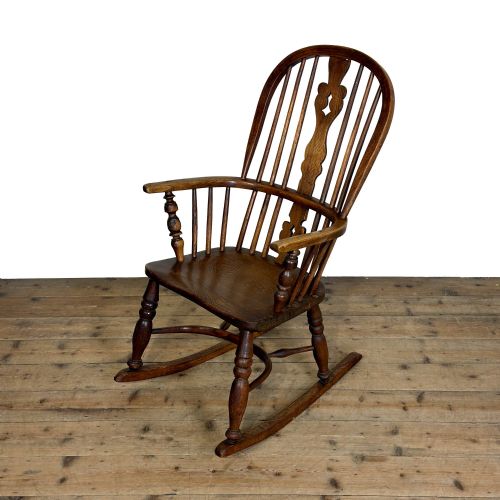
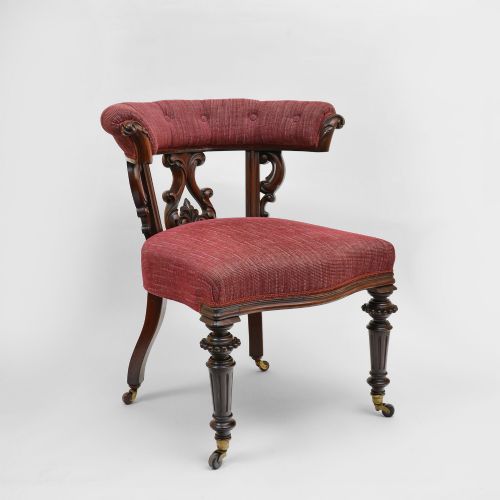
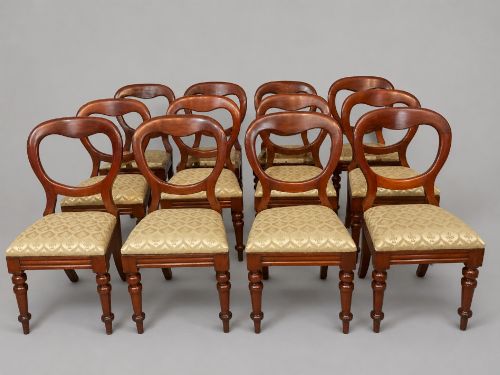
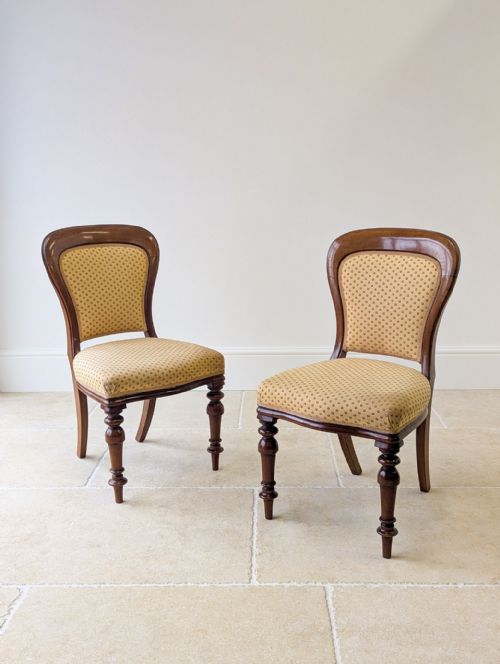
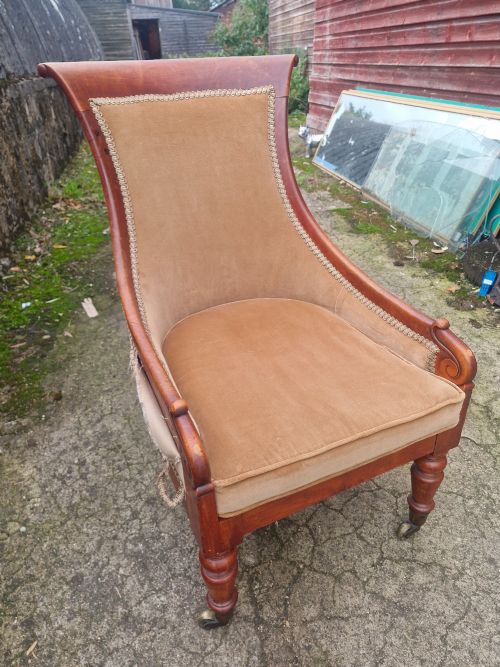
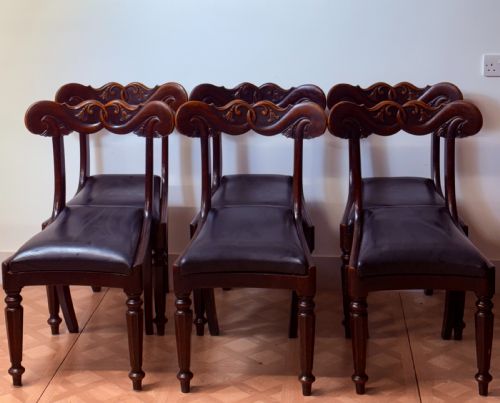
Carved turned leg chairs encompass seating forms spanning dining chairs, armchairs, hall chairs, and library chairs produced across the nineteenth and early twentieth centuries. These pieces display timber frames shaped on lathes to create cylindrical, bobbin, or spiralled supports beneath the seat.
The materials recorded in these listings point towards mahogany, oak, walnut, elm, and beech utilised for the structural framing. Individual examples incorporate upholstered pads, leather panels, cane backrests, or brass details alongside carved ornamentation.
The selection ranges from Regency and William IV dining suites to Victorian library armchairs and Edwardian reception seats. Buyers encounter single occasional chairs as well as matched sets intended for formal dining arrangements.
How they were made
Makers constructed these frames using hardwoods such as mahogany, oak, walnut, beech, and elm. Lathe turning shaped the legs and stretchers, while hand carving added decorative relief to the woodwork.
Upholstery materials included leather, fabric, and velvet, secured over padding. Cane inserts appeared on specific oak and Edwardian framework styles.
Carved Turned Leg Chairs Retail Price Guide 2026
Typical asking prices for carved turned leg chairs among the pieces listed under this phrase on Sellingantiques today, from the lower quarter to the upper quarter. They describe what is for sale here now, not the wider market.
Listings span periods from the seventeenth-century style up to the twentieth century, utilising mahogany, oak, walnut, elm, and beech.
What varies in quality
The distinction between standard utility seating and finer workshop production lies in the crispness of the turning and the depth of the timber carving. Timber selection dictates the grain pattern and structural integrity across the frame.
Sets matched across multiple pieces demonstrate greater uniformity in timber colour and turning detail than assembled groupings. The retention of original upholstery components and undisturbed timber surfaces alters the integrity of individual pieces.
John Taylor of Edinburgh·Guillows Oak·M. D. Miller and Sons Nottingham
The Carved Turned Leg Chairs Glossary
- Turned leg
- A structural support shaped on a lathe to produce cylindrical or geometric profiles. This technique appears on the vertical supports of many nineteenth-century chairs.
- Balloon back
- An oval or rounded backrest contour shaped to resemble a balloon. This silhouette is common among Victorian dining chairs.
- Hall chair
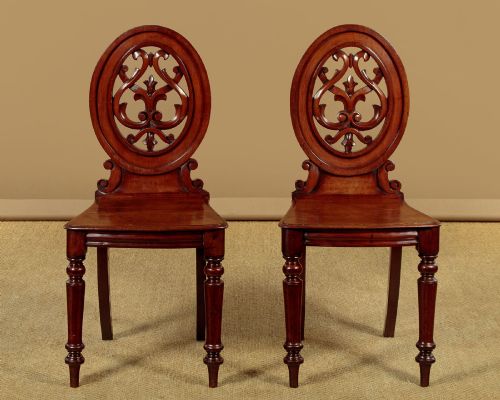
- A rigid wooden seat designed for placement in an entrance hall. These pieces frequently feature carved crests and solid timber seats rather than upholstery.
- Smoker's bow
- A low-backed Windsor armchair with a rounded continuous arm rail. These sturdy seats utilised elm and beech in domestic spaces.
- Wingback
- An armchair featuring protective side panels attached to the backrest. This form provided shelter from drafts in period rooms.
Carved Turned Leg Chairs: Frequently Asked Questions
How are carved turned leg chairs identified?
The presence of lathe-turned legs combined with carved wooden elements determines the classification. Examining the timber species and joint construction helps establish the period of production.
Matching the stylistic markers against documented nineteenth and twentieth-century forms clarifies the origin of the seating.
Where were these chairs used historically?
These seating forms served multiple domestic functions ranging from formal dining rooms to libraries and entrance halls. Dining suites accommodated guests, while heavy armchairs provided seating in studies.
Individual hall chairs functioned as temporary reception seating near doorways.
Can dining sets be mixed safely?
Assembled sets often combine pieces of similar timber and turning styles to achieve a unified appearance around a table. Timber grain and colour variations require careful comparison.
Matching the leg turning profiles ensures visual consistency across the seating group.
How do I care for leather upholstery?
Leather panels benefit from regular dusting and occasional conditioning to maintain suppleness in dry environments. Avoiding direct sunlight prevents timber fading and leather cracking.
Maintaining stable indoor humidity preserves both the timber framing and the applied surface finishes.