

Antique French Candle Stands
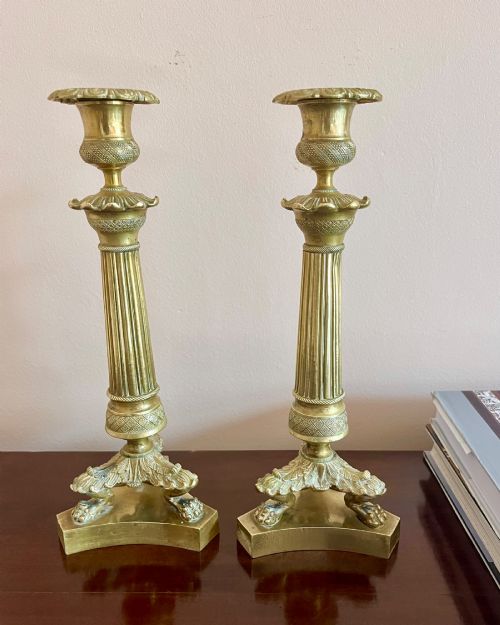
These antique french candle stands bring light and classical proportion into a room, spanning periods from the eighteenth century to the early twentieth.
Antique French Candle Stands
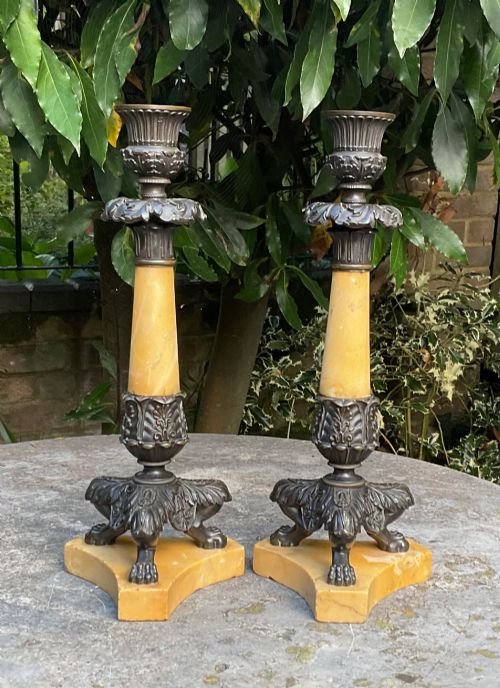
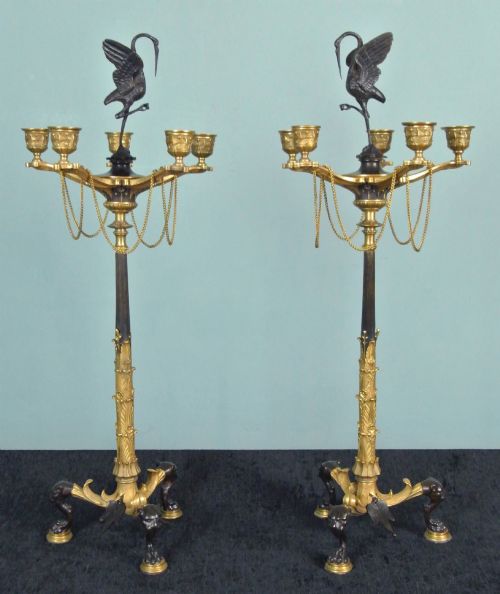
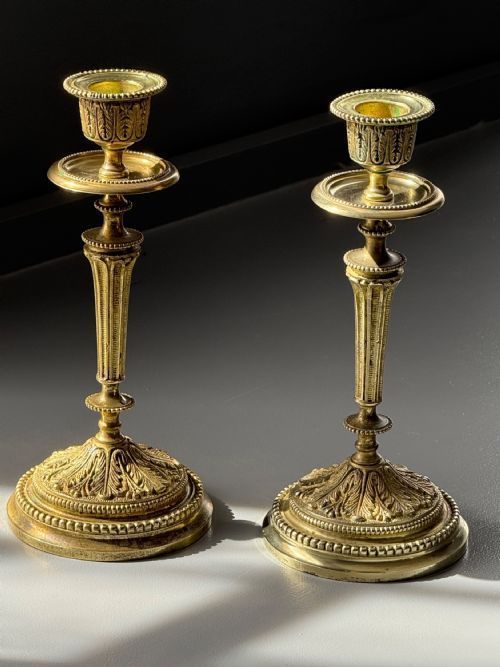
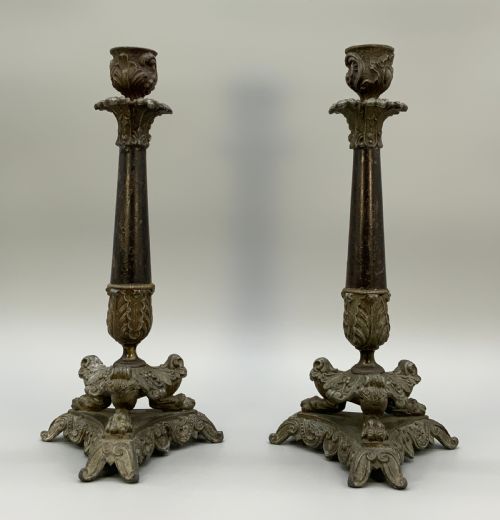
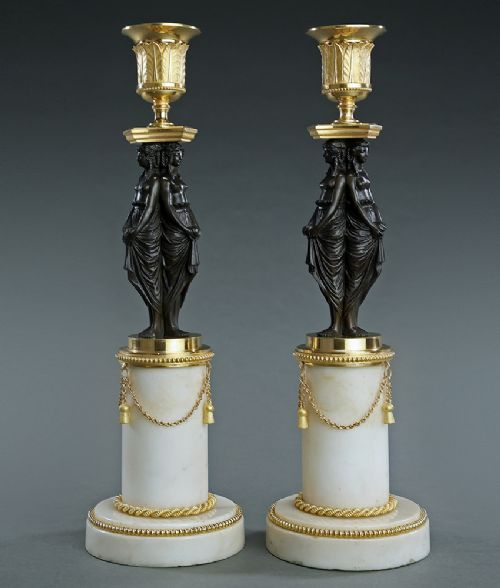
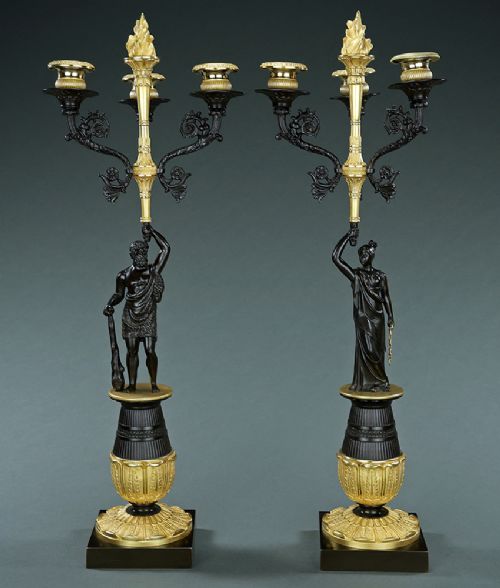
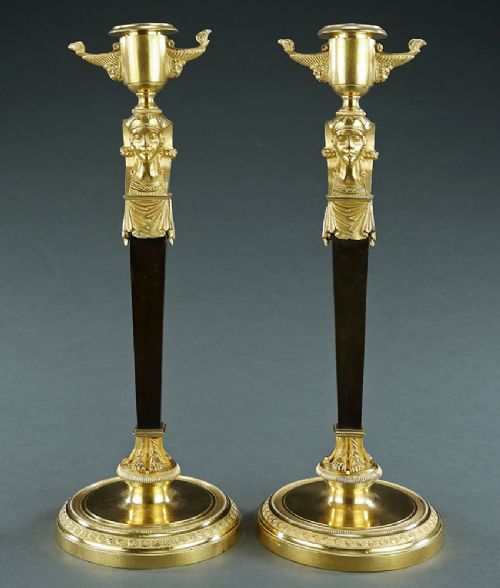
When you search for antique french candle stands, you encounter lighting fixtures designed to elevate candles upon tables, desks, and floors. The most frequent versions on this page are pairs of candlesticks and multi-branch candelabra.
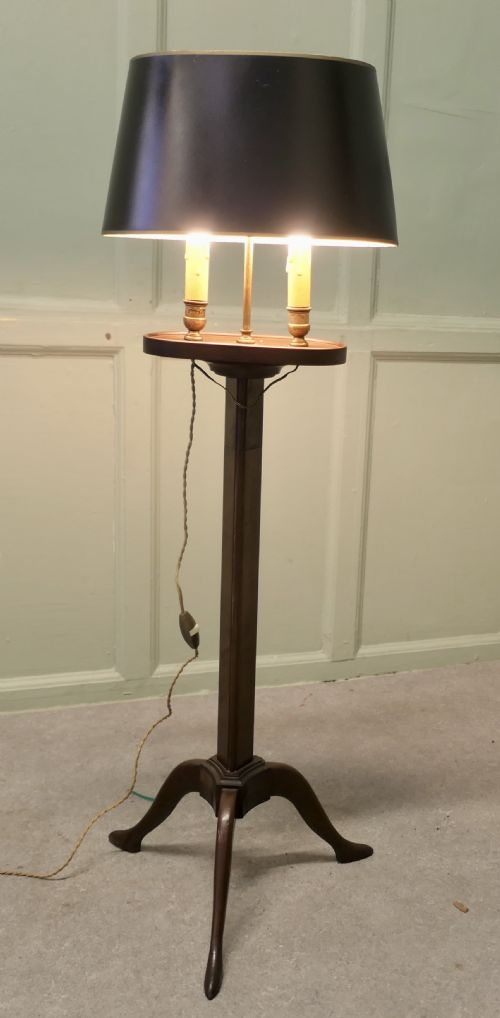
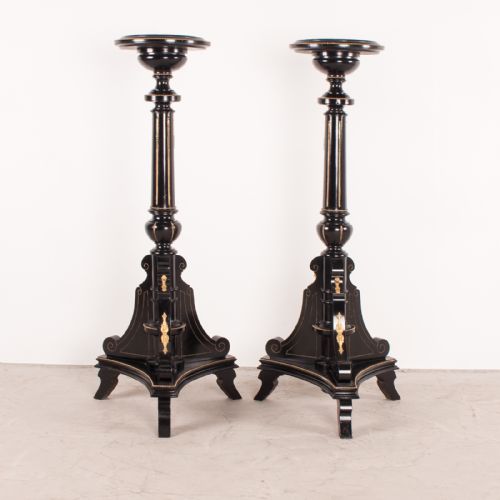
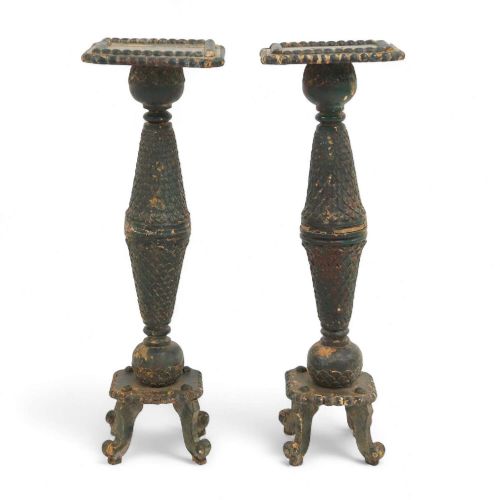
The selection includes tall torcheres, pedestals, and adjustable floor lamps alongside smaller desk accessories. Pieces appear in French Empire, Louis XVI, Regency, and Rococo Revival styles.
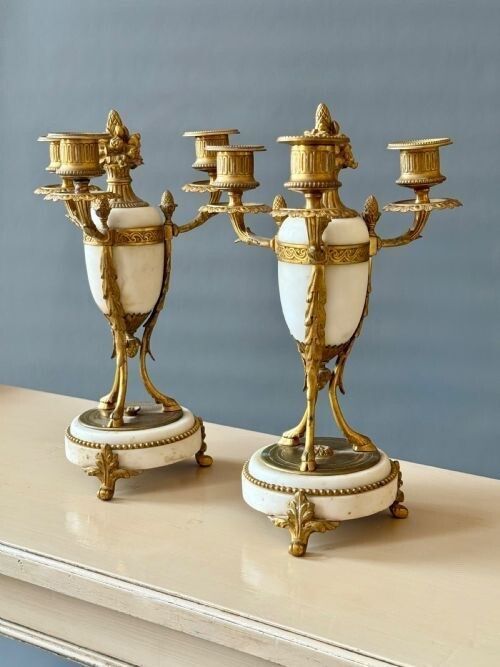
Materials range from cast bronze and ormolu to carved wood, marble, and giltwood. Makers utilised patinated bronze, brass, and onyx across nineteenth-century workshop productions.
How they were made
Foundry workers cast bronze and brass using traditional methods, often combining patinated surfaces with fire-gilded ormolu highlights. Artisans chased the metal details by hand after casting to sharpen foliage, figures, and architectural motifs.
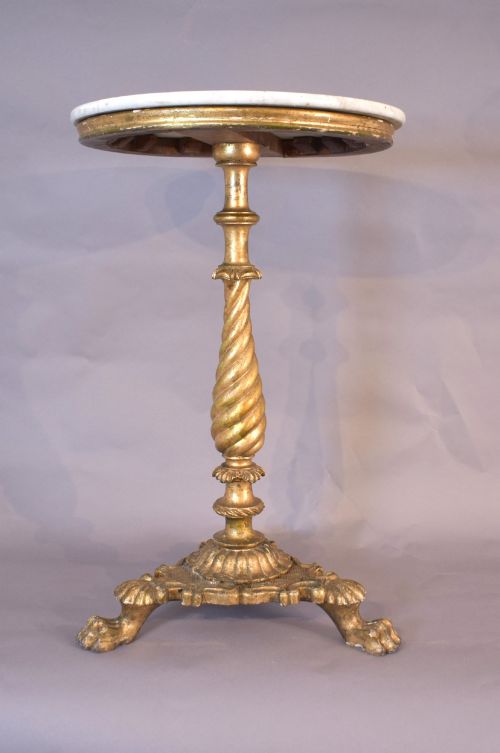
Carvers shaped wood and giltwood for torcheres and pedestals, applying gold leaf over prepared grounds. Stonemasons turned white and coloured marble bases to support metal stems and nozzles.
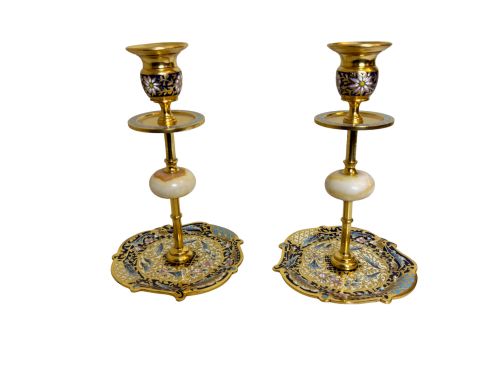
Enamels and champleve techniques decorated specific nineteenth-century pieces, integrating coloured glass cells directly into the bronze framework.
Listings feature nineteenth-century materials including gilt bronze, ormolu, patinated bronze, marble, brass, carved wood, and giltwood.
What varies in quality
Construction methods separate standard production from master workshop output. Heavy, multi-part bronze assemblies screwed firmly together outlast lightweight cast metal alternatives.
The quality of the associated materials, such as finely veined marble bases or intact champleve enamel work, elevates the standing of an individual pair.
Barbedienne·Pierre Philippe Thomire·Abel Landry
The Antique French Candle Stands Glossary
- Ormolu
- Gilt bronze produced by applying a mixture of gold and mercury to a bronze base and heating it. This technique creates a durable golden finish typical of high-end French decorative metalwork.
- Torchere
- A tall stand or candlestick designed to hold a light source high above the floor. These items often feature carved wood, giltwood, or painted surfaces.
- Candelabra
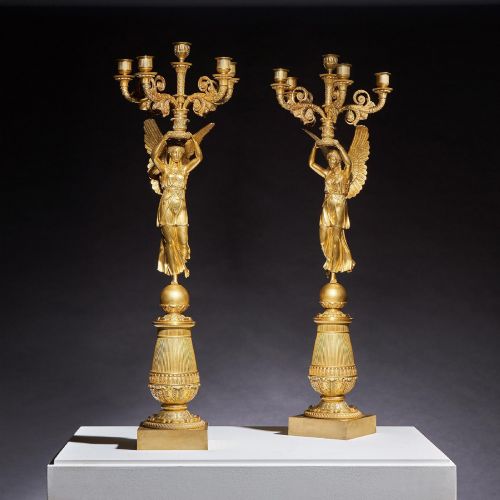
- A branched lighting fixture holding multiple candles upon a single base. These pieces frequently incorporate figural stems and removable drip pans.
- Champleve
- An enamelling technique where troughs are dug into a metal surface and filled with vitreous enamel powder before firing. The resulting coloured patterns contrast against the polished bronze walls.
- Grand Tour
- Cultural travel undertaken by wealthy Europeans to collect classical antiquities and souvenirs. Items acquired on these journeys often reflect neoclassical architectural motifs.
Antique French Candle Stands: Frequently Asked Questions
How do I clean antique bronze candle stands?
Dust the surfaces gently with a soft, dry brush to remove settled particles. Avoid abrasive polishes that strip away original patination or historical gilding.
Keep moisture away from the metal and any integrated marble or wooden components. Professional conservation is advisable if deeper cleaning becomes necessary.
Were these stands wired for electricity?
Most antique french candle stands were built exclusively for wax or tallow candles during the eighteenth and nineteenth centuries. Many surviving examples retain their original drip pans and socket configurations without modification.
Conversion to electricity occurs frequently today, though reversible wiring methods preserve the underlying structure for collectors who prefer unmodified pieces.
How can I identify a Louis XVI style piece?
Louis XVI style items rely on straight architectural lines, symmetry, and classical motifs such as fluted columns, ribbons, and acanthus leaves. This aesthetic contrasts against the curving asymmetry of earlier Rococo designs.
Bronze mounts on these stands often incorporate caryatids, urns, and Greek key patterns reflecting archaeological discoveries of the period.
Where should I place floor torcheres in a room?
Tall torcheres and pedestals suit corners or flanking spaces beside large pieces of furniture. Their height draws the eye upward and adds vertical balance to an interior.
Ensure stable placement on level flooring, particularly when displaying heavier wooden or giltwood examples.