

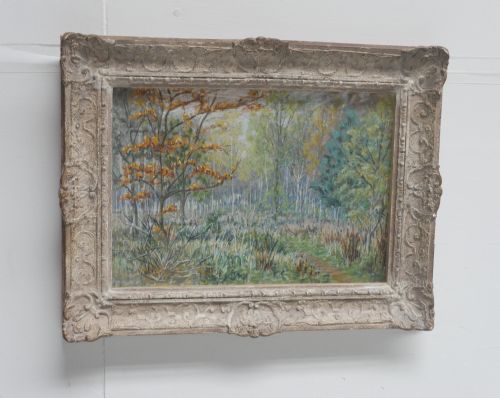


Antique Forest Artwork
Antique forest artwork captures the quiet depth of woodland scenes through the eyes of painters working across the nineteenth and twentieth centuries.
Antique Forest Artwork
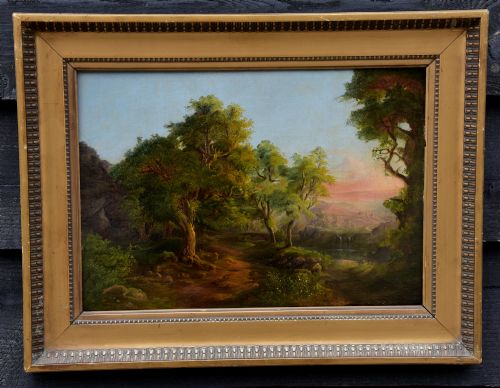
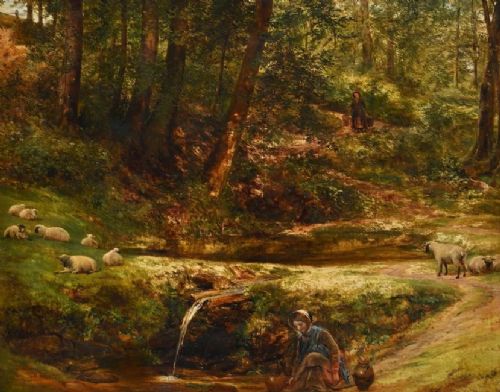
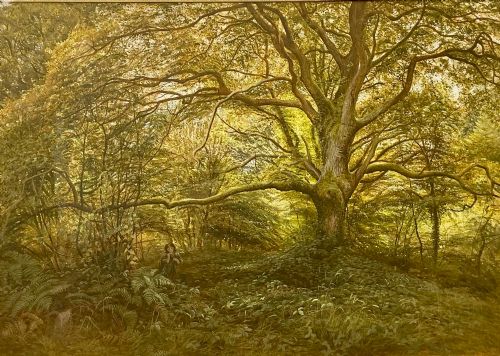
When buyers search for antique forest artwork, they encounter a range of interpretations depicting trees, woodland paths, and river glens. These pieces span periods from the nineteenth century through the mid twentieth century, reflecting shifting tastes in landscape representation.
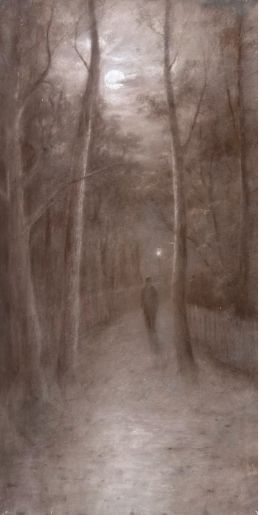
The most common formats on this page are oil paintings on canvas or wood panel, alongside watercolours and drawings on paper. Subjects vary from pastoral Victorian woodland scenes to later impressionist and tonalist treatments of light filtering through trees.
Originating largely from British and European schools, these works capture natural habitats with varying degrees of topographical precision and atmospheric mood. Each piece serves as a historical record of how artists observed and rendered natural landscapes over past generations.
Materials and techniques
Artists relied primarily on oil paint applied to canvas, wood panel, or board, building rich textures and deep tones that defined woodland shadow and canopy. Watercolours on paper offered a lighter, more translucent method for capturing damp leaves and open air.
Preparation of the support involved priming canvas or wooden boards with gesso before layering pigments, sometimes incorporating charcoal sketching underneath to guide the composition. Frame construction typically involved moulded timber, often gilded or painted to complement the tonal balance of the painting.
Listings feature works spanning the nineteenth century through the nineteen-sixties, utilising oil, watercolour, canvas, and wood panel.
Measures of quality
Quality rests in the handling of light, shadow, and perspective, where skilled brushwork conveys the dense atmosphere of a forest floor rather than a mere botanical record. Superior works demonstrate a confident command of colour harmony, particularly in capturing twilight, sunset, or seasonal shifts.
The relationship between the support, the medium, and the original framing dictates the overall integrity of the piece. Stronger examples maintain pigment stability and harmonious composition, showing deliberate choices in mark-making that give depth to the trees and foliage.
William H Myers·Thomas W Lascelles·Richard Redgrave·Thomas Bromley Blacklock·David Watts·James Proudfoot·Jan Evert Morel·Rowland Henry Hill·Edmund George Warren·Charles James Adams·Ernest Higgins Rigg·Frederick Golden Short·Augustus William Enness·Charles Branwhite·Emily M Paterson·Albert de Belleroche·Walter Emsley·William Mellor·Charles Pettitt·Henri Harpignies
The Antique Forest Artwork Glossary
- Canvas
- A heavy woven fabric stretched across a wooden frame to serve as a painting surface. It provides the texture and flexibility characteristic of many traditional oil paintings.
- Watercolour
- A paint consisting of pigment suspended in a water-soluble binder, applied to paper. It creates transparent washes that suit delicate atmospheric effects.
- Wood Panel
- A rigid flat wooden support used instead of canvas for painting. Artists utilised panels for their stability and smooth working surface.
- Impressionism
- An art movement focusing on accurate depiction of light and its shifting qualities. Painters working in this manner prioritized loose brushstrokes over rigid academic finish.
- Tonalism
- A style where artists painted landscapes with an overall tone or haze. Works in this manner emphasise shadow, atmosphere, and a subdued palette.
Antique Forest Artwork: Frequently Asked Questions
What periods do these forest artworks come from?
The pieces span from the nineteenth century through the mid twentieth century, encompassing Victorian naturalist approaches and later impressionist interpretations.
Changes in artistic style over these decades mean earlier works often focus on detailed foliage while later examples explore abstract light and mood.
What mediums were used to create them?
Artists worked primarily in oil paint on canvas or wood panel, as well as watercolour and pastel on paper.
These varied materials allowed creators to achieve different effects, from thick impasto textures in oils to translucent washes in watercolours.
How should I display woodland art at home?
These pieces suit spaces with natural light that complements their earthy tones and green or brown palettes. Pairing them with traditional wooden frames enhances their historical character.
Direct sunlight should be avoided to protect both canvas and paper from fading over time.
How can I tell different painting styles apart?
Victorian works often rely on precise draughtsmanship and narrative detail, whereas later impressionist pieces prioritise visible brushwork and atmospheric lighting.
Examining the handling of shadows and the application of pigment reveals whether an artist focused on botanical accuracy or overall mood.