



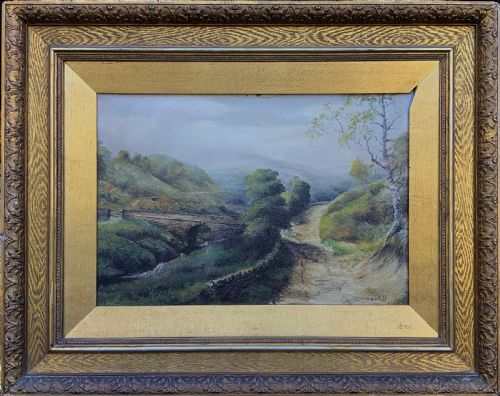
Countryside Scene Painting
A countryside scene painting brings pastoral rivers, working farms and quiet woodlands indoors, capturing the changing light of rural life on canvas or paper.
Countryside Scene Painting
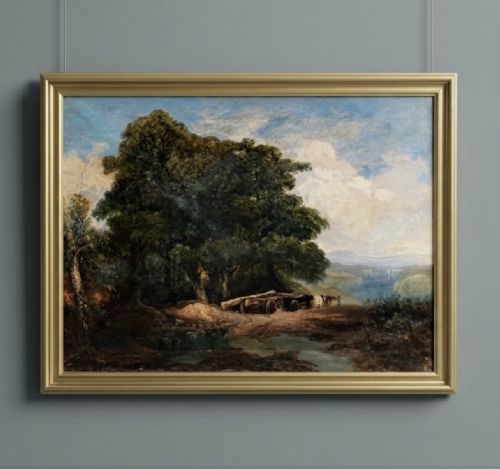
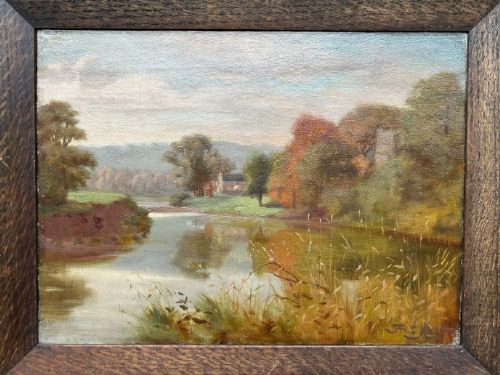
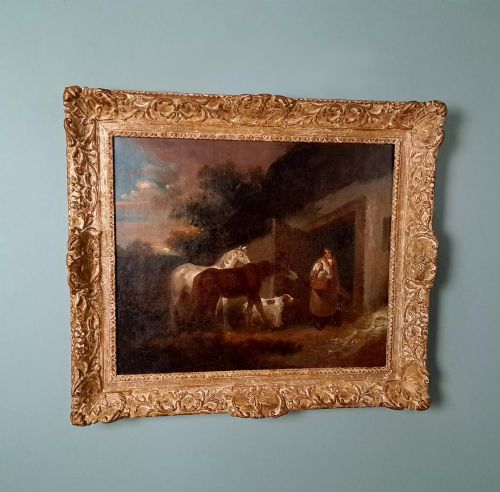
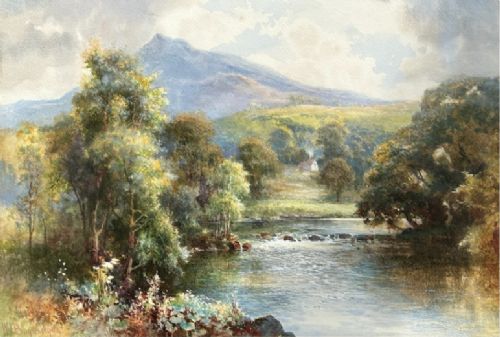
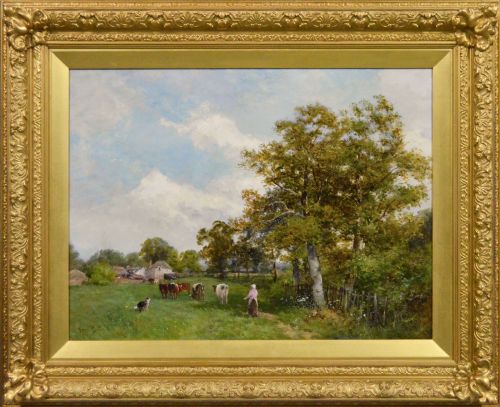
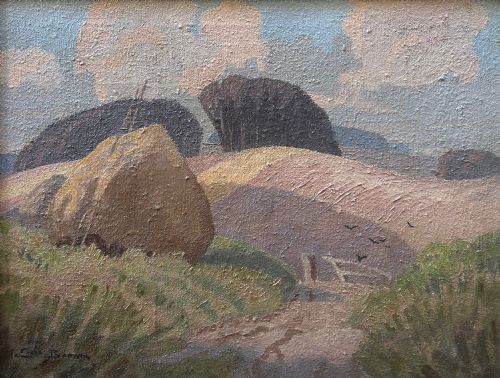
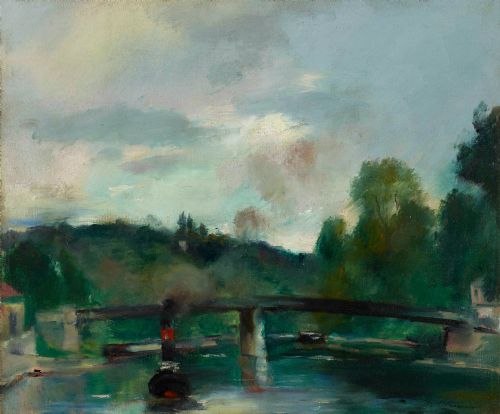
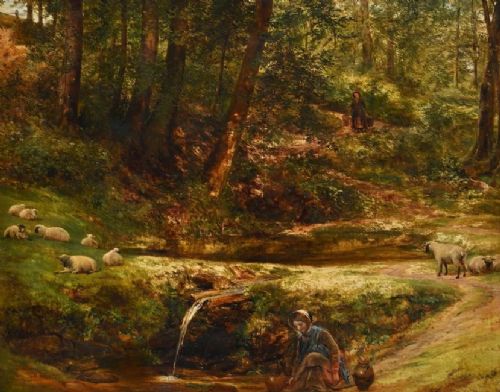
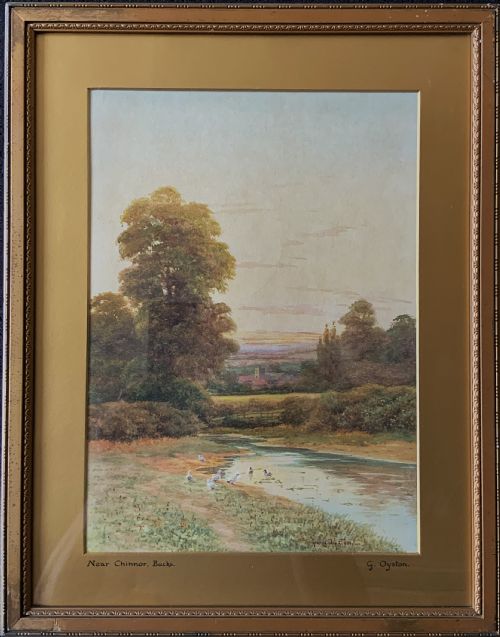
A countryside scene painting encompasses framed works depicting British and European pastoral life, river valleys, agricultural fields and woodland paths. These pictures range from expansive Victorian canvases showing horse-drawn ploughs and herding figures to smaller twentieth-century watercolours of thatched cottages and haystacks.
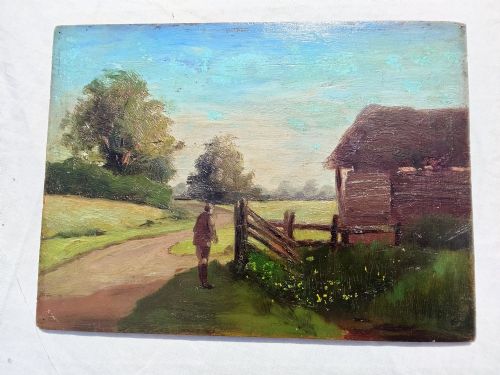
The version most commonly encountered on this page is the nineteenth-century or early twentieth-century oil painting on canvas or wood panel, often attributed to the British School or framed in gilt wood. Such works frequently capture specific regional localities, from Welsh riversides to Yorkshire farms, rendered in naturalist or impressionist palettes.
Materials and application
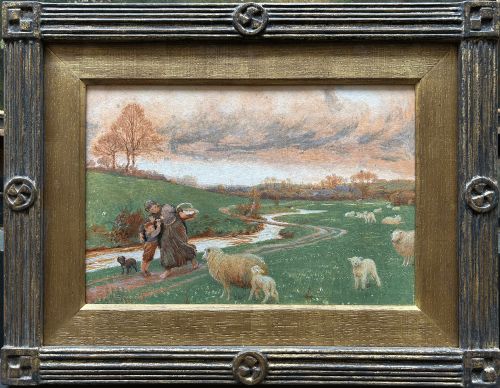
The foundational medium for these works is oil paint applied to stretched canvas, wooden board or wooden panel, allowing artists to build rich textures and deep tones. Watercolours on paper appear frequently alongside oils, offering a lighter application for river scenes and atmospheric weather.
Support structures typically involve traditional wooden stretchers and heavy gilt wood frames that complement the natural tones of the countryside subject matter. Applied brushwork varies from tight, academic representation to loose impressionist dabs denoting foliage, water and shifting sunlight.
Several sheep and at least one patient shire horse appear to have held very still while generations of artists mixed their greens.
Distinctions in execution
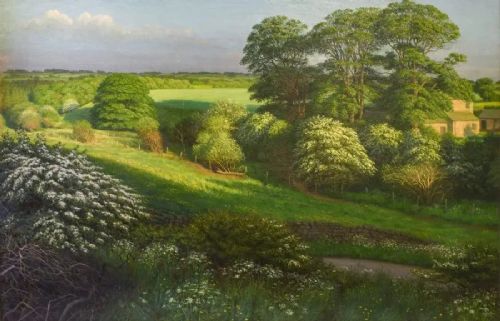
Quality in a countryside scene painting rests on the artist's command of light, atmosphere and proportion, particularly in the rendering of skies, water reflections and foliage. Stronger pieces convey a palpable sense of place and weather through assured brushwork, while lesser works rely on formulaic compositions.
The handling of figurative elements, such as working horses, fishermen or farm labourers, distinguishes accomplished professional output from simpler amateur records. Original framing, surface preservation and legible signatures further differentiate works within the category.
Richard Sebastian Bond·William Joseph Shayer Senior·David Bates·George Oyston·Frederick Hines
The Countryside Scene Painting Glossary
- British School
- A designation applied by dealers and auctioneers to paintings executed by British artists whose specific identities remain unrecorded or general.
- Oil on Canvas
- Pigments bound in a drying oil applied to woven fabric stretched across a wooden frame, forming the primary medium for durable landscape works.
- Gilt Wood
- Timber framing coated in gold leaf or gold-coloured paint, commonly found surrounding nineteenth-century landscapes to enhance visual depth.
- Pastoral
- A genre of art focused upon rural life, agriculture, shepherds and tranquil countryside scenery rather than urban or industrial subjects.
Countryside Scene Painting: Frequently Asked Questions
What is a countryside scene painting?
A countryside scene painting is a framed artwork depicting rural topography, agricultural labour, rivers, woodlands and rural architecture. These pieces record pastoral life across different European regions.
Most examples date from the nineteenth and early twentieth centuries, executed in oil or watercolour. They serve as historical records of changing rural landscapes and agrarian traditions.
How were these paintings displayed?
Historically, these landscape works hung in domestic parlours, drawing rooms and studies as a way to bring the perceived tranquility of nature indoors. They were valued for their ability to evoke familiar regional topography.
Frames were selected to complement the interior decor of the period, frequently utilising heavy gilt wood mouldings that added warmth and presence to the wall art.
How do I identify the period?
Dating relies upon stylistic clues, framing materials, artist signatures and technical substrates such as canvas types or wood panels. Victorian works often feature detailed narrative elements and heavier gilt framing.
Later twentieth-century examples frequently adopt looser impressionist brushwork or muted palettes associated with Edwardian and interwar British art movements.
How should I care for an antique painting?
Preservation requires hanging works away from direct sunlight and maintaining stable indoor humidity levels to prevent cracking in oil paint or warping in wooden panels. Glass protection on watercolours helps shield fragile paper from atmospheric pollutants.
Dusting should be performed gently with a soft, dry brush, avoiding liquid cleaners or chemical solvents that might damage the original pigment surface.