
Antique Flower Painting
These antique flower painting works capture botanical forms across centuries in oil and watercolour.
What They Are
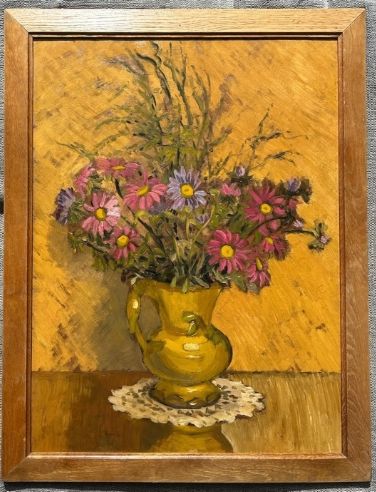
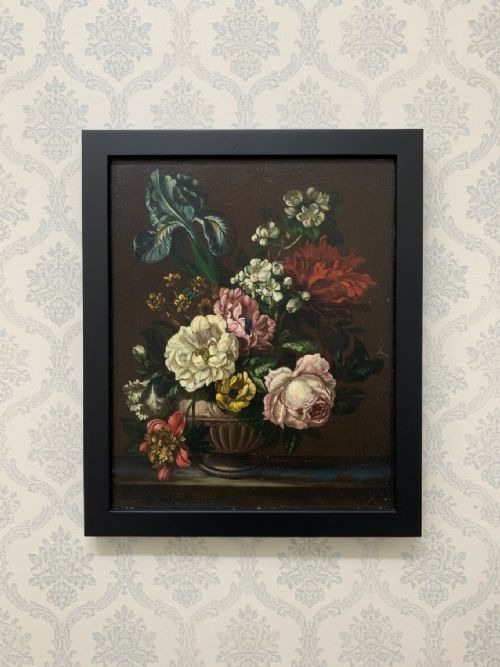
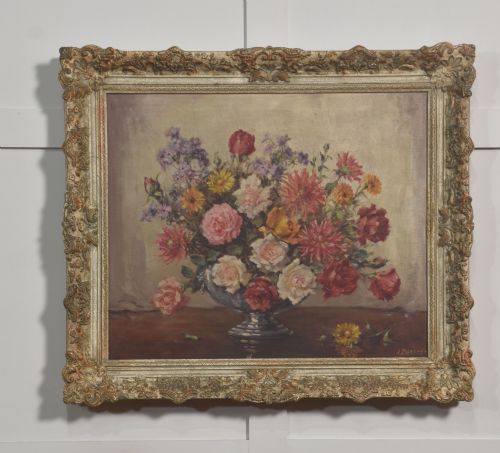
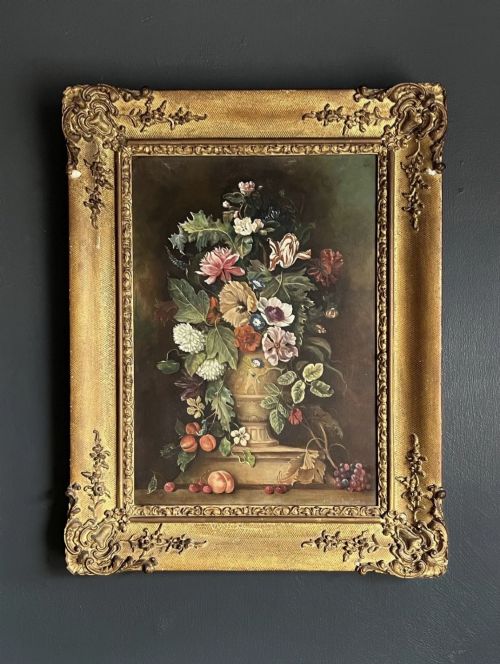
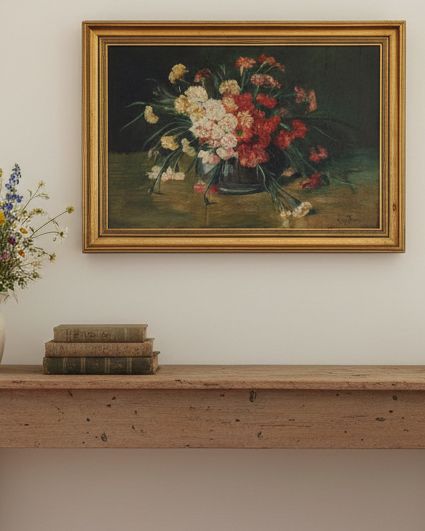
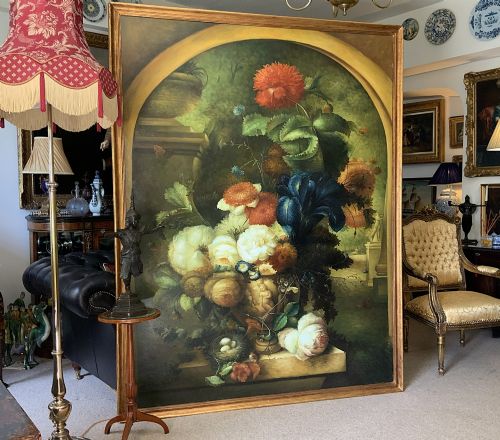
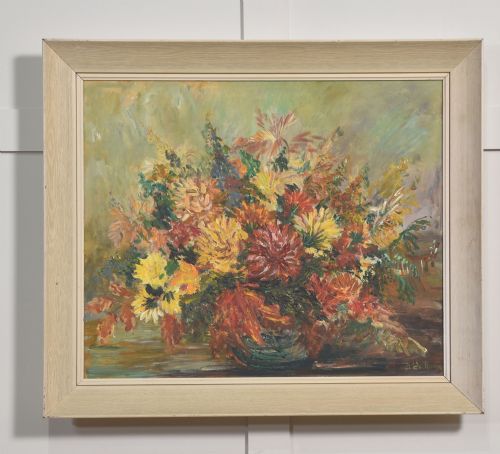
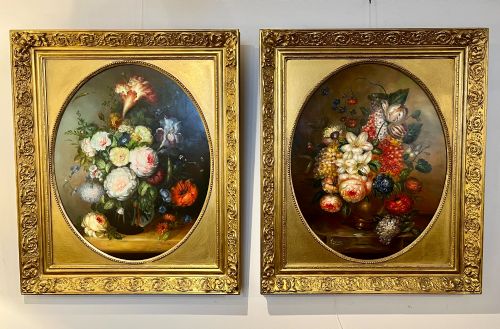
An antique flower painting presents natural botanical studies, floral still lifes and garden compositions executed across the nineteenth and twentieth centuries. These works record varied botanical subjects, from single specimen stems in jugs to elaborate arrangements in urns accompanied by birds' nests and butterflies.
The most common examples on this page are oil paintings on canvas or panel and watercolours on paper, originating from British, French, German and Dutch studios. Painters from the nineteenth century onward utilised these floral subjects to explore light, colour and natural detail within domestic interiors.
How They Were Made
Artists painted these floral studies using oil paint or watercolour pigment applied to canvas, mahogany panels, metal panels, card mounts or heavy paper. Works often incorporated wood framing and silver leaf details to complement the painted composition.
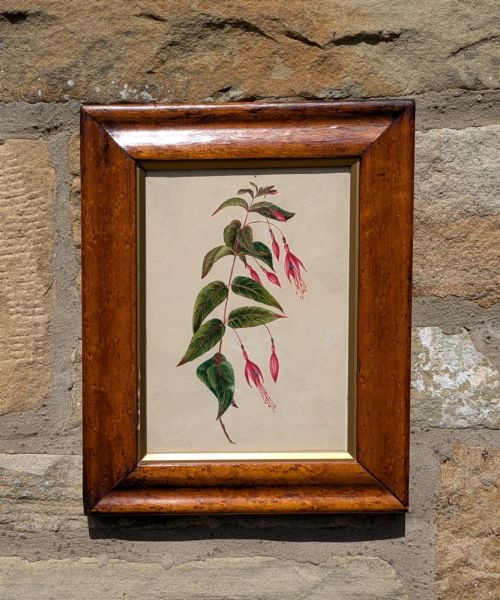
Techniques range from precise nineteenth-century botanical watercolours detailing pelargoniums and azaleas to looser oil brushwork influenced by Dutch Golden Age traditions and post-impressionist styles.
Retail Price Guide 2026
Typical UK retail prices for flower painting, calculated from the Sellingantiques database of over a million retail prices indexed since 2003. This retail price guide relies exclusively on Sellingantiques data; no external sources or auction records are used, so the figures do not describe the wider market.
Artists frequently invited small butterflies and curious birds to share the canvas with unruly bunches of summer roses and pelargoniums.
What Varies in Quality
Quality rests in the precision of the botanical draughtsmanship and the artist's handling of light upon petals, leaves and glass vessels. Superior pieces demonstrate careful observation of natural textures, insect life and tonal depth.
The sophistication of the composition distinguishes standard decorative studies from masterworks, particularly where artists integrate complex elements like bird nests, fruit and urns within a balanced spatial arrangement.
Jabez Bligh·Charlotte Isa James·Henry D'Arcy Hart·Henry Farmer·Mary Stevens·E M Davies·Isabelle Cohen·Giuseppe Pesci·Maria Harrison·Jessie Wolfe·Charles-Gilles Dutillieu·Giuseppe Vincenzino·Simon Hardimé·Evelyn Chester·H C Mellor·Olive Higginbottom·George Clare
The Antique Flower Painting Glossary
- Still life
- A painting depicting inanimate subject matter, typically commonplace objects such as flowers, fruit and tableware. In these pieces, floral arrangements form the primary focus.
- Botanical
- An accurate scientific or artistic representation of plant species. These works prioritise precise structural detail of petals and leaves.
- Panel
- A rigid support for oil painting, often constructed from wood such as mahogany or metal. Panels provide a smooth, stable surface distinct from woven canvas.
- Card mount
- A paperboard border or backing placed around watercolours to frame and protect the sheet. It separates the pigment from the glazing.
- Watercolour
- A painting method where water-soluble pigments are suspended in a water-based solution on paper. This technique yields transparent, luminous colour washes.
Frequently Asked Questions
What periods do these paintings come from?
The available selection spans from the nineteenth century through to the mid-twentieth century. Works reflect various historical periods including Victorian botanical illustration and Dutch Golden Age revivals.
Dates recorded on the pieces range from the eighteen-sixties up to nineteen-fifty, demonstrating enduring interest in floral subjects.
What materials were used in these artworks?
Artists employed traditional media such as oil paint and watercolour pigment. Supports include stretched canvas, wood and metal panels, card mounts and heavy paper.
Frames often incorporate wood and silver leaf elements to house the paintings securely.
How should I display a watercolour painting?
Watercolour works on paper require protection from direct sunlight to prevent pigment fading over time. Glazing with appropriate glass helps shield the paper surface from environmental moisture and dust.
Displaying these pieces in rooms with stable temperature and humidity preserves the paper support and card mounts.
What subjects accompany the flowers in these paintings?
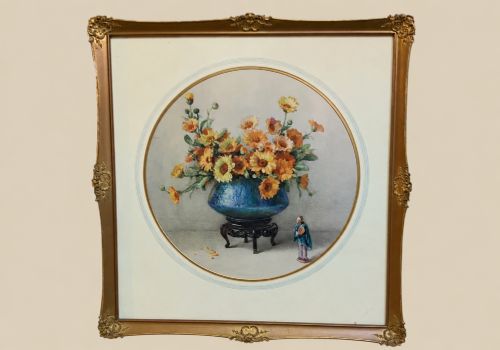
Many floral still lifes include additional natural elements such as butterflies, birds' nests with eggs, fruit and insects. Glass vases, ceramic jugs, willow pattern vessels and stone ledges frequently ground the flower arrangements.
These complementary details add narrative depth and texture to the composition.