
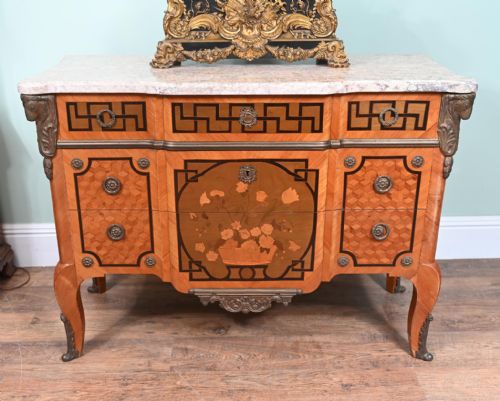
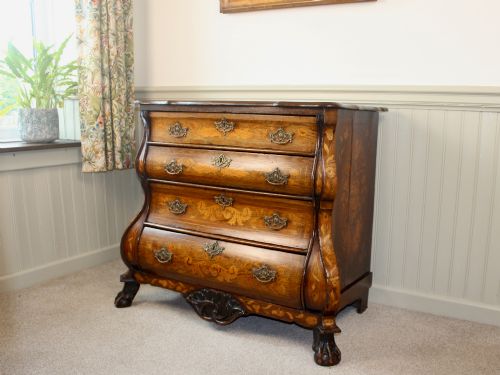

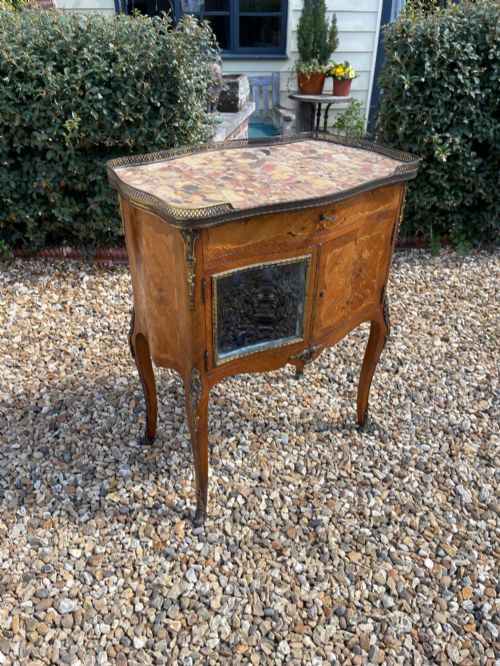


Antique Floral Inlay Commode
An antique floral inlay commode brings intricate marquetry and substantial storage to a room through centuries of cabinet-making skill.
Antique Floral Inlay Commode
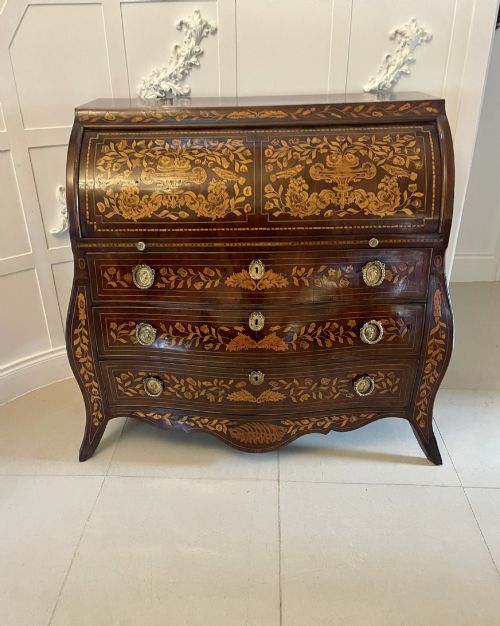
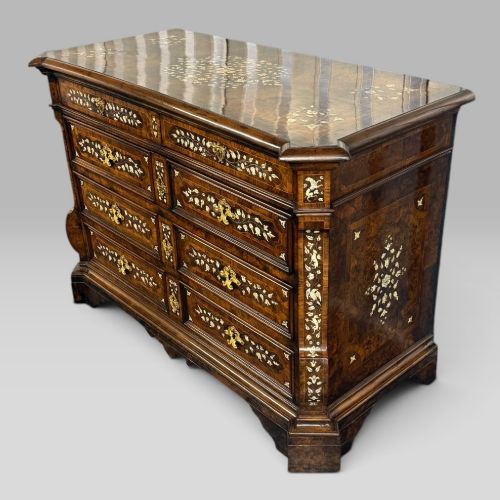
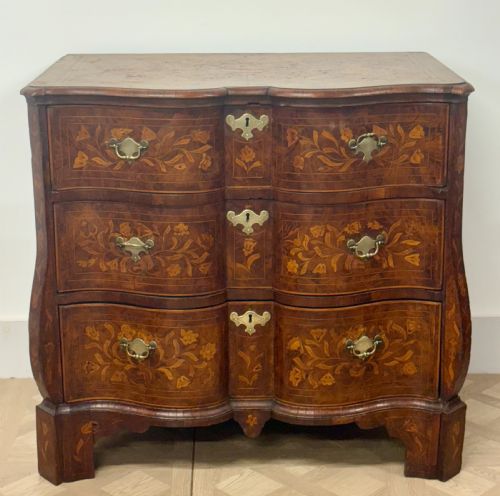
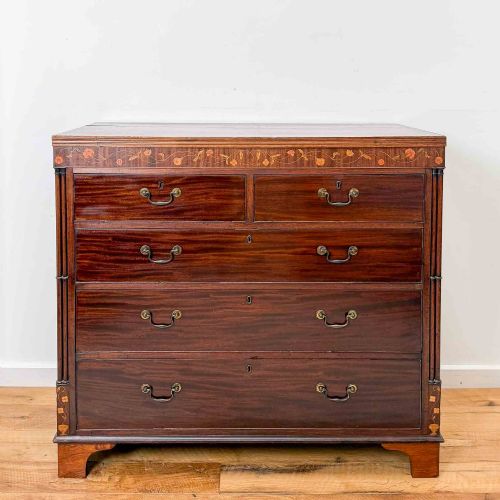
An antique floral inlay commode brings together practical storage and detailed surface decoration across several centuries of European craftsmanship. These pieces span centuries from the seventeenth to the twentieth, with Dutch marquetry and French styles appearing frequently alongside English satinwood and mahogany designs.
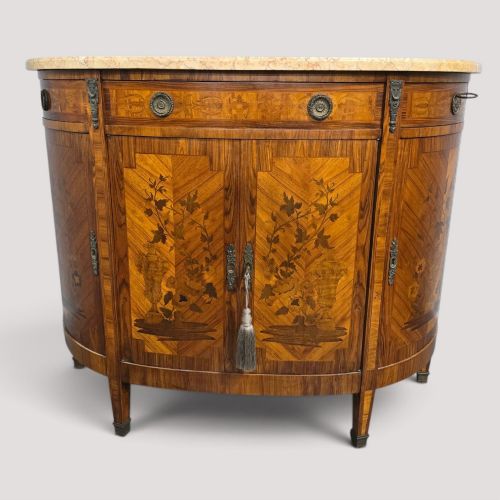
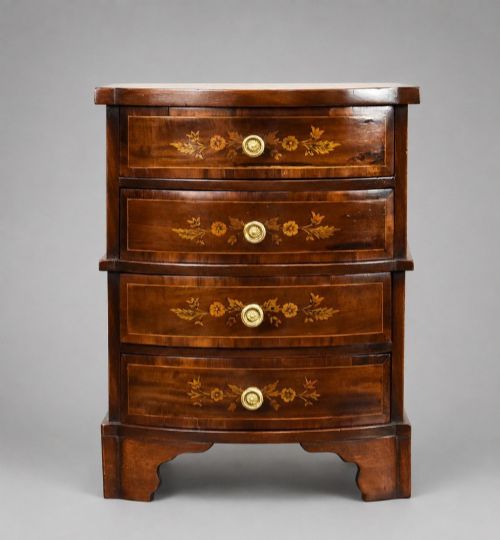
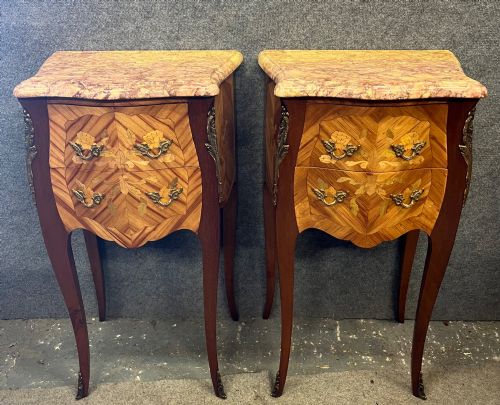
The selection here ranges from bombe chests and tallboys to marble-topped side cabinets, demi-lune consoles and bedside tables. Buyers encounter robust oak and walnut carcases alongside lighter satinwood and kingwood pieces, reflecting both baroque splendour and later revival tastes.
Materials and Construction
Cabinet-makers built these carcases from foundational timbers such as mahogany, walnut, oak and fruitwood, applying fine veneers over the primary structure. Floral designs took shape through marquetry, using contrasting woods and organic materials carefully cut and fitted into the surface.
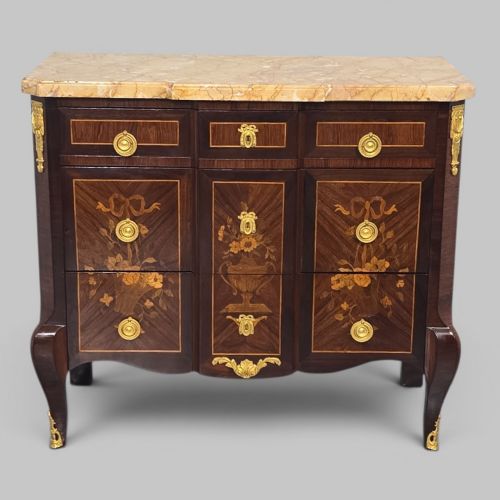
Many examples incorporate decorative metalwork, including ormolu mounts, brass inlays and cast handles that complement the timber tones. Marble tops appear on numerous French and continental pieces, providing a durable and polished counterpoint to the wooden frames below.
Listings feature walnut, mahogany, rosewood and kingwood combined with marble, ormolu and brass across eight distinct periods.
Judging Quality
The fineness of the floral marquetry dictates much of the visual success, with superior pieces showing precise cutting and shading within each petal and leaf. The choice of underlying cabinet timbers and secondary woods also marks the distinction between standard workshop production and high-status commissions.
Hardware integration and structural proportions reveal the maker's hand, particularly where ormolu mounts or brass details align flush with the timber. Surface finishing that retains the natural depth of the grain without heavy modern interference separates well-preserved examples from over-restored ones.
Edwards and Roberts·Grand Ducal Workshops
The Antique Floral Inlay Commode Glossary
- Marquetry
- A technique where small pieces of veneer are assembled to form pictorial or decorative patterns on a wooden surface. This method allows for intricate floral arrangements across drawer fronts and tabletops.
- Ormolu
- Gilded bronze used for decorative mounts, feet and handles on furniture. It adds a metallic lustre that complements walnut and kingwood surfaces.
- Bombe
- A bulging, outward-curving profile found on the sides and fronts of certain cabinets and chests. This swelling shape is characteristic of baroque and rococo continental furniture.
- Demi-lune
- A half-moon shape used for the surface and footprint of console tables and cabinets. It allows the piece to sit flush against a wall while offering a curved front.
Antique Floral Inlay Commode: Frequently Asked Questions
What is an antique floral inlay commode?
These pieces are decorative storage chests and cabinets featuring detailed wood-inlaid floral patterns across their drawers and doors. They serve as functional furniture while displaying intricate marquetry work from various European traditions.
Craftsmen utilised contrasting timbers like satinwood, rosewood and mahogany to build these surfaces. They function today as focal storage units in reception rooms and hallways.
How do I care for marble-topped cabinets?
Marble surfaces require gentle cleaning with warm water and a soft cloth to avoid scratching the polished stone. Acidic substances should be kept away from the top to prevent surface etching.
Wooden bases benefit from occasional waxing with traditional furniture polish to nourish the timber. Maintaining a stable room temperature protects the veneer and marquetry from cracking.
Where were these pieces made?
The pieces originate primarily from workshops across England, France, Italy and the Netherlands. Each region developed distinct cabinet-making traditions, from Dutch floral marquetry to French Louis styles.
Local timber availability and prevailing artistic movements shaped the appearance of furniture from each area. Makers adapted these regional styles through successive revival periods during the nineteenth century.
How do I distinguish different periods?
Early seventeenth and eighteenth-century examples often feature dense walnut or oak carcases with heavy floral marquetry. Later nineteenth-century revival pieces frequently incorporate satinwood, kingwood and machine-cut veneers.
Construction methods inside the drawers and the style of the mounts provide additional clues to the date of manufacture. Examining the secondary woods helps confirm whether a piece belongs to its original period or a later revival.