

Antique Floral Footstool
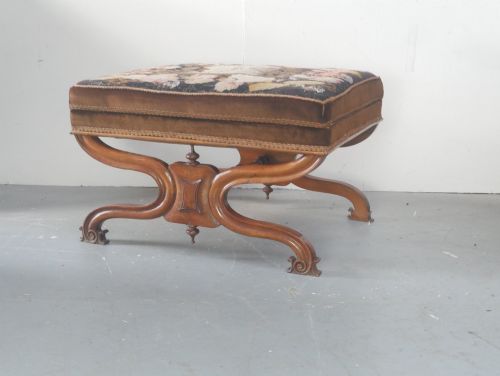
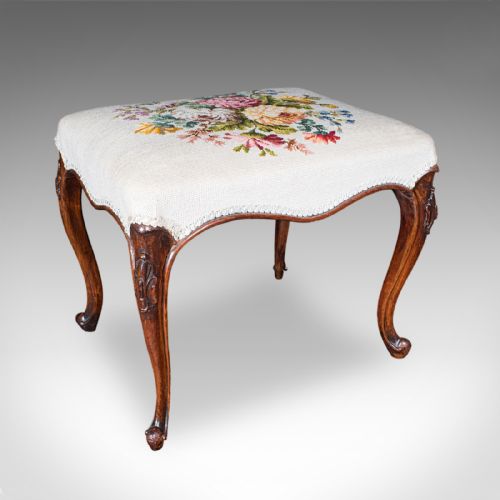
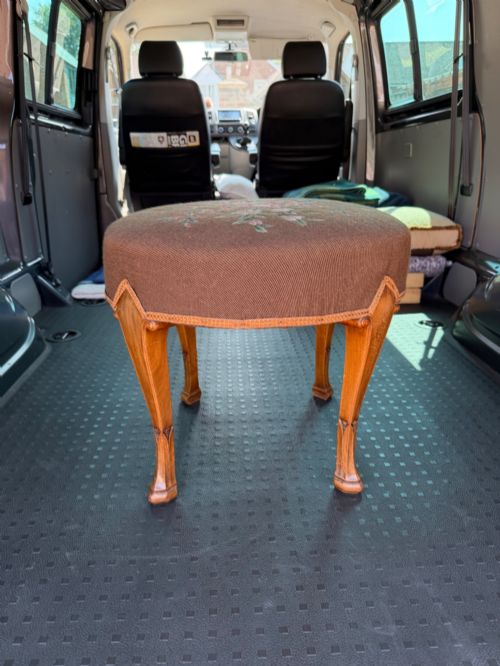
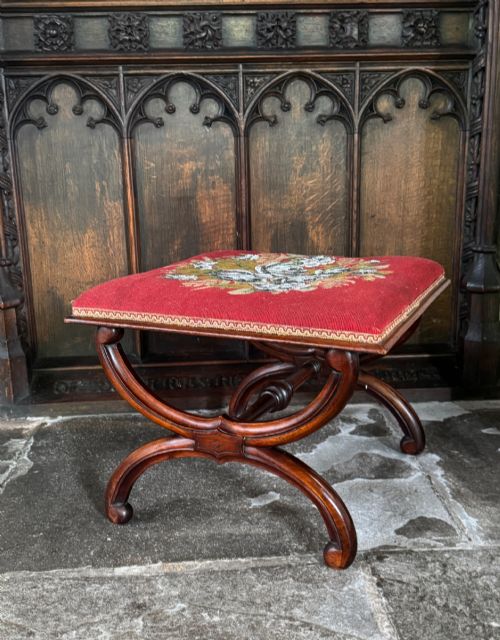
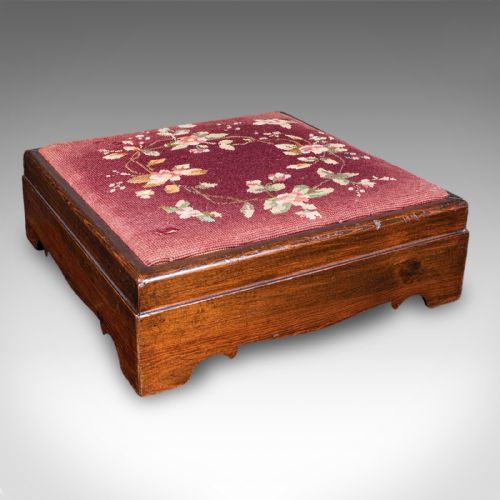
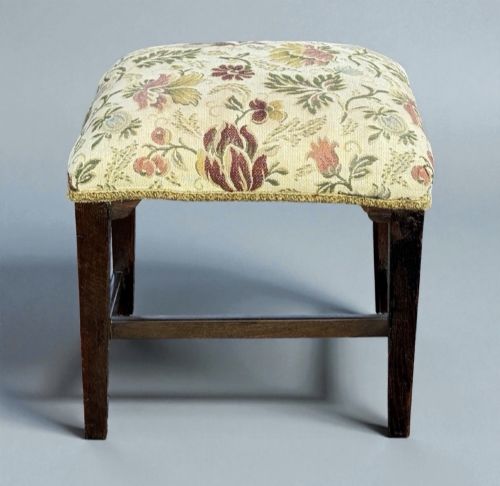
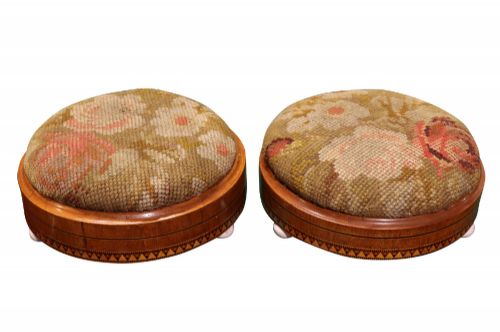
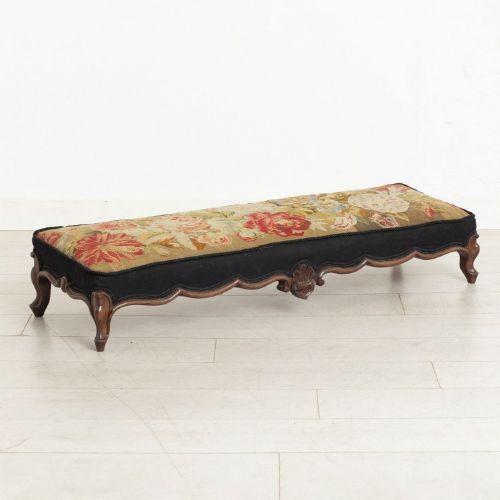
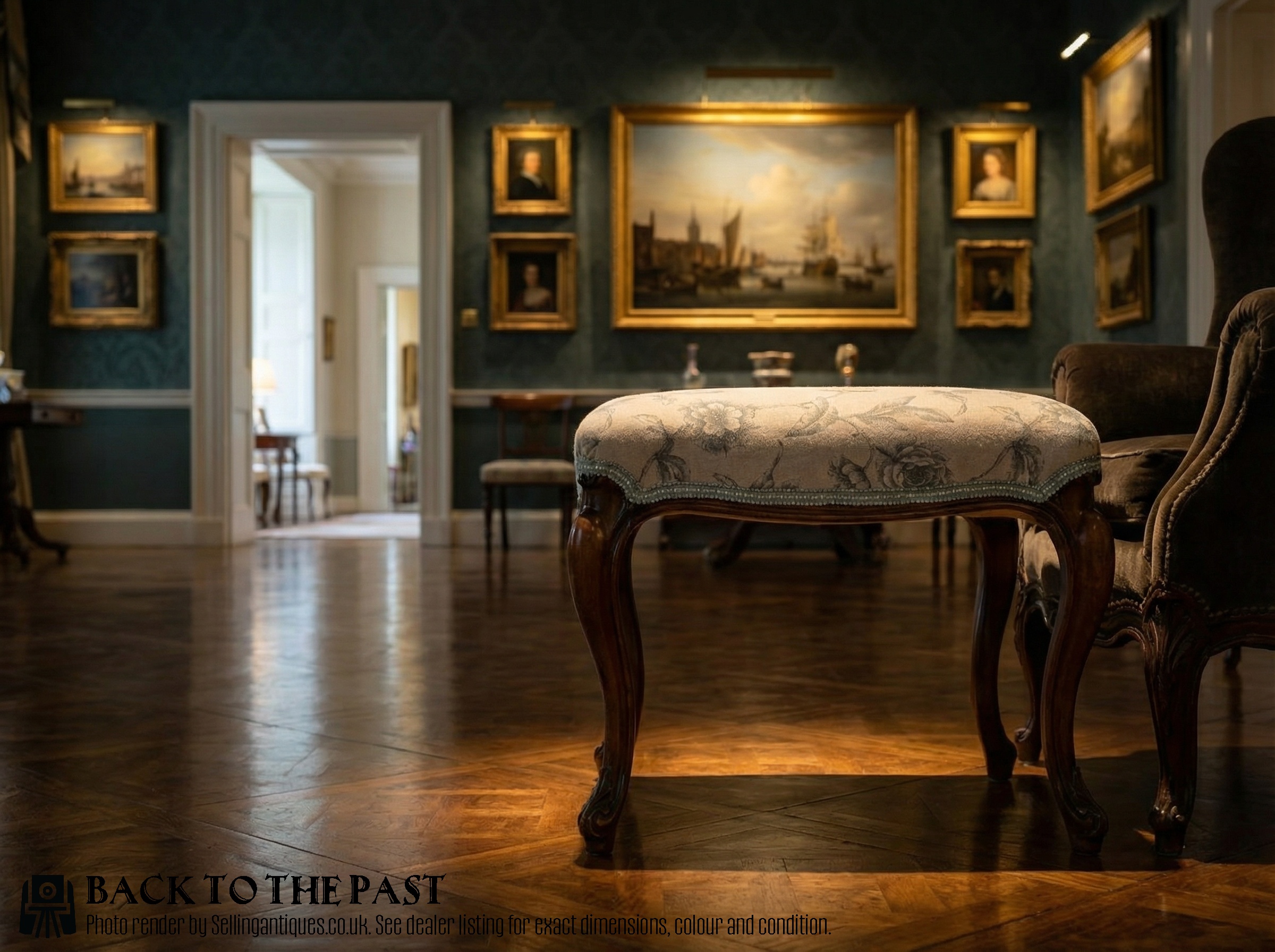
These antique floral footstool pieces bring practical comfort and rich historical texture to a room, led by Victorian walnut examples with needlepoint tops.
What these pieces are
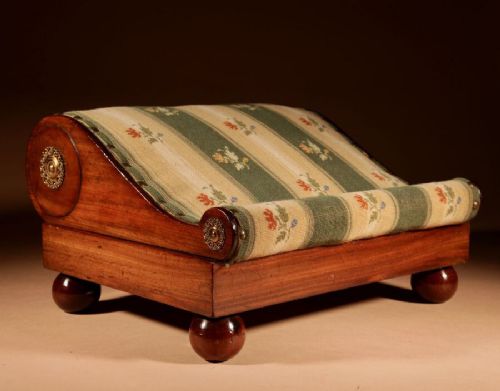
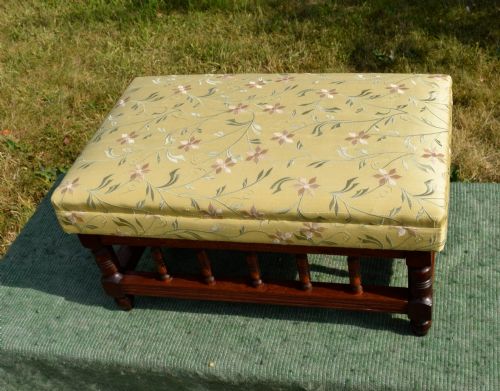
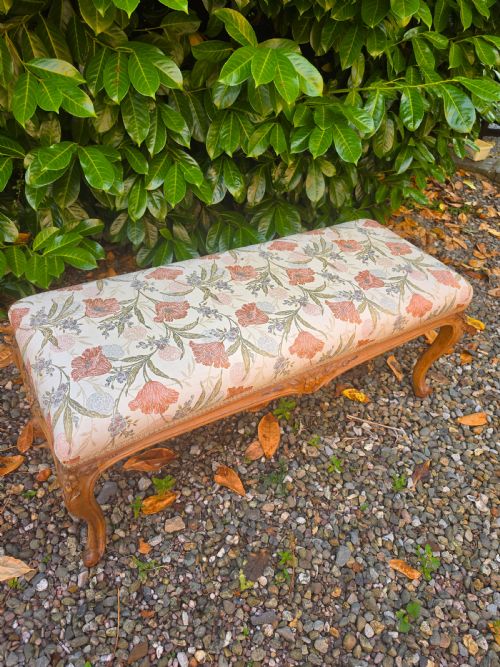
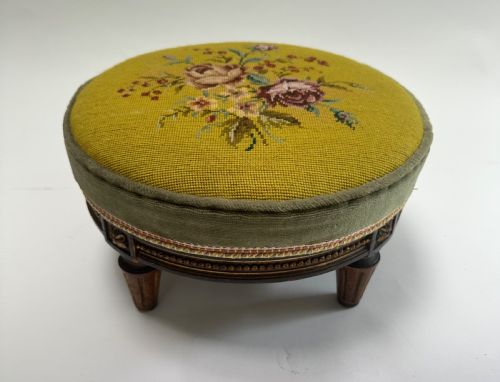
An antique floral footstool covers a diverse group of low seating forms designed for resting feet or low occasional use. The selection spans the Regency era through to the early twentieth century, taking in both British and continental workshops.
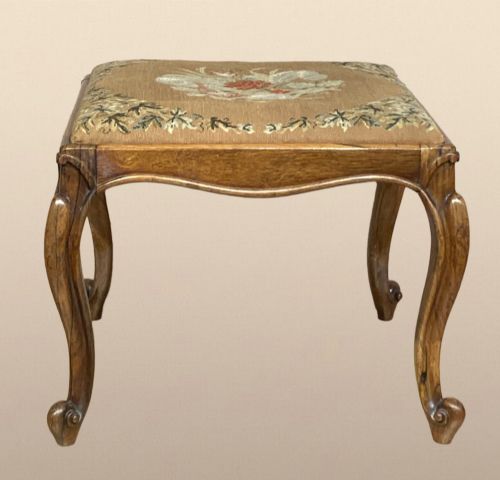
Victorian walnut framed stools dominate the selection, frequently upholstered in floral wool tapestry or needlepoint textiles. Alongside these, buyers encounter Regency rosewood pieces, Swedish Empire birch examples, and French Louis XVI revival small stools.
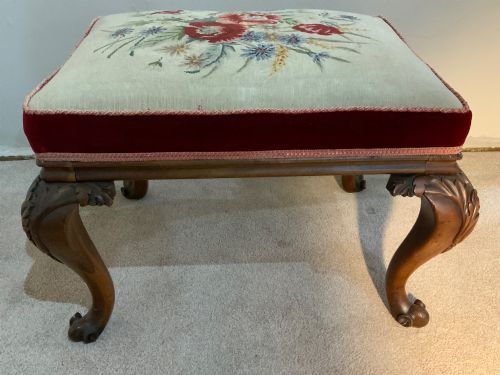
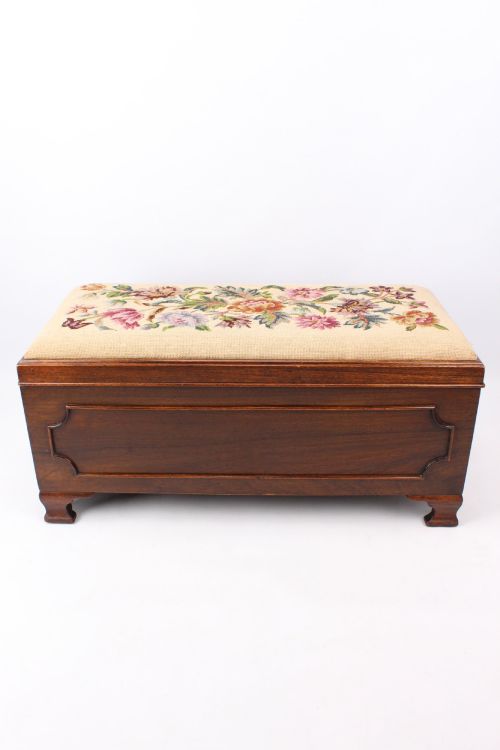
The primary forms range from modest small footstools with cabriole legs to mahogany and walnut frames carrying original fabric or later needlework covers. Each piece reflects the domestic comfort requirements of its specific nineteenth century decade.
How they were made
Cabinetmakers shaped the structural frames of these stools from hardwoods such as walnut, mahogany, rosewood, and birch. These timbers provided the necessary strength for low load-bearing furniture while allowing for carved details on legs and rails.
Upholstery techniques relied on textiles including wool tapestry, needlepoint, fabric, and velvet. Artisans worked floral designs directly into wool needlework tops, securing them over traditional padding and webbing within the wooden frames.
Retail Price Guide 2026
Typical UK retail prices for floral footstool, calculated from the Sellingantiques database of over a million retail prices indexed since 2003. This retail price guide relies exclusively on Sellingantiques data; no external sources or auction records are used, so the figures do not describe the wider market.
Periods represented span from the Regency era through the Victorian decades up to nineteen twenty.
What varies in quality
The grade of timber selection and the crispness of frame carving separate standard production from superior examples. Dense walnut and finely grained rosewood indicate a higher tier of construction.
The finesse of the wool needlepoint or tapestry top dictates much of the visual merit. Finely worked floral needlework with subtle shading represents the upper end of the range compared to simpler commercial textiles.
The Antique Floral Footstool Glossary
- Cabriole leg
- A furniture leg that curves out and then in, resembling an animal's leg. This form appears frequently on Victorian walnut frames in this group.
- Needlepoint
- A type of canvas work embroidery executed with a yarn in a counted thread stitch. It forms the classic floral top seen on nineteenth century footstools.
- Regency
- The British design period spanning the early nineteenth century, known for classical restraint and dark timbers like rosewood. Pieces from this era show distinct stylistic refinement.
- Tapestry
- A thick textile traditionally woven on a loom with pictorial or floral patterns. In these listings, it provides durable and decorative upholstery for footstools.
- Empire style
- The decorative arts movement from the early nineteenth century favouring classical antiquity and native timbers such as birch. Swedish interpretations of this style feature in the archive.
Frequently Asked Questions
What is an antique floral footstool?
An antique floral footstool is a low nineteenth century seat, typically framed in walnut or mahogany and finished with a needlepoint or tapestry floral top.
These pieces were constructed during periods such as the Regency and Victorian eras to serve alongside larger parlour seating.
How were these stools used originally?
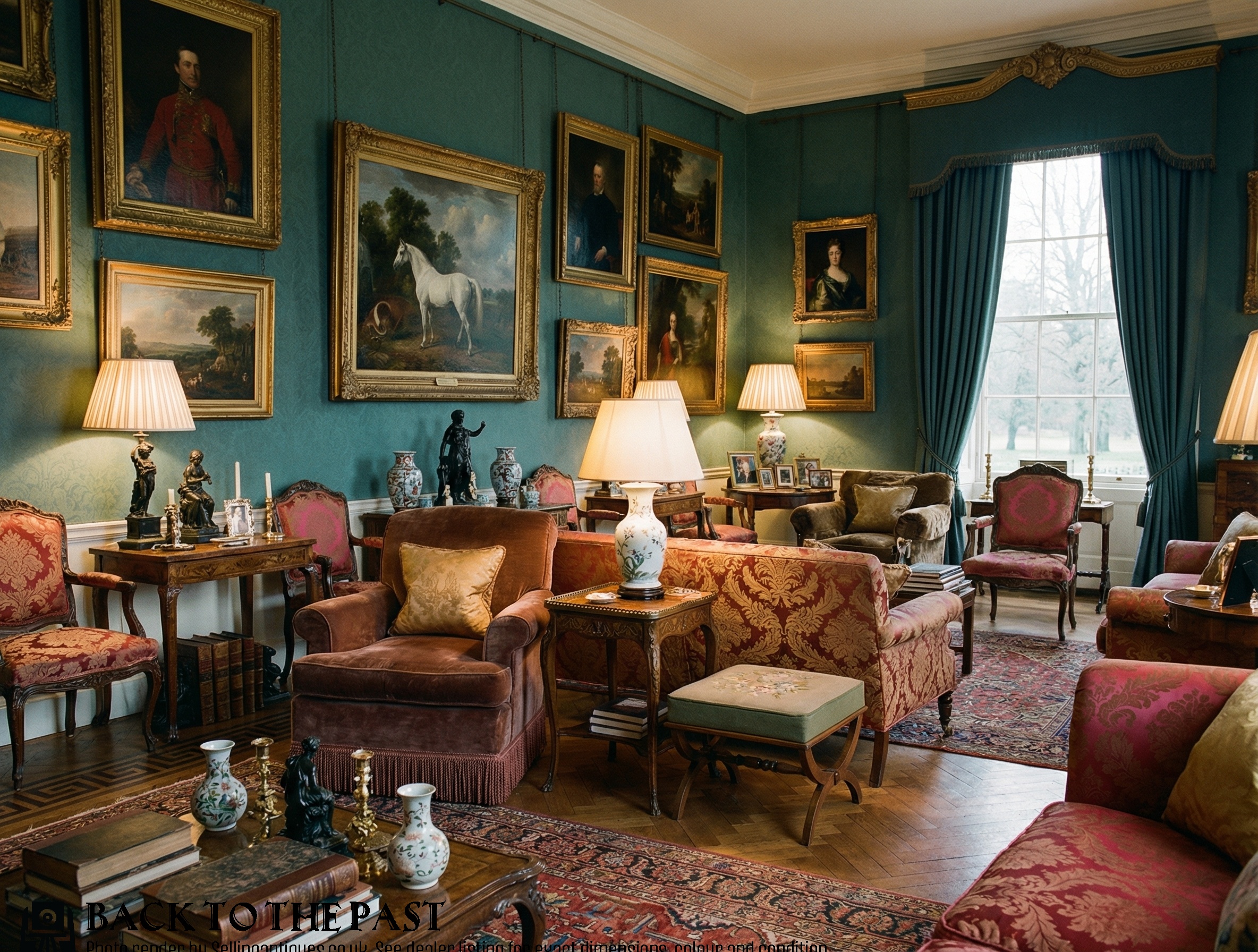
In nineteenth century drawing rooms and parlours, occupants used these low stools to support their feet while seated in armchairs. Their modest height made them practical accessories for domestic comfort.
Over time, they also functioned as casual low seats or decorative surfaces within formal rooms.
How do I date a footstool?
Dating relies on identifying the primary wood species, frame silhouette, and upholstery technique. Victorian walnut pieces often display cabriole legs, while Regency examples utilise rosewood and different classical proportions.
Comparing the construction methods of the wooden frame to known nineteenth century cabinetmaking practices confirms the production period.
Are the needlework tops original?
Some pieces retain their original wool tapestry or needlepoint covers, while others have received replacement upholstery during their lifespan. Examining the wear on the textile and the method of attachment helps determine its age relative to the wooden frame.
Both period original needlework and sympathetic later replacements appear across these historical pieces.
How do I care for antique upholstery?
Protect antique textile tops from direct sunlight to prevent fading of the wool threads. Gentle surface cleaning with a soft brush maintains the needlepoint without disturbing the historic fibres.
Keep the wooden frames conditioned with appropriate furniture wax, avoiding excessive moisture on the fabric elements.