
Antique Floral Engraving
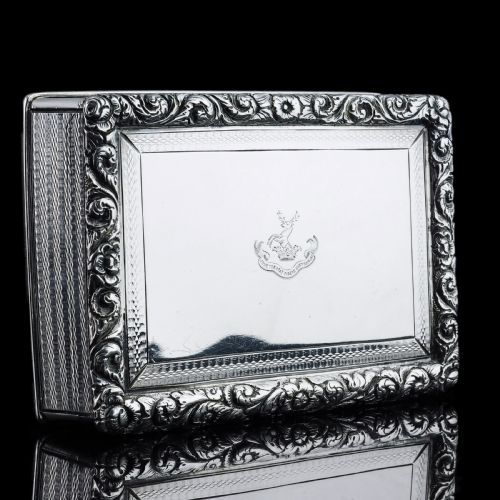
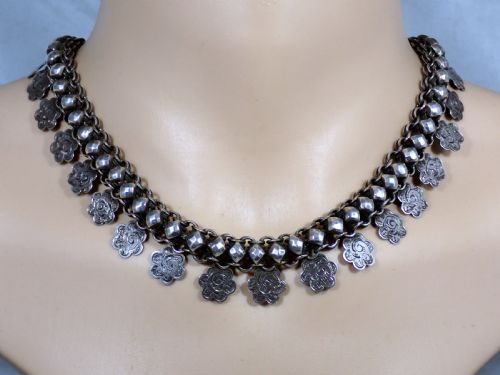
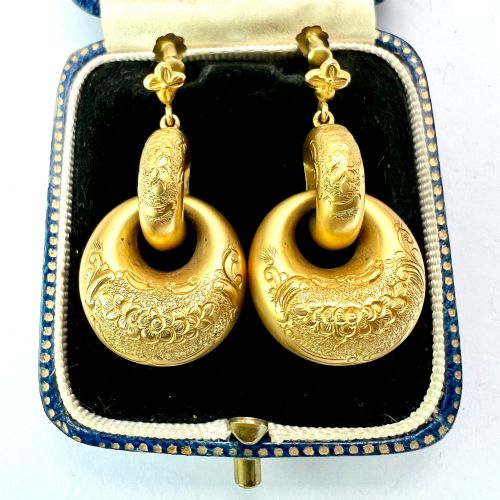
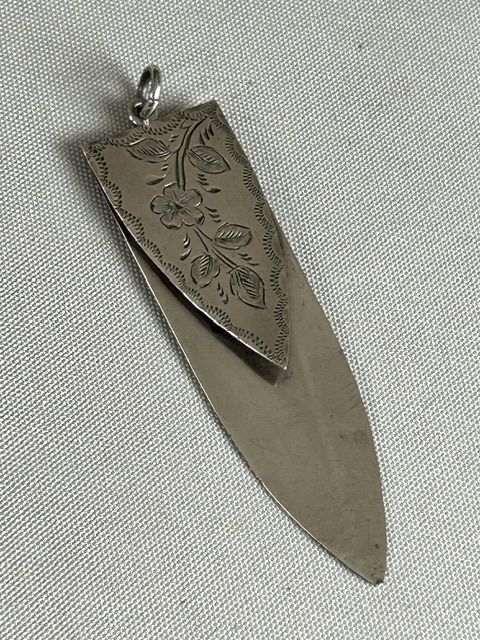
These antique floral engraving pieces capture botanical motifs across periods like the Victorian era and the 19th Century on sterling silver, gold, and glass.
Antique Floral Engraving
When searching for antique floral engraving, collectors encounter objects spanning the Georgian, Victorian, Edwardian, and later periods. The selection includes personal items like lockets, pendants, rings, and bangles alongside tableware such as claret jugs, serving dishes, and glass pieces.
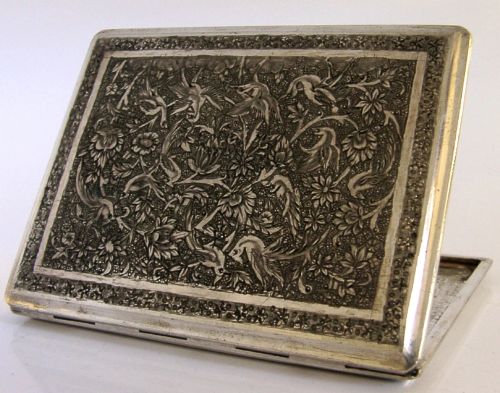
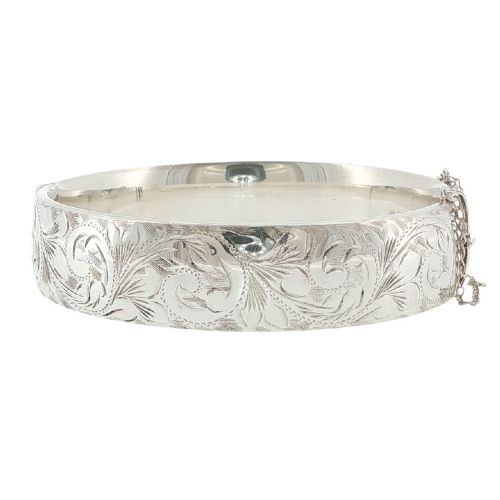
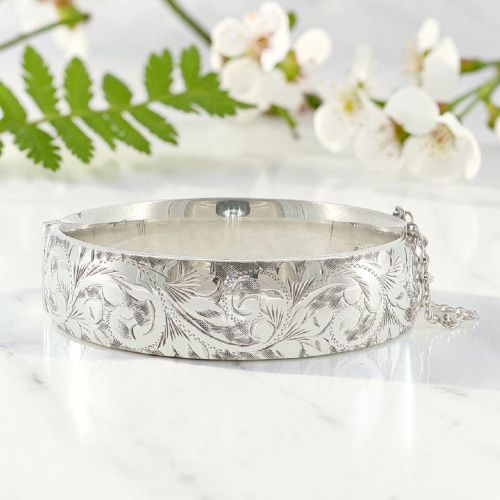
Silver and gold items often display intricate hand-cut botanical ornamentation, while glass and ceramic pieces feature etched or engraved floral and foliate scrolls. The inventory bridges wearable ornaments and functional household items made across diverse regions.
How they were made
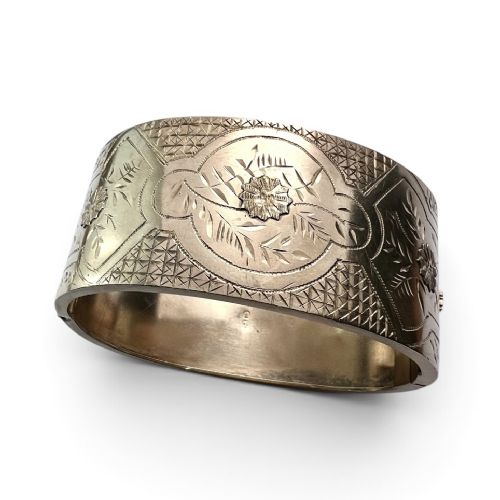
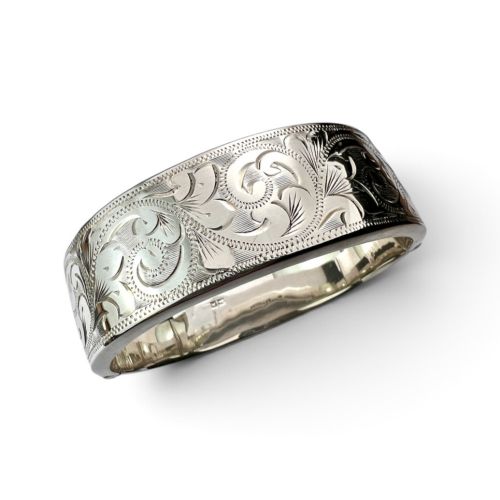
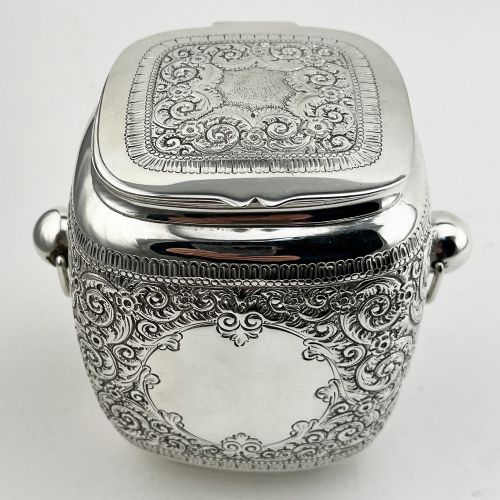
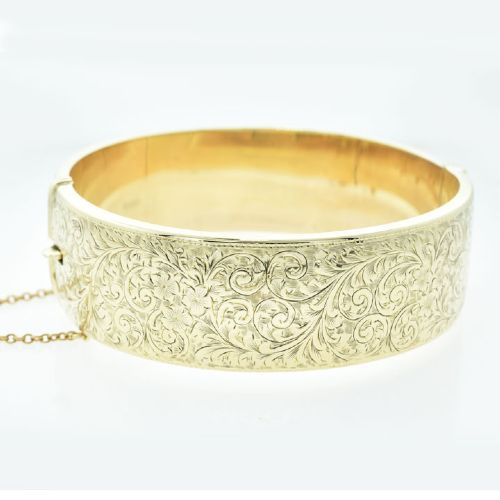
Metal items rely on hand engraving, chasing, and etching techniques applied to sterling silver, silver plate, and various carats of gold. Craftsmen used sharp burins and gravers to cut plant motifs directly into the metal surface.
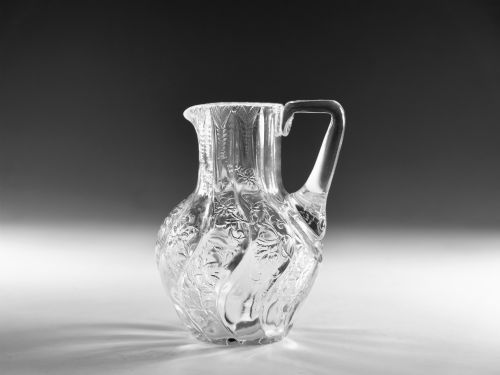
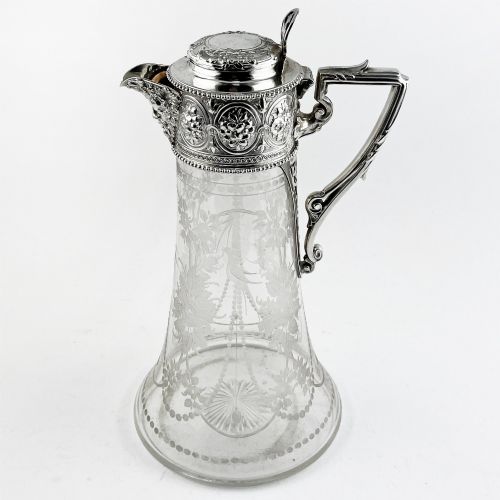
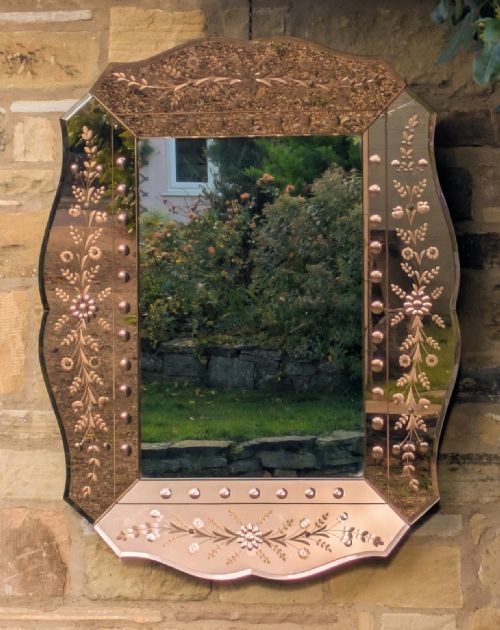
Glass objects utilise wheel-engraving and etching methods to produce frosted or defined floral patterns on vessels like ewers, rummers, and decanters. Brass and other base metals employ similar surface incising to render foliate borders.
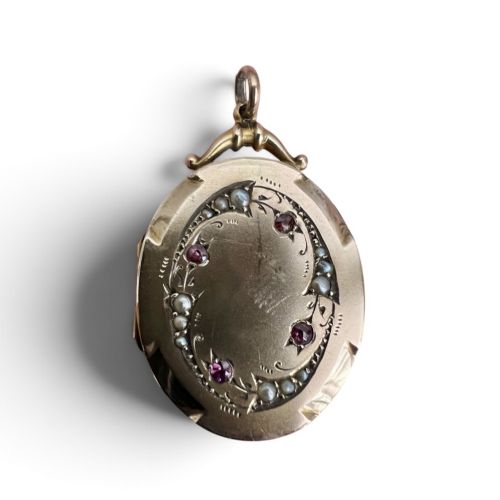
Swallow birds and flower baskets hide among the engraved foliage on late-nineteenth-century gold lockets.
What varies in quality
The precision and depth of the hand engraving distinguish finer examples from standard production pieces. Crisp, confident lines in floral scrolls indicate skilled execution by the maker.
The weight and purity of the underlying material, whether solid sterling silver, high-carat gold, or lead crystal, influence the overall calibre of the surviving object.
EV Pledge And Son·Martin Hall And Co·Joseph Willmore·Walker And Hall·Padley Parkin·Ando Jubei·A And J Zimmerman Ltd·Taylor And Perry
The Antique Floral Engraving Glossary
- Engraving
- The process of cutting design lines into a hard surface using a sharp metal tool called a graver. This technique defines the floral and foliate motifs seen on silver and glass.
- Chasing
- A metalworking technique where a hammer and punches push the metal from the front to sink the relief rather than cutting away material. It often borders engraved floral panels.
- Vesta case
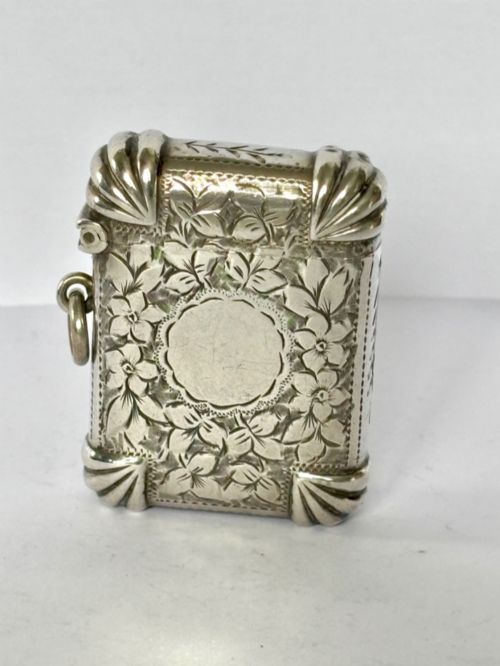
- A small pocket box designed to hold matches, typically fitted with a striking surface and decorated with engraved botanical designs.
- Claret jug
- A large pouring vessel for wine, frequently constructed from glass with a silver mount and handle that displays detailed floral ornamentation.
Antique Floral Engraving: Frequently Asked Questions
How do I date antique engraved silver?
Dating relies heavily on hallmarks stamped into the metal, which indicate the assay office, year letter, and maker. Stylistic clues such as floral scroll depth also help place the piece in periods like the Victorian era.
Comparing the engraving style to documented examples from specific makers provides further chronological context.
What is the difference between engraved and chased floral work?
Engraving involves cutting metal away to form the lines of a flower or leaf pattern. Chasing indents the surface without removing metal, pushing it inward to create a raised effect.
Many antique pieces combine both techniques to achieve depth and texture in botanical scenes.
How should I clean antique engraved silver?
Gentle washing with warm water and mild soap removes daily grime without harming the delicate recessed lines of the engraving. Soft cloths prevent scratching the polished raised surfaces.
Harsh abrasive dips should be avoided because they strip away the dark oxidation that highlights the engraved details.
Are engraved gold lockets durable for daily wear?
Gold lockets from the Victorian and Edwardian periods are generally robust, but the hinge and clasp mechanisms require careful handling. Lower carats like 9ct offer more structural resilience than high-carat gold.
Thin back-and-front varieties should be treated with care to prevent denting the floral designs.