

Antique Floral Chairs
These antique floral chairs bring pattern and craftsmanship into a room, offering practical seating paired with historic textiles.
Antique Floral Chairs
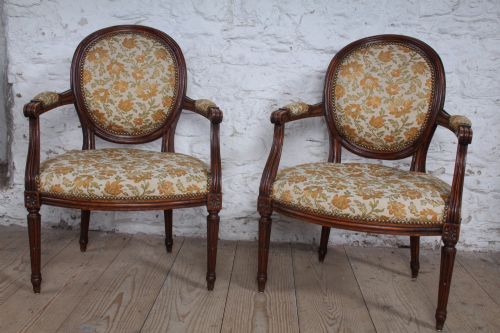
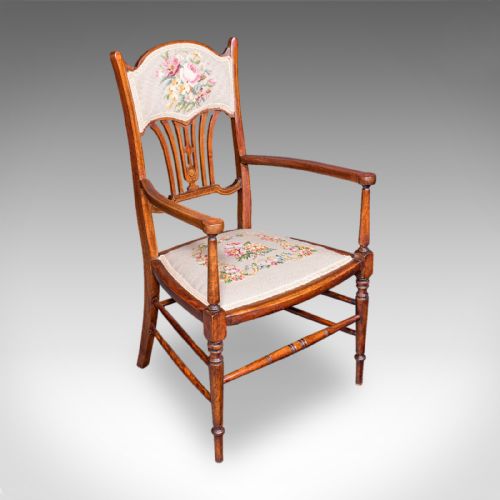
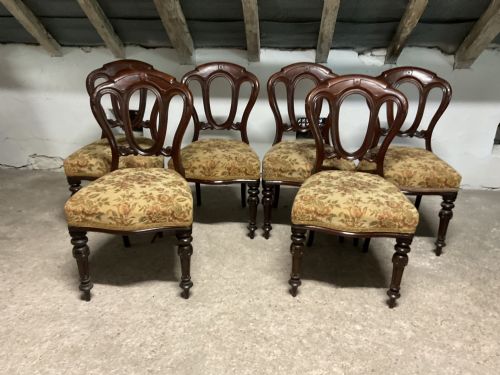
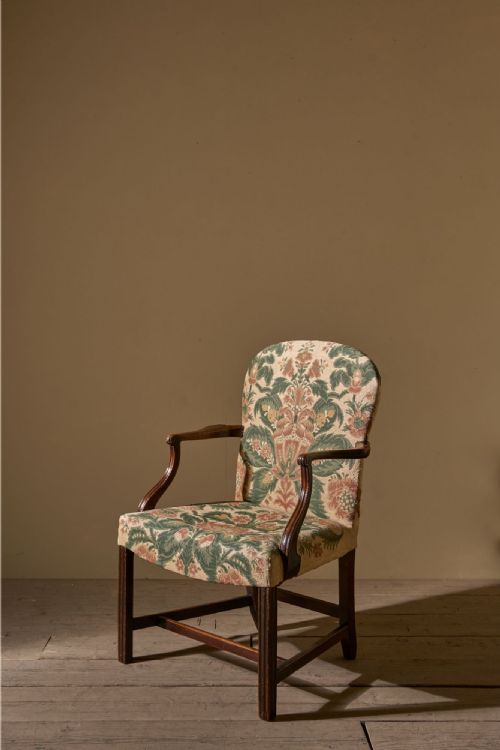
When you search for antique floral chairs, you encounter seating upholstered in tapestry, floral fabric, or decorative textiles spanning the Georgian, Victorian, and Edwardian eras. The selection comprises armchairs, wingbacks, salon chairs, and dining chairs constructed across various centuries.
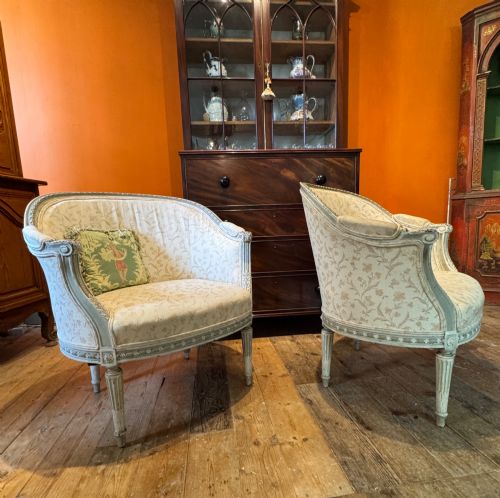
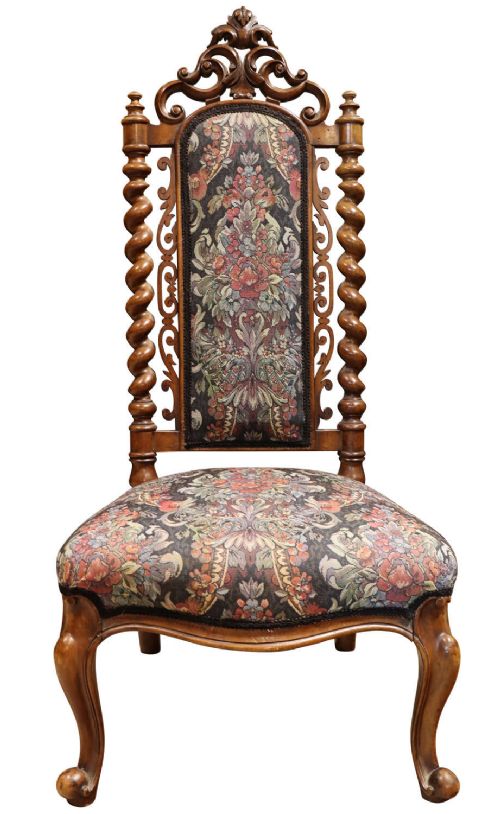
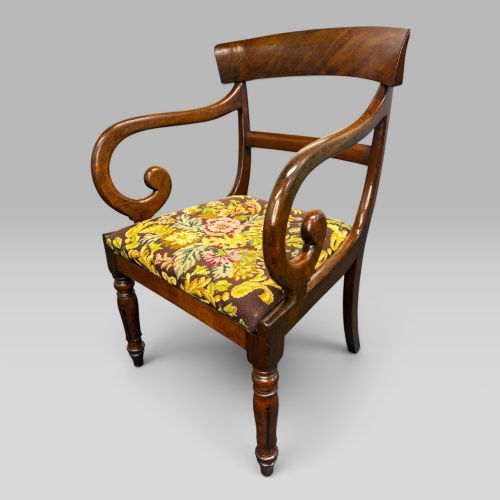
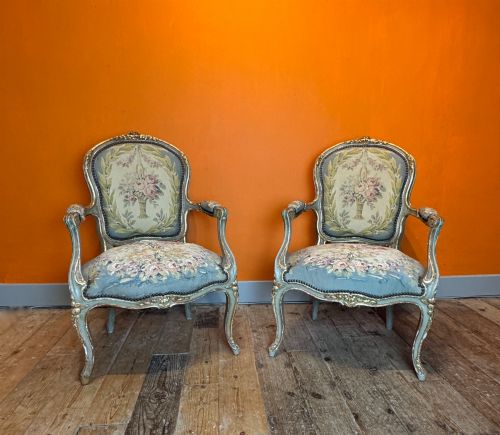
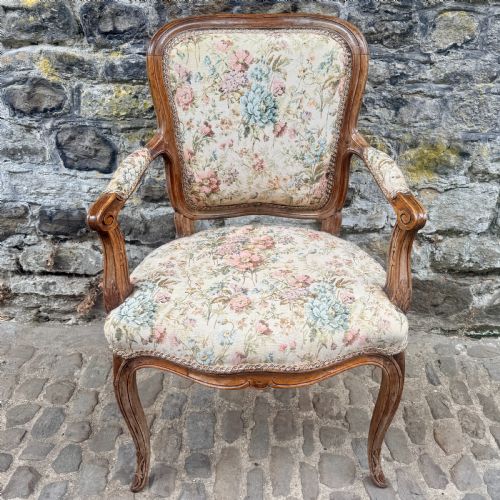
Victorian walnut and mahogany pieces upholstered in tapestry or floral textiles dominate the selection. You also find Georgian desk chairs, Edwardian occasional chairs, and French provincial armchairs featuring patterned fabric.
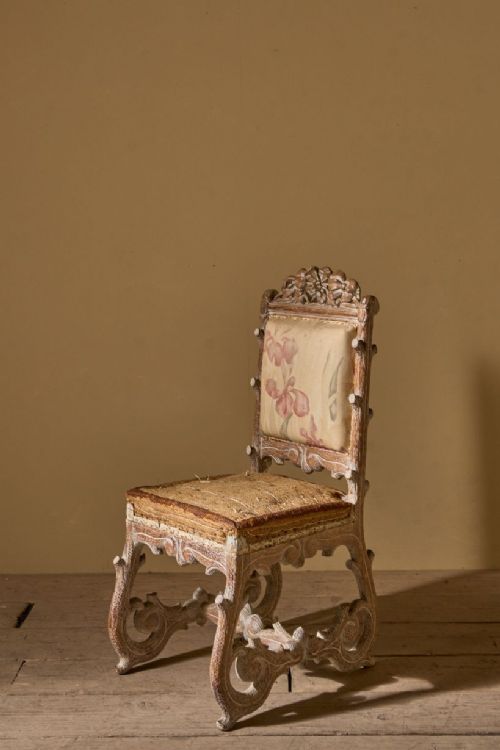
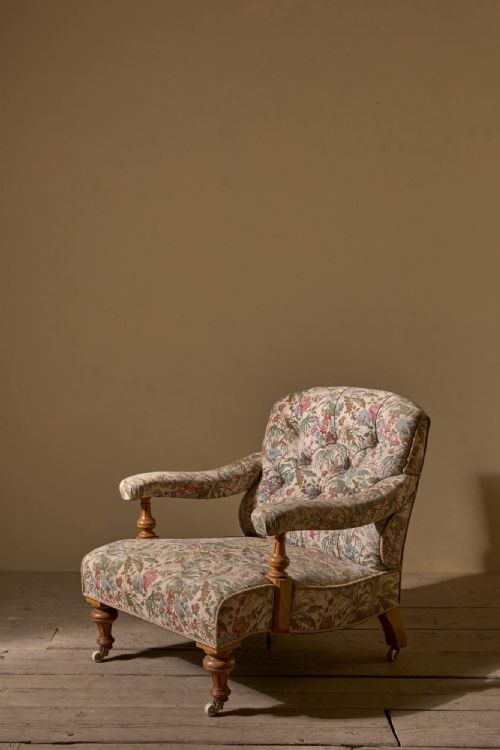
Forms range from simple side chairs and slipper chairs to large wingback armchairs, elbow chairs, and sets of dining chairs. Many incorporate carved wood frames in walnut, mahogany, beech, or giltwood.
How they were made
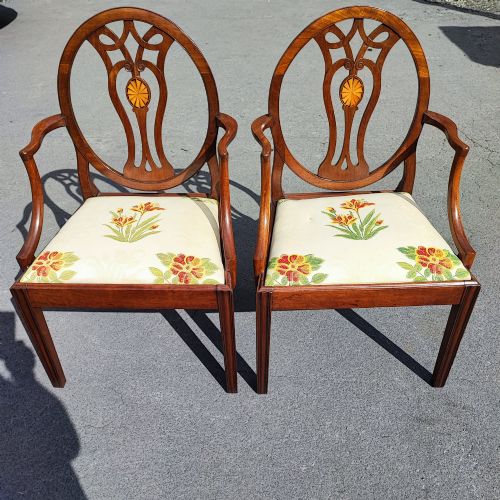
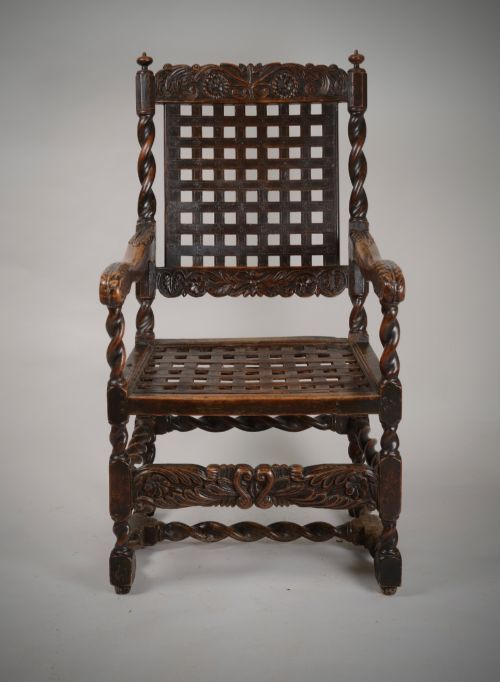
Carpenters and cabinet makers shaped sturdy frames from hardwoods including mahogany, walnut, oak, and beech, frequently employing marquetry, inlay, carving, or parcel gilding. Brass components and mother of pearl sometimes augmented the wooden structures.
Upholsterers applied textile coverings, tapestry fabric, and needlework to seats and backs, occasionally utilising feather fillings for padding. Frames often reflected specific stylistic revivals, from Queen Anne and Chippendale to Louis XV and Art Nouveau.
Some nineteenth century buyers purchased matching His and Hers salon chairs, ensuring domestic debates about comfortable seating were settled by design.
What varies in quality
The sophistication of the timber carving and the precision of marquetry inlay set finer frames apart from simpler regional pieces. Original upholstery treatments and period tapestry fabrics indicate higher preservation standards.
Proportion and structural integrity distinguish exceptional seating from standard examples. Chairs retaining original paint, parcel gilding, or maker attribution command greater attention from collectors.
Morris And Co·Holland And Sons·Beresford And Hicks
The Antique Floral Chairs Glossary
- Bergere
- An enclosed upholstered armchair with wooden framing exposed around the sides and back. It often includes a cane panel or tight upholstery.
- Marquetry
- Decorative veneer work forming pictures or patterns by fitting together small pieces of wood. Cabinet makers used contrasting timbers to create floral designs on chair backs and frames.
- Prie Dieu
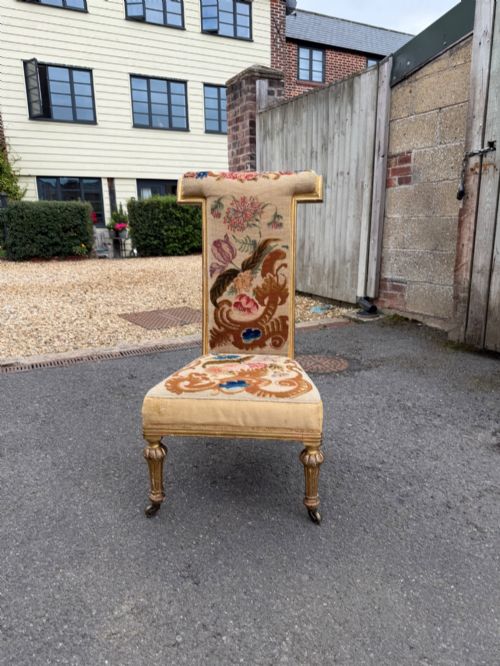
- A devotional chair featuring a low seat and a narrow upper shelf designed for kneeling prayer. These nineteenth century examples frequently display rich tapestry upholstery.
- Salon chair
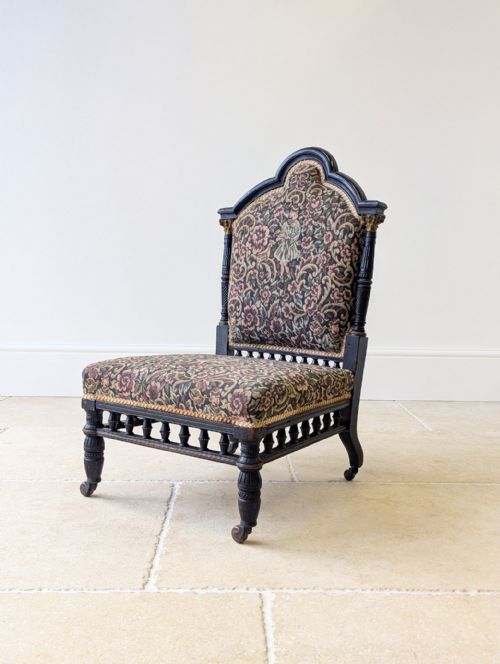
- A light, decorative chair made for entertaining guests in a formal reception room. Victorian and Edwardian examples often utilise walnut or ebonised wood.
- Cabriole leg
- A furniture leg that curves out and then in, resembling the leg of an animal. This form appears frequently on eighteenth century walnut seating.
Antique Floral Chairs: Frequently Asked Questions
How do I identify a Victorian floral chair?
Victorian floral chairs typically feature dark woods like walnut or mahogany with carved details and tapestry or floral textile upholstery. They often include styles influenced by the Aesthetic Movement or French revivals.
Examine the frame construction and the nature of the floral fabric to determine if the upholstery represents a later replacement or a period textile.
Can I use antique armchairs every day?
Most antique armchairs are built with sturdy hardwood frames that withstand regular daily use. Feather fillings and traditional upholstery provide comfortable seating for living rooms and studies.
Consider the internal padding and fabric condition before daily placement to ensure the antique materials remain protected from excessive wear.
What is a salon chair used for?
Salon chairs served as light, movable seating for nineteenth century reception rooms and drawing rooms. Their compact proportions made them easy to rearrange during gatherings.
Today these chairs function well as occasional seating in bedrooms or corners where space is limited.
How do I spot a Georgian desk chair?
Georgian desk chairs usually combine a revolving or sturdy wooden base with upholstered seats in tapestry or leather. Mahogany and walnut were the primary woods utilised during the eighteenth century.
Look for classic joinery methods and proportions typical of the Georgian period to confirm the age of the desk chair.