


Antique Fireplace Firedogs
These antique fireplace firedogs support logs within the hearth, bringing structural weight and period detail to a fireplace.
Antique Fireplace Firedogs
When you search for antique fireplace firedogs, you encounter pairs of heavy metal supports designed to hold logs above the hearth floor. These utilitarian hearth accessories evolved into decorative centrepieces across the eighteenth and nineteenth centuries.
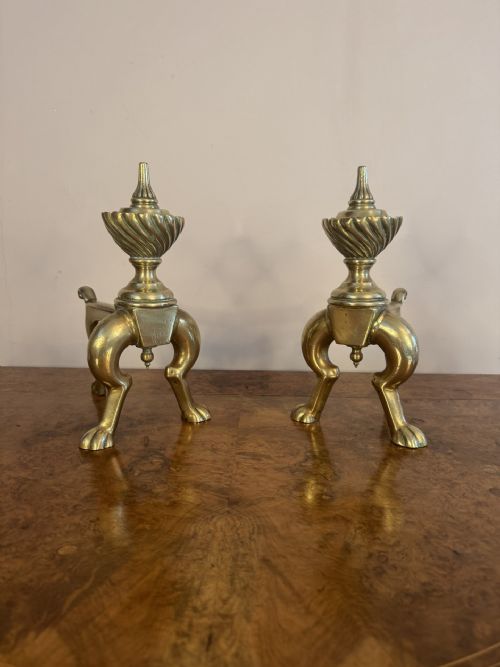
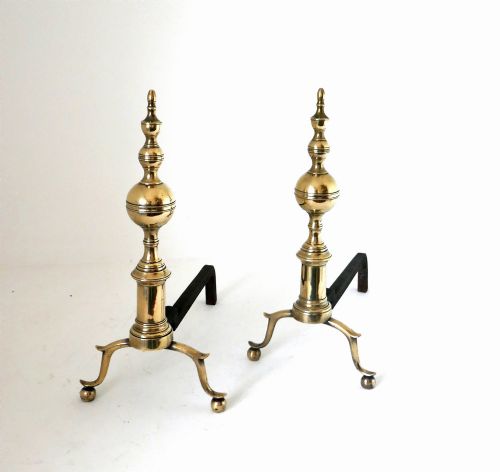
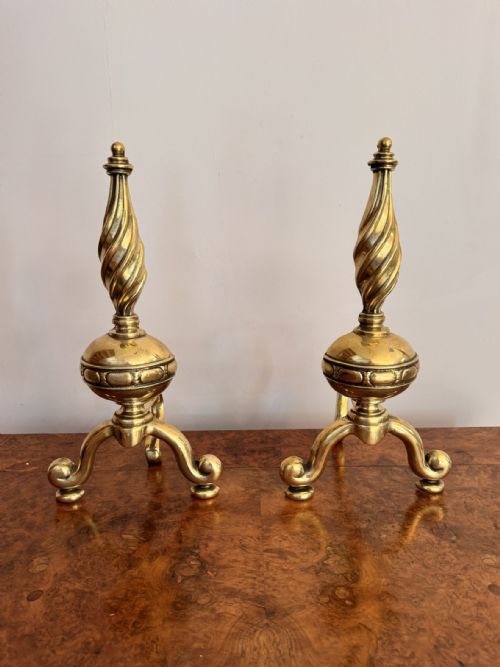
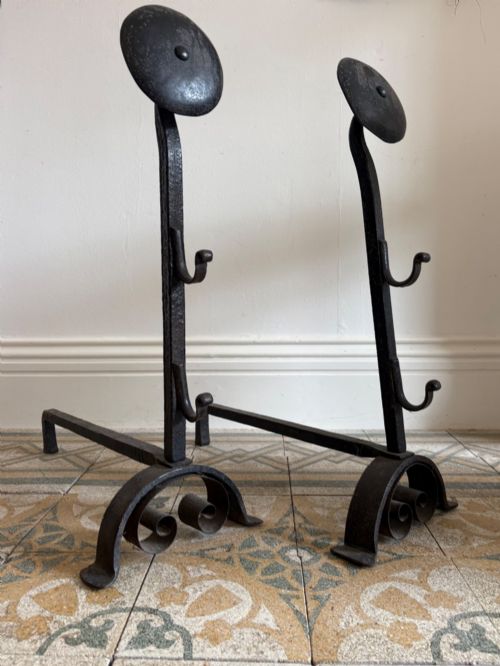
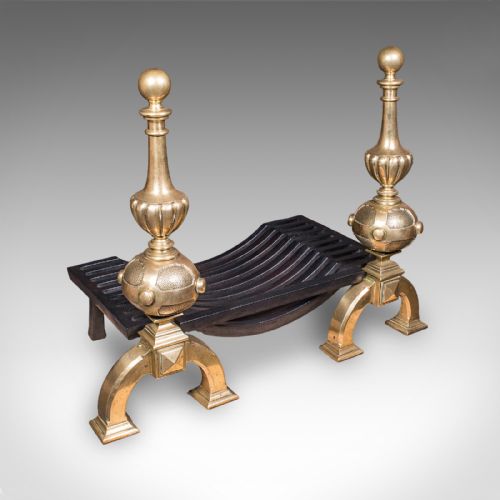
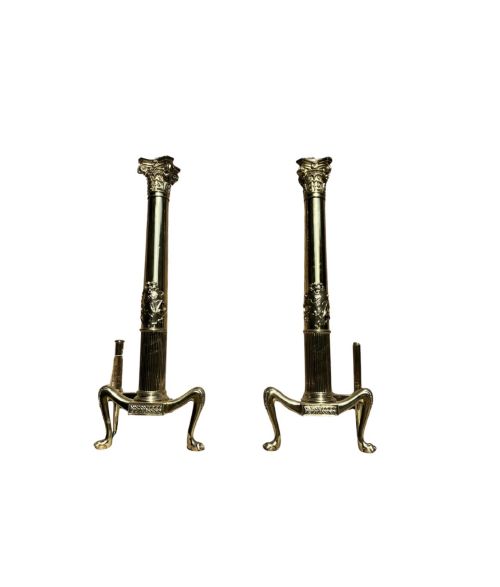
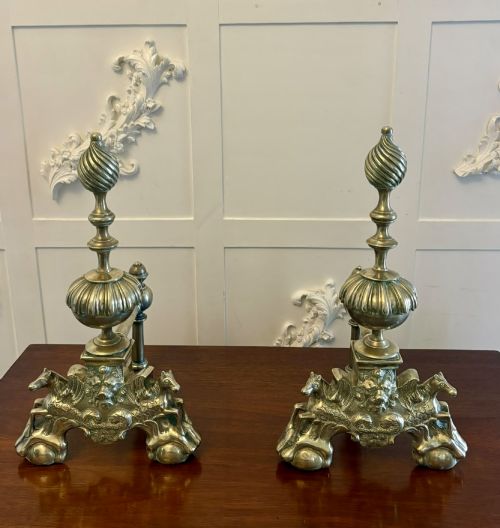
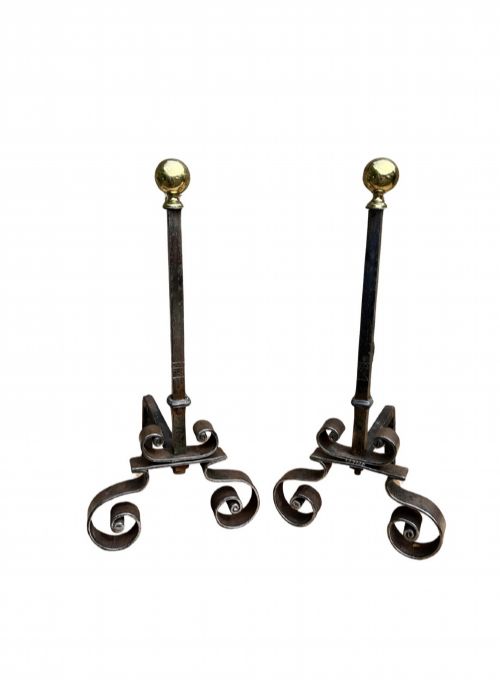
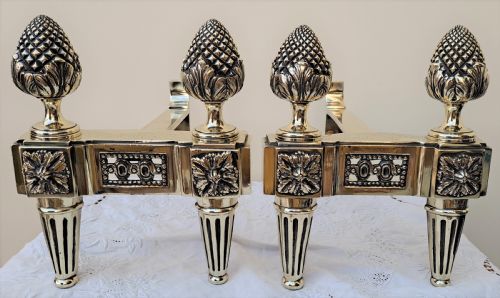
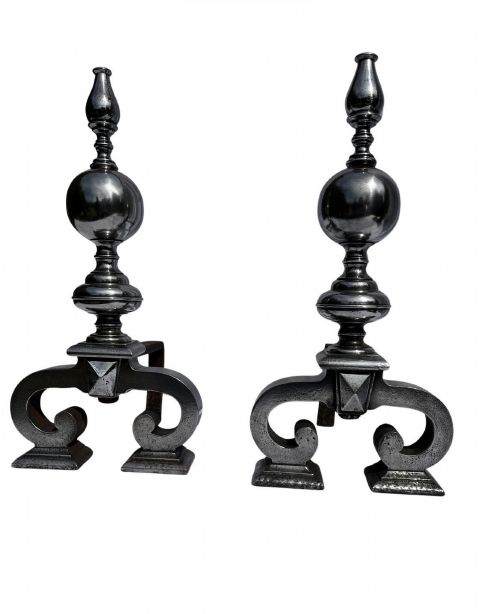
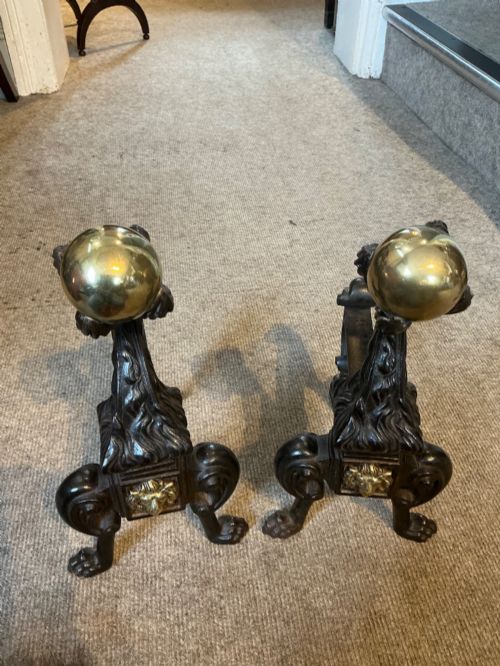
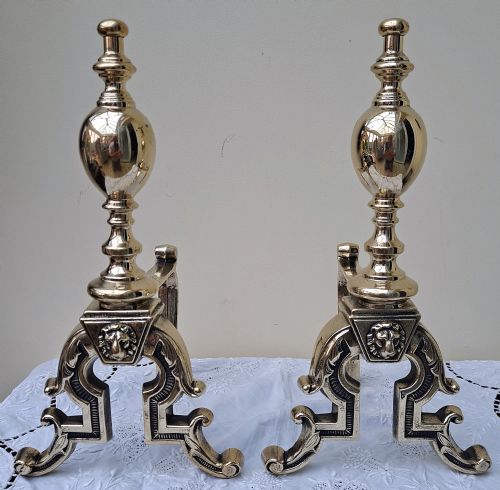
The selections available here span from the robust hand-forged utility of the Georgian and Victorian eras to ornamental French ormolu examples. Common forms include classic brass shafts, wrought iron standards, and figural chenets.
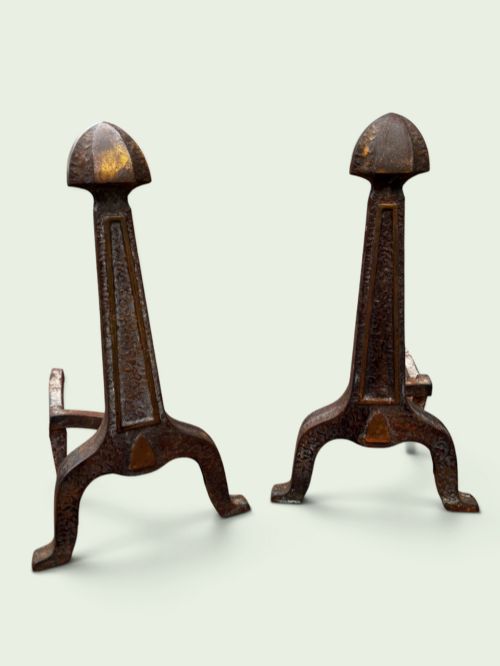
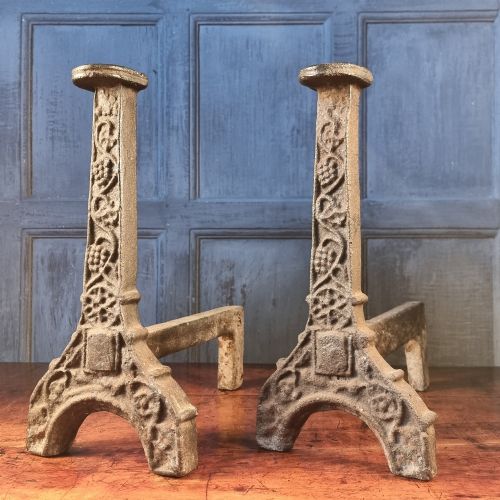
Originating primarily from English and French workshops, these firedogs appear in varied styles ranging from austere Arts and Crafts ironwork to ornate Louis XIV and Gothic Revival revivals.
Materials and construction methods
Makers utilised resilient metals such as cast iron, wrought iron, brass, bronze, and steel to withstand intense hearth temperatures. Wrought iron pieces rely on hand-forged manipulation, whereas brass and bronze examples employ detailed casting techniques.
Gilt bronze and ormolu variants combine cast metal with fine surface gilding, creating rich tonal contrast against the dark stone of the fireplace surround. Iron iterations often feature simple riveted or forged joints intended for heavy daily use.
Antique Fireplace Firedogs Retail Price Guide 2026
Typical asking prices for fireplace firedogs among the pieces listed under this phrase on Sellingantiques today, from the lower quarter to the upper quarter. They describe what is for sale here now, not the wider market.
Listings feature brass, wrought iron, and cast iron firedogs spanning the Georgian, Victorian, and Edwardian eras.
Judging execution and material depth
Quality rests in the crispness of the casting and the weight of the metal utilised in the construction. Substantial gauge brass and deeply chased bronze display superior definition compared to lighter, flattened stampings.
Hand-forged wrought iron pieces show merit in the deliberate consistency of the hammer marks and the structural integrity of the joints. Finer pairs retain matched symmetry and original surface patination accumulated through generations of fireside service.
Thomas Jeckyll·William Tonks·James Cartland and Sons
The Antique Fireplace Firedogs Glossary
- Firedog
- A horizontal metal bar supported on legs, used in pairs to hold logs in an open fireplace. They are also frequently referred to as andirons.
- Chenet
- The French term for a firedog, typically describing decorative ornamental metal supports placed at the front of the hearth. They often feature figural or rococo cast brass and bronze ornamentation.
- Andiron
- An alternative name for a firedog, consisting of a vertical front standard and a horizontal bar extending backward into the hearth. These objects support wood above the hearth floor to improve airflow.
- Fire Basket
- A metal grate designed to hold coal or wood within a fireplace opening. They frequently incorporate integral firedogs or tool rests at the sides.
- Ormolu
- Gilt bronze ornamentation applied to decorative metalwork, particularly prevalent on nineteenth-century French pieces. The technique involves fusing an amalgam of gold onto a bronze base.
Antique Fireplace Firedogs: Frequently Asked Questions
What is the difference between firedogs and andirons?
The terms are used interchangeably to describe the same supporting iron or brass hearth implements. Regional preference generally dictates which term appears in historic records.
Both serve the identical function of elevating logs within the fireplace grate to encourage proper combustion.
How do I date an antique firedog?
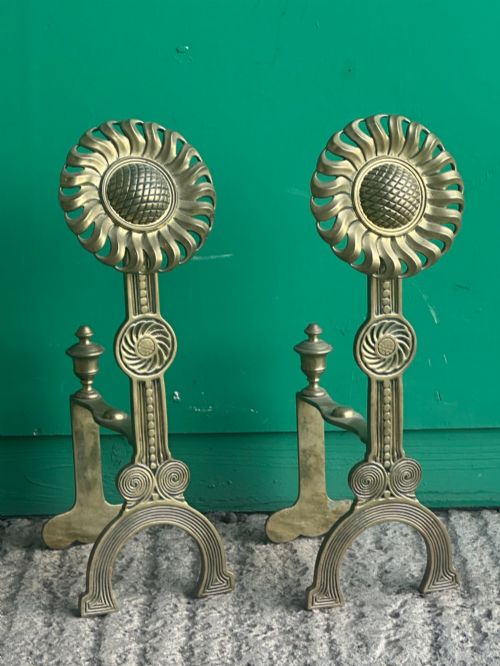
Dating relies on observing the prevailing stylistic motifs, such as Gothic Revival tracery or Aesthetic Movement sunflower patterns, alongside manufacturing marks. Cast iron and wrought iron techniques also evolved from heavy hand-forging to precise industrial casting as the nineteenth century progressed.
Matching the patination and metal composition to documented pieces helps confirm the period of production.
Can these firedogs be used in a working fireplace?
Most solid metal firedogs tolerate regular heat exposure when constructed from heavy cast iron or wrought iron. Brass and ormolu variants function well but require careful placement to protect delicate surface gilding.
Checking the structural thickness of the metal ensures the piece handles active wood fires safely.
How do I clean antique brass firedogs?
Maintenance involves gentle dusting and occasional cleaning with a soft cloth to preserve the natural historic patina. Avoid harsh chemical polishes that strip away the aged surface character accumulated over centuries.
Light application of microcrystalline wax can protect exposed metal surfaces from atmospheric oxidation.