
Antique Fire Kerb
An antique fire kerb defines the hearth, keeping stray embers in check while anchoring the room's entire fireplace arrangement.
Antique Fire Kerb
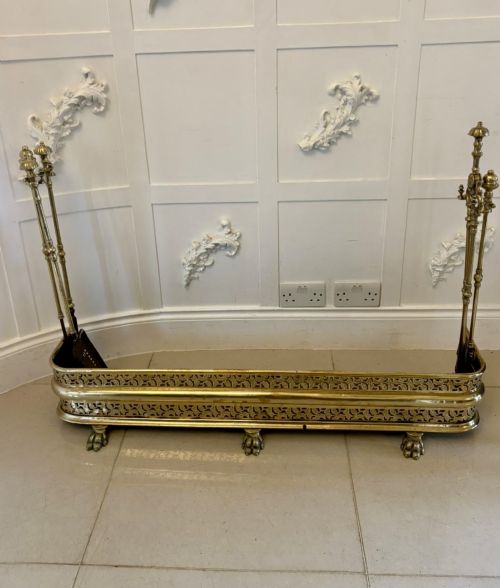
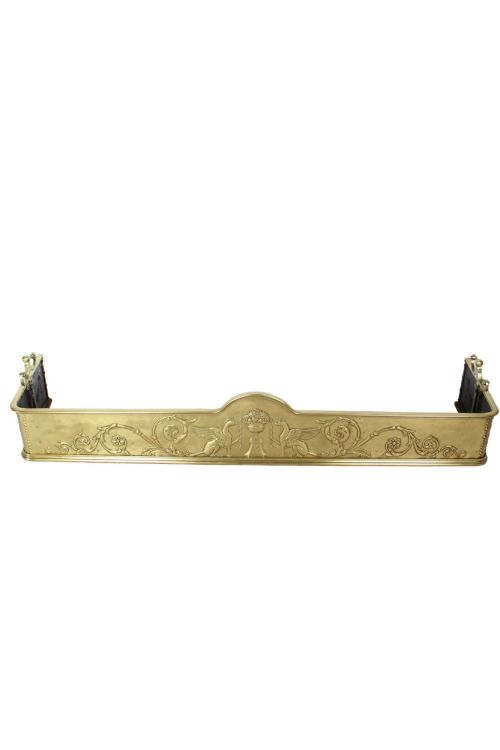
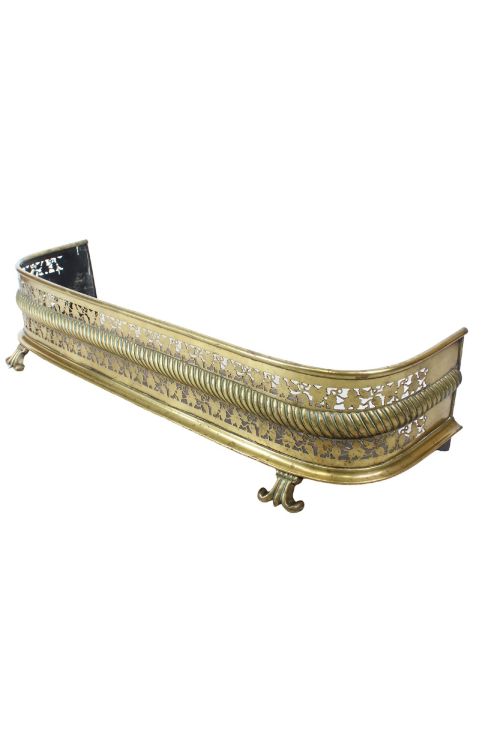
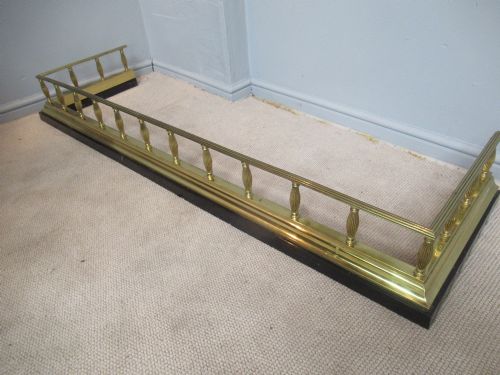
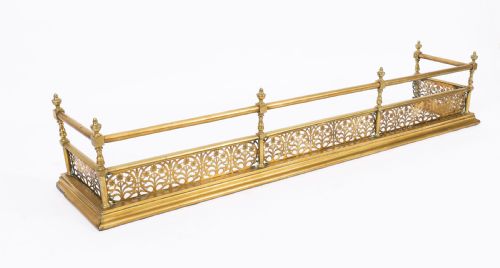
An antique fire kerb, also known as a fender, forms a low metallic or wooden barrier around the hearth to contain ash and burning coals. These pieces range from simple nineteenth-century iron rails to elaborate Victorian and Edwardian brass surrounds.
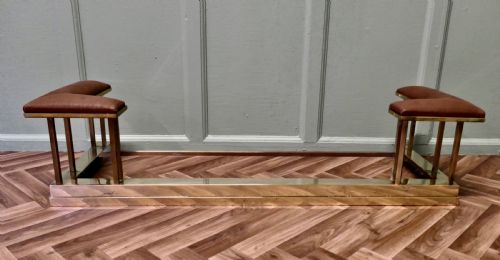
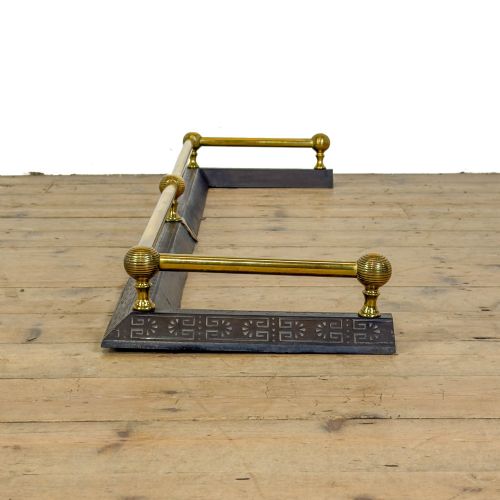
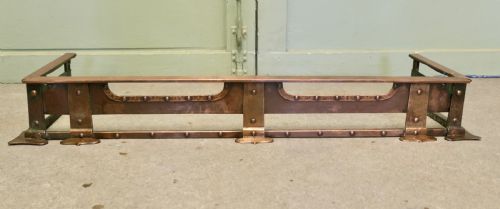
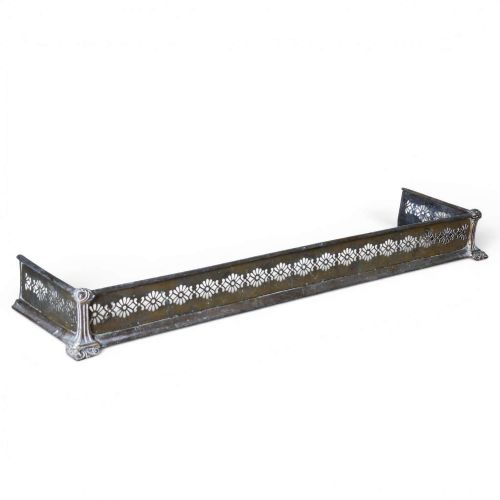
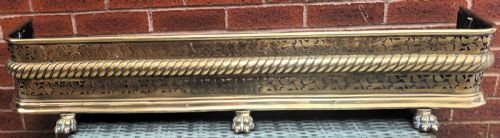
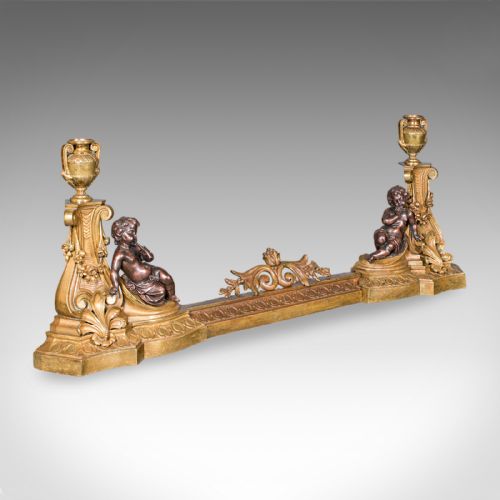
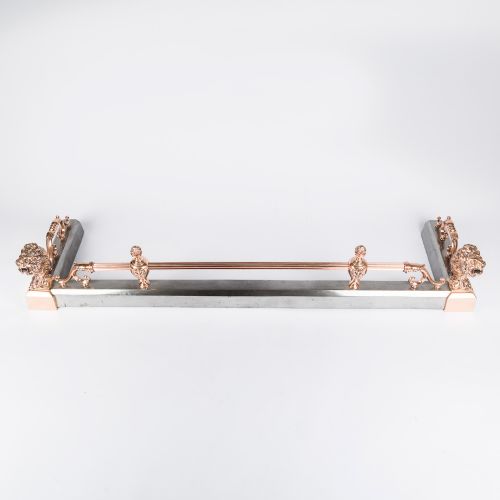
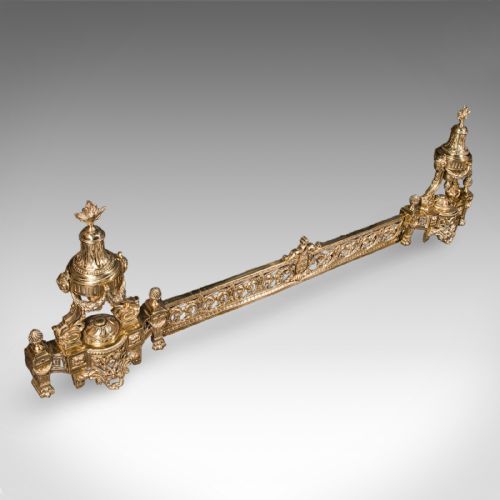
Victorian brass and pierced copper designs appear most frequently on this page, often featuring adjustable frames or decorative motifs like flower patera. Collectors also encounter Georgian steel serpentine fronts and sturdy oak club fenders designed with upholstered seats.
Originating primarily from English and French workshops, these hearth surrounds span stylistic movements from Regency elegance to Arts and Crafts simplicity and Art Nouveau curves.
Materials and construction
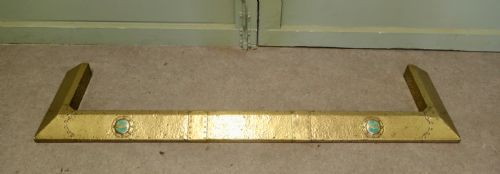
Makers shaped these surrounds using cast and sheet brass, wrought iron, and polished steel, frequently combining metals for structural strength and visual contrast. Copper components display hand-beaten textures, riveted joints, or enamel cabochon inserts typical of the Arts and Crafts movement.
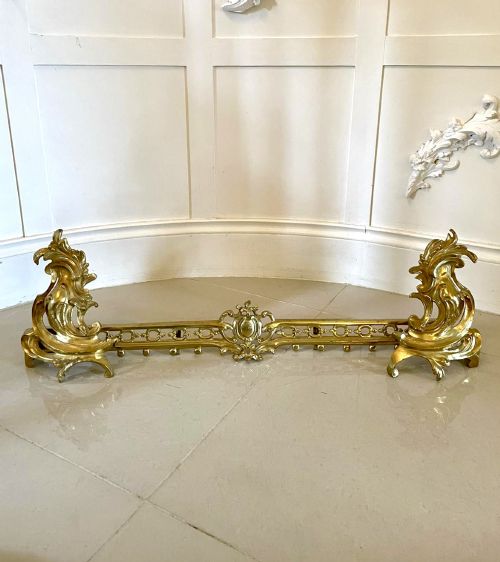
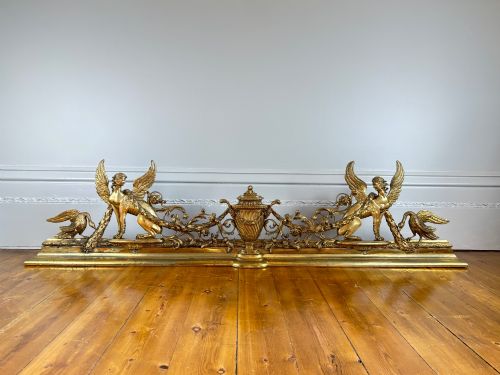
Foundry work involved casting heavy bronze, ormolu, and cast iron elements, which were then chased, pierced, or parcel-gilded. Oak frames provide the sturdy wooden base for upholstered club fenders, integrating leather seating directly into the hearth furniture.
Listings feature 19th Century, Victorian, Edwardian, and Georgian periods, utilising brass, steel, iron, and copper.
Evaluating quality and craftsmanship
Quality reveals itself in the weight of the metal, the crispness of pierced or engraved decoration, and the integrity of structural joints. Substantial gauge brass and thick steel maintain their shape against intense hearth heat without warping.
The refinement of decorative details distinguishes standard production pieces from exceptional ones, particularly in hand-engraved serpentine steel fronts and finely chased bronze or ormolu mounts. Original components, such as matching fire irons or integral leather upholstery, preserve the historical wholeness of the piece.
E F Caldwell New York
The Antique Fire Kerb Glossary
- Fender
- A low metal or wooden guard placed around a hearth to keep logs and embers from rolling onto the floor. It doubles as a physical boundary for fireside seating.
- Club fender
- A low, U-shaped hearth surround featuring upholstered leather seats on either side of the fireplace. This form gained popularity in country houses for keeping warm close to the fire.
- Patera
- A circular ornamental bas-relief motif resembling a classical disc or flower petal. Makers frequently stamped or cast these into brass and copper kerb rails.
- Serpentine
- A gently undulating curved shape resembling a snake's path, often seen on eighteenth and nineteenth-century steel hearth rails. This profile required skilled smithing to achieve symmetry.
- Ormolu
- Gilded bronze produced by applying a mercury-gilt amalgam to cast bronze. The technique creates a rich, matte gold surface finish on decorative mounts.
Antique Fire Kerb: Frequently Asked Questions
How do I choose the right size?
Measure the width and depth of your hearth stone before browsing, leaving adequate clearance around the fireplace opening.
Adjustable models offer flexibility if your hearth dimensions fall between standard sizes.
Can I use an antique kerb with a modern fire?
These surrounds suit gas, electric, and open wood-burning hearths equally well, provided the interior dimensions accommodate your fire source.
Ensure the materials can handle the specific heat output of your installation.
How do I clean brass and copper?
Gentle dusting with a dry microfibre cloth preserves the historical patina accumulated over generations.
Avoid abrasive metal polishes unless you prefer a bright, highly reflective modern shine over aged character.
What is the difference between a kerb and a fender?
The terms are largely interchangeable in antique markets, though 'kerb' often specifically denotes heavy stone, iron, or brick plinths bordering the hearth.
Both serve the primary function of containing ashes and protecting flooring.