



Pierced Brass Fire Curb
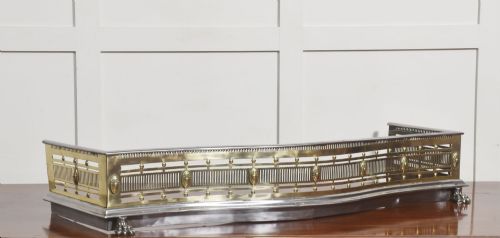
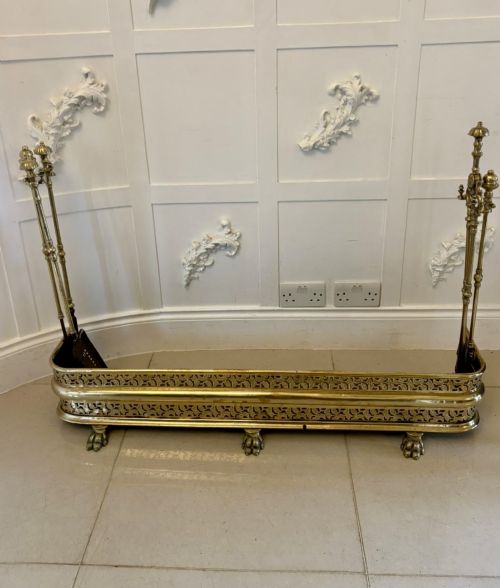
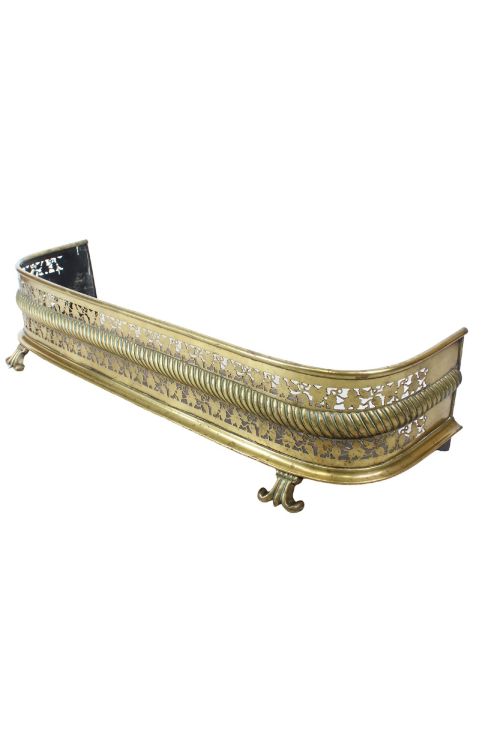
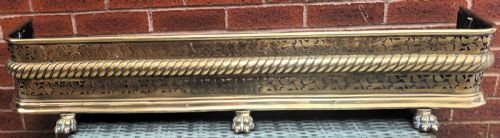
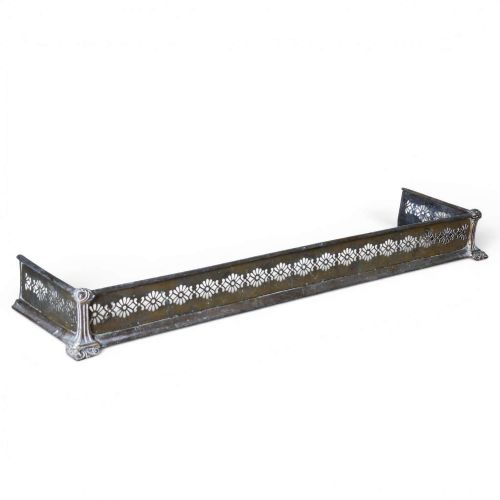
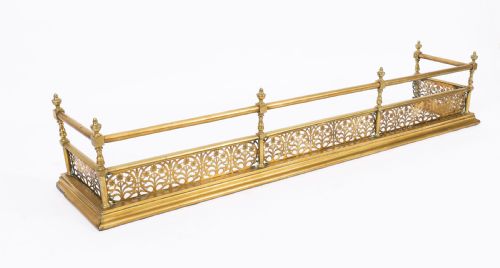
A pierced brass fire curb frames the hearth with openwork metalwork that keeps stray embers contained while catching the glow of the fire.
Pierced Brass Fire Curb
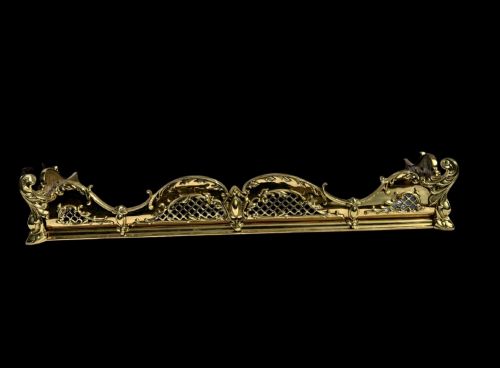
A pierced brass fire curb protects the hearth area while providing a decorative metallic barrier around the fireplace opening. These hearth furnishings appear primarily in Victorian and Regency styles, ranging from simple nineteenth-century designs to ornate examples with intricate cutwork patterns.
The objects take the form of low guards or curbs placed directly on the floor in front of the fireplace. Most examples combine bright brass bodies with iron or steel internal components for structural stability during daily use.
How they were made
Craftsmen shaped sheet brass using piercing and punching techniques to create openwork motifs along the front and side galleries. Heavier versions incorporate cast brass elements alongside polished steel or cast iron frames to provide rigidity.
Makers often combined brass with blackened steel or iron bases to ensure the structure could withstand the heat and movement near an active hearth. Surface finishes ranged from high polish to patinated industrial textures depending on the period.
Pierced Brass Fire Curb Retail Price Guide 2026
Typical asking prices for pierced brass fire curb among the pieces listed under this phrase on Sellingantiques today, from the lower quarter to the upper quarter. They describe what is for sale here now, not the wider market.
What varies in quality
Quality depends on the thickness of the brass gauge and the precision of the piercing work along the curb. Finer examples display crisp edges in the cutwork patterns and retain substantial weight in the metal frame.
The integration of materials also defines the tier of the piece, with superior curbs uniting brass components securely to robust iron or steel internal structures rather than relying on thin soldered joints.
The Pierced Brass Fire Curb Glossary
- Pierced brass
- Sheet metal perforated with decorative geometric or floral patterns. This technique allows light from the hearth to pass through the metalwork.
- Curb fender
- A low metal barrier enclosing the hearth space. It prevents burning logs or coals from rolling onto the main floor.
- Regency
- A stylistic period spanning the early nineteenth century. Pieces from this era often feature classical restraint and clean linear proportions.
- Victorian
- A period covering the reign of Queen Victoria characterised by diverse revival styles. Fireplace accessories from this time display varied manufacturing techniques and ornamentation.
Pierced Brass Fire Curb: Frequently Asked Questions
How do I clean a brass fire curb?
Use a soft cloth and a gentle metal cleaner formulated specifically for brass surfaces. Avoid abrasive pads that can scratch the vintage finish.
Preserve any dark patination by limiting polishing to the raised decorative areas rather than scrubbing the recessed pierced sections.
Can I use these curbs with a modern fireplace?
These pieces fit readily in front of both working hearths and decorative gas or electric fireplace installations. Measure your hearth space carefully before selection.
Ensure the internal dimensions match the hearth perimeter to secure proper placement against the floor.
What is the difference between a fender and a curb?
The terms are generally used interchangeably to describe low protective barriers placed around hearths. Both variants serve the primary function of containing ash and embers.
Older listings frequently alternate between fender and curb depending on regional terminology and exact period style.
How do I date a brass fire curb?
Examine the manufacturing techniques, fastener types, and stylistic motifs visible on the metal frame. Victorian and Regency examples show distinct decorative traits.
Material combinations like polished steel paired with pierced brass provide strong clues regarding the nineteenth-century period of origin.