

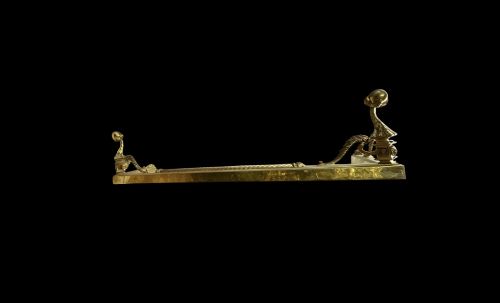

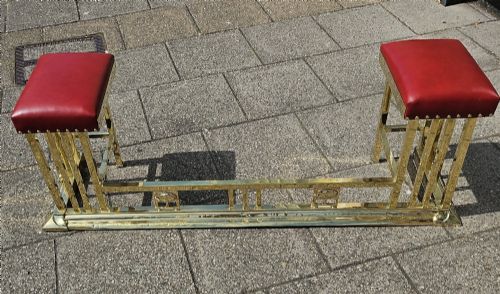


Traditional Brass Fireplace Curb
A traditional brass fireplace curb frames the hearth, combining polished metal and leather to anchor the room.
Traditional Brass Fireplace Curb
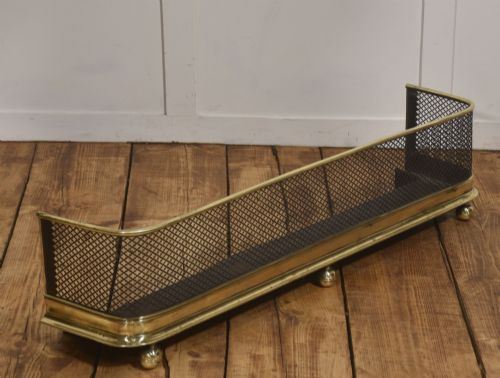
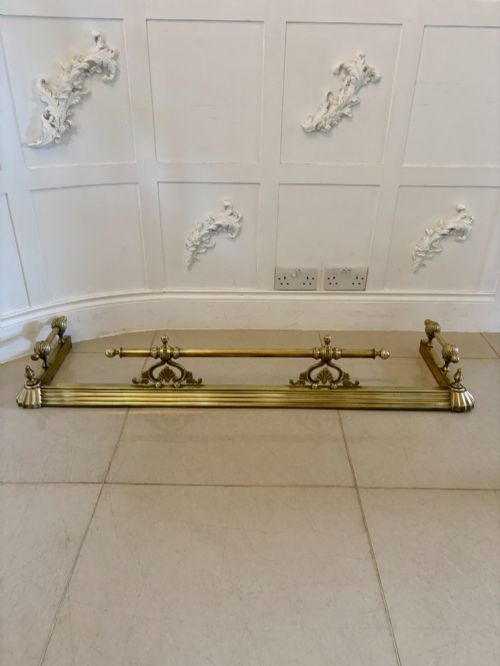
A traditional brass fireplace curb establishes the boundary of the hearth, protecting the room from stray embers while defining the fireplace as a focal point. These functional pieces range from simple guards to elaborate club fenders incorporating cushioned seats.
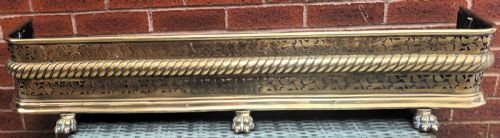
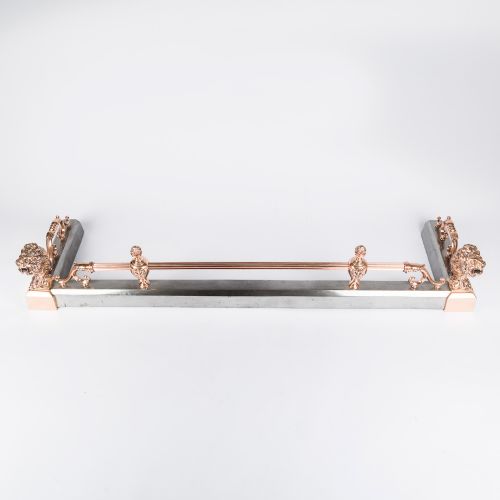
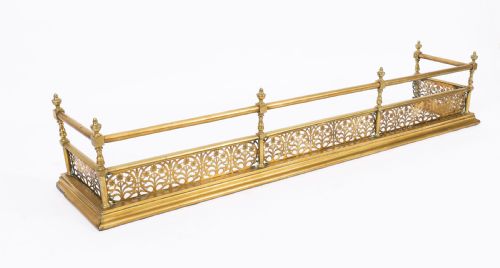
Victorian examples dominate the selection, spanning simple pierced designs to heavy cast pieces featuring lions or garlands. Edwardian and early twentieth-century variations introduce cleaner lines and club fenders upholstered in mature tan leather.
Makers utilised various metals alongside brass, incorporating iron, steel, copper, and bronze into the construction. Buyers encounter straight extending formats, curved profiles, and complete sets including matching fire tools.
Materials and Construction
Makers constructed these curbs using brass combined with iron, steel, copper, and bronze to ensure weight and stability around the hearth. Pierced brass work, scrolled detailing, and cast ornamentation define the decorative metal surface.
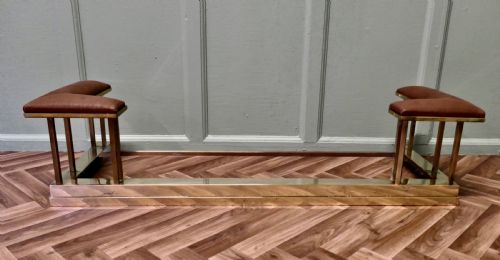
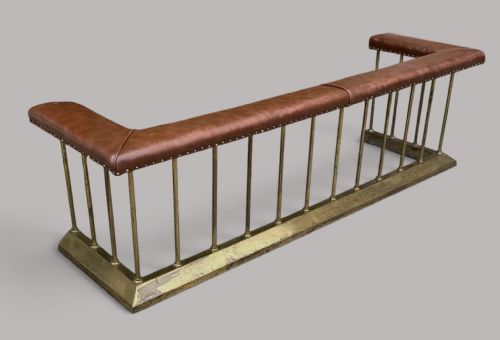
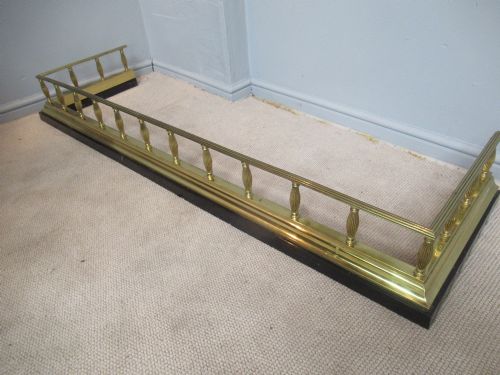
Club fenders incorporate leather upholstery, featuring mature tan leather across cushioned seats designed for fireside sitting. Heavy gauge brass and polished finishes require skilled metalworking techniques to achieve the ornate garlands and spindle designs seen in the Victorian and Edwardian periods.
Traditional Brass Fireplace Curb Retail Price Guide 2026
Typical asking prices for traditional brass fireplace curb among the pieces listed under this phrase on Sellingantiques today, from the lower quarter to the upper quarter. They describe what is for sale here now, not the wider market.
Listings feature pieces spanning the Victorian, Edwardian, and Art Deco periods, constructed from brass, iron, steel, leather, copper, and bronze.
Assessing Quality and Craftsmanship
Weight and gauge set the foundation for quality, with heavy brass construction and substantial iron or steel subframes distinguishing superior pieces from lighter alternatives. Material thickness ensures the frame withstands heat and daily use around the fireplace.
The precision of pierced brass patterns, crispness of cast garlands, and quality of the leather upholstery separate standard hearth guards from exceptional club fenders. Finer examples display meticulous attention to detail in scrolled motifs and integrated decorative elements like lions.
The Traditional Brass Fireplace Curb Glossary
- Club fender
- A low, U-shaped hearth guard featuring upholstered top rails designed for seating. These originated in the nineteenth century to provide comfortable proximity to the fire.
- Pierced brass
- Metalwork decorated by cutting or piercing decorative patterns directly through the brass sheet. This technique allows heat to circulate while creating ornamental light and shadow effects.
- Fender
- A low metal barrier placed in front of an open fireplace to contain falling coals and sparks. They range from simple flat rails to ornate three-sided structures.
- Adam style
- A neoclassical design style popular in the eighteenth century and revived later, characterised by symmetrical ornamentation, garlands, and classical motifs.
- Spindle
- A slender turned or shaped upright column used in series to form the openwork gallery of a fender. These vertical elements provide rigid structure while maintaining a light visual appearance.
Traditional Brass Fireplace Curb: Frequently Asked Questions
What is a club fender?
A club fender is a low hearth guard featuring cushioned leather seats along the top rails. This design allows people to sit directly by the fire.
Originating in gentlemen's clubs and large country houses, they combine functional ember protection with comfortable fireside seating.
How do I date a brass fender?
Dating relies on stylistic clues such as neoclassical garlands, heavy Victorian casting, or cleaner Edwardian and Art Deco lines. Material combinations like brass paired with iron or steel also point to specific nineteenth and early twentieth-century manufacturing periods.
Examining the construction methods and weight helps confirm whether a piece belongs to the Victorian, Edwardian, or later periods.
Can these fenders be adjusted for size?
Certain examples feature extending mechanisms designed to fit variable hearth widths. These nineteenth-century extending versions allow the metal frame to slide outward to match the fireplace opening.
Fixed-size curbs require precise measurement of the hearth space before placement to ensure proper fit against the surrounding floor.
What metals are used besides brass?
Makers frequently combined brass with iron, steel, copper, and bronze. Iron and steel typically formed the hidden structural frames or contrasting dark accents, while copper and bronze added tonal variety to the decorative surfaces.
Leather also appears on upholstered club fender models, providing a tactile contrast to the polished metal framework.