


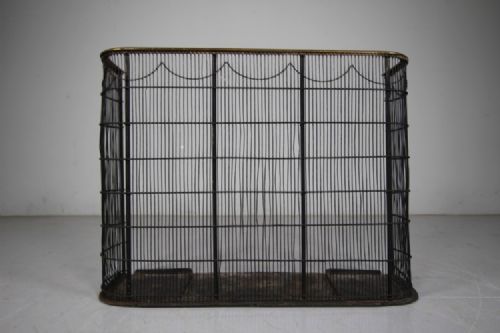


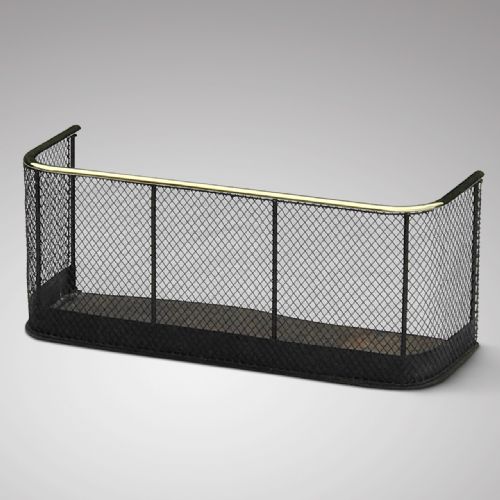
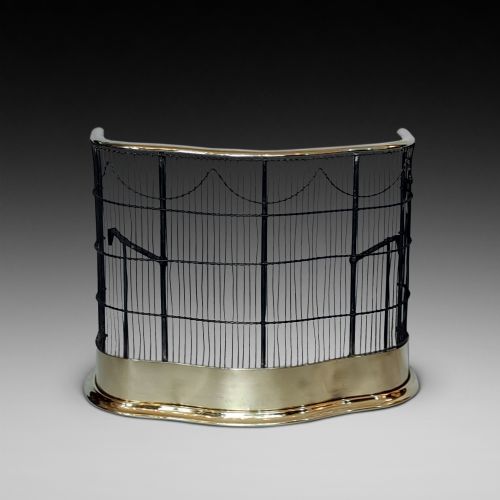


Brass Spark Guard Fender
A brass spark guard fender brings functional warmth and protection to a hearth, combining sturdy metalwork with fine mesh to keep stray embers safely contained.
Brass Spark Guard Fender
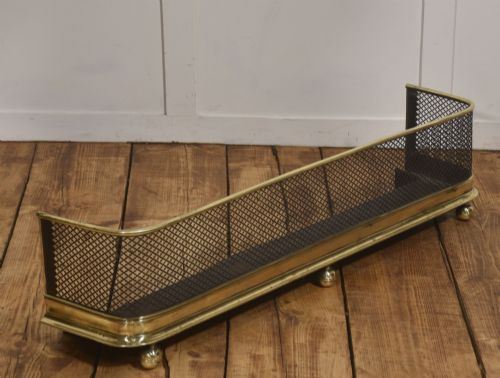
A brass spark guard fender unites the structural boundary of a traditional hearth fender with the protective barrier of a fire screen. These items protect rooms from stray embers while framing the fireplace during periods when coal or wood fires burn.
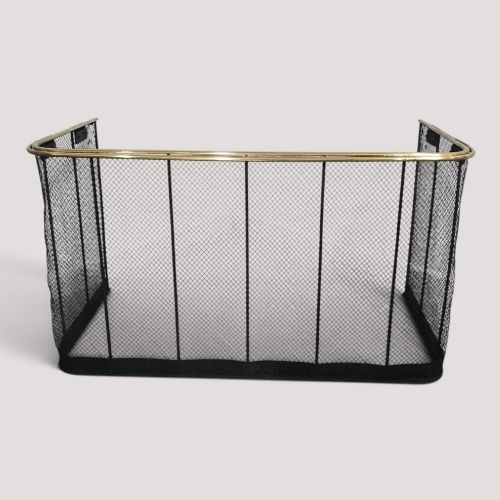
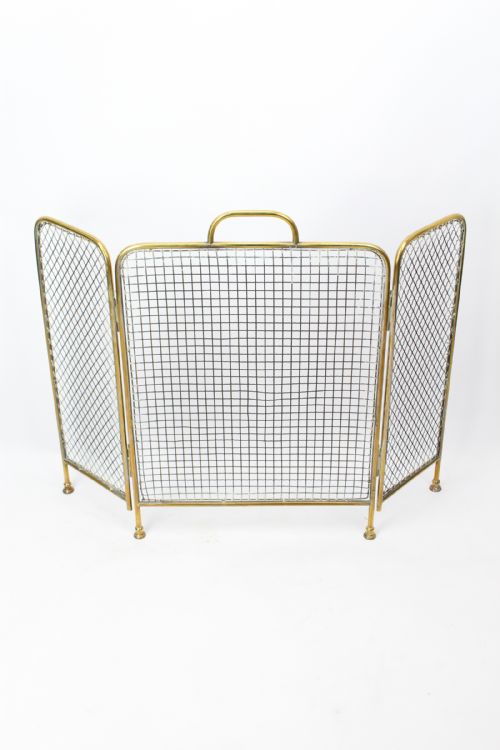
Most examples found here date from the nineteenth century, including Victorian, Edwardian, and Regency eras. Forms range from simple bowed wire mesh designs to large nursery guards equipped with clothes rails and tripartite folding panels.
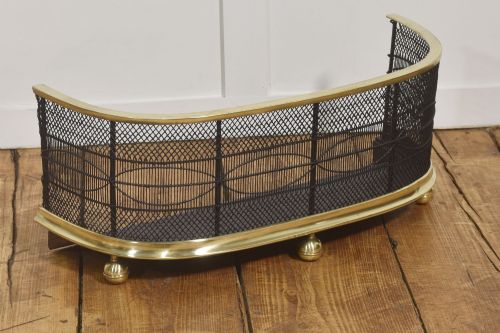
Makers fashioned these accessories to suit various hearth configurations, producing serpentine fronts, D-end shapes, and gate-fronted versions. The combination of brass frames and wire mesh dominates the selection, occasionally paired with iron or steel.
How they were made
Craftsmen built these guards using robust brass frames combined with woven iron wire or steel wire mesh. The metalwork involved shaping tubular or solid brass for top rails and borders, securing the fine mesh screens within to block sparks effectively.
Production techniques varied from cast brass flower-pierced fender bases to hand-woven wirework panels. Iron and steel components frequently provided underlying structural strength for larger nursery fenders and folding configurations.
Brass Spark Guard Fender Retail Price Guide 2026
Typical asking prices for brass spark guard fender among the pieces listed under this phrase on Sellingantiques today, from the lower quarter to the upper quarter. They describe what is for sale here now, not the wider market.
Some nursery fenders included clothes rails, turning the hearth into an impromptu Victorian laundry dryer.
What varies in quality
Quality rests in the weight of the brass, the tightness of the wire mesh weave, and the rigidity of the folding hinges. Substantial frames maintain their shape under daily use, whereas lighter constructions feel flexible and prone to sagging.
Design complexity also separates standard utility guards from finer examples. Pierced brass details, serpentine curves, and well-integrated clothes rails demonstrate superior workshop execution compared to plain, straight-sided models.
The Brass Spark Guard Fender Glossary
- Nursery fender
- A tall protective guard designed to encircle the hearth and keep children at a safe distance from the fire. These often feature integrated top rails.
- Wire mesh
- Woven metal screening fitted within the brass frame to contain sparks. The gauge and regularity of the wire indicate the standard of production.
- Serpentine
- A gently undulating curved front shape seen on finer fenders. This profile required skilled metal shaping during manufacture.
- D-end
- A fender shape featuring a semi-circular curved end matching traditional hearth layouts. It provides a neat fit against flat walls.
- Tripartite folding
- A guard constructed in three hinged sections that angle around the hearth. This configuration allows the screen to fold flat for storage.
Brass Spark Guard Fender: Frequently Asked Questions
What is a brass spark guard fender?
A brass spark guard fender is a hearth accessory that combines a low metal fender base with a taller wire mesh screen. It serves to frame the fireplace while preventing burning embers from reaching the room.
These pieces date primarily from the nineteenth century and vary from simple folding screens to large nursery guards with built-in rails.
How do I date a brass spark guard?
Dating relies on stylistic details, construction methods, and materials recorded across Victorian, Edwardian, and Regency periods. Regency and early nineteenth-century pieces often feature distinct wirework patterns, while later Victorian versions frequently incorporate stamped or pierced brass decorations.
Examining the fixings, wire gauge, and brass thickness helps place an object within its proper era.
What is a nursery fender?
A nursery fender is a taller variation of the standard hearth guard built to protect young children from open flames. They typically enclose a larger area around the fireplace and sometimes include a top rail once used for airing clothes.
Victorian homes utilised these extensively to improve safety in family rooms.
How do I clean an antique brass fender?
Cleaning requires gentle care to preserve the aged patina accumulated over decades of use. Soft cloths and mild cleaning agents remove surface dust without stripping the character from the brass and wire mesh.
Harsh metal polishes should be avoided to maintain the authentic historic appearance.